Introduction
With fuel charges creeping up into operational expenses, firms across India, from logistics companies to SMEs, are turning to prepaid fuel cards and fleet cards for better control and savings. These tools simplify fuel payments and make them an easy task, and reduce the possibilities of fraud and accounting losses while enabling real-time tracking of each rupee spent. If you are looking to purchase the best prepaid fuel card available in India, this blog explains how fuel and fleet cards work, what to compare, and which options suit different business needs.
What is a Fuel Card?
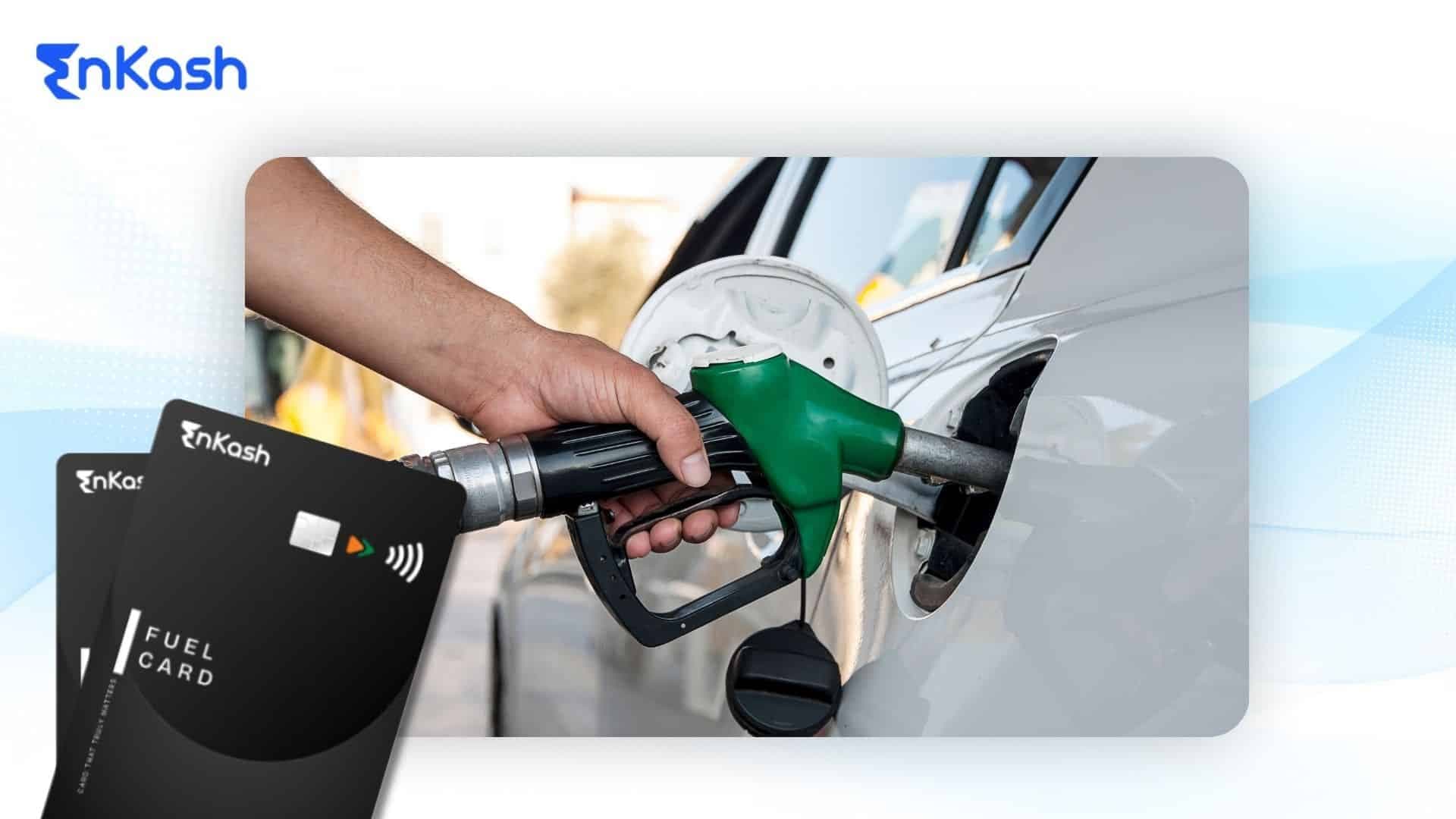
A fuel card is a specialized payment card issued to businesses for purchasing fuel and managing fuel-related expenses in a controlled and trackable manner. Instead of paying for fuel using cash, UPI, or personal cards, businesses use fuel cards to centralize fuel payments, monitor consumption, and simplify expense management for vehicles and drivers.
In simple terms, a fuel card allows companies to pay for fuel digitally while gaining visibility, control, and reporting over fuel spends.
Fuel cards work on a prepaid or credit-based model, depending on the type of card chosen.
Here’s how a typical fuel card transaction works:- The business issues fuel cards to drivers or assigns them to vehicles
- The driver uses the fuel card at authorised network fuel stations.
- The transaction is approved based on preset limits and controls
- Fuel spend data is recorded instantly in the system
Reports are generated for reconciliation and analysis
For fleet operators, fuel cards enable vehicle-wise, driver-wise, and location-wise tracking, helping reduce fuel leakage and operational inefficiencies.
Get Your Fuel CardWhat is a Fuel Credit Card?
A fuel credit card is a payment card that allows individuals or businesses to purchase fuel on credit and pay the bill later, typically on a monthly billing cycle. Unlike prepaid fuel cards, which require loading funds in advance, fuel credit cards let users buy fuel immediately and settle the payment later, providing short-term credit flexibility for managing operational expenses.
What is a Fleet Card?
A fleet card is a specialized business payment card designed for companies that operate multiple vehicles. It enables businesses to pay for fuel and other expenses related to vehicles in a centralized, controlled, and trackable way. Fleet cards help organizations monitor fuel usage, manage driver spending, and gain real-time visibility into fleet operating costs. Unlike fuel cards that are limited to tracking only fuel-related expenses, fleet cards provide a broader view by monitoring all vehicle-related expenses, including fuel, maintenance, tolls, and other operational costs.
Fleet Card vs Regular Fuel Card
While both fleet cards and fuel cards are used for fuel payments, they serve different business needs.
| Aspect | Fleet Card | Regular Fuel Card |
| Designed for | Multi-vehicle operations | Individual or small business use |
| Tracking level | Vehicle-wise and driver-wise | Card-level tracking |
| Spend controls | Advanced limits and restrictions | Basic controls |
| Reporting | Detailed fleet analytics | Standard fuel reports |
| Best suited for | Logistics, transport, large fleets | SMEs, single-vehicle businesses |
A fleet card is ideal when fuel spend needs to be monitored across multiple vehicles and drivers.
Best Prepaid Fuel Cards in India
| Prepaid Fuel Card | Issuer / Provider | Fuel Network Coverage | Key Features | Best For |
| EnKash Prepaid Fuel Card | EnKash | Multiple fuel networks across India | Centralized prepaid balance, vehicle/driver-level controls, real-time reporting, expense integration | SMEs, fleets, logistics companies |
| IndianOil XTRAPOWER Fleet Card (Prepaid) | IndianOil | IndianOil fuel stations nationwide | Prepaid wallet, transaction-level tracking, MIS reports, fuel-only usage | Transporters, large fleets |
| BPCL SmartDrive Prepaid Fuel Card | Bharat Petroleum | BPCL fuel stations across India | Preloaded balance, fleet analytics, driver-wise tracking, fuel control | Fleet owners, logistics operators |
| HPCL DriveTrack Plus Prepaid Card | Hindustan Petroleum | HPCL fuel outlets pan-India | Prepaid fuel payments, vehicle-based limits, and detailed consumption reports | Medium to large fleets |
| YES Bank Prepaid Fuel & Fleet Card | YES Bank | Multiple partnered fuel stations | Prepaid model, spend controls, corporate reporting | Corporates, managed fleets |
| UCO Bank Fleet Card (Prepaid) | UCO Bank | PSU fuel station partners | Prepaid balance, fleet expense tracking, fuel-only transactions | Government vendors, transport fleets |
| Axis Bank Prepaid Fleet Card | Axis Bank | Select fuel networks | Prepaid limits, basic reporting, controlled usage | SMEs with predictable fuel spends |
EnKash Fuel Cards for Businesses
The EnKash Prepaid Fuel Card is a modern, business-focused fuel payment solution designed to help companies control fuel expenses, prevent misuse, reduce reimbursement efforts, and gain real-time visibility across vehicles and drivers. Unlike traditional oil-company-only fuel cards, EnKash integrates fuel payments into a broader spend and expense management ecosystem.
Built for SMEs, logistics providers, and growing fleets, the EnKash fuel cards work on a prepaid model, enabling businesses to manage fuel budgets without credit exposure or interest costs.
Key Features of EnKash Fuel Card
- Prepaid balance control
Load funds in advance and allocate limits at the vehicle or driver level to avoid overspending.
- Multi-network fuel acceptance
Use the card across a wide network of fuel stations, reducing dependency on a single fuel provider.
- Advanced spend controls
Set daily, weekly, or monthly limits and restrict usage to fuel-only transactions.
- Real-time transaction tracking
View fuel spends instantly through dashboards with transaction-level details.
- Centralized reporting and reconciliation
Generate MIS reports for accounting, audits, and compliance with minimal manual effort.
Fuel Credit Card vs Prepaid Fuel Card
| Aspect | Fuel Credit Card | Prepaid Fuel Card |
|---|
| What it is | A fuel credit card allows users to purchase fuel on credit and pay the bill later, usually monthly | A prepaid fuel card requires businesses to load funds in advance and spend only the available balance |
| Payment model | Credit-based (pay after use) | Prepaid (pay before use) |
| Credit risk | Yes – subject to credit limits, interest, and penalties if unpaid | No – spending is limited to the loaded balance |
| Interest charges | Applicable if dues are not paid within the billing cycle | Not applicable |
| Eligibility | Requires credit assessment and approval | Easier onboarding with minimal credit checks |
| Best suited for | Individuals or businesses needing short-term credit flexibility | Businesses focused on budget control and cost discipline |
| Fuel surcharge handling | Usually offers surcharge waiver up to a limit | Often structured to reduce or optimize fuel surcharge |
| Spend control | Limited control beyond the overall credit limit | Strong controls with vehicle-wise or driver-wise limits |
| Risk of misuse | Higher if controls are not properly set | Lower due to predefined prepaid limits |
| Accounting & reconciliation | Requires tracking credit card statements and payments | Simplified reconciliation with real-time prepaid tracking |
| Cash flow impact | Improves short-term cash flow but increases credit dependency | Better cash flow planning with predictable expenses |
| Compliance & audits | More complex due to credit billing cycles | Easier due to transparent prepaid records |
What Is Fuel Surcharge?
A fuel surcharge is a small, extra charge added to the cost of fuel. It is not a tax but a fee meant to recover the increased cost of fuel supply, distribution, or credit card processing. For businesses, this surcharge can incrementally increase overall fuel costs, especially across large fleets.
Why is Fuel Surcharge Charged on Card Payments
- Processing Costs: Fuel card and credit card providers incur transaction fees, which are partially recovered via the surcharge.
- Fuel Price Volatility: Fuel stations adjust charges to account for fluctuating petroleum prices.
- Operational Recovery: Covers costs related to distribution, logistics, and maintenance associated with fuel supply.
For businesses using fuel cards, the fuel surcharge typically appears on top of the fuel price and may vary based on card type and fuel station.
Typical Fuel Surcharge Rates in India
In India, fuel surcharge is commonly around 1% to 3% of the transaction value. In many card programs, GST also applies to the surcharge component, subject to issuer terms. Though exact rates depend on:
- Fuel card provider
- Type of card (prepaid or credit)
- Fuel network and station policies
Some fuel cards, including modern prepaid and fleet cards, offer surcharge waivers or optimization, reducing additional costs for businesses.
Explore Prepaid CardsWhy Use a Prepaid Fuel Card for Business Expenses?
In today’s competitive environment, businesses, whether small enterprises, startups, or logistics companies, need tools that can streamline operations and reduce unnecessary overhead. One such tool for a prepaid fuel card for business aims at controlling one of the most common and recurring business expenses: the fuel costs.
Unlike credit cards or bill- or reimbursement-based systems, prepaid fuel cards accomplish the task of offering businesses full control over where and how money is spent. The finance or operations team can preload the card with an amount so that it restricts fuel usage to what the vehicle would normally use or what the employee needs. Once funds have been loaded, cards can only be utilized at approved fuel stations; therefore, it is really a prepaid card with fuel specification, which eliminates misuse.
Fuel cards offer many benefits that make them ideal for business use. Another strong argument in controlling spending is that prepaid card controls can be made very specific, allowing the business itself to restrict when the card is used, how much can be spent at a time, or by which merchant category. These controls can be invaluable to field teams or delivery operations where cash usage frequently goes unaccounted for. By limiting the card to fuel purchases only, businesses reduce the risk of leakage or non-compliant expenses.
A key advantage is cleaner documentation. Businesses get digital transaction records and invoice-ready logs that simplify accounting and audits. Tax benefits depend on the fuel type and applicable tax regime, and should be evaluated with a tax advisor based on the invoice type and eligibility. Since each transaction bears the name of a merchant, fuel amount, and vehicle ID, finance teams can go through the spending patterns to find discrepancies and make decisions on fuel allowances or operational efficiencies.
Secondly, cash flow management is another benefit accruing from prepaid fuel cards. When managed proactively, prepaid fuel cards can eliminate the need for emergency cash with drivers. Every card can then be preloaded on schedule, even replenished digitally from a single dashboard.
This eliminates manual reimbursements from the intervention and sets the scheduling base for financial planning. From here, businesses can plan budgets weekly or monthly for departments and drivers, with follow-ups for actual fuel consumption against card consumption. Another often overlooked benefit: employee convenience.
Now, drivers or fieldworkers no longer need to pay out of their own pockets and wait for weeks for a refund. A prepaid fuel card eases the process while providing a morale-boosting factor by removing this payment hurdle.
A prepaid fuel card for business expense management ensures smooth, secure, and trackable expense management of dispersed operations such as sales teams, delivery fleets, or service technicians. Transparent budgets and reduced operational delays from manual claims and approvals are a few of the other benefits.
How to Choose the Best Fuel Card for Your Business
Choosing the best prepaid fuel card for your business is much more than picking one that works at fuel stations. The ideal fuel prepaid card should provide control, flexibility, and insight into fuel spending. Whether handling the fleet, reimbursing employees for fuel expenses, or making logistics simpler, the best fuel cards in India have features far beyond mere payments. Let us now look at the specific features that make a prepaid card for fuel an absolute business necessity.
Instant Card Issuance and Activation
Time is money in logistics and field operations. A reasonable feature for any good prepaid fuel card is instant issuance so that companies can create and activate the cards on the fly. With a platform such as EnKash, businesses can even issue multiple fuel cards simultaneously with preset spending limits, thus eliminating lengthy onboarding and manual form-filling.
Integration with Digital Dashboards
Modern fuel card systems should have a real-time digital dashboard where every transaction can be tracked. Integration is what enables finance teams to categorize spending, generate reports automatically, and ensure that every rupee spent is accounted for. With EnKash, the digital dashboard helps managers with trend analysis, budgeting, and reacting fast to any abnormalities.
Restrict Spending by Location, Merchant, or Category
One of the great benefits offered by a prepaid fuel card is the ability to restrict usage. Usage can be controlled by businesses on how, when, and where a card is used. You want the card to work only in fuel stations in a particular city? That can be done. You want to limit it to specific brands or merchants? That too is possible. These measures go a long way in cutting fuel fraud and enforcing internal policies.
Notifications & Reporting in Real-Time
Real-time notifications may be sent to the cardholder and the finance admin each time transactions are made from a prepaid fuel card. Real-time updates ensure transparency and provide an immediate first view of spending. Comprehensive reports generated from these transactions help businesses maintain accurate records for compliance and audit needs.
Easy reloading of prepaid fuel cards
Fuel prepaid cards can be reloaded through UPI, net banking, or scheduled bulk top-up via programs set by EnKash. This means fuel credits are never exhausted while the workers are on the move. The businesses can even automate these reloads, either on usage or date, which minimizes manual effort and ensures uninterrupted fuel access.
For the final Indian fuel card experience, all features supported together comprise the all-in-one solution offered by EnKash. Financial control is thereby simplified while day-to-day operations become more manageable and transparent.
Prepaid Fuel Card Benefits for Small Businesses and Logistics Companies
Managing fuel expenses can be time-consuming, especially for small businesses, startups, and logistics companies. EnKash prepaid fuel cards simplify this by offering control, transparency, and efficiency for fuel management.
Key Benefits for Small Businesses
- Flexible Budgeting: Load fuel allowances per month (₹1,000–₹50,000+) and reload instantly.
- Saves Time: Eliminates manual reimbursements, reducing administrative effort and errors.
- Real-Time Tracking: Monitor each transaction instantly, with categorized reports and alerts.
- Granular Control: Assign cards per vehicle, driver, or team, set rules, and track usage.
- Better Cash Flow: Pre-funded cards help manage budgets and maintain liquidity.
- GST Compliance: Generate invoice-ready, electronic logs to simplify tax filing and audits.
Key Benefits for Logistics Companies
- Track Expenses Per Vehicle or Route: Allocate costs accurately and optimize fuel usage.
- Restrict Usage: Limit cards to specific fuel stations or merchant categories; set geo-fencing rules.
- Prevent Misuse: Monitor mileage vs fuel spend to detect pilferage or anomalies.
- Centralized Control: Top up, block, or restrict cards remotely via EnKash dashboard.
- Cut Costs & Optimize Routes: Reduce idle time, improve route efficiency, and save on fuel.
- Simplified Reconciliation: Consolidated reports and invoice-ready logs make accounting and GST filing easier.
Manage All Business ExpensesConclusion
Few tools can transform how small and large businesses manage operational expenses like prepaid fuel cards, and optimizing expenses for a small-scale company or a logistics company running a very large fleet is to use the best prepaid fuel card in India. Prepaid fleet cards, fuel cards, and prepaid petrol cards offer flexibility, security, and controls that many standard payment methods do not. With EnKash, you not only access robust prepaid fuel card solutions but also gain insights and automation that fuel your business forward—literally and financially.
FAQs
1. What is a prepaid fuel card?A prepaid fuel card is a business payment card loaded with a set balance in advance. It allows employees or drivers to purchase fuel while giving businesses control over expenses, tracking, and reporting.
2. How does a prepaid fuel card differ from a fuel credit card?A prepaid fuel card requires funds to be loaded before use, while a fuel credit card allows fuel purchases on credit to be paid later. Prepaid cards provide better control and reduce financial risk.
3. Who should use prepaid fuel cards?SMEs, startups, logistics companies, and enterprises with multiple vehicles benefit most, as prepaid cards help manage budgets, prevent misuse, and streamline accounting.
4. Can I allocate fuel cards per vehicle or driver?Yes. Prepaid fuel cards like EnKash allow allocation per vehicle, driver, or team, enabling granular tracking and accountability.
5. Do prepaid fuel cards support GST-compliant invoices?Yes. Cards such as EnKash automatically generate GST-compliant invoices and electronic logs for accounting and tax purposes.
6. Can I restrict where the card can be used?Yes. Businesses can restrict card usage to specific fuel stations, merchant categories, or even set geo-fencing rules to prevent unauthorized transactions.
7. How does a prepaid fuel card help with cash flow?By loading a predetermined amount at the start of the month, prepaid cards prevent unexpected fuel expenses, helping businesses manage working capital effectively.
8. What is a fuel surcharge?A fuel surcharge is an additional fee added to fuel purchases, usually as a percentage of the transaction, to offset fuel price fluctuations or processing costs.
9. How much is the fuel surcharge in India?Typically, fuel surcharge ranges from 1% to 2% of the transaction value, depending on the card provider, fuel type, and station.
10. Can fuel surcharge be waived?Yes. Many prepaid and fleet fuel cards, including EnKash, offer fuel surcharge waivers for businesses, reducing overall fuel costs.