Most digital payments create a processing trail that links a transaction with the approved business receiving funds. When a customer pays through a card machine, payment gateway, QR code, UPI flow, or online checkout, the transaction must be linked with the approved business collecting the amount. A merchant ID creates that link inside the payment network. It helps banks, aggregators, gateways, and processors identify the merchant account connected with each collection, settlement, refund, or dispute. For businesses in India, this reference is important for payouts, reconciliations, chargeback reviews, and provider support. This blog explains the MID full form, its format, how it differs from terminal details, how to find it, and how to apply for a new one.
What is Merchant ID
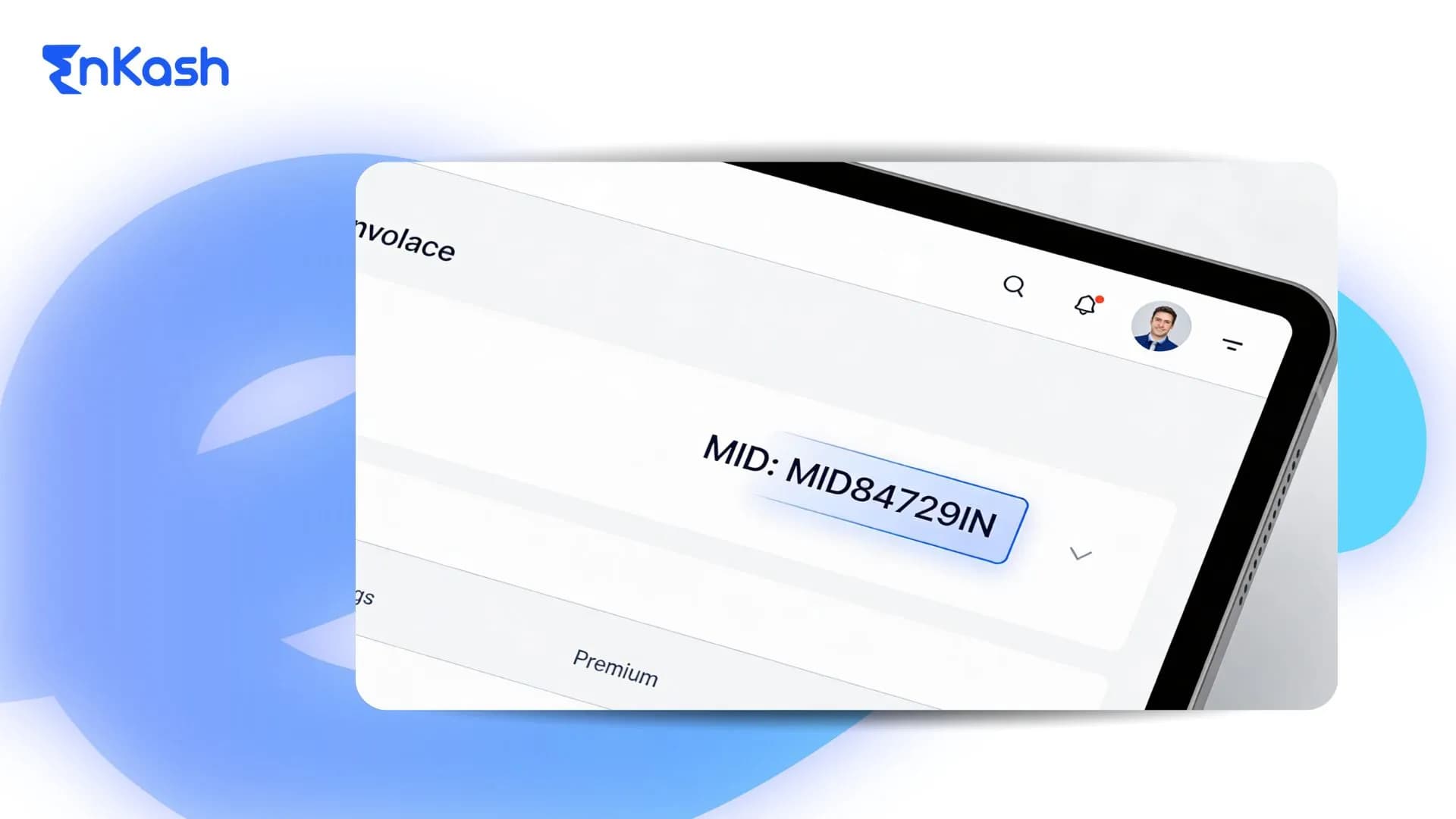
A Merchant ID, or MID, is a unique merchant-level identifier assigned to an approved business payment setup. It helps banks, payment gateways, processors, and aggregators link transactions, settlements, refunds, and disputes to the correct merchant account.
In payment processing, the MID number meaning refers to the unique merchant identification number associated with an approved business account. A UPI merchant VPA may follow a structure such as merchant identifier, aggregator identifier, and acquiring bank handle, depending on NPCI and acquiring bank specifications. The number helps the processing system recognize the merchant connected with a payment.
MID in banking acts as a merchant-level reference across payment records. Banks, processors, gateways, and settlement systems use it to connect transaction activity with the registered business profile. It can appear in settlement reviews, refund reviews, support investigations, and dispute trails.
This identifier is different from a bank account number, IFSC, PAN, GSTIN, UPI ID, order ID, payment ID, or API credential. Each detail has its own payment or compliance role. For example, when a customer pays ₹2,000 during online checkout, the gateway must attach the transaction to the correct approved merchant setup. The identifier helps the provider match the transaction to the correct account during processing, reporting, and later review.
A MID number does not follow a single, fixed public pattern across all banks, gateways, or processors. GSTIN and IFSC follow clear structures, but merchant identifiers depend on the acquiring bank, payment processor, aggregator arrangement, payment rail, and merchant setup.
A merchant ID may be:
- numeric
- alphanumeric
- a gateway account reference
- a sub-merchant ID
- an acquiring bank reference
- a terminal-linked merchant reference
For UPI, a merchant VPA may follow a different format based on the acquiring bank and aggregator setup. This should not be treated as the same as a card merchant ID, POS terminal ID, or gateway account ID.
A UPI merchant VPA may follow a format such as <merchant identifier>.<aggregator identifier>@<acquiring bank handle>, depending on the acquiring bank and applicable UPI specifications. This should not be treated as the same identifier used for card processing or gateway settlement records.. The safest method is to confirm the official merchant ID through the provider dashboard, onboarding email, settlement statement, or bank help channel.
Do Payment Aggregators Issue MID?
In India, payment aggregators operate under the RBI’s payment aggregator framework. For businesses, this makes merchant onboarding, KYC, business category mapping, settlement account verification, and risk monitoring important parts of the payment setup.”
RBI issued consolidated Payment Aggregator Directions in 2025, covering online, offline, and cross-border payment aggregation activities. This makes the India-specific regulatory context important for a blog on merchant onboarding and payment identifiers.
Payment aggregators can provide merchant-level identification, but the exact setup depends on the acquiring arrangement. A business working directly with an acquiring bank may receive a dedicated bank-level reference. A business onboarded through an aggregator may receive a gateway account ID, sub-merchant ID, or merchant ID connected with the aggregator’s payment structure.
This distinction becomes important during audits, refund checks, chargeback review, and payout queries. A finance team may need the acquiring bank reference. A gateway executive may need the dashboard reference. A terminal service team may need the device-level number.
Regulated payment aggregators are expected to verify merchants, perform due diligence, and maintain appropriate merchant-level records. Terminal-level identifiers may also be mapped where POS devices or offline acceptance points are involved. A business should ask a precise question during onboarding: which number is required for payouts, which one is required for service tickets, and which one identifies the outlet or terminal.
Why do Businesses Need a Merchant ID?
To Prove Which Business Owns the Payment
Many businesses use the same banks, gateways, and aggregator systems. A merchant ID identifies the approved business associated with a payment entry. This helps when multiple merchants, brands, or outlets use the same payment provider
To Support Settlement Tracking
Settlement tracking requires a clear link among transactions, merchant profiles, payout cycles, and bank credit. Finance teams may compare order IDs, payment IDs, payout dates, settlement UTRs, and provider reports before marking collections as received.
To Simplify Reconciliation and Audit Work
Reconciliation compares payment records across systems. The finance team may match gateway exports, invoices, bank credits, refund entries, chargeback deductions, and tax records. A merchant reference gives accounting teams a reliable trail during month-end review.
To Manage Refunds, Failed Payments, and Chargebacks
Refunds and disputes need traceability. A customer may report a duplicate debit. A cardholder may dispute a transaction. A checkout attempt may fail before reversal. The identifier helps the provider locate the correct merchant-side payment trail.
To Support Compliance and Risk Monitoring
Payment providers review the business category, transaction patterns, onboarding details, merchant name, website information, and the settlement bank account. MID helps in monitoring payment activity against the approved business profile during risk checks.
Example:For example, an Indian D2C brand may receive payments through UPI, cards, net banking, and payment links. During reconciliation, the finance team may need to match the order ID, payment ID, settlement UTR, refund status, and merchant reference before closing the transaction.
What is the Difference Between MID and TID?
In simple terms, MID identifies the business. TID identifies the payment terminal or acceptance point. A business may have one merchant-level reference and several terminal IDs if it uses multiple POS devices or counters.
| Point | MID | TID |
|---|
| Full form | Merchant Identification Number | Terminal Identification Number |
| What it identifies | Merchant account or approved payment setup | POS machine, terminal, device, or checkout point |
| Level | Business or merchant level | Device or acceptance-point level |
| Main use | Payout mapping, merchant reporting, refunds, disputes, and provider checks | Device tracking, terminal troubleshooting, counter-level reporting, and outlet checks |
| Example | A store chain may have one merchant-level account reference | Each POS machine at a separate counter may have a separate terminal number |
| Where it appears | Gateway dashboard, settlement report, merchant statement, onboarding email | POS receipt, terminal menu, device report, provider mapping sheet |
| Common confusion | Some providers display the account ID or sub-merchant ID beside the merchant reference | TID may appear on a receipt beside the merchant identifier |
| When to share it | Use it for account, payout, refund, or reconciliation issues | Use it when a specific POS device or payment point has an issue |
A business with several devices should keep a clean mapping record. This helps when one machine has payout delays, receipt mismatches, or transaction failures.
How to Find Your Merchant ID
Check the Payment Gateway Dashboard
Most providers display merchant details inside the logged-in dashboard. Look under Business Profile, Account Settings, Merchant Profile, Live Account, Settlement Settings, or Developer Settings. The label may appear as a merchant code, account ID, sub-merchant ID, or gateway reference. API keys and webhook secrets are different credentials.
Review Settlement and Payout Reports
Settlement reports are useful for verifying the official MID Number. Daily payout files, monthly statements, chargeback reports, refund reports, and CSV exports may include merchant-level references. Finance teams should archive onboarding emails and payout files for older disputes.
Check POS Receipts and Terminal Details
POS slips may display both merchant-level and terminal-level references. The merchant reference may appear near the business name, while the terminal number appears near device details. When the value is masked, ask the provider for registered mapping.
Ask for a MID-TID Mapping Sheet
Branches, counters, delivery points, and multiple POS machines need a mapping sheet. It should include merchant reference, terminal number, outlet name, store code, device location, provider name, and settlement account.
Confirm the Exact Type of ID
Before sharing details with an accountant, auditor, bank, or provider team, confirm whether the number is a direct bank merchant ID, gateway account ID, sub-MID, terminal number, or dashboard reference.
How to Get a Merchant ID for Your Business
Choose Between Bank and Payment Aggregator Route
A business can apply through an acquiring bank or onboard with a payment aggregator. Some larger companies may prefer a bank-led arrangement for direct commercials, custom settlement terms, or dedicated infrastructure. Smaller businesses, online sellers, clinics, education centers, subscription firms, and direct-to-consumer brands commonly start with aggregators.
Submit Business KYC and Verification Details
The provider verifies the business before enabling collections. Common inputs include PAN, GST certificate where applicable, business registration document, address proof, bank account proof, authorized signatory details, website or app details, and business model information. Online merchants may also need refund, cancellation, privacy, shipping, and contact policies.
The provider maps the business category during onboarding. This category influences risk review, access to payment modes, monitoring, and reporting. Depending on the provider and merchant approval, payment modes may include cards, UPI, net banking, wallets, payment links, EMI, QR, and POS collections. Settlement cycle, payout account, refund rules, and transaction limits should be reviewed before launch.
Complete Testing Before Live Use
Testing should cover successful payment, failed payment, refund, webhook response, payout entry, dashboard report, and bank credit. The finance team should review settlement files, while the technology team checks callbacks. Before launch, collect merchant reference, terminal details where relevant, UPI merchant handle, dashboard account ID, and provider ticket format.
Can Business Keep More Than One MID and Why?
A business can maintain more than one MID when its payment structure needs separation. This may happen across legal entities, brands, gateways, acquiring banks, outlet groups, or payment channels.
A company may keep separate identifiers for online checkout and offline POS collections. A group business may use different identifiers for separate entities. A retail chain may divide outlets by region or provider. When a business shifts to a new gateway, acquirer, or aggregator setup, it may receive a new merchant reference. Older transactions usually remain mapped to the previous identifier..
Multiple identifiers can improve reporting when each business line requires separate settlement reviews, refund tracking, or risk controls. They can also help finance teams review channel performance with fewer manual filters.
Poor mapping creates problems. If identifiers are not documented properly, teams may struggle with payout matching, refund tracking, tax review, and audit queries.
How to Keep MID Safe
Restrict Internal Access
A merchant ID should be visible only to teams that need it for payment operations. Finance, technology, reconciliation, and authorized service staff may need access. Dashboard roles should be limited by function. Open spreadsheets, public chat groups, and unsecured files are weak places for payment identifiers.
Separate MID from Login and API Credentials
A merchant identifier is different from a password, OTP, card number, CVV, API key, webhook secret, or bank login credential. It still connects with sensitive payment operations. Risk increases when it is shared with dashboard access, settlement details, or internal payout files.
Verify Support Requests
Fraudulent calls and emails may request identifiers, OTPs, dashboard passwords, API keys, or changes to settlement details. Share details only through official ticket portals, registered email IDs, verified managers, or logged-in provider dashboards.
Maintain Secure MID-TID Records
Businesses with several outlets or devices should maintain controlled MID Number records. Track terminal number, store name, provider, device location, status, and settlement account. Remove access when employees leave or change roles.
Before going live, businesses should document their merchant ID, gateway account ID, UPI ID, terminal IDs, settlement account, provider support contact, and refund escalation process. This helps finance, operations, and support teams resolve payout or dispute queries faster.
Conclusion
A merchant ID is the business payment identity used inside the processing system. It helps connect collections to the correct merchant setup during payouts, reconciliations, refunds, disputes, and provider communication.
This identifier is different from a terminal number, bank account, GSTIN, UPI ID, order ID, and API credential. Businesses using gateways, cards, POS devices, QR codes, payment links, and UPI flows should know where the identifier appears and how it is mapped.
A verified, documented merchant reference streamlines payment operations. It also protects finance teams from avoidable confusion during audits, support tickets, refund reviews, and settlement reviews.
FAQs
What does the full form mean in a payment gateway?MID full form is Merchant Identification Number. It identifies the approved business behind a payment transaction and helps the gateway, acquirer, or processor link collections, payouts, refunds, and disputes with the correct merchant account.
What does the MID number mean in banking?MID number in banking refers to the merchant-level identifier assigned to an approved payment setup. Banks and processors use it to connect payment activity, settlement files, refund cases, and chargeback records with the right business.
How does a merchant ID work in payment processing?A merchant ID works by linking each payment transaction with the approved merchant account behind the collection. It helps payment systems identify the business during authorization, settlement review, refund handling, reconciliation, and provider support.
Is the merchant ID different from the terminal ID?Merchant ID identifies the approved business or merchant account, while Terminal ID identifies a specific POS device, payment terminal, counter, or acceptance point. Both may appear together on receipts and provider reports.
What does terminal ID mean on a POS receipt?Terminal ID meaning on a POS receipt refers to the unique number assigned to the specific card machine, POS terminal, or payment device used for accepting that customer transaction at the counter.
Can one business have more than one MID Number?A business can have more than one MID Number when it uses multiple gateways, acquiring banks, outlets, brands, legal entities, or payment channels. Separate identifiers can make settlement tracking and reconciliation cleaner.
Do payment aggregators provide a merchant ID in India?Yes. Payment aggregators may provide a Merchant ID, sub-merchant ID, gateway account ID, or similar merchant reference after onboarding. The exact identifier depends on the provider, acquiring arrangement, business model, and payment setup.
Where can a business find its MID Number?A business can find its MID Number in the payment gateway dashboard, settlement report, onboarding email, payout file, POS receipt, terminal settings, or verified response from the bank, acquirer, or payment provider.
Does MID change after switching payment gateways?MID can change when a business moves to a new gateway, acquiring a bank, aggregator, or merchant setup. Older transactions should remain mapped with the previous identifier for reconciliation, refunds, disputes, and audit checks.
Should customers receive the merchant MID Number?Customers generally do not need the merchant MID. Businesses should avoid sharing merchant identifiers, dashboard details, API credentials, or settlement information with customers or unverified callers. It is mainly used by businesses, banks, gateways, processors, and support teams for payment tracking, settlement checks, refund review, and transaction verification through official channels.