What is UPI?
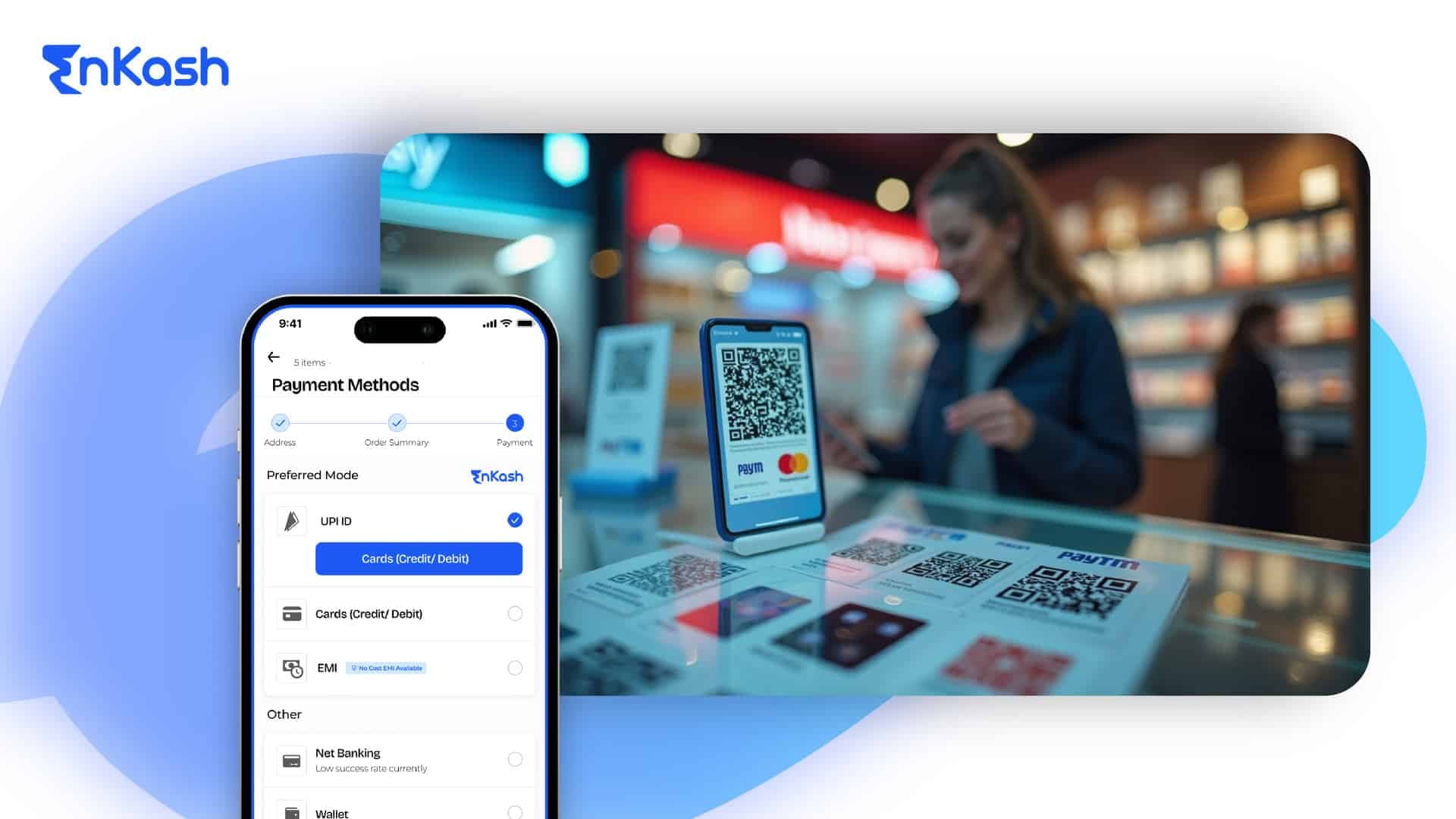
Unified Payments Interface (UPI) is India’s real-time bank-to-bank payment system for instant money transfers through mobile applications. It allows users to make UPI payments using a UPI ID, QR code, or mobile number, without entering account numbers or IFSC codes.
UPI supports person-to-person and person-to-merchant transactions and operates 24x7, including weekends and bank holidays. Payments are debited and credited directly between bank accounts in near real time, with instant confirmation in most cases.
The system is operated by the National Payments Corporation of India(NPCI) and regulated by the Reserve Bank of India, ensuring interoperability, security, and standardization across banks and UPI apps.
Transactions are executed using a Virtual Payment Address (VPA), commonly referred to as a UPI ID, which removes the need to share sensitive banking credentials.
How UPI Works
Unified Payments Interface works by connecting users, banks, and payment apps through a single real-time payment framework. While the user experience is simple, every UPI transaction follows a structured and secure backend process.
At a high level, a UPI payment involves three participants:- The payer’s UPI app and bank
- The recipient’s UPI app and bank
- NPCI’s UPI switch (the central routing system) validates and routes transactions
When a user initiates a UPI payment, the request is securely transmitted from the payer’s app to their bank. The bank verifies the request and forwards it to the central UPI switch operated by the National Payments Corporation of India. NPCI validates the transaction details and routes the request to the recipient’s bank for credit.
Once the recipient’s bank confirms the credit, the transaction is completed in real time, and both parties receive instant confirmation. This entire process typically takes only a few seconds, depending on bank and network conditions.
UPI does not store money in wallets; transactions are routed directly between linked bank accounts. Every transaction is executed directly between bank accounts, which removes settlement delays and reduces intermediary risk. Authentication is handled using a UPI PIN, ensuring that only the account holder can authorize payments.
UPI Transaction Flow
A UPI transaction follows a defined, real-time flow that ensures secure and instant movement of funds between bank accounts.
Step-by-step UPI Transaction Flow- Payment initiation
The payer initiates a UPI payment by entering the recipient’s UPI ID, scanning a QR code, or selecting a saved contact. The amount and optional remarks are added.
- Authentication using UPI PIN
The payer authorizes the transaction by entering the UPI PIN. This step ensures that only the account holder can approve the payment.
- Request routing
The payment request is sent from the payer’s UPI app to their bank and then routed through the UPI switch managed by the National Payments Corporation of India.
- Debit from the sender’s bank
The payer’s bank verifies the UPI PIN and checks the account balance. Once validated, the amount is debited from the sender’s bank account.
- Credit to the receiver’s bank
The transaction request is forwarded to the recipient’s bank, which credits the amount to the beneficiary’s account in real time.
- Confirmation and notification
Both the payer and the payee receive instant confirmation through the UPI app and SMS alerts from their respective banks.
Failed Transactions and Auto Reversal
If a UPI transaction fails after the amount is debited but before it is credited to the recipient, an automatic reversal process is triggered. This ensures the debited amount is credited back to the sender’s account, typically within 24 hours, without manual intervention.This structured flow enables UPI to process millions of transactions daily with speed, accuracy, and reliability.UPI Security and Data Protection
UPI is built on a multi-layered security framework designed to protect users, banks, and merchants from unauthorized access and fraud. All UPI transactions follow security standards prescribed by the Reserve Bank of India and implemented across banks and payment service providers by the National Payments Corporation of India.
Key Security Mechanisms in UPI
End-to-end encryptionAll transaction data is encrypted during transmission, ensuring that sensitive information such as account details and UPI IDs cannot be intercepted or misused.
Two-factor authentication (2FA)Every UPI transaction requires:
- Device binding to a registered mobile number
- Authorization through a UPI PIN
This ensures that only the account holder can approve payments.
Virtual identifiers (VPA/UPI ID) UPI uses a Virtual Payment Address (UPI ID) so users can pay without sharing bank account numbers. The bank and UPI system map this identifier securely to the underlying account.
Real-time fraud monitoringUPI transactions are continuously monitored for unusual behaviour such as high-frequency transactions, abnormal values, or unfamiliar locations. Suspicious activity can trigger temporary blocks or additional verification.
Instant alerts and transparencyUsers receive immediate notifications for every transaction through app alerts and SMS messages, allowing quick detection of unauthorized activity.
User Safety GuidelinesTo maintain security, users should:
- Never share their UPI PIN or OTP with anyone
- Avoid clicking unknown payment links or QR codes
- Use only official UPI apps from trusted sources
- Report suspicious activity immediately to their bank or UPI app
These security controls ensure that UPI remains one of the safest large-scale digital payment systems in operation.
Features of UPI
Unified Payments Interface offers a wide range of functional features that support everyday payments for individuals and businesses.
- Real-time payments
UPI transactions are processed instantly between bank accounts.
- Multiple payment modes
Payments can be made using a UPI ID, QR code, mobile number, or bank account details.
- Interoperability across banks and apps
Users can send and receive money across different banks and UPI apps without restrictions.
- 24x7 availability
UPI works round the clock, including weekends and bank holidays.
- Single app, multiple bank accounts
Users can link more than one bank account to a single UPI app and choose the account at the time of payment.
- Merchant payments without POS machines
Businesses can accept payments using UPI QR codes without investing in card terminals.
- Recurring payments and mandates
UPI supports automatic payments for subscriptions, utilities, and EMIs through e-mandates.
- Overdraft and credit line support
UPI allows linking of overdraft accounts and credit lines for eligible users.
- Request and collect payments
Users and merchants can send payment requests that the payer approves within the app.
Benefits of UPI
UPI delivers value to both end users and businesses by simplifying how money moves while keeping transactions secure and real time.
For Customers
- Instant bank-to-bank transfers
Money moves immediately between accounts without waiting for settlement cycles.
- Simple payment experience
Payments can be completed using a UPI ID or QR code, removing the need to remember banking details.
- Always available
UPI works 24x7, including weekends and holidays, making it suitable for everyday payments.
- No dependency on cash or cards
Users can make payments directly from their bank account using just a mobile phone.
- Secure transaction authorization
Every payment requires UPI PIN authentication, reducing the risk of unauthorized transactions.
- Wide usage coverage
UPI can be used for peer transfers, bill payments, online shopping, subscriptions, and in-store purchases.
For Businesses
- Low-cost digital payment acceptance
Merchants can accept payments using QR codes without investing in POS machines or card infrastructure.
- Instant settlement and improved cash flow
Payments are credited directly to the merchant’s bank account in real time.
- Reduced cash handling risks
Digital payments minimise losses related to theft, counting errors, and reconciliation issues.
- Scalable for businesses of all sizes
UPI works equally well for small retailers, online businesses, and large enterprises.
- Easy integration with online platforms
UPI can be offered as a payment option on websites and apps with minimal setup.
How UPI Is Different from IMPSUPI and IMPS are both instant payment systems in India, but they differ significantly in how users initiate and experience transactions.| Parameter | UPI | IMPS |
| Payment identifier | UPI ID, QR code, or mobile number | Bank account number and IFSC |
| User experience | App-based, simplified | Bank-led, relatively manual |
| Authentication | UPI PIN | Internet banking or MPIN |
| Interoperability | Works across all UPI apps and banks | Limited to bank interfaces |
| Typical use cases | Daily payments, merchant transactions, subscriptions | Account-to-account transfers |
| Adoption scale | Very high | Moderate |
IMPS focuses on direct bank transfers using traditional banking credentials. UPI builds on the IMPS infrastructure but abstracts the complexity by introducing virtual identifiers and a unified interface across banks and apps.
As a result, UPI is better suited for frequent, small-value, and merchant-facing transactions, while IMPS is commonly used for direct account transfers where UPI is not preferred.
What is UPI 2.0?
UPI 2.0 is an enhanced version of the Unified Payments Interface that introduced advanced capabilities to support more structured and secure transactions. It was launched to expand UPI beyond basic money transfers and enable business-grade payment use cases.
Key enhancements introduced with UPI 2.0 include:- Overdraft and credit account linking
Users can link overdraft accounts or approved credit lines to UPI, allowing payments even when the primary account balance is insufficient.
- Invoice verification before payment
Merchants can send invoices directly to the payer’s UPI app. Users can review payment details before authorising the transaction.
- Signed QR codes for merchants
Digitally signed QR codes ensure payments are made only to verified merchants, reducing the risk of tampered or fake QR codes.
- E-mandates for recurring payments
UPI 2.0 enables automated payments for subscriptions, EMIs, and utility bills through pre-approved mandates.
These upgrades strengthened UPI’s suitability for merchant payments, recurring transactions, and credit-linked use cases, while maintaining real-time settlement and security.
Conclusion
Unified Payments Interface has fundamentally changed how digital payments work in India. By enabling instant bank-to-bank transfers through a simple, app-based interface, UPI has removed the complexity traditionally associated with electronic payments.
Its real-time processing, interoperability across banks and apps, and strong security framework have made UPI suitable for everyday use by individuals as well as scalable adoption by businesses. From peer-to-peer transfers to merchant payments and recurring transactions, UPI supports a wide range of payment use cases without relying on wallets or delayed settlements.
With continued enhancements such as UPI 2.0 and evolving transaction capabilities, UPI remains central to India’s digital payments infrastructure. Its widespread adoption reflects a shift toward faster, more transparent, and more accessible financial transactions, reinforcing UPI’s role as the backbone of the country’s digital payment ecosystem.
FAQs
1. What is UPI?UPI is a real-time payment system that enables instant money transfers between bank accounts using mobile applications.
2. What is a UPI ID?A UPI ID is a unique virtual address used to identify a bank account for UPI transactions, such as name@bank.
3. What is VPA in UPI?VPA stands for Virtual Payment Address. It is the identifier used in UPI to send and receive money without sharing bank account details.
4. What is UPI full form in banking?UPI stands for Unified Payments Interface.
5. What is NPCI?NPCI is the organization that operates UPI and manages retail payment systems in India.
6. Who invented UPI?UPI was developed by the National Payments Corporation of India under the guidance of the Reserve Bank of India.
7. When was UPI launched?UPI was launched in 2016.
8. What is the UPI transaction limit?The standard daily UPI transaction limit is ₹1 lakh per user, with higher limits allowed for specific use cases such as IPO applications.
9. What is UPI Lite?UPI Lite is designed for small-value payments and helps reduce dependency on real-time bank connectivity for every transaction. Exact limits and availability can vary by bank and UPI app.
10. What is UPI 2.0?UPI 2.0 is an upgraded version of UPI that introduced features such as invoice verification, overdraft linking, e-mandates, and signed QR codes.
11. How to create a UPI ID?Download a UPI app, link your bank account using your registered mobile number, and set a UPI PIN to generate a UPI ID.
12. What is a UPI payment?A UPI payment is a real-time digital transaction executed directly between bank accounts using a UPI app.