

Enkash White logo
call  icon
hamburger menu icon
Enkash Blue logo
Close menu icon
bgImg

IFSC Codes List of IFSC Codes and MICR Codes of All Banks in India

OR

IFSC Codes of Top Indian Banks

Punjab National Bank


IFSC Code: PUNB0928800
MICR Code: N/A
State: Maharashtra
District: Mumbai
Branch: Back Office Mumbai Cosca
Address:
Pnb 7th, Tower-f Wing Cuffe Parade, Mumbai, 400005

State Bank of India


IFSC Code: SBIN0000691
MICR Code: 110002087
State: Delhi
District: New Delhi
Branch: New Delhi Main Branch
Address:
11, Sansad Marg, New Delhi - 110001

Bank of India


IFSC Code: BKID0006059
MICR Code: 110013075
State: Delhi
District: New Delhi
Branch: New Delhi Large Corporate
Address:
Pti Building, 4, Sansad Marg, New Delhi - 110001

Airtel Payments Bank


IFSC Code: AIRP0000001
MICR Code: N/A
State: Haryana
District: Gurgaon
Branch: Airtel Payments Bank Imps
Address:
Airtel Center, Plot No-16, Udyog Vihar, Phase-4, Gurgaon (Gurugram), Haryana

Axis Bank


IFSC Code: UTIB0001366
MICR Code: 110211101
State: Haryana
District: Gurgaon
Branch: Sector 57, Gurgaon
Address:
Ground Floor, Shop No. G-01, G-02, G-03, Bestech Central Square, Block G, Sushant Lok Phase 2, Sector 57, Gurgaon, Haryana, Pin 122101

Bank of Baroda


IFSC Code: BARB0GURGAO
MICR Code: 110012064
State: Haryana
District: Gurgaon
Branch: Gurgaon Main Branch
Address:
Gurgaon Branch, Delhi Alwar Road, Gurgaon, 122001

IFSC stands for Indian Financial System Code. It is an 11-character alphanumeric code of identify bank branches participating in NEFT, RTGS, and IMPS. Every bank branch has a unique IFSC code that helps the RBI ensure secure transactions.

How to Find the IFSC Code of Any Bank

    Looking for your bank’s IFSC code? You can easily find it using multiple sources.

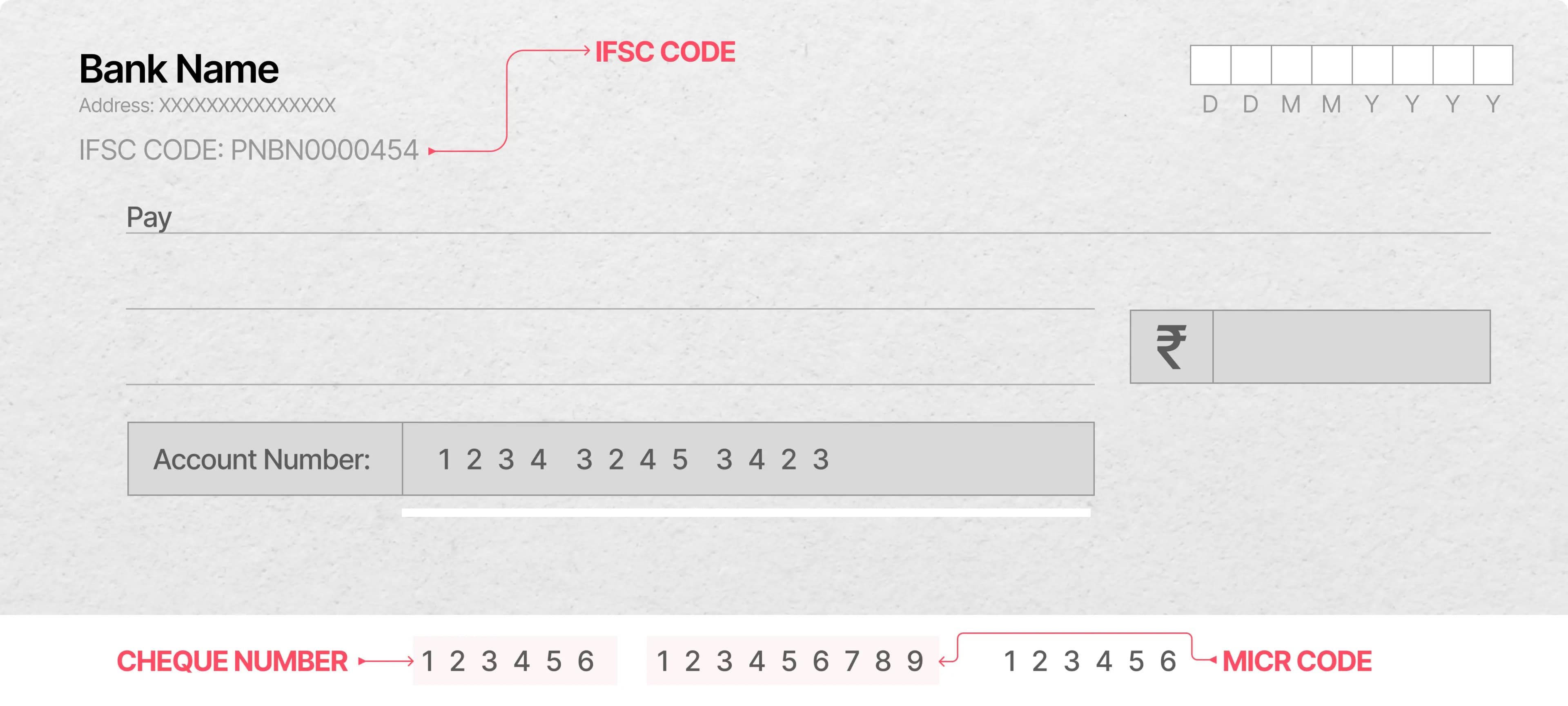
  • Cheque Book / Passbook: The IFSC code is printed near your account number and branch details, and you can find it on the Cheque Leaf.

  • Net Banking or Mobile App: Log in and check the Account Details.

  • RBI Official Directory: The Reserve Bank of India provides a verified list of IFSC codes for all banks and branches in India.

  • IFSC Code Finder Tool: Use our online IFSC Code Search to instantly get the correct IFSC and MICR code by entering your bank name, state, district, or branch

Locate the IFSC Code on the Cheque Leaf
Cheque Leaf
IFSC Code Format

    Every bank branch in India has its unique IFSC code, which is used for secure online transactions. The IFSC code is an 11-character alphanumeric code that follows a fixed pattern:

    AAAA0BBBBBB

  • AAAA – Represents the bank name (first four letters)

  • 0 The fifth character is always zero, reserved by the RBI

  • BBBBBB – Indicates the specific branch code

Example: SBIN0000454 — here, SBIN identifies State Bank of India, and 000454 represents the branch code.

Infographic showing ifsc
Electronic Funds Transfer in India using IFSC Code:

The IFSC code is used in three electronic fund transfer methods—NEFT, RTGS, and IMPS. Customers may simply move money across accounts with these kinds of electronic fund transfers.

Because fund transfers are only permitted if precise information, such as the payee's bank account number and IFSC code, is supplied, using electronic transfer systems reduces the chances of a transaction going wrong.

NEFT- NEFT stands for National Electronic Fund Transfer. It deals with moving money from one bank account to another. In India, this method of transferring money is widely used. In order to guarantee the safe transfer of funds between bank accounts, IFSC codes must be appropriately used. The beneficiary name, account number, and account type must be provided in addition to the IFSC code. NEFT transactions are processed in half-hourly batches throughout the day.

RTGS- The full form of RTGS is Real Time Gross Settlement. It is a well-liked method for transferring money quickly between banks without having to wait. Similar to NEFT, IFSC codes aid in accurately identifying the participating bank branches. High-value transactions often employ RTGS fund transfers, which are instantly cleared. The payee's name, the account number, the IFSC code, and the transaction amount are all important for the RTGS transaction.

IMPS- The most widely used is IMPS, which stands for Immediate Payment Service. Started in November 2010, it is a new alternative in India. Money may be moved immediately and across all major Indian banks using this service, which can be accessed online, through an ATM, or on a mobile device. This technique is known for being safe, quick, affordable, and unrestricted in terms of the maximum amount that may be moved. Banks typically allow ₹2 lakh, though each bank defines its own limit. An IFSC code is required to start an IMPS transfer.

What is MICR Code and How It Differs from IFSC

The MICR Code (Magnetic Ink Character Recognition Code) is a 9-digit numeric code printed on cheques to speed up and authenticate the processing of cheques. It uniquely identifies a bank branch, similar to the IFSC code, but serves a different purpose.

Structure of a MICR Code

Example MICR: 400002103

Cheque Leaf
Find a bank check's MICR code:

This appears beside the check number. A magnetic character ink reader is the only device that can read the MICR code, which is presented in a different font and ink than the check number.

Benefits of MICR Code

The use of unique magnetic ink and character recognition(MICR) technology assists banks in processing checks swiftly and safely. This enables automated cheque clearing, reducing manual intervention and errors.

  • Faster Cheque Clearance: Enables quick and automated cheque processing.

  • High Accuracy: Reduces manual errors during cheque verification.

  • Enhanced Security: Helps identify fake or tampered cheques.

  • Nationwide Standardization: Ensures uniform banking operations across all branches.

  • Reliable Fund Settlement: Speeds up interbank cheque transfers and payments.

How to Transfer Money Using the IFSC Code of a Bank Account

You can easily transfer money online using the IFSC (Indian Financial System Code) through NEFT, RTGS, or IMPS.

Steps to Transfer Money Using IFSC Code:
  1. Log in to your internet or mobile banking account.

  2. Add a beneficiary by submitting their name, account number, and the IFSC code.

  3. Choose the transfer mode – NEFT, RTGS, or IMPS.

  4. Enter the amount and confirm the transaction.

  5. The money is securely transferred to the recipient's account based on the selected mode.

Top Bank IFSC, MICR & SWIFT Codes List
Bank NameIFSC CodeMICR CodeSWIFT Code
Airtel Payments Bank
AIRP0000001NANA
Axis Bank
UTIB0000400560211061AXISINBB194
Canara Bank
CNRB0005479560015123CNRBINBBLFD
Citibank
CITI0000003560037002CITIINBI
HDFC Bank
HDFC0000128560240065HDFCINBBGBH
HSBC Bank
HSBC0400002NANA
IDBI Bank
IBKL0NEFT01560259006IBKLINBB008
IndusInd Bank
INDB0000018560234021INDBINBBBGM
Kotak Mahindra Bank
KKBK0000261400485002KKBKINBB
Punjab National Bank
PUNB0112000560024029PUNBINBBBCY
State Bank of India
SBIN00CARDS560002021SBININBB112
Yes Bank
YESB0CMSNOC561532028YESBINBB
How to Register the Beneficiary Account?

You must register the beneficiary's account in your online or mobile banking site before making any online transaction. This guarantees that your money is safely sent to the right person and the transaction can be tapped easily.

  1. Log in to your internet or mobile banking account.

  2. Go to the 'Funds Transfer' or 'Manage Beneficiary' section.

  3. Click on 'Add New Beneficiary'.

  4. Enter the beneficiary's name, account number, and IFSC code.

  5. Verify details carefully and submit the request.

  6. Your bank sends an OTP for confirmation.

  7. Once verified, the beneficiary is activated (usually within 30 minutes to 4 hours, depending on the bank).

Note: After activation, you can securely transfer money using NEFT, RTGS, or IMPS.

Difference Between MICR and IFSC Code
MICR CodeIFSC Code
Magnetic Ink Character Recognition CodeIndian Financial System Code
9-digit numeric code11-character alphanumeric code
Used for cheque clearingUsed for online fund transfers (NEFT, RTGS, IMPS)
Use for Offline transactionsUse for Online transactions
Cheques and bank documentsCheques, passbooks, and online banking portals

Frequently Asked Questions (FAQs)

Have more questions?