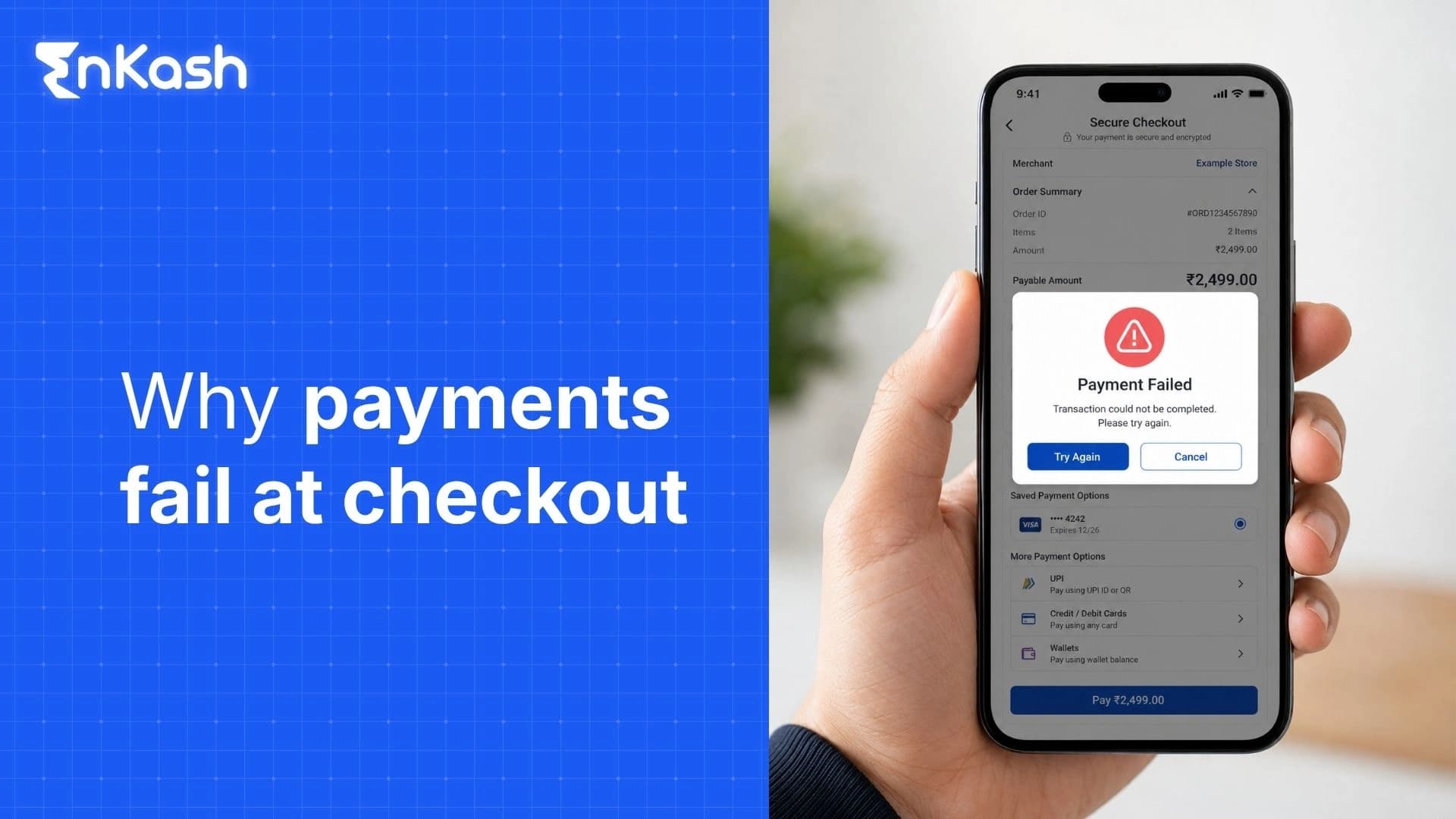
Payments can fail when any step in the payment chain breaks, from checkout and authentication to issuer approval, routing and transaction confirmation. A card entry, a bank authorisation, a fraud check, a network route, an OTP screen, a gateway callback: each one can stop the transaction, and each produces a different failure for a different reason. To the customer, all of these look identical: one red message, one abandoned cart. To the business, they aren't the same problem at all, and treating them as one is why most merchants leave recoverable revenue on the table. This blog covers every common failure mode in the Indian checkout context (UPI, cards, netbanking, EMI), what each means, and how to push more transactions through.
What Happens When a Customer Clicks "Pay"
A payment request may complete within seconds, but the exact time depends on the payment method, authentication flow, bank response, and customer action.:
- Your checkout page sends the payment details to your payment gateway.
- The gateway routes the request through an acquiring bank and the relevant card network or UPI rail (Visa, Mastercard, RuPay, NPCI).
- The issuing bank runs its checks: valid credentials, available balance, risk score, transaction limits.
- Where required, the customer completes authentication, such as an issuer-led card authentication flow or UPI PIN approval in the UPI app.
- The issuer returns an approval or a decline code, which travels back to your success or failure page.
A payment can fail at multiple points in this flow, including before authentication, during issuer processing or while the final transaction status is being returned to the merchant.
Common Reasons Payments Fail at Checkout
Incorrect, Expired or Invalid Payment Details
The most basic cause: a mistyped card number, a wrong CVV, an expired card, or a UPI ID that no longer exists. The gateway or issuer rejects the request before any money moves. These are usually the customer's to fix, but inline validation catches most of them before submission.
Insufficient Funds and Transaction Limits
The card or account is valid, but the balance can't cover the purchase, or the amount crosses a per-transaction or daily limit. UPI caps most person-to-merchant payments at ₹1 lakh per transaction.NPCI allows higher limits for certain verified merchant categories, with some transactions permitted up to ₹2 lakh or ₹5 lakh. Banks may set lower limits within NPCI's ceilings, and card issuers apply their own online and international limits. The payment is declined even though nothing is technically "wrong."
OTP, 3DS or UPI Authentication Failure
The transaction reaches authentication and stalls. The customer doesn't enter the OTP in time, closes the bank page, mistypes the UPI PIN, or the 3D Secure page fails to load. Authentication can be a major drop-off point in card checkout, particularly when OTP delivery, redirects or issuer authentication pages are slow or interrupted.
Bank or Issuer Declines
The issuing bank refuses the transaction for a reason on its side: a risk flag, a temporary hold, a card marked for suspected misuse, or an internal policy block. The customer often has no idea why, because the bank rarely explains it in plain language.
Bank, Network or Payment Infrastructure Downtime
The customer's bank, an acquiring bank, or a payment rail is down or degraded. This is common in India, where issuer and UPI outages happen regularly, and it fails through no fault of the customer or merchant. If your checkout can only reach that bank through one route, those transactions are lost until service recovers.
Customer Connectivity and Checkout Issues
A dropped mobile connection, a browser that times out during the redirect, or an app that loses the session mid-payment. The request never completes its round trip. Mobile-heavy Indian traffic makes this more frequent than desktop-era playbooks assume.
Payment Gateway Integration or Configuration Errors
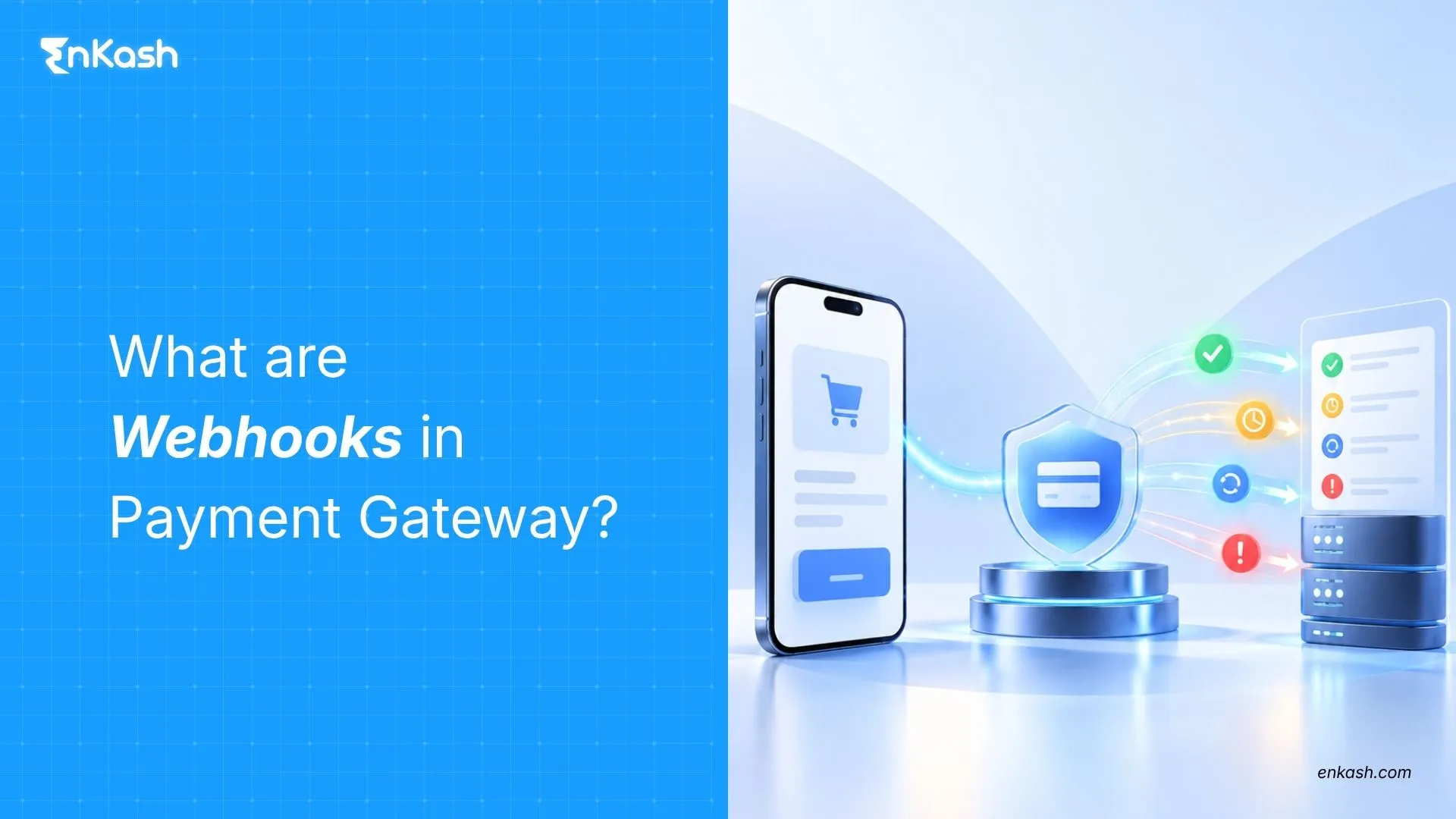
A misconfigured API call, a broken webhook, a wrong currency or amount format, an expired key, or a callback URL that never fires. The failure is on the merchant's side, and it can silently kill a whole payment method or traffic segment with no obvious signal.
Unsupported Payment Methods or Issuers
The customer may want to use a payment method the checkout does not offer, or a supported method may have limited issuer, network, or merchant-category coverage. Missing UPI, missing popular netbanking options, or weak RuPay and EMI coverage sends ready-to-buy customers away at the last step.
Not Every Failed Payment is the Same
Four distinct things get lumped together as "payment failed." Separating them is the first real step toward fixing them.
Technical Failure. The transaction broke before the issuer could decide: a timeout, a gateway error, a downed network, a dropped connection. Nobody said no; the system just didn't complete. Many technical failures are retryable, but merchants should first confirm the transaction status to avoid duplicate payments.
Payment Decline:The issuer received the request and refused it, a deliberate "no" from the bank for a stated reason.
Soft Decline: A temporary refusal that can succeed if tried again: insufficient funds right now, a transient issuer error, an expired authentication window. Retry later, and it may go through.
Hard Decline: A permanent refusal: a closed account, a card reported lost or stolen, a "do not honour." Retrying the same details won't work and can flag the account.
Retry only recoverable failures after checking transaction status, avoid repeated retries on permanent declines, and use alternate routes or payment methods where the failure source allows it. Doing the opposite is how good transactions get thrown away.
What is the Difference Between Failed, Declined, Pending and Reversed payments?
Then give a compact table:
| Status | What it means | Should you retry? |
|---|
| Failed | Payment did not complete | Depends on final status and reason |
| Declined | Issuer/processor refused it | Depends on decline type/advice |
| Pending | Final outcome is not confirmed | Do not blindly retry |
| Reversed | Debit was returned after an incomplete transaction | Usually no further action |
| Refunded | A successful payment was later returned | Different from a failure |
How Failed Payments Affect Businesses
Every failed checkout is a customer who wanted to buy and couldn't. The direct hit is lost revenue on that order; the second is the abandoned cart that never returns, because many customers don't retry after a failure.
Beyond the single sale, failures raise support volume ("money was deducted but the order didn't go through"), erode trust, and drag down the lifetime value of customers who quietly stop returning. For subscription businesses, failed renewals can contribute materially to involuntary churn and are often more recoverable than voluntary cancellations. The cost is rarely one number on a dashboard, which is why it goes unmanaged.
How To Find Out Why Payments Are Failing
You can't fix what you can't see. A failure looks like one event to the customer, but every failed transaction carries the data to diagnose it. Segment your failures by:
- Payment method: is UPI failing more than cards, or one method collapsing?
- Issuing bank: are failures concentrated at one or two banks (a sign of issuer downtime)?
- Error or decline code: the raw reason returned, the single most useful field and the most ignored.
- Transaction stage: did it die at authentication, authorisation, or the callback?
- Device and channel: mobile web, app, or desktop; failures often cluster on one.
- Gateway or acquirer route: is one route underperforming while another succeeds?
- Time and value: spikes at certain hours or above certain amounts point to limits or outages.
How to Reduce Payment Failures at Checkout
Use Intelligent Routing and Failover
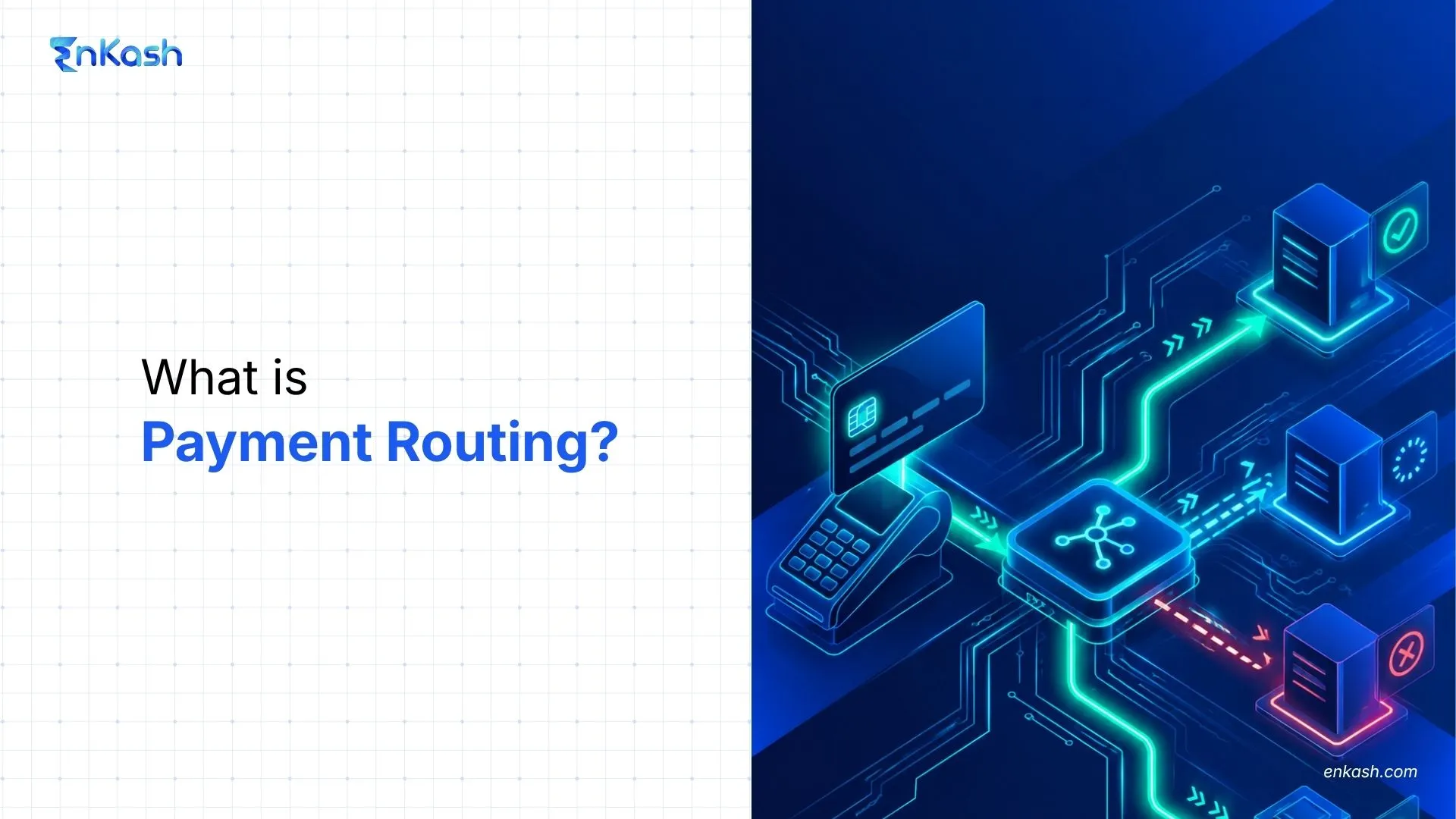
Don't send every transaction down one path. Use routing logic to select healthy acquiring or processing routes based on payment method, issuer, network, and recent performance. When one acquiring or processing route is degraded, traffic may be moved to another available route. Routing cannot, however, bypass every issuer outage or a system-wide payment-rail disruption. This can recover some failures caused by an underperforming acquirer or processing route, although it cannot bypass every issuer or network outage.
Retry Recoverable Failures Intelligently
Before retrying a timeout or ambiguous failure, check the latest transaction status to avoid duplicate payments. Retry only failures classified as recoverable, and follow issuer, network or gateway advice on timing and retry limits. For recurring payments, retry on a schedule tuned to when balances are more likely to be topped up. Blind retries get flagged; smart retries recover revenue.
Improve Authentication Success
Reduce drop-off at the OTP and UPI-PIN step. Support the authentication flows customers actually use, keep the redirect fast and mobile-friendly, and make the bank page load reliably. Fewer stalls means more payments completed at a stage where customer action and issuer infrastructure both affect completion.
A slow checkout fails before the bank is ever involved. Keep the page fast, minimise redirects, validate inputs inline, and hold the session through the round trip on flaky mobile networks.
Tune Fraud Rules to Reduce False Declines
Tighten fraud logic so it blocks genuine fraud without killing good orders. Review your false-decline rate the way you review your fraud rate; a filter that stops fraud but rejects your best customers isn't doing its job. Monitor it continuously, not once.
Maintain Reliable Payment Gateway Integrations
Keep webhooks firing, keys current, amount and currency formats correct, and callbacks reliable, and watch for silent method-level failures. A stable integration with a gateway that supports UPI, cards, netbanking and EMI (with human support when something breaks) prevents the failures you never see coming.
Conclusion
Most payment failures aren't random and aren't the customer's fault. They fall into a handful of known categories: technical breaks, soft and hard declines, downtime, authentication drop-off, false fraud blocks, and integration bugs. Once you can tell them apart, most are addressable through routing, retries, better authentication, and a gateway built for how India actually pays. The merchants who win at checkout aren't the ones with zero failures; they're the ones who recover the failures worth recovering.
Frequently asked questions
I tried to make a payment and it failed. What do I do?
Check whether money was actually deducted or just shown as pending. If nothing was debited, you can try again. If money was debited on a failed payment, don't pay again immediately; wait for the auto-reversal (below) and keep the transaction reference or screenshot.
My payment failed but money was deducted. Will I get it back?
If your account was debited but the payment did not complete, first check the transaction status before paying again. Failed transactions are generally reversed automatically, but the applicable timeline depends on the payment type and failure scenario. Under RBI's failed-transaction framework, UPI fund-transfer failures may require reversal by T+1 calendar day, while certain failed UPI merchant payments and card-not-present transactions have a T+5 calendar-day outer limit. Compensation may apply if the prescribed turnaround time is exceeded. Under RBI's turnaround-time rules you may be owed compensation if the reversal is delayed.
How long does it take to get a refund for a failed payment?
UPI reversals usually land within 24 hours; card and netbanking reversals typically take 5 to 7 working days. If it hasn't come back by then, raise it with your bank using the transaction reference or UTR number.
Why does my payment fail even though I have enough balance?
Usually a per-transaction or daily limit, a bank risk flag, a failed OTP or UPI PIN, or temporary bank downtime, not the balance. A false fraud check can also block a payment on a fully funded account.
My debit card isn't working for online payments. Why?
Many Indian banks keep online or e-commerce use switched off by default. Open your bank app, go to card settings, enable online (or international) use, and check your online spending limit. An expired card, wrong CVV, or failed OTP will also stop it.
My UPI payment failed. Why does that happen?
Usually a weak connection during approval, an incorrect UPI PIN, a timed-out payment request, bank-side technical issues, connectivity problems, or a transaction that exceeds the applicable limit. These are mostly temporary; any debited money comes back and a retry often succeeds.
It says payment successful on my phone but the order didn't go through. Will I be charged?
If your bank or UPI app shows the payment as successful but the order is missing, do not assume the payment will be reversed. The merchant may have received the money even if the website or app missed the final confirmation. Keep the transaction reference, check the merchant's payment status, and contact the merchant before making another payment
Can I just try paying again after a payment fails?
If no money was deducted, yes. If it was, wait for the reversal first or you risk paying twice. For subscription payments, a soft decline (a temporary low balance) is worth retrying; a hard decline (closed or blocked card) is not.
What's the difference between a failed and a declined payment?
A failed payment broke before the bank could decide (a timeout, network drop, or technical fault). A declined payment reached the bank and was deliberately refused. Failures are usually worth retrying; whether a decline is depends on if it's temporary (soft) or permanent (hard).
Can payment gateway or bank downtime cause failures?
Yes. If the gateway, an acquiring bank, or a rail like UPI is down, payments fail regardless of the customer or merchant. A gateway with multi-route failover keeps payments flowing by shifting traffic to a healthy route when one goes down.