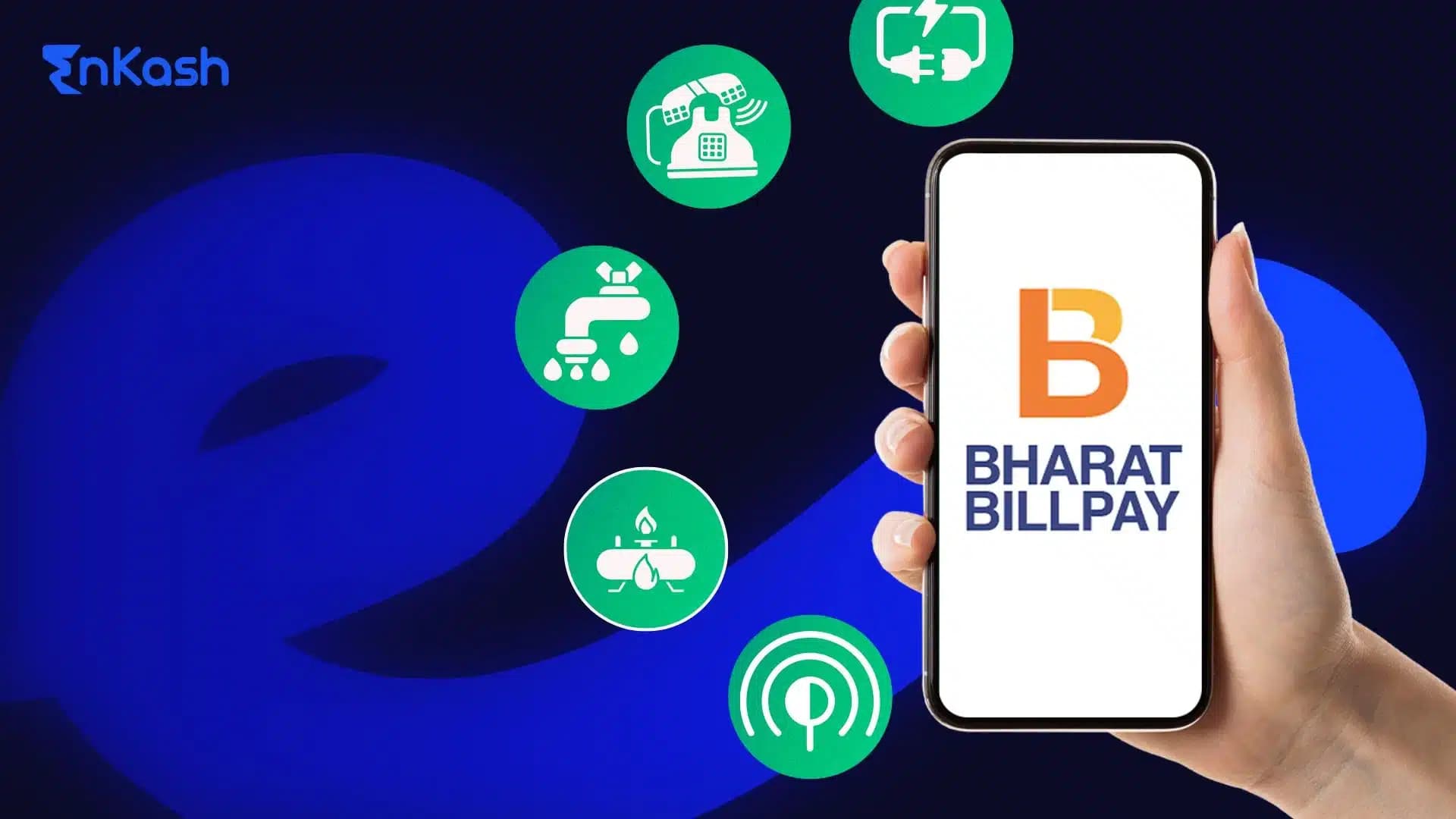
What is BBPS?
The full form of BBPS is Bharat Bill Payment System.
It provides a common framework through which customers can find supported billers, fetch bill details, make payments and receive confirmation without depending on a separate payment arrangement with every biller.
Under RBI's 2024 BBPS Directions, a bill can include a notice for a recurring or non-recurring payment. It can also include a notice or advice for the recharge of a prepaid service. This means BBPS is broader than a platform for monthly electricity or mobile bills.
Depending on the billers available on a particular channel, it can support categories ranging from utility bills and telecom to credit-card payments, loan repayments, municipal payments, education fees and other services.
Is BBPS the Same as Bharat Connect?
BBPS and Bharat Connect refer to the same broader bill-payment ecosystem, but the terms are used differently.
BBPS is the regulated Bharat Bill Payment System. Bharat Connect is the current brand used across the ecosystem and its customer-facing experience.
That is why you may still find “BBPS” in RBI regulations, banking documentation and older articles while seeing the Bharat Connect identity on newer payment interfaces.
How Does BBPS Work?
BBPS connects the customer side and the biller side through a regulated network.
The current framework has three important layers.
1. NPCI Bharat BillPay Limited as the BBPCU
NPCI Bharat BillPay Limited, or NBBL, is the authorised Bharat Bill Pay Central Unit.
The BBPCU operates BBPS, sets operational, technical and business standards, and undertakes clearing and settlement functions for transactions routed through the system.
2. Customer Operating Unit or COU
A Customer Operating Unit (COU) provides customers with a physical or digital interface for paying bills.
This interface may be provided directly or through an agent institution.
For example, when you pay a supported bill through your bank's mobile app or another BBPS-enabled payment interface, the customer-facing participant forms part of this side of the ecosystem.
3. Biller Operating Unit or BOU
A Biller Operating Unit (BOU) connects billers to BBPS.
A BOU can onboard a biller directly or through a biller aggregator.
Customer → COU → NBBL/BBPCU → BOU → Biller
This structure allows customers and billers using different participating institutions to transact through a common system.
Step-by-Step BBPS Transaction Process
Step 1: Choose a BBPS or Bharat Connect-Enabled Channel
You begin through a supported bank app, payment app, website, branch or physical agent.
Step 2: Select the Bill Category and Biller
Choose the relevant category, such as electricity, broadband, credit card or loan repayment, and select your biller.
Step 3: Enter the Required Customer Details
Depending on the biller, you may need to enter your consumer number, account number, registered mobile number or another identifier.
Step 4: Fetch the Bill
For transactions facilitated through BBPS, the bill is fetched before payment is initiated.
For prepaid services, the platform validates the customer's relationship with the biller.
Step 5: Verify the Details
Check the biller's name, amount, due date and other available information before making the payment.
Step 6: Select a Payment Mode
Available modes can include UPI, internet banking, debit or credit cards, prepaid payment instruments or cash at supported physical locations. The exact options depend on the channel you are using.
Step 7: Complete the Payment
Authenticate the transaction using the process required by your chosen payment mode.
Step 8: Receive Confirmation
After a successful transaction, you receive payment confirmation and a reference that can be used for tracking or raising a complaint if required.
What Bill Categories Are Covered Under BBPS?
Bharat Connect supports a broad range of bill-payment categories. Availability can vary depending on the biller and the bank, app or payment channel you use.
Common categories include:
Utility Bills
These can include:
- Electricity
- Water
- Piped gas
- LPG-related payments
Supported categories can include:
- Mobile postpaid
- Mobile prepaid
- Broadband
- Landline
- DTH
- Cable TV
Financial Payments
Depending on the participating biller, BBPS can support categories such as:
- Loan repayments
- Credit-card bill payments
- Insurance premiums
- Recurring deposits
- National Pension System payments
- Supported investment-related payments
Education
Customers may be able to pay fees to schools, colleges and other participating educational institutions.
Municipal and Government Services
Supported services can include:
- Municipal taxes
- Municipal services
- eChallan payments
- Other government-related bills available through participating billers
Transport
Categories can include:
- FASTag recharge
- NCMC recharge
Housing and Rent
Supported billers may accept:
- Housing-society payments
- Maintenance charges
- Rent payments
Other Categories
The network also covers categories such as:
- Subscriptions
- Hospitals and pathology services
- Clubs and associations
- Donations
The list of supported categories and billers can change, so you should check the options available on your chosen Bharat Connect-enabled channel.
Which Payment Modes Does BBPS Support?
BBPS is a bill-payment system, not a single payment method.
RBI's framework allows bill payments through multiple payment modes, including:
- UPI
- Internet banking
- Cards
- Cash
- Prepaid payment instruments
This is an important distinction because the bill-payment network and the payment rail can be different.
For example, you may use UPI to complete a bill payment being processed through BBPS.
BBPS vs UPI: What Is the Difference?
BBPS and UPI often work together, but they perform different functions.
| BBPS | UPI |
|---|
| A bill-payment and collection ecosystem | A real-time payment system |
| Connects customers, billers, COUs and BOUs | Moves money between participating bank accounts and payment endpoints |
| Supports bill presentment and bill fetching | Primarily handles payment transfer |
| Can support several payment modes | Is itself a payment mode or rail |
| Used for supported bill categories | Used for P2P and merchant payments, among other use cases |
| UPI can be used to pay a BBPS bill | A UPI transaction does not automatically make it a BBPS transaction |
Think of it this way: BBPS helps organise and process the bill-payment flow, while UPI can be one of the ways you pay that bill.
What Are the Benefits of BBPS?
Benefits for Customers
One Network for Multiple Bills
Customers can access multiple supported bill categories through participating banks, apps and physical outlets.
Multiple Ways to Pay
Customers are not restricted to a single payment method. Available options may include UPI, internet banking, cards, PPIs and cash.
Bill Verification Before Payment
For BBPS transactions, bill details are fetched before payment initiation. This allows users to review the available information before paying.
Payment Confirmation
A successful transaction generates confirmation and a reference that can be retained for future tracking.
Complaint Framework
BBPS has defined roles for participants in handling transaction-related complaints and failed payments.
Benefits for Businesses and Billers
Wider Collection Reach
A biller connected through the BBPS ecosystem can make its bills accessible through participating customer-facing channels rather than relying only on its own collection interface.
Interoperability
The common network can reduce the need to build and maintain separate bilateral payment arrangements with multiple customer-facing platforms.
Standardised Payment Information
A common transaction framework and reference information can make payment tracking and reconciliation easier.
Multiple Collection Channels
Customers can pay through supported digital or physical channels, helping billers serve different payment preferences.
Defined Operating Framework
Participants operate within RBI's regulatory framework and NBBL's applicable operational and technical standards.
How Are BBPS Complaints, Failed Transactions and Refunds Handled?
If a BBPS payment fails, is debited without successful confirmation or is not properly reflected against the bill, start by raising the issue through the channel where you made the payment.
This can be:
- Your bank or payment app
- The relevant BBPS or Bharat Connect section of the platform
- The agent outlet used for an assisted transaction
Keep your BBPS transaction/reference number and payment receipt. These details help identify the transaction.
Under RBI's BBPS Directions, COUs and BOUs must ensure failed transactions are handled according to the applicable RBI rules on turnaround time and customer compensation for failed transactions.
There is no single turnaround time that applies to every BBPS complaint. The applicable timeline can depend on the payment method and the type of transaction failure.
For general information about digital payment products and the appropriate institution to contact, DigiSaathi provides a 24x7 information service.
As of June 2026, DigiSaathi can be reached at:
- 14431
- 1800 891 3333
- WhatsApp: +91 892 891 3333
For a specific transaction dispute, however, the bank, payment app, COU or other payment channel through which the transaction was initiated should generally be your first point of contact.
Is There a Separate BBPS Licence?
Under the Reserve Bank of India (Bharat Bill Payment System) Directions, 2024, banks and non-bank Payment Aggregators that intend to operate as BBPOUs do not require a separate BBPOU authorisation.
They must intimate the Department of Payment and Settlement Systems at RBI's Central Office before commencing BBPOU operations.
The framework allows:
to participate as Operating Units subject to the applicable regulatory requirements.
A BBPOU can function as a Biller Operating Unit, Customer Operating Unit or both.
Other participants, such as Agent Institutions and Technology Service Providers, have different roles and onboarding or certification requirements within the ecosystem.
Businesses evaluating BBPS participation should therefore identify the role they intend to perform before considering the applicable regulatory or NBBL requirements.
How EnKash Helps Businesses Manage Bill Payments
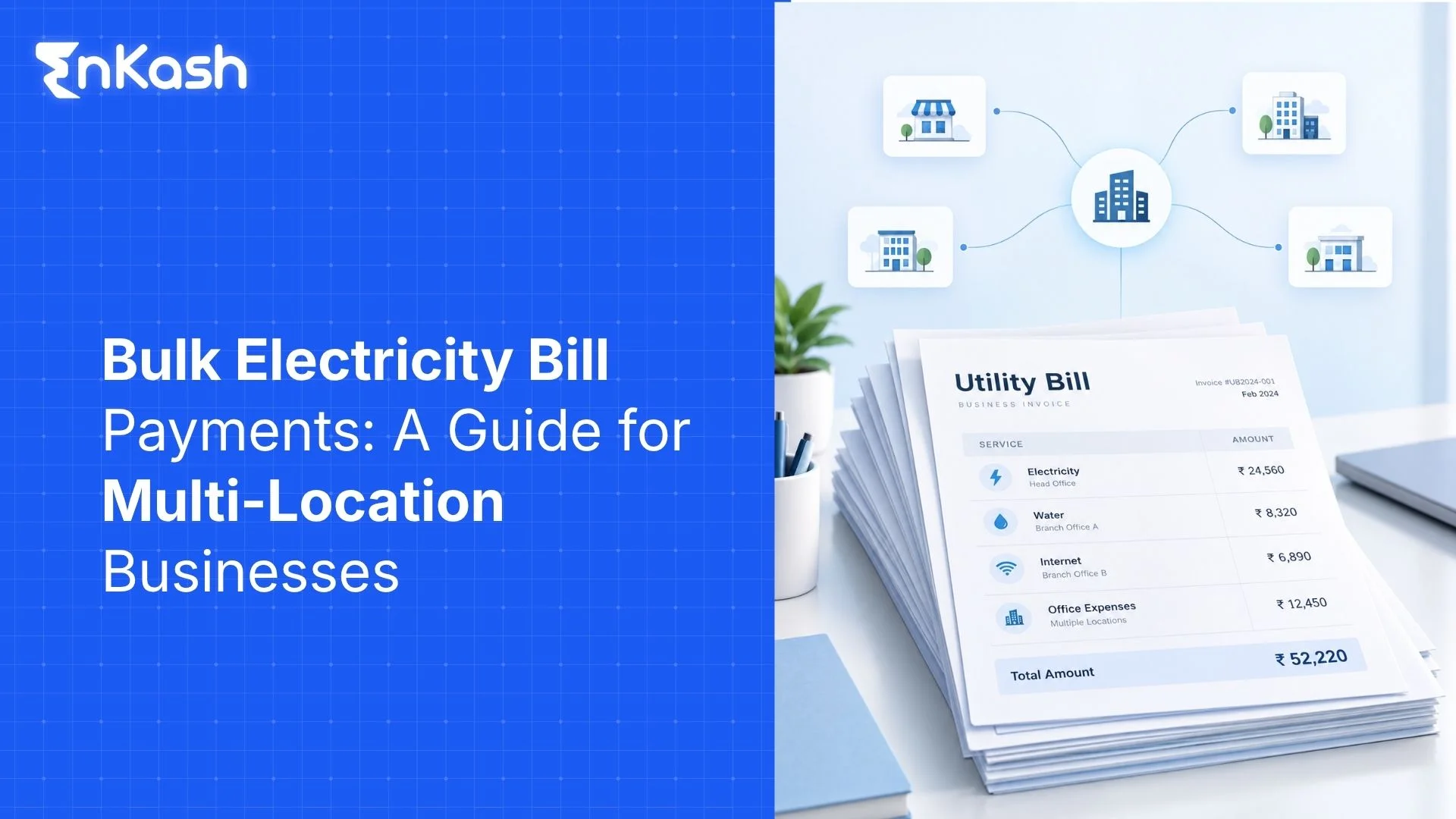
For a consumer, paying one electricity or broadband bill is simple. For a business managing dozens or hundreds of locations, the problem is different.
Finance teams may need to track different billers, due dates, branches, approval levels, payment records and receipts every month. Managing these through separate portals and spreadsheets adds manual work.
EnKash Business Utility Bill Payment helps businesses centralise supported bill-payment workflows through a single system.
Automatic Bill Fetching
For supported billers, bill information can be fetched without teams manually downloading and uploading every bill.
Central View Across Locations
Finance teams can track bills, payment status, due dates and records across branches from one place.
Maker-Checker Approval Workflows
Bills can move through defined approval levels before payment, helping businesses maintain internal control over outgoing payments.
Scheduled Payments
Teams can plan payments around due dates instead of manually tracking each bill separately.
Role-Based Access
Different permissions can be assigned to makers, checkers and administrators based on the organisation's process.
Payment Records and Reconciliation
Central payment and billing records can make it easier to match transactions with bills and reduce manual reconciliation work.
As transaction volumes increase, structured payment operations can also help businesses manage approvals, payment records, reconciliation and reporting without relying on disconnected processes.
Analytics
Businesses can analyse payment and consumption information across locations to identify trends, penalties and areas of unusually high spend.
Feature and biller availability may vary based on account configuration and supported services.
Conclusion
BBPS has developed from a utility-bill network into a broader interoperable bill-payment infrastructure supporting recurring payments, non-recurring payments and prepaid services.
The current framework connects customers and billers through COUs and BOUs, with NPCI Bharat BillPay Limited operating the central BBPCU. Customers get access to supported bills through multiple channels and payment modes, while businesses can benefit from wider collection access and a more standardised payment process.
For businesses handling bills across multiple locations, the larger opportunity is operational. Bringing bill fetching, approvals, payment records and reconciliation into one workflow can reduce the manual effort involved in managing bills month after month.
Frequently Asked Questions
1. What is BBPS?
BBPS stands for Bharat Bill Payment System. It is an interoperable bill-payment platform regulated by RBI. NPCI Bharat BillPay Limited (NBBL) is the authorised BBPCU that operates the central BBPS infrastructure.
2. What is Bharat Connect?
Bharat Connect is the current brand used for the BBPS ecosystem and its customer-facing bill-payment experience. BBPS continues to be the term used in RBI's regulatory framework.
3. What is a BBPS payment?
A BBPS payment is a bill transaction processed through the Bharat Bill Payment System. The bill is fetched or the required customer-biller relationship is validated before payment, and successful transactions provide confirmation and transaction reference information.
4. What is BBPS in banking?
In banking, BBPS is the bill-payment facility through which participating banks can allow customers to access and pay supported bills through mobile banking, internet banking or other enabled channels.
5. What is a BBPS transaction reference number?
It is the reference associated with a BBPS transaction. You should keep it with your payment receipt because it can be used to identify or track the transaction when raising a complaint.
6. Is BBPS the same as UPI?
No. BBPS is a bill-payment ecosystem, while UPI is a real-time payment system and payment mode. UPI can be used as one of the payment methods for a BBPS transaction.
7. Can businesses use BBPS?
Yes. Businesses can use the BBPS ecosystem for supported bill-payment or collection use cases depending on their role and the available billers, channels and integrations.
8. How can a customer raise a BBPS complaint?
Raise the complaint through the bank, payment app or agent used for the original transaction. Keep the transaction reference number and receipt. Failed-transaction timelines depend on the applicable RBI turnaround-time rules and the payment method involved.
9. How can a business integrate BBPS?
The integration route depends on the role the business intends to play. Billers generally connect through a BOU, while customer-facing services operate through a COU structure. NBBL-certified Technology Service Providers can also provide technology services for integrations within the ecosystem.
10. Do banks need a separate BBPS licence?
Under RBI's 2024 BBPS Directions, banks and non-bank Payment Aggregators intending to operate as BBPOUs do not require separate BBPOU authorisation. They must intimate RBI before commencing operations.