India’s financial infrastructure has evolved through deliberate integration of digital identity, regulated payment rails, and bank-led access models. The focus has remained clear. Banking services must be secure, traceable, and reachable beyond branch networks. This shift has strengthened systems that allow verified transactions without dependence on cards, passwords, or personal devices.
AEPS operates within this framework. It aligns Aadhaar authentication with core banking systems to support transactions through assisted touchpoints. The design addresses a practical gap in the ecosystem. Many account holders require access that does not depend on smartphones, stable internet, or digital literacy. At the same time, banks must retain control, auditability, and regulatory oversight.
From a regulatory and infrastructure perspective, the system supports financial inclusion without diluting compliance standards. It allows financial access to scale while preserving transactional discipline. Understanding its purpose requires examining how identity, banking, and payment routing intersect within India’s regulated digital payments environment.
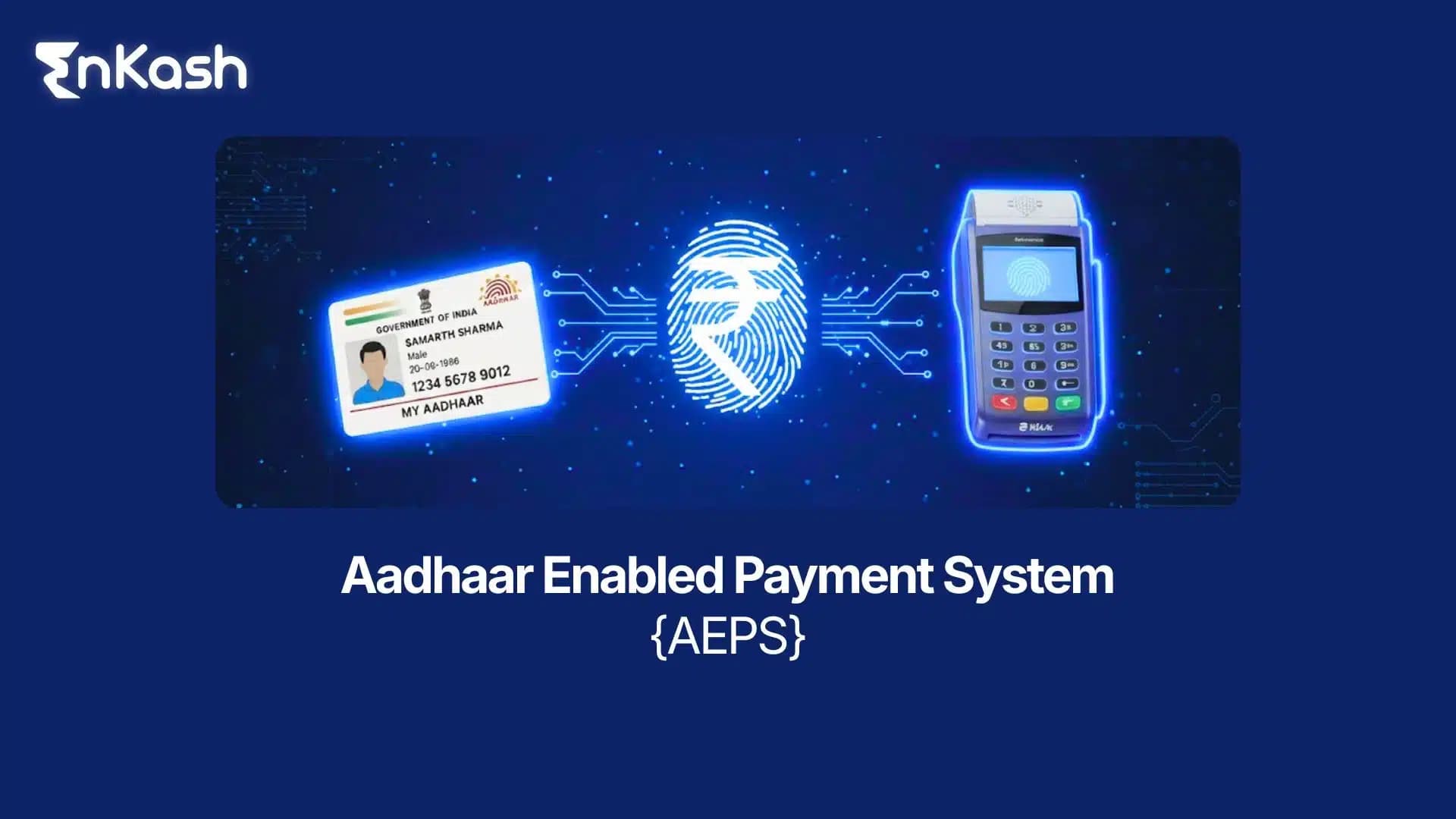
AEPS refers to a banking system that enables basic financial transactions using Aadhaar-based biometric authentication. It allows account holders to access their bank accounts through authorised service points without relying on cards, personal devices, or passwords. The system is designed for controlled, identity-verified access within India’s regulated banking network.
The full form of AEPS is Aadhaar Enabled Payment System. This is a framework that links a customer’s Aadhaar number with a bank account, allowing transactions to be authorised through fingerprint or iris verification. Each request is validated in real time, ensuring that access remains secure and traceable.
From a functional perspective, AEPS's meaning in banking is tied to assisted digital access. Transactions are initiated at micro banking touchpoints and routed through a regulated payment infrastructure. This structure allows banks to extend services beyond branches while retaining oversight and audit control.
At its core, the system operates as an Aadhaar-enabled payment system that prioritises identity verification over device ownership. By anchoring access to biometric proof, AEPS supports reliable banking access for users who require physical assistance while maintaining compliance with national payment standards.
Features of AEPS
The operational value of AEPS lies in how its features align identity verification with regulated banking access. Each feature serves a distinct function within the system, without overlapping roles.
Biometric-Based Authentication
Transactions are authorised through Aadhaar-linked biometric verification. Fingerprint or iris data confirms identity at the point of service. This method removes reliance on cards, personal devices, or memorised credentials while maintaining strong verification control.
Interoperability Across Banks
The system functions across participating banks on a common payment rail. Customers are not restricted to their home branch for access. This structure allows consistent banking availability through authorised service points.
Assisted Banking Model
Transactions are executed with support from trained operators using certified devices. This model supports users who require in-person assistance. Banks retain oversight while extending reach beyond traditional branch networks.
Regulated Transaction Routing
All requests are routed through formal banking and payment infrastructure. Records remain traceable and auditable. From a system perspective, AEPS's meaning in banking reflects controlled access combined with operational discipline.
AEPS Services List
The service layer of AEPS focuses on essential banking functions delivered through identity-verified access points. Each service addresses a specific banking need and operates independently within the system.
Cash Withdrawal Through AEPS
This service allows users to withdraw cash from their linked bank account after biometric authentication. The transaction is completed at an authorised service point. AEPS cash withdrawal through this route supports access in locations where branches or automated teller machines are not easily available.
AEPS Balance Enquiry
Users can check the available balance in their bank account through biometric verification. AEPS balance enquiry provides real-time account visibility without requiring printed statements or mobile banking access.
Mini Statement Access
The mini statement service displays recent account transactions. It helps users track deposits and withdrawals in a limited format. This service supports basic financial awareness without exposing full account histories.
Aadhaar-Based Banking Access
These services together form AEPS banking, where identity replaces physical instruments. Each AEPS transaction is authorised, recorded, and routed through a regulated payment infrastructure to ensure accuracy and accountability.
What is AEPS Debit Facility?
The debit structure of AEPS is direct and rule-bound. Every transaction results in funds being deducted from the customer’s linked bank account after successful biometric verification. This mechanism explains the AEPS debit meaning in practical banking terms. Money moves only when identity authentication is confirmed, and the account has a sufficient balance.
Questions around what the AEPS debt facility usually arise due to terminology confusion. The system does not extend credit, advances, or overdraft access. Transactions are limited strictly to available funds. There is no deferred settlement or borrowing layer attached to this framework.
From a control perspective, this structure protects both banks and users. Debit execution happens in real time and follows predefined routing rules. Each transaction remains traceable within the regulated payment infrastructure. This clarity ensures that AEPS functions as a secure debit-based access channel rather than a financing or lending tool.
AEPS Transaction Process
Every AEPS transaction follows a structured sequence that ensures accuracy, security, and regulatory compliance. The process is designed to authenticate identity first, then route the request through the formal banking infrastructure.
The transaction begins when the user provides an Aadhaar number at an authorised service point. The linked bank is selected from the available list. This step ensures the request is directed to the correct account network.
Biometric Authentication
Biometric data is captured through a certified device and matched with Aadhaar records. Successful verification confirms the user’s identity. The transaction does not proceed if authentication fails.
Transaction Routing Through NPCI
Once verified, the request is routed through NPCI AEPS infrastructure. The system validates the bank response and checks the account status. This step maintains interoperability across participating banks.
Debit Execution and Confirmation
After approval, funds are debited from the linked account, and the transaction result is returned instantly. Records are generated for audit and reconciliation, completing the transaction cycle.
How to Register for AEPS?
Access to AEPS requires a structured onboarding process that links identity with an active bank account. Registration is designed to confirm eligibility and ensure biometric accuracy before transactions are enabled.
Aadhaar and Bank Account Linking
The first requirement is an Aadhaar number linked to an active bank account. This linkage allows identity verification to align directly with core banking records. Without this step, transaction access cannot be enabled.
Biometric Capture and Verification
Biometric data is recorded using certified devices at an authorised service point. Fingerprint or iris information is validated against Aadhaar records. Accurate capture is critical, as all future transactions depend on this verification layer.
Registration Through Authorised Channels
AEPS Registration is completed through bank branches, customer service points, or banking correspondents. These entities operate under regulated frameworks and follow verification protocols defined by participating banks.
Activation and Access Enablement
Once verification is complete, the account is enabled for transactions. Access becomes available through supported service points. From this stage, the user can initiate transactions using identity-based authentication within the Aadhaar-enabled payment system.
Read More: How to Download Aadhaar Card?
AEPS Banking: Banks That Support AEPS
The reach of AEPS banking depends on participation from banks that are connected to the national payment infrastructure. Support is structured to ensure interoperability, regulatory oversight, and consistent access across regions.
Participation of Public and Private Sector Banks
Most NPCI-enabled public sector and private sector banks in India support transactions under AEPS.. Integration allows customers to access accounts regardless of where the account was opened. This removes dependency on branch-specific access.
Interoperability Through NPCI Network
Bank participation is enabled through central routing managed by NPCI AEPS infrastructure. This ensures that transactions initiated at any authorised service point are routed correctly to the linked bank. Interoperability remains a core operational requirement.
Example of Bank-Level Support
Banks such as Bank of India provide services under BOI AEPS, allowing customers to perform basic transactions through assisted channels. Similar support structures exist across other participating banks under the same regulatory framework.
Consistent Access Across Service Points
Once a bank is enabled on the network, customers can transact through multiple authorised locations. This structure allows uniform access while preserving banking controls and transaction accountability.
AEPS Charges and Fees
Cost structures under AEPS are defined by banks and authorised service providers. Charges are kept transparent to ensure accessibility while covering operational handling at service points.
For end users, registration is usually completed without a direct charge. In some cases, agents or service providers may apply onboarding costs linked to device setup or service enablement. References to Aeps registration fee online typically relate to agent-level onboarding rather than customer access.
Transaction Level Charges
Banks may apply nominal charges per transaction based on internal policies. These charges are disclosed at the service point before execution. The structure ensures clarity for both users and operators.
Responsibility for Fee Collection
Fees, where applicable, are collected through the authorised service provider. This model maintains consistency and avoids direct cash handling by banks at the transaction level.
Read more: What Is UIDAI? Full Form, Meaning, and Functions in India
AEPS: Benefits and Limitations
Benefits of AEPS
- Enables banking access through Aadhaar-linked biometric verification
- Supports assisted transactions without reliance on cards or personal devices
- Extends basic banking services beyond branch networks
- Maintains traceable and auditable transaction records
- Operates within a regulated payment infrastructure
Limitations of AEPS
- Restricted to a limited set of basic banking services
- Dependent on successful biometric authentication
- Not suitable for advanced account management needs
- Availability depends on authorised service points.
NPCI AEPS Guidelines
The governance framework for AEPS is defined by rules issued to banks and service providers to ensure controlled usage and systemic integrity. These guidelines focus on security, accountability, and clear role separation.
Regulatory Oversight and Transaction Control
NPCI AEPS operates under centralised routing and monitoring standards. Banks are required to process transactions only after successful identity authentication. Every request must follow defined validation checks to prevent unauthorised access and misuse.
Guidelines on Debit and Access Limits
Rules related to NPCI guidelines clarify that AEPS supports debit-based transactions only and does not involve any debt or credit facility. Banks are prohibited from enabling credit or deferred payment access through this channel. Transaction limits are set to reduce exposure and operational risk.
Compliance for Banks and Service Providers
Participating entities must use certified devices, follow audit requirements, and maintain transaction logs. These measures ensure traceability, dispute resolution readiness, and consistent service delivery across the network.
In Summary
This system should be viewed as a practical access layer within India’s regulated banking structure. AEPS enables essential transactions where card-based or application-driven access is not reliable. Banks, service providers, and users must treat it as a purpose-built channel with defined limits. Use it for withdrawals, balance checks, and assisted access through authorised points. Avoid using it for needs that require detailed account control. Follow verification protocols, confirm transaction details before authorisation, and rely only on certified operators. When used within these boundaries, the system delivers secure access while preserving banking discipline and audit readiness.
FAQs
1. Who can use AEPS services?AEPS is intended for account holders who require assisted banking access. It supports individuals without smartphones, debit cards, or reliable internet. Transactions are completed through authorised service points using Aadhaar-based biometric verification linked directly to an active bank account.
2. Is Aadhaar linking mandatory for AEPS transactions?Aadhaar linking is required for transactions through AEPS. The Aadhaar number must be mapped to a bank account. This linkage allows biometric authentication to validate identity in real time before any debit request is approved by the banking system securely.
3. Can users check their balance without withdrawing cash?Yes, users can perform an AEPS balance enquiry without withdrawing cash. The service provides a real-time account balance through biometric verification. This helps users confirm available funds before initiating other transactions at authorised service locations across supported banking networks nationwide securely.
4. Does AEPS offer any credit or debt facility?Transactions under AEPS do not provide credit access. The system supports debit-only movement of existing funds. References to debt facilities relate to a misunderstanding, as withdrawals are limited strictly to the available balance in the linked bank account only.
5. How secure are AEPS transactions?Security in AEPS depends on biometric authentication and regulated routing. Transactions are processed only after identity verification. Users should confirm operator credentials and transaction details before authorisation to reduce the risk of misuse at service points during assisted banking interactions.
6. Which banks support AEPS banking services?Most banks in India support transactions through AEPS banking networks. Participation allows customers to access accounts beyond home branches. Availability may vary by location, but interoperability ensures transactions route correctly to the linked bank within the national payment infrastructure, securely managed.
7. Are there charges for using AEPS services?Charges related to AEPS vary by bank and service provider. Customers usually do not pay registration fees. Transaction charges, if applied, are disclosed at the service point before execution to maintain cost transparency across different regions and banking access points.
8. Is a smartphone required to use AEPS?A smartphone is not required for AEPS usage. Transactions are completed through assisted service points using biometric devices. This allows banking access for individuals who rely on physical locations instead of digital applications for routine financial needs, nationwide, and securely managed.
9. What happens if an AEPS transaction fails?When an AEPS transaction fails, funds are not debited. Failure can occur due to biometric mismatch or connectivity issues. Users should request a receipt and contact the bank or service provider for resolution through authorised grievance handling channels that are promptly available.
10. How is AEPS different from application-based payment systems?AEPS differs from application-based systems by relying on biometric identity instead of personal devices. It supports assisted access through service points, making it suitable where internet connectivity or digital familiarity is limited across diverse banking environments nationwide, securely regulated.
11. What is AEPS Full form?AEPS Full form in Aadhaar Enabled Payment System