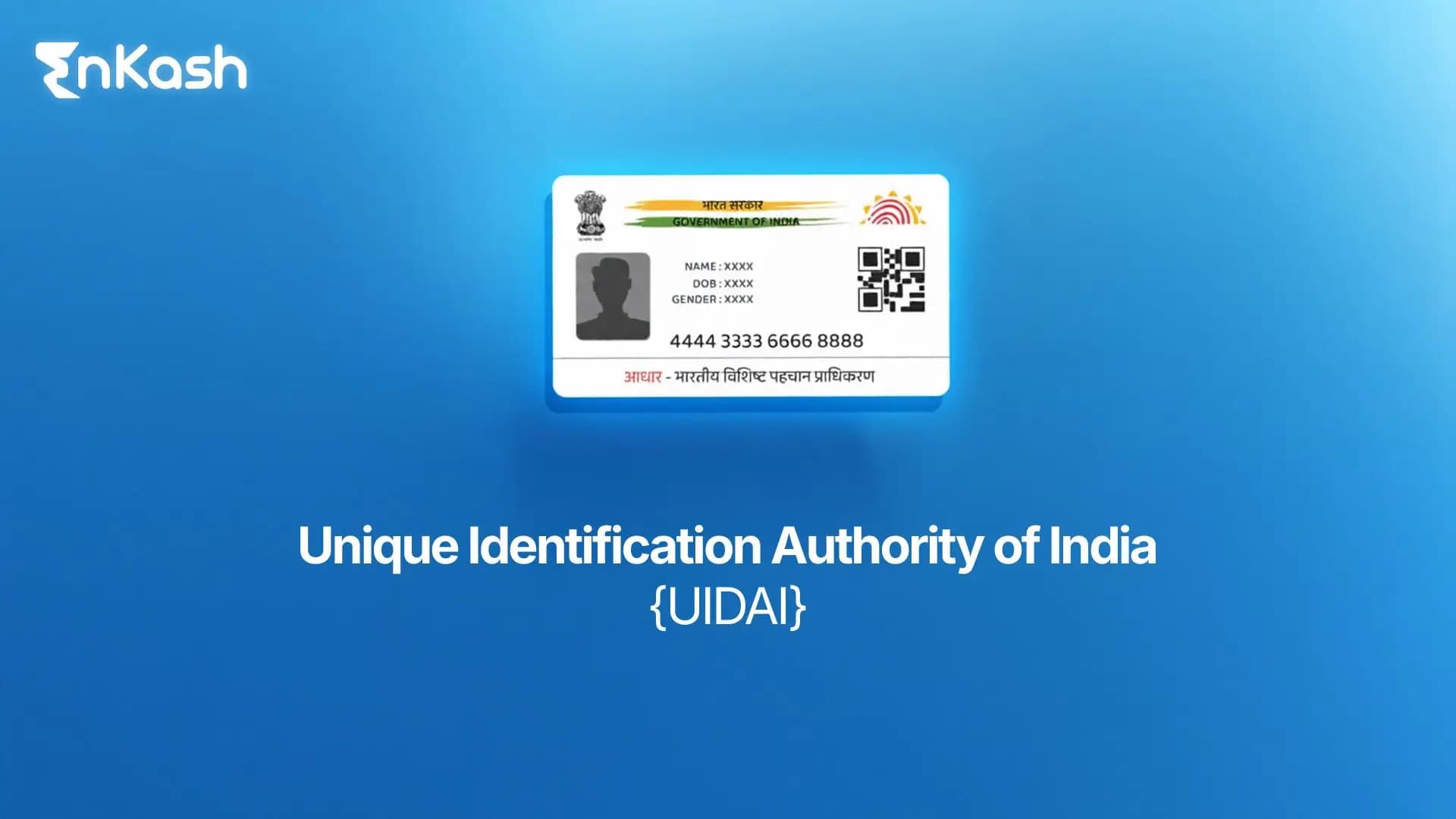
UIDAI (Unique Identification Authority of India) is the statutory authority established under the Aadhaar Act, 2016 that governs Aadhaar enrolment standards, authentication, and data security in India.
India’s digital economy depends on identity systems that are precise, scalable, and trusted across sectors. At the core of this framework is UIDAI, an authority designed to bring consistency and confidence to identity verification. When stakeholders ask what is UIDAI, the question reflects a deeper need to understand how identity integrity is protected while financial and public systems expand.
From a governance standpoint, UIDAI operates as the institutional anchor for identity assurance. Its role is not transactional. It is foundational. By setting standards for identity management, the authority supports secure verification flows that reduce friction, limit duplication, and strengthen trust across digital services. This structure allows financial platforms to rely on verified identity without assuming custodial risk over sensitive data.
To understand about UIDAI, it is important to separate oversight from execution. The authority governs the framework that enables identity use, while service providers and institutions apply that framework within defined boundaries. This separation preserves accountability and supports interoperability across systems that depend on verified identity.
UIDAI Full Form
The UIDAI full form is Unique Identification Authority of India, and the name reflects the institution’s role with clarity and intent. The term unique highlights the focus on maintaining a single identity record for each resident. Identification points to identity as a verified reference layer, not a benefit or entitlement. The authority establishes UIDAI as a governing body with defined responsibility, oversight, and accountability.
Viewed as the unique identification authority of India, the institution sets identity standards rather than delivering services directly. This distinction explains why its role centres on governance, risk control, and system integrity. By shaping how identity frameworks operate, UIDAI supports secure access, digital inclusion, and policy confidence across India’s regulated financial and digital landscape.
When Was UIDAI Established? (2009 vs 2016 Explained)
The establishment of UIDAI followed a clear policy need to create a single authority responsible for identity governance in India. At the time, identity verification depended on multiple documents issued by different bodies. This made large-scale verification slow, inconsistent, and difficult to regulate across systems that required accuracy.
Understanding what UIDAI was created for requires looking at this gap. The authority was formed to introduce a unified structure that could assign and manage identity records through defined standards. This approach reduced duplication and created a dependable reference layer for verification.
As the unique identification authority of India, the institution was positioned to support long-term digital growth. Its creation laid the groundwork for identity-driven systems that rely on consistency, accountability, and trust across regulated environments.
UIDAI and Aadhaar: Governance Relationship Explained
The relationship between UIDAI and Aadhaar is based on governance rather than service delivery. Aadhaar card serves as an identity instrument used for verification across systems. UIDAI functions as the authority that governs how this identity framework is designed, maintained, and protected. This separation defines responsibility and strengthens accountability within India’s digital infrastructure.
Aadhaar operates within standards set by UIDAI, rather than existing as an independent programme. The authority controls how identity data is collected, secured, and authenticated. It also sets the technical and procedural requirements that institutions must follow when relying on Aadhaar for verification. This ensures uniformity across financial, administrative, and digital platforms.
Public references to Aadhaar can blur this distinction. Aadhaar is the verification tool. UIDAI remains responsible for governing the system that supports it. The authority does not provide services or distribute benefits. Its role is to ensure that identity verification remains accurate, controlled, and secure.
This governance structure reduces operational risk and supports trust. It creates a clear framework where identity-driven processes function within defined regulatory boundaries.
Read more: Udyog Aadhaar: Registration Process, Benefits, Fees & Charges
Statutory Functions Assigned to UIDAI
The statutory functions of UIDAI define its role as a governing authority rather than a service provider. These responsibilities focus on maintaining the integrity, reliability, and security of identity systems used across regulated environments. As the unique identification authority of India, its mandate centres on setting rules, enforcing standards, and ensuring that identity verification remains consistent and controlled. This section outlines those functions without overlapping with services, legal structure, or administrative oversight.
Aadhaar Number Issuance and Uniqueness Management
A core function of UIDAI involves overseeing the process through which unique identity numbers are issued. This responsibility focuses on ensuring that each identity record remains singular and accurate. The authority governs enrolment standards and verification processes that prevent duplication. By maintaining this level of control, identity records remain dependable reference points for systems that rely on verified identity inputs.
Identity Authentication and Verification Framework
Another key function relates to defining how identity authentication operates across platforms. UIDAI establishes the protocols that allow institutions to verify identity securely. These protocols support verification without exposing underlying identity data. This framework enables regulated entities to confirm identity with confidence, while maintaining safeguards that protect resident information and system integrity.
Data Protection and Security Responsibilities
Safeguarding identity data forms a central part of UIDAI’s responsibilities. The authority sets security standards that govern data storage, access controls, and authentication processes. These standards are designed to reduce risk and prevent misuse. By enforcing strict security requirements, UIDAI ensures that identity systems remain resilient against unauthorised access and operational vulnerabilities.
Policy, Standards, and Ecosystem Governance
Beyond technical oversight, UIDAI functions as a policy and standards authority within the identity ecosystem. It defines operational guidelines for registrars, enrolment agencies, and authentication partners. These standards ensure uniform implementation across sectors that depend on identity verification. Through this governance role, the authority maintains consistency and accountability across a complex network of stakeholders.
Taken together, these statutory functions explain about UIDAI from an institutional perspective. They show how the authority governs identity systems through defined responsibilities that support trust, regulatory confidence, and long-term stability across India’s digital and financial landscape.
Legal Framework Governing UIDAI
A clear legal foundation is essential for identity governance at scale. The framework governing UIDAI defines its authority, scope, and limits, which helps regulated systems rely on identity verification with confidence. This section focuses only on the legal basis, without repeating functions, services, or administrative control.
Statutory Basis and Legislative Authority
UIDAI operates under a dedicated legal framework that establishes it as a statutory authority. This framework defines its mandate to govern identity standards and oversee the use of identity verification systems. Legal recognition ensures that identity governance follows due process and remains anchored in law.
Defined Powers and Scope of Operation
The law specifies what UIDAI is authorised to do and where its role ends. These provisions outline responsibilities related to identity architecture, data protection standards, and authentication rules. Clear boundaries prevent overreach and support predictable compliance for institutions that depend on identity verification.
Accountability and Compliance Obligations
Legal provisions also impose accountability on UIDAI. The authority is subject to audits, reporting requirements, and oversight mechanisms. These obligations reinforce transparency and strengthen trust across financial and digital platforms that rely on governed identity systems.
Public and Institutional Services Enabled by UIDAI
The services enabled by UIDAI are designed to support identity usage without shifting control of identity data or decision-making. These services operate through a governed framework that allows identity verification to function across systems while preserving accountability and data integrity.
Resident-Facing Identity Support
For residents, UIDAI enables access to identity-related support through defined and controlled processes. These include enrolment guidance, updates to personal details, and regulated authentication mechanisms. Each interaction follows uniform standards to maintain accuracy and consistency across identity records. The authority does not deliver benefits or manage outcomes. Its role remains limited to enabling verified identity use.
Verification Enablement for Regulated Institutions
Banks, financial platforms, and other regulated entities rely on verification mechanisms enabled by UIDAI during onboarding and compliance workflows. During Aadhaar authentication, institutions typically receive a confirmation response rather than full identity details. For e-KYC, permitted entities may receive limited e-KYC data as allowed under UIDAI regulations and applicable consent and permissions. This model limits data exposure and supports risk management within regulated environments.
Standards, Controls, and System Integrity
At a system level, UIDAI provides the rules, technical standards, and access controls that make identity verification reliable. It does not participate in transactions or operational decisions. This separation ensures that identity governance remains neutral, auditable, and scalable. The framework allows institutions to rely on a common identity layer without building parallel infrastructure, reinforcing trust across digital and financial systems.
Limitations, Responsibilities, and Accountability of UIDAI
Clear boundaries are essential for any authority that governs identity systems. The role of UIDAI is intentionally limited to preserve trust, reduce risk, and prevent misuse of identity data. This section explains those limits and the responsibility framework without repeating legal powers or operational functions.
Defined Limitations on Authority
UIDAI does not deliver public services, distribute benefits, or make eligibility decisions. It does not control how institutions use identity verification outcomes. Its role stops at governing identity standards and verification processes. These limits ensure that identity governance remains neutral and insulated from service delivery decisions.
Responsibility Toward Residents and Institutions
The authority carries responsibility for maintaining accuracy, security, and consistency within the identity framework. UIDAI must ensure that standards are applied uniformly and that identity verification remains reliable across systems. This responsibility supports confidence among regulated institutions and residents who rely on verified identity.
Accountability and Oversight Mechanisms
Accountability is built into how UIDAI operates. Oversight mechanisms, audits, and compliance requirements ensure that identity governance remains transparent and controlled. These measures reinforce public trust and reduce systemic risk within identity-driven platforms.
UIDAI’s Role in Supporting Government Program Delivery
Government programs that operate at a national scale require identity verification that is consistent, secure, and auditable. In this structure, UIDAI plays a supporting role rather than an implementing one. Its involvement is limited to enabling identity verification through a governed framework, which other authorities use within their own operational scope.
Identity Enablement Without Program Ownership
UIDAI provides the identity verification layer that government systems rely on, but it does not own or run any program. Departments retain control over design, eligibility rules, and final delivery processes. This separation is important because it prevents identity governance from influencing policy outcomes or altering benefits. Identity functions as a reference point. Programme decisions stay with the respective departments. This structure protects both accountability and neutrality within public service ecosystems.
Standardisation Across Government Systems
One of the strongest contributions of UIDAI is the standardisation it brings to identity verification. By governing a single identity framework, the authority allows multiple government systems to operate with uniform verification standards. This reduces duplication and improves coordination across departments that would otherwise depend on separate identity checks. Platforms can validate identity without building and maintaining their own verification mechanisms. This shared structure makes identity-driven processes more efficient and easier to regulate.
Risk Control and Accountability
A central governance model also supports risk control. Each authority remains accountable for programme outcomes, while UIDAI ensures that identity verification follows defined standards. This reduces operational vulnerabilities that may arise from inconsistent practices. The authority’s framework supports transparency, auditability, and regulatory alignment across systems. This separation of roles allows identity verification to remain secure and predictable, even as government programs expand, evolve, or adopt new delivery models.
Citizen Access, Contact Channels, and Support Framework
Access to identity support must remain structured, predictable, and accountable. This is where UIDAI maintains a clearly defined support framework that allows residents to seek assistance without compromising data integrity or system control.
Resident Access to Identity Support
UIDAI enables residents to access identity-related assistance through approved channels. These include support for enrolment guidance, record updates, and authentication-related concerns. Each interaction follows defined processes to ensure accuracy and consistency across identity records.
Official Contact Channels
All communication with UIDAI is routed through authorised platforms designed to handle requests securely. These channels are structured to verify requests before action is taken, which reduces errors and protects identity information within regulated systems.
Grievance Handling and Resolution
A formal grievance framework allows residents to raise concerns and track resolution. UIDAI oversees this process to ensure that issues related to identity governance are addressed within defined timelines and accountability standards.
Why UIDAI Remains Central to India’s Digital Governance Today
India’s digital governance framework depends on identity systems that remain consistent as scale increases. UIDAI continues to play a central role because it governs identity standards that multiple sectors rely on, without becoming embedded in service delivery or policy execution.
A Stable Identity Reference for Regulated Systems
A key reason UIDAI remains relevant is its ability to provide a common identity reference layer. Financial platforms, public systems, and regulated services rely on this shared framework to verify identity consistently. When identity standards remain uniform, systems avoid fragmentation and conflicting verification practices. This stability supports compliance requirements and allows institutions to operate with clarity. Instead of building separate identity mechanisms, regulated entities align with a single governed framework that reduces complexity and supports coordination across sectors.
Risk Management and System Integrity
Central identity governance plays a direct role in limiting operational and data risk. UIDAI sets verification and security standards that shape how identity processes function across platforms. These standards ensure that identity verification remains auditable, controlled, and predictable. As digital systems scale, this structure helps prevent weak points that could arise from inconsistent practices. Regulated environments benefit from clear rules that reduce uncertainty and support responsible expansion without compromising system integrity.
Enabling Inclusion at National Scale
Digital participation depends on identity systems that remain accurate and accessible across populations. UIDAI governs a framework that allows identity verification to function reliably at a national scale. This approach supports access across diverse regions and use cases while preserving accountability. Identity-driven access remains effective only when governance prevents dilution of standards. By maintaining this balance, UIDAI supports inclusion without weakening oversight or trust.
Long-Term Relevance in Digital Governance
The continued importance of UIDAI reflects its foundational role in identity governance. It supports evolving digital systems by maintaining consistency, regulatory alignment, and institutional confidence. This outcome aligns directly with what UIDAI was created for, which is to sustain secure and transparent identity governance over time, even as technology and usage models continue to change.
Conclusion: The Role of UIDAI in India’s Identity Infrastructure
India’s digital systems rely on identity frameworks that remain accurate, secure, and governed with care. UIDAI fulfils this requirement by operating as an authority that defines standards, safeguards identity data, and maintains consistency across platforms that depend on verified identity. Its role is institutional, not transactional, which helps preserve accountability across financial and public systems.
Understanding about UIDAI requires recognising this separation between governance and usage. Aadhaar functions as an identity instrument, while the authority ensures that identity processes remain controlled and auditable. This structure limits risk, supports compliance, and enables interoperability without concentrating power in service delivery.
FAQs
1. How does UIDAI protect identity data during verification?
UIDAI protects identity data by using controlled authentication methods that confirm identity without exposing personal details. The system relies on secure requests and structured responses, which prevent institutions from accessing stored information. This design keeps verification reliable and limits risk for residents who depend on identity-supported services.
2. Why do financial platforms rely on UIDAI for identity checks?
Financial platforms rely on UIDAI because it offers a governed identity layer that supports accurate and consistent verification. This reduces duplication and controls exposure to sensitive information. The framework helps institutions meet compliance needs while lowering operational risk linked to identity errors or fragmented verification practices across their onboarding systems.
3. What makes UIDAI different from service delivery departments?
Service delivery departments manage benefits, eligibility, and public programmes. UIDAI does not oversee these activities. It governs the identity framework that other departments use during verification. This separation keeps identity governance neutral and prevents identity systems from becoming tied to programme decisions or policy outcomes across different sectors in India.
4. Does UIDAI decide who can use Aadhaar for verification?
UIDAI defines the rules and security standards for Aadhaar authentication and offline verification. Eligible entities can access these services through UIDAI’s requesting-entity ecosystem and applicable regulations, subject to compliance and required permissions.
5. How does UIDAI support grievance resolution for identity issues?
Residents can raise concerns through approved support channels governed by UIDAI. The authority reviews each request to ensure that identity records remain accurate and well-regulated. This structured process helps identify issues linked to verification, updates, or data quality while keeping identity governance accountable and transparent across public and private systems.
6. Why is UIDAI considered essential for digital inclusion?
Digital inclusion depends on identity verification that works reliably at scale. UIDAI governs the framework that supports this requirement. When identity remains accurate, secure, and accessible, residents can use financial, administrative, and digital services with confidence. This role helps maintain participation across diverse regions and demographic groups in India.
7. Does UIDAI monitor how institutions use verification results?
UIDAI governs how verification must occur, but it does not control how institutions use the confirmation response within their processes. Each institution remains responsible for its decisions and compliance duties. This separation maintains accountability and prevents identity governance from influencing service delivery outcomes or institution-specific workflows.
8. How does UIDAI maintain consistency across large-scale identity updates?
Identity updates follow standardised procedures defined by UIDAI. Every request passes through controlled steps that confirm accuracy before changes are applied. This prevents duplication and maintains a unified identity record. Consistent processes ensure that updates remain traceable and secure while supporting systems that depend on verified identity data.
9. Why does UIDAI focus on framework governance instead of direct services?
Framework governance helps UIDAI maintain neutrality. When the authority avoids involvement in service delivery, it can focus on standards, security, and system integrity. This approach prevents conflicts of interest and keeps identity verification predictable across sectors that require reliable identity without shifting operational responsibility to the authority.
10. What role does UIDAI play when technology in identity systems evolves?
As identity technology evolves, UIDAI updates its standards and verification protocols to maintain security and accuracy. The authority evaluates changes carefully to ensure that new methods strengthen reliability without weakening governance. This steady approach allows identity systems to improve while protecting resident information and regulatory confidence.