Key Takeaways
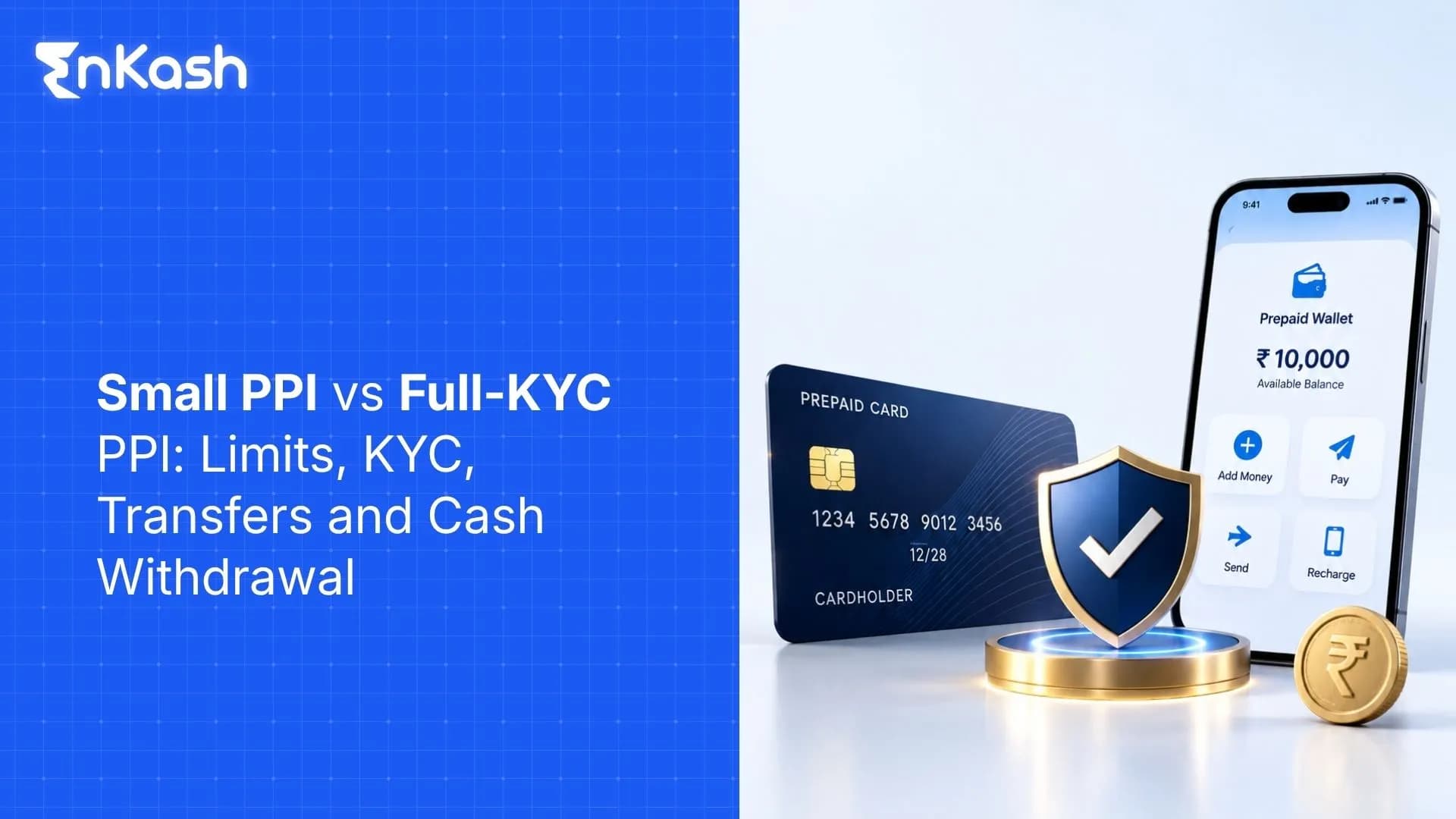
- A Small PPI is issued using minimum customer details, while a Full-KYC PPI requires full customer verification.
- Both Small PPI variants can hold up to ₹10,000. A Full KYC PPI can hold up to ₹2 lakh at any point.
- Small PPIs are meant for eligible merchant purchases. Fund transfers and cash withdrawals are unavailable.
- Full-KYC PPIs permit eligible fund transfers and cash withdrawals, subject to regulatory and issuer controls. RBI also mandates interoperability for Full-KYC wallets through UPI and for Full-KYC cards through authorised card networks.
- The cash-loading Small PPI must be converted within 24 months for further credits to continue. The existing balance can remain available for permitted spending.
- The Small PPI without cash loading does not carry the same 24-month conversion condition under the operative framework.
- Conversion requires completion of full KYC. The exact verification journey can vary by issuer.
Two prepaid wallets may look similar, but the KYC completed by the holder determines how much money they can store and which transactions they can make. The differences affect balance limits, fund transfers, cash withdrawals and loading restrictions.
A Full KYC PPI supports a wider range of permitted uses after full customer verification. A Small PPI has a narrower purchase-focused role with lower balance and loading ceilings. Looking at each area separately makes it easier to see when an upgrade has value and when a lower-value PPI may already cover the intended use.
Small PPI vs Full-KYC PPI: Key Differences
Small PPIs and Full-KYC PPIs differ in verification requirements, balance and loading limits, fund transfers, cash withdrawals and interoperability. Both can be issued by authorised banks and non-bank PPI issuers, but the functions available to holders are different.
| Feature | Small PPI With Cash Loading | Small PPI Without Cash Loading | Full-KYC PPI |
|---|
| KYC requirement | Minimum customer details | Minimum customer details | Full KYC |
| Maximum outstanding balance | ₹10,000 | ₹10,000 | ₹2,00,000 |
| Maximum monthly loading | ₹10,000 | ₹10,000 | No general aggregate monthly loading cap prescribed |
| Maximum annual loading | ₹1,20,000 | ₹1,20,000 | No equivalent general annual cap prescribed |
| Cash loading | Allowed within applicable loading limits | Not allowed | Allowed, subject to ₹50,000 per month and other applicable limits |
| Electronic loading | Allowed | Allowed from a bank account, credit card or Full-KYC PPI | Allowed through permitted sources, subject to applicable limits |
| Monthly debit limit | ₹10,000 | No separate monthly debit ceiling prescribed | No general monthly debit ceiling prescribed |
| Merchant payments | At eligible merchants | At eligible merchants | Through permitted acceptance channels |
| Regular fund transfers | Not allowed | Not allowed | Allowed within applicable limits |
| Cash withdrawals | Not allowed | Not allowed | Permitted, subject to issuer type, channel and applicable limits |
| Interoperability | Not available | Not available | Mandatory through UPI for wallets and authorised card networks for cards |
| Mandatory conversion within 24 months | Yes, to continue receiving credits | No equivalent condition | Not applicable |
| Closure and balance return | Allowed under applicable conditions | Allowed under applicable conditions | Allowed under applicable conditions |
Note: These are regulatory ceilings under RBI's operative PPI framework, not guaranteed limits or available facilities for every PPI product. Actual transactions may be subject to issuer controls, payment-network rules and other applicable restrictions.
How Do KYC Requirements Differ Between Small PPI and Full KYC PPI
Customer verification determines which regulatory category the instrument can enter. A Small PPI can be issued after minimum customer details are collected. A Full KYC PPI requires the issuer to complete the full KYC process for the holder.
The verification requirements differ in the following ways:
Small PPI Verification
Minimum-detail PPIs require a mobile number verified through OTP along with a self-declaration of the holder's name and the identification number of an accepted identity document. Full customer due diligence is not completed at this stage.
Until full KYC is completed and the PPI is upgraded, fund transfers and cash withdrawals remain unavailable.
Full KYC PPI Verification
A Full KYC PPI is issued after customer due diligence is completed under the applicable KYC framework. The issuer may use an approved method that meets the required verification standard.
The Video-based Customer Identification Process (V-CIP) can be used to open a Full-KYC PPI or upgrade an existing Small PPI. Issuers may present the verification journey differently depending on the approved KYC method and their product flow.
What Does the Difference in PPI Limits Mean?
Consider a customer who adds ₹8,000 to a Small PPI during a month and spends ₹5,000.
Although the wallet now holds only ₹3,000, the customer cannot load another ₹3,000 during the same month. That would bring the total monthly loading to ₹11,000, exceeding the ₹10,000 limit applicable to Small PPIs.
A Full-KYC PPI does not have this general ₹10,000 monthly loading restriction. It can hold up to ₹2 lakh at any point, although the source of funds, cash-loading rules, and issuer-specific controls still apply.
The key distinction: The outstanding balance limit determines how much money can remain in the PPI at one time. The loading limit determines how much can be added during a specified period. These are not the same.
Limitations of Small PPI
Small PPIs are intended for lower-value merchant payments. They cannot be used for routine fund transfers or cash withdrawals.
The main restrictions are:
- Merchant purchases only
A Small PPI can be used to purchase goods and services at eligible merchants that have an acceptance arrangement with the issuer, directly or through a payment aggregator or payment gateway. - Funds transfer is unavailable
A Small PPI cannot be used to transfer money to another person or bank account as a regular funds transfer. - Cash withdrawal is unavailable
The holder cannot withdraw the stored balance as cash. - Funding depends on the variant
A Small PPI without cash loading can receive funds only from a bank account, credit card, or Full-KYC PPI.
These restrictions continue even when unused balance remains available. A holder who needs transfers or cash access has to move into a PPI category that supports those functions.
Benefits of Full KYC PPI
Full KYC enables higher balance limits and access to additional permitted transaction types. A Full KYC PPI can move beyond merchant purchases into permitted transfers, cash withdrawal, movement back to the holder, and interoperable payment access.
Fund Transfers
A fully verified PPI can support fund transfers. The holder can register beneficiaries by providing the required bank account or PPI details, and the issuer can set transfer controls within the permitted ceilings. Transfers to a pre-registered beneficiary can reach ₹2 lakh per month per beneficiary. For transfers other than those to pre-registered beneficiaries, the RBI framework specifies a limit of ₹10,000 per month per holder. Transfers to pre-registered beneficiaries may have a higher ceiling of ₹2 lakh per month per beneficiary, subject to issuer limits.. An issuer may apply a lower ceiling after considering the holder's risk profile and operational controls.
Cash Withdrawal
Cash access becomes available under the rules that apply to the issuer type. For a non-bank-issued Full-KYC PPI, withdrawal can reach ₹2,000 per transaction and ₹10,000 per month per PPI across agents, ATMs, point-of-sale devices, and other supported channels. Bank-issued Full-KYC PPIs permit cash withdrawal through eligible channels, including ATMs and PoS devices. For PoS cash withdrawals specifically, RBI prescribes a ₹2,000 per-transaction limit and an overall monthly limit of ₹10,000 across locations. Other withdrawal channels are subject to their applicable rules.
Transferring Funds Back to Your Own Account
Funds in a fully verified PPI can move back to the original funding source or to the holder's own verified bank account. The issuer can apply limits after considering customer risk and operational controls. This allows the holder to move eligible unused funds to their own verified bank account or back to the original funding source.
Interoperability
RBI requires issuers to provide PPI interoperability for Full-KYC wallets through UPI and for Full-KYC prepaid cards through authorised card networks. Physical and virtual PPI cards use authorized card networks. An issuer may also enable its Full-KYC wallets to be discovered and linked through supported third-party UPI apps. Availability of this option depends on the issuer and the participating UPI app. The prepaid balance remains the source of funds, while UPI or the card network carries the transaction.
Process of converting Small PPI into Full KYC PPI
Conversion changes an existing Small PPI into a fully verified instrument after the holder completes the required KYC process. The regulatory path remains consistent, even though the screens, document requests, and verification method can vary across issuers.
The upgrade process generally involves three steps:
- Request the upgrade
The holder selects the issuer's available option to move from a Small PPI to a fully verified PPI. - Provide the required KYC information
The customer submits the identity and customer information needed for full verification. - Complete identity verification
The issuer carries out the approved KYC process. V-CIP can be used where the issuer supports it. - Wait for KYC Verification
The submitted information is checked and the issuer finishes the customer-verification controls. - Receive Upgrade Confirmation
After successful verification, the existing instrument can move to Full-KYC status.
Issuers can use different customer journeys for this process. The regulatory outcome is full customer verification, while the app flow or document sequence can vary.
When Does a Small PPI Need to Be Converted?
The 24-month conversion condition applies to the Small PPI variant that permits cash loading. If full KYC is not completed within 24 months from issuance, further credits cannot be added to that PPI. Money already available can continue to be used for permitted purchases.
The Small PPI variant without cash loading does not carry the same 24-month conversion condition under the operative framework. Its funding continues through permitted non-cash sources within the applicable balance and loading limits. Calling the 24-month point an expiry can be misleading because the existing balance in the cash-loading PPI remains usable after further credits stop.
Example: A cash-loading Small PPI issued on January 1, 2026, must be upgraded to Full-KYC status within 24 months for further credits to continue. If the holder does not complete full KYC within that period, the PPI cannot receive additional credits. However, the remaining balance can still be used for permitted purchases.
This restriction should not be confused with the expiry of the PPI instrument itself. The Small PPI variant without cash loading does not have the same mandatory 24-month conversion condition.
Do RBI's Draft PPI Directions, 2026, Affect These Limits?
A revised PPI framework was released for public comments in April 2026. The draft proposed changes to PPI classification and several operating rules.
As of October 15, 2026, RBI's Master Directions on Prepaid Payment Instruments, 2021, updated through September 30, 2026, remain the operative framework. RBI also released draft PPI Directions in April 2026, but proposals in that draft should not be treated as effective rules unless formally notified. The figures and functions used in this article follow that framework. Draft provisions should be treated as proposed changes until a final replacement direction is issued.
Which Should You Choose: Small PPI or Full-KYC PPI?
A Small PPI may be sufficient if you primarily need to make lower-value payments at eligible merchants and do not require fund transfers or cash withdrawals.
A Full-KYC PPI is more suitable if you need to maintain a higher prepaid balance, transfer money to eligible beneficiaries, access permitted cash withdrawal facilities or use interoperable payment networks.
The funding method also matters. A Small PPI without cash loading can receive money through permitted non-cash sources and does not have the same 24-month mandatory conversion condition as the cash-loading variant.
Before choosing or upgrading a PPI, check the issuer's supported payment methods, transaction limits, fees, and KYC requirements. Completing full KYC expands the regulatory permissions available, but the features actually offered can vary across products.
FAQs
Does a Full KYC PPI Balance Earn Interest?
PPI issuers cannot pay interest on the balance held in a PPI. The money remains prepaid value available for permitted transactions. Completing full KYC does not turn the PPI into an interest-bearing deposit.
Can One Person Hold Multiple PPIs?
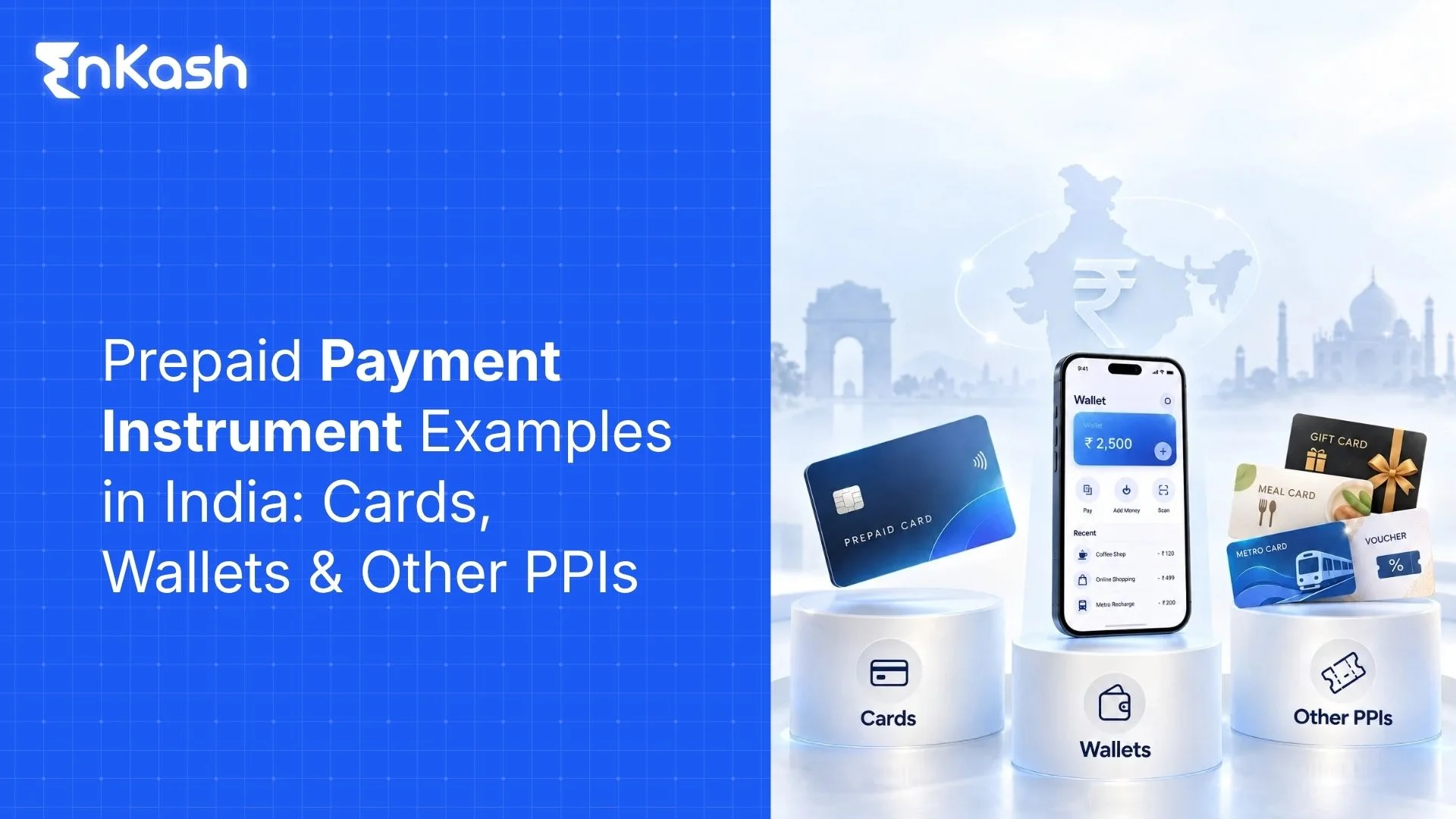
An issuer may provide multiple PPIs within the permitted category, such as a wallet and a prepaid card. However, applicable balance limits must be monitored across the relevant instruments issued to the same customer. For example, the ₹2 lakh balance ceiling applies to the combined value of Full-KYC PPIs issued by one issuer to that customer. An issuer cannot simultaneously provide both Small PPI variants against the same mobile number. Issuers need systems that prevent the use of multiple instruments to bypass regulatory limits. The number of products available to one customer can depend on the issuer's product structure and monitoring controls.
What Happens to the Balance When a Small PPI Is Closed?
A Small PPI can be closed at the holder's request. The remaining amount can be sent back to the original funding source. It may also be transferred to a bank account after the required KYC checks for that transfer have been completed. Closure follows its own process and does not require the holder to convert the instrument first.
Can a Full KYC PPI Be Used for Eligible Cross-Border Purchases?
Full-KYC PPIs issued by Authorised Dealer Category-I banks may be enabled, at the holder's explicit request, for permitted cross-border purchases under FEMA. Such transactions are subject to a maximum of ₹10,000 per transaction and ₹50,000 per month. Cross-border fund transfers and LRS remittances are not permitted through these PPIs.A Small PPI uses minimum customer details, while a Full KYC PPI requires complete customer verification. The facility operates under specific transaction conditions and ceilings. Foreign-exchange-denominated prepaid instruments fall under a separate regulatory framework.
Can an Issuer Set Lower Limits Than the Regulatory Ceiling?
Yes. A regulatory ceiling sets the maximum level permitted under the framework. An issuer can apply lower transfer or operating limits after considering customer risk and operational controls. The limit visible to the holder may consequently be lower than the maximum amount permitted for the PPI category.