Key Takeaways
- A Prepaid Payment Instrument can be a mobile wallet, physical prepaid card, virtual card, or another approved electronic form.
- RBI classifies PPIs that require approval or authorisation into two main types: Small PPIs and Full-KYC PPIs, with separate provisions for specific categories such as Gift PPIs and PPI-MTS.
- Gift PPIs, mass-transit PPIs, and certain PPIs issued to visitors have their own rules.
- Cash withdrawal is not available across every PPI. It depends on the category and the rules attached to it.
- A prepaid balance that can be used only with the entity that issued it may qualify as a closed-system instrument, which is not treated as a payment system requiring RBI approval or authorisation.
Prepaid products are easy to recognise, but their regulatory classification is less obvious. A wallet on a phone, a prepaid card carried by an employee, and a gift card can all hold money that has already been loaded. Yet they may work quite differently once you look at where the money can be spent, whether it can be transferred, and what rules apply to the product.
The same prepaid format can therefore fall under different regulatory rules depending on how it is issued and used. This guide explains the common PPI forms used in India, how they are regulated, and what each type allows a holder to do, without treating every prepaid wallet or card as the same kind of instrument.
What Are Prepaid Payment Instruments in India?
In India, a PPI is an instrument that lets a holder use value stored in advance for permitted purchases, financial services, remittances, or related transactions. RBI allows PPIs to be issued as cards, wallets, or other permitted forms or instruments through which the stored value can be accessed. Paper vouchers cannot be issued as PPIs.
The PPI represents the stored value, while a card, wallet, or other permitted form provides the holder with access to that value. Under the current RBI framework, PPIs that require approval or authorisation are classified into two types: Small PPIs and Full-KYC PPIs.
A Prepaid Payment Instrument can be described by its form, purpose, and regulatory position. These three labels answer different questions.
The form is what the holder uses. It can be a mobile wallet, physical prepaid card, virtual prepaid card, or another permitted electronic access method.
Purpose
Purpose describes the use case the instrument is designed to support. A business may fund a card for employee expenses. A consumer may use a wallet for merchant payments. Other products may support gifting, transit, tolls, or visitor payments.
Regulatory Position
The regulatory position determines the functions attached to the product. A wallet may operate as a Small PPI or Full-KYC PPI. A gift instrument has a separate RBI provision. A transit instrument may fall under PPI-MTS rules. A store balance usable only with the issuing retailer can be a closed-system arrangement outside RBI authorization for third-party payment systems.
Common PPI Examples in India
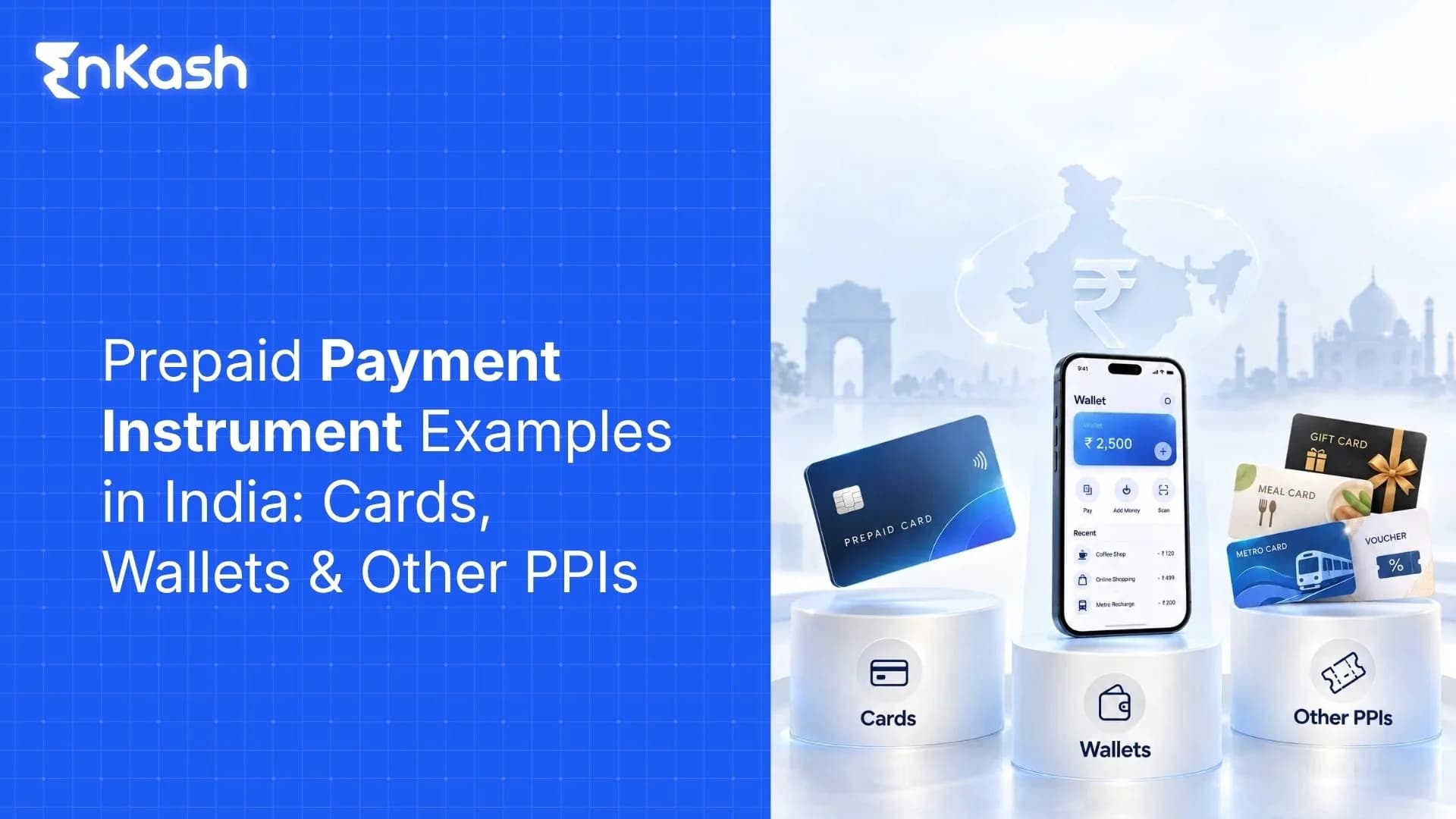
Common examples of PPIs in India include mobile wallets, physical and virtual prepaid cards, Gift PPIs, mass-transit PPIs and certain UPI-linked visitor wallets. The visible product is only the starting point. Its underlying regulatory category determines what it can do.
| PPI example | What the user sees | Regulatory treatment | Key restriction |
|---|
| Mobile wallet | App-based stored balance | Small or Full-KYC PPI | Depends on KYC/category |
| Physical prepaid card | Physical payment card | Depends on underlying PPI | Functions depend on category |
| Virtual prepaid card | Digital card credentials | Depends on underlying PPI | Functions depend on category |
| Gift PPI | Preloaded gift instrument | Specific Gift PPI rules | Max ₹10,000; non-reloadable |
| PPI-MTS | Transit payment instrument | Specific PPI-MTS rules | Max ₹3,000 outstanding |
| Visitor PPI | UPI-linked INR wallet | Specific Full-KYC visitor framework | Merchant payments only under this framework |
| Store-only prepaid balance | Balance usable only with issuer | Closed-system arrangement | Cannot be used with third-party merchants |
Mobile Wallets
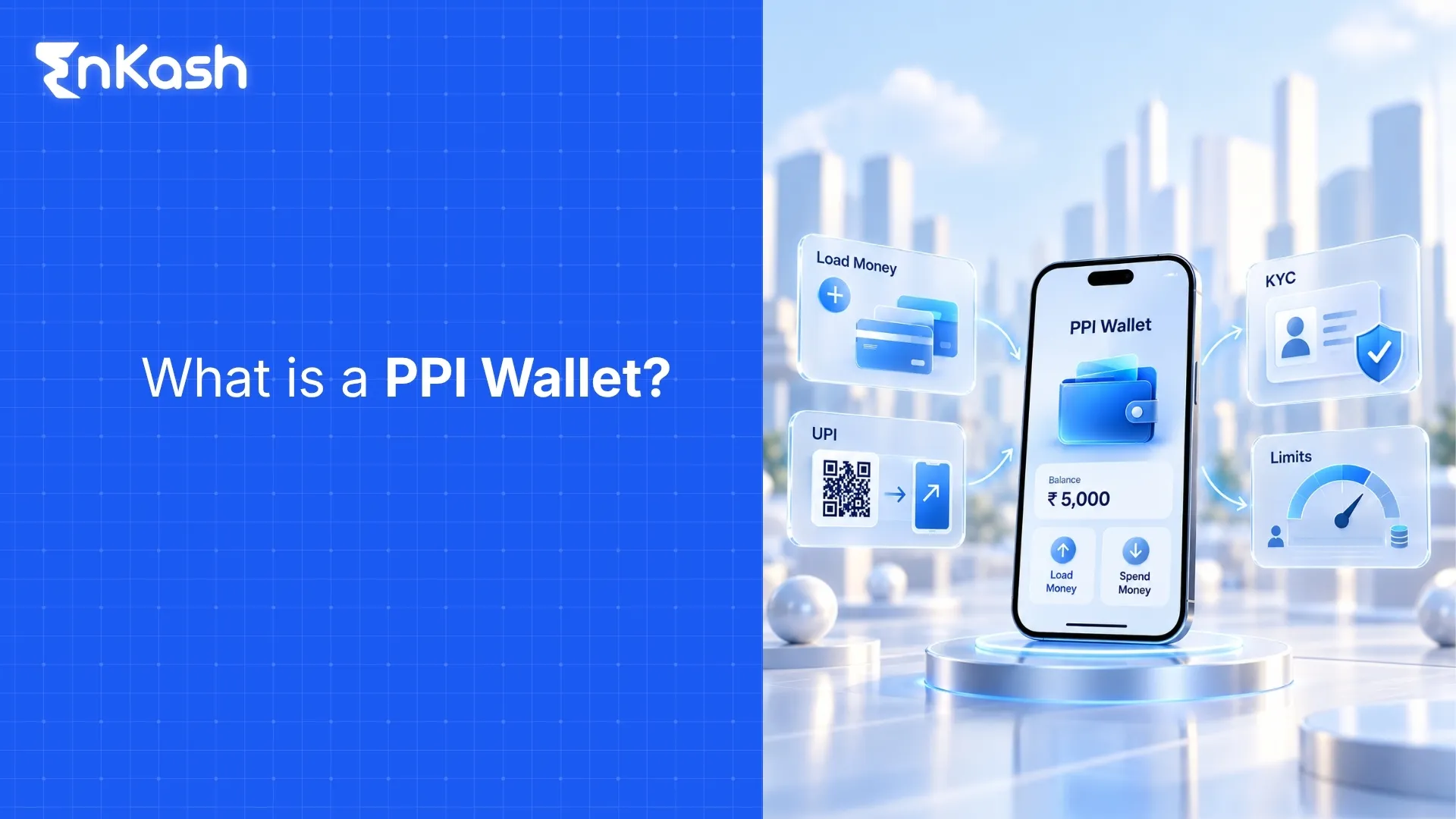
A mobile wallet is a common Prepaid Payment Instrument form. The holder accesses stored value through an app. A Small PPI wallet is limited to purchases of goods and services. A Full-KYC wallet can carry the broader functions allowed for that category. For Full-KYC wallets, interoperability is provided through UPI. Since RBI’s December 2024 update, PPI issuers may also enable full-KYC PPIs where the issuer enables the feature to be discovered and linked on third-party UPI apps, with such transactions authenticated using UPI credentials.
Physical and Virtual Prepaid Cards
A prepaid card gives access to value already loaded into the instrument. It may be physical or virtual, but the format does not reveal the full regulatory position. Where PPIs are issued in interoperable card form, they operate through authorised card networks. Interoperability is mandatory for Full-KYC PPI cards, while Gift PPIs may offer it optionally and PPI-MTS remains exempt. A physical or virtual card can support only the functions permitted for the underlying PPI category.
Gift PPIs
Gift PPIs are designed for prepaid gifting. RBI caps each gift instrument at ₹10,000. The instrument is non-reloadable, and cash withdrawal or funds transfer is not permitted. Funds may be transferred back to the source account after the PPI holder gives consent. A Gift PPI should therefore not be treated as equivalent to a general reloadable prepaid card.
Mass Transit PPIs
PPIs for Mass Transit Systems, or PPI-MTS, cover specified payments across metro, buses, rail, waterways, tolls, and parking. They can be reloadable and may be issued without KYC verification of the holder. The outstanding amount cannot exceed ₹3,000. Cash withdrawal, refunds, and funds transfer are unavailable.
Visitor PPIs
RBI permits eligible foreign nationals and NRIs visiting India to receive INR-denominated Full-KYC PPIs under the prescribed visitor framework, subject to the categories and issuance locations covered by the applicable RBI rules. The instruments can take the form of wallets linked to UPI for merchant payments. Physical verification of the customer's passport and visa is required at the point of issuance. Unused balance can be handled under the applicable foreign-exchange rules, including permitted transfer back to source or encashment in foreign currency.
Business-Funded PPIs
A company may fund a prepaid card or wallet for employee, contractor, travel, project, or controlled spending use. The business purpose does not create a separate RBI category. For finance and operations teams, this distinction affects product selection. A company may call the product an employee-spend instrument internally, but the Prepaid Payment Instrument operates under the regulatory structure that applies to the actual product issued.
Can You Withdraw Cash from a Prepaid Payment Instrument (PPI)?
Cash withdrawal depends on the PPI category. Small PPIs, Gift PPIs, and PPI-MTS do not permit cash withdrawal. Full-KYC PPIs can permit it under the applicable RBI conditions.
For bank-issued Full-KYC PPIs, cash withdrawal can be permitted through eligible channels subject to applicable rules and issuer limits. At PoS terminals, RBI caps cash withdrawal at ₹2,000 per transaction within an overall monthly limit of ₹10,000.
For Full-KYC PPIs issued by non-banks, cash withdrawal is permitted subject to RBI's prescribed per-transaction and monthly limits and the withdrawal channels supported by the issuer. The current ceiling is ₹2,000 per transaction and ₹10,000 per month per PPI.
When a Prepaid Product Is Not a Regular PPI
Certain prepaid products may resemble regulated PPIs but are treated differently under the applicable regulatory framework.
Closed-System Balances
A retailer can issue stored value that works only for purchases from that same entity. RBI defines this as a closed-system arrangement. Since the value cannot be used for payment or settlement with third parties, its issuance and operation are not treated as an RBI-authorized payment system.
Foreign-Exchange PPIs
Foreign-exchange-denominated prepaid instruments issued by entities authorised under FEMA fall outside the scope of RBI's domestic PPI Master Directions for those instruments. Their loading, withdrawal, transfer and redemption rules should therefore be checked under the applicable foreign-exchange framework. A travel-related prepaid product should be classified based on its currency denomination and regulatory basis before being grouped with domestic INR PPIs.
How to Identify a PPI in Practice
A Prepaid Payment Instrument can be identified more accurately by checking its issuer, stored-value structure, acceptance, KYC status, and permitted functions. Product labels alone may not provide enough detail.
Use these checks:
- Identify who issued the instrument.
- Check if value is loaded or made available in advance.
- Confirm if access is through a wallet, physical card, virtual card, or another permitted form.
- Check if the value can be used with third-party merchants.
- Find out if the product is a Small PPI or Full-KYC PPI.
- Check if Gift PPI or PPI-MTS provisions apply.
- Check whether funds transfer or cash withdrawal is permitted.
- Confirm whether the product is INR-denominated under the domestic PPI framework.
For businesses, the commercial label should be matched with the actual regulatory structure, balance limits, permitted transactions, and operational controls.
In Summary
A Prepaid Payment Instrument cannot be identified correctly from the words “wallet,” “card,” “gift,” or “employee expense” alone. Start with the form, then check the purpose and the RBI category behind it. This approach makes it easier to understand spending limits, transfer rights, cash access, interoperability, and the practical role of each PPI example in India.
FAQs
Can a customer have both physical and virtual PPI cards?
Yes, where the issuer's product structure supports both form factors. RBI permits PPIs to be issued in electronic forms including cards, but whether a customer receives both a physical and virtual card depends on the issuer and the underlying PPI programme.
Does money kept in a PPI earn interest?
PPI balances do not earn interest. RBI states that PPI issuers cannot pay interest on PPI balances. The value remains available for functions allowed under the relevant category, subject to the issuer’s terms and applicable regulatory limits.
What happens when a PPI remains inactive for a long period?
A PPI with no financial transaction for one consecutive year is required to be made inactive after due notice to the holder. Reactivation requires validation and applicable due diligence. Reactivation requires validation and applicable due diligence. The issuer must also report these inactive PPIs to RBI separately.
Can a Full-KYC PPI be linked to a third-party UPI app?
Yes, where the issuer facilitates the feature under the current RBI framework. RBI permits discovery and linking of eligible Full-KYC PPIs on third-party UPI applications, with those transactions authenticated through UPI credentials. The PPI issuer must support the feature.
Can a person hold multiple kinds of PPIs?
Yes. An issuer may provide multiple PPIs to the same customer under permitted arrangements, including different programmes or form factors. The issuer must still ensure that all applicable KYC, balance, loading and transaction limits are complied with across the relevant PPI arrangements.