Key Takeaways
- A PPI transaction uses money already available in a prepaid instrument.
- Merchant payments, eligible fund transfers, and permitted cash withdrawals can all involve PPI value, depending on the category.
- Loading money into a PPI and spending from that balance are separate events.
- A PPI can provide the funds even when UPI or a card network carries the payment.
- Payment approval and merchant settlement happen at different points in the transaction journey.
- Failed payments, reversals, and merchant refunds need to be treated as separate outcomes.
Imagine paying at checkout and seeing “successful,” only for the merchant to say the payment has not arrived. Both screens can reflect different stages of the same transaction. A debit without merchant confirmation may indicate an unresolved or failed payment, while settlement is a later process that determines when the merchant receives funds.
A single payment status can hide several separate stages, including authentication, debit, confirmation, and settlement. This blog follows those parts from the customer's payment request through merchant confirmation and settlement, then looks at what changes when the payment fails, or money has to come back.
What is a PPI Transaction
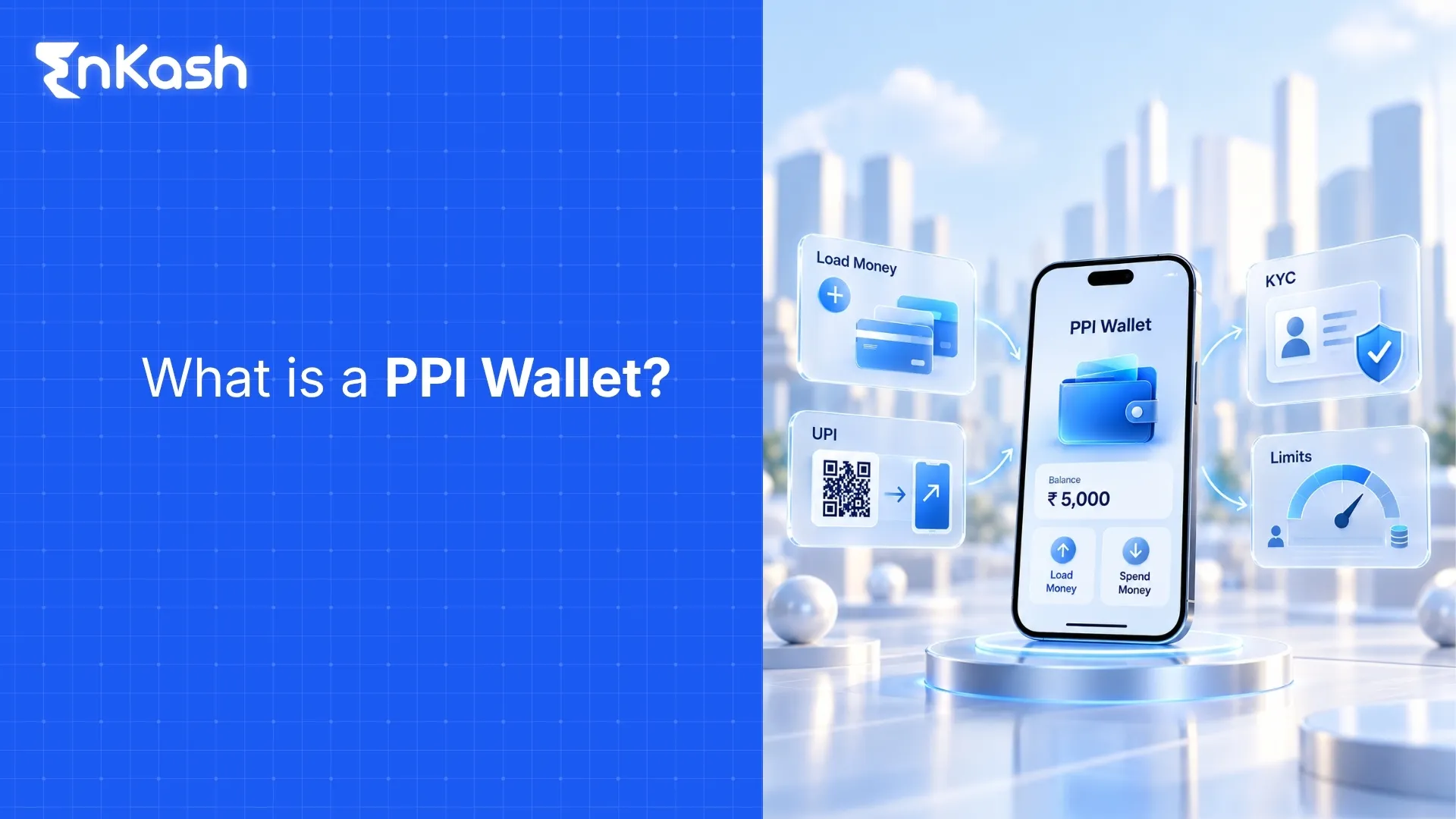
A PPI transaction happens when value already available in a Prepaid Payment Instrument is used for a function that the instrument is allowed to support. The money comes from the prepaid balance held in the PPI.
A PPI can hold money without any transaction taking place yet. That is the point to keep in mind when looking at PPI transaction meaning. Loading creates the balance. The transaction starts only when that balance is used for a payment, an allowed transfer, or an approved cash withdrawal.
With prepaid payment instrument transactions, the stored-value product and the payment rail can be different things. A Full-KYC wallet may send a supported payment over UPI. A prepaid card may use an authorized card network. What the user can actually do is determined by the PPI type. Small PPIs can be used for purchasing goods and services but do not permit fund transfer or cash withdrawal. Full-KYC PPIs can support additional permitted functions.
What Types of PPI Transactions Can Take Place
The type of transaction available to a holder depends on the PPI category. A customer with a Small PPI has fewer permitted uses than a customer with an eligible Full-KYC instrument.
The main ways PPI value can be used fall into three groups:
Merchant Payment
A merchant payment uses the prepaid balance to buy goods or services from an eligible merchant. Small PPIs can be used for this purpose, as can Full-KYC PPIs. Depending on the acceptance model, the merchant may connect directly or receive the payment through a payment aggregator, payment gateway, or other supported acceptance arrangement. The customer sees the purchase, while the merchant receives the payment status through its acceptance or processing setup.
Funds Transfer
A funds transfer moves stored value through a transfer facility available on the PPI. Small PPIs do not provide this function. Full-KYC PPIs can support fund transfers within the applicable conditions and limits. Depending on the permitted PPI setup, funds may be transferred to an eligible bank account, PPI, or supported payment destination.
Cash Withdrawal
Cash withdrawal converts eligible prepaid value into cash. The facility applies only where the PPI category permits it. Full-KYC PPIs can provide cash withdrawal under the applicable conditions. Small PPIs do not provide cash withdrawal. Cash withdrawal is not permitted from Small PPIs, Gift PPIs, or PPIs for Mass Transit Systems.
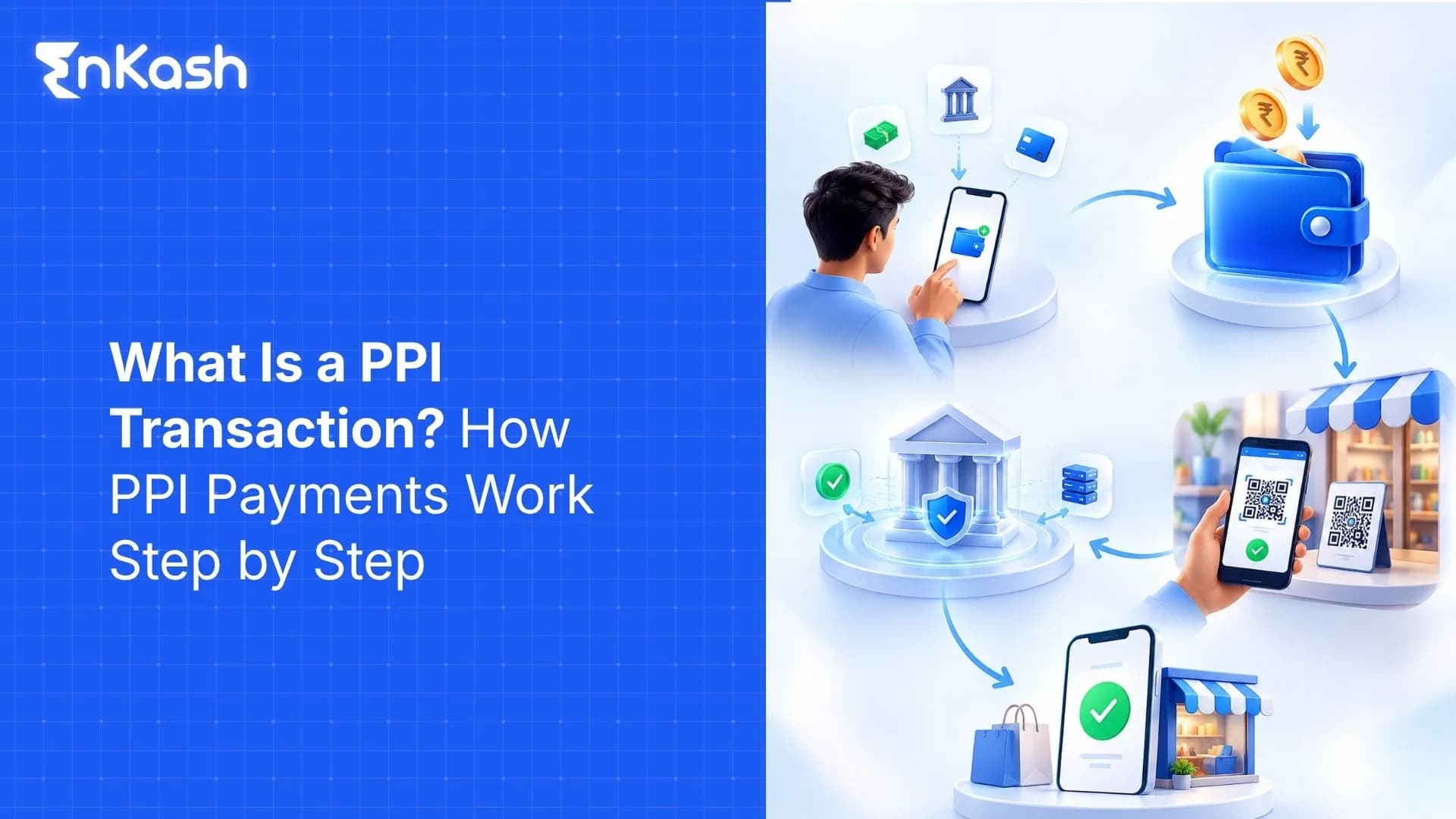
How Do PPI Merchant Transactions Work Step by Step
A merchant payment begins with prepaid value already available to the customer. From there, the request moves through the authentication and processing steps required by the relevant PPI and payment rail, followed by payment confirmation and merchant settlement where applicable. Each stage has a different job.
A successful merchant payment moves through these stages:
- The customer selects the PPI
The holder chooses an eligible prepaid wallet, prepaid card, or another supported PPI at checkout. The instrument needs enough usable balance for the purchase and must support that type of transaction.
- The merchant initiates the payment request
The merchant's payment interface creates the request for the purchase amount. Depending on the setup, the request may move through the issuer's environment, UPI, an authorized card network, or an intermediary used by the merchant.
- The customer authenticates the payment
Wallet debits require two-factor authentication under the PPI security framework. Physical and virtual PPI cards follow the additional-factor rules applicable to debit cards. Gift PPIs and mass-transit PPIs have specified exceptions.
- The issuer checks the transaction
The payment request is checked against the available PPI balance, applicable limits, security controls, and the functions permitted for that instrument. Issuers also maintain controls around transaction velocity and fraud detection.
- The prepaid balance is debited
Once the request passes the required checks, the purchase amount is taken from the value held in the PPI. The remaining balance changes accordingly.
- The merchant receives the payment result
The acceptance system returns the transaction status to the merchant. When the payment reaches the successful state required by the merchant's integration, the order can move forward. At this point, the customer may see a success message or receipt, and the merchant can treat the purchase as paid according to its payment setup.
- The successful transaction moves to settlement
Payment confirmation does not mean that settlement money has already reached the merchant's bank account. The accepted transaction enters the settlement process used by the issuer, network, acquirer, or payment intermediary involved.
- The merchant receives settlement
The merchant claim is paid under the applicable settlement arrangement. For non-bank PPI issuers, RBI's escrow framework requires funds to be maintained against outstanding PPI value and merchant-payment obligations, with merchant settlements handled through the permitted escrow-account flows.
Which Payment Rails Can Carry a PPI Transaction?
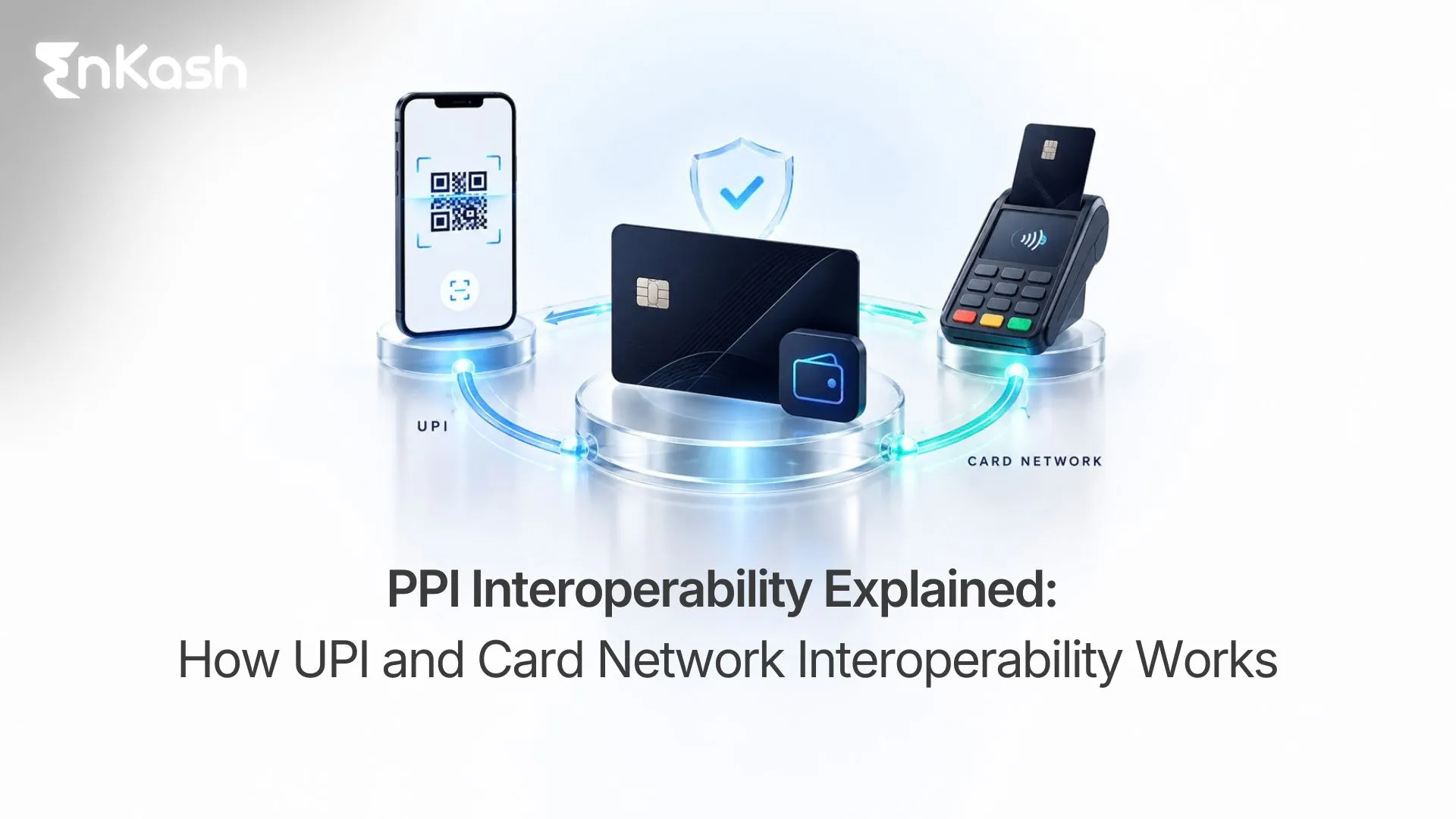
The PPI provides the prepaid value, while an external rail such as UPI or a card network may carry the transaction. The path depends on the form of the PPI and the acceptance setup used for the payment.
The main transaction paths can be compared as follows:
| Payment Setup | Transaction Path | What Happens |
|---|
| Full-KYC wallet | UPI | Prepaid wallet value funds a payment carried through UPI |
| Physical or virtual PPI card | Authorized card network | The stored balance is accessed through the card-network transaction |
| On-us payment | Issuer environment | The transaction remains within the issuer's own PPI setup |
| Off-us payment | External payment system | UPI, a card network, IMPS, or another applicable system carries the transaction |
Full-KYC PPI wallet interoperability works through UPI, and PPI cards use authorized card networks for interoperability. RBI also permits PPI issuers to enable Full-KYC PPIs to be discovered and linked on supported third-party UPI applications, in addition to UPI access through the issuer's own application.
The difference between on-us and off-us becomes relevant when a payment goes wrong. An off-us payment follows the failure and compensation rules of the payment system carrying it. An on-us payment remains within the PPI issuer's environment.
How Are Failed, Reversed, and Refunded PPI Transactions Handled
A payment can stop before completion, or money can come back after a purchase has already succeeded. A reversal and a refund may both return money to the customer, but they arise from different transaction states.
The following outcomes need to be kept separate:
Failed Transaction
A failed transaction is a payment that does not complete as intended. For example, the PPI may be debited even though the merchant never receives transaction confirmation. The next action depends on the transaction path. Off-us failures follow the turnaround and compensation framework of the payment system carrying the payment.
Transaction Reversal
A reversal returns money connected with an unsuccessful payment. For specified on-us PPI failures, including a debit where the merchant does not receive transaction confirmation, the prescribed reversal period is T+1 day. For these specified on-us failures, reversal is required within T+1 day, with compensation of ₹100 per day for delay beyond that period under RBI's failed-transaction framework. The customer is receiving back value from a payment that failed to complete. This makes a reversal different from a merchant refund after a completed sale.
Merchant Refund
A refund begins after an earlier payment has already completed. The merchant may return the amount because an order was canceled, goods were returned, a service was rejected, or another accepted refund reason applies. When the original payment came from a PPI, the refund is credited back to that PPI to the extent of the original PPI debit. The credit can temporarily take the balance above the normal limit for that category. Under RBI's PPI refund rules, an amount originating from another payment instrument should not be credited into the PPI as a refund.
What Records Follow a Completed PPI Transaction
A completed payment leaves a record on the customer's side as well as within the issuer's transaction systems. Those records become important when someone needs to verify the amount, check the remaining balance, or raise a complaint later.
A customer can expect the transaction trail to include:
- Transaction alert: The issuer should send the holder transaction information for PPI debits and credits, including the amount and the available balance after the transaction. The alert includes the debit or credit amount and the available balance after the transaction.
- Updated PPI balance: The remaining prepaid value reflects the completed debit or credit.
- Account statement: Holders must have an option to generate or receive statements covering at least the previous six months.
- Transaction details: The statement includes the transaction date, debit or credit amount, net balance, and transaction description.
- Recent transaction history: The issuer has to provide history covering at least ten transactions.
The issuer also keeps a much longer regulatory record. Logs of transactions carried out through PPIs must be maintained for at least ten years and made available for regulatory scrutiny when required.
Final Thoughts
A PPI transaction is easier to diagnose when the payment amount, time, transaction ID, PPI type, payment rail, and current status are reviewed together. These details help distinguish a successful payment awaiting settlement from a failed transaction awaiting reversal or a completed payment awaiting refund.
Regulatory note: PPI transaction rules, limits and operating requirements are governed by RBI directions and may change over time. Readers should refer to the latest RBI Master Directions and issuer terms for current limits, eligibility and transaction features.
FAQs
Do PPI Transaction Limits Depend on the Type of PPI?
Yes. The permitted transaction range and financial limits depend on the PPI category. Small PPIs have tighter restrictions and cannot support funds transfer or cash withdrawal. Full-KYC PPIs can support a wider set of transactions within the limits and controls that apply to them.
Can a Customer Raise a Complaint About a Completed PPI Transaction?
Yes. PPI issuers need a publicly available grievance system with customer-care details, escalation channels, and complaint tracking. PPI issuers must maintain a publicly disclosed grievance-redressal framework with customer-care channels, escalation procedures, a nodal officer and defined turnaround times for complaint handling. Customers can also have access to the Reserve Bank Integrated Ombudsman Scheme where applicable.
Can Domestic PPI Transactions Be Made in Foreign Currency?
Domestic PPIs under the main PPI framework are denominated in Indian rupees. Foreign-exchange-denominated PPIs issued by entities authorized under FEMA fall outside that framework. Domestic PPIs under the RBI PPI framework are denominated in Indian rupees. However, Full-KYC PPIs issued by banks with an AD-I licence may be enabled, on the holder's explicit request, for specified cross-border purchases of goods and services permitted under FEMA. Separate RBI limits and conditions apply. Foreign-exchange-denominated prepaid instruments issued by entities authorised under FEMA fall outside the domestic PPI framework for those instruments..
Yes. A merchant can have an acceptance arrangement through a payment aggregator or payment gateway instead of maintaining a direct arrangement with every PPI issuer. Yes. PPI acceptance may be facilitated through a payment aggregator, payment gateway, digital marketplace or other supported arrangement, rather than through a direct relationship between the PPI issuer and every individual merchant.
How Long Are PPI Transaction Records Kept?
PPI issuers have to maintain transaction logs for at least ten years. This regulatory retention period is different from the transaction-history view available to the customer, which must include at least the recent history and statement access prescribed for PPI holders.