Key Takeaways
- PPI interoperability allows eligible prepaid payment instruments to use common payment infrastructure such as UPI or authorised card networks beyond the issuer’s own acceptance environment.
- Full-KYC wallet PPIs use UPI, while physical and virtual prepaid cards use authorized card networks.
- Full-KYC PPIs come under mandatory interoperability. Small PPIs remain outside ordinary interoperability.
- Gift PPIs can offer interoperability at the issuer’s choice, while PPI-MTS remains exempt.
- A Full-KYC wallet may work through the issuer’s UPI app and, where enabled, through a third-party UPI app.
- Authentication changes according to the UPI path used by the holder.
- Non-bank issuers use a sponsor bank for UPI settlement. Card-network settlement may follow a direct or sponsor-bank arrangement.
- Merchant acceptance infrastructure also supports interoperability, giving eligible PPI payments access to common payment rails.
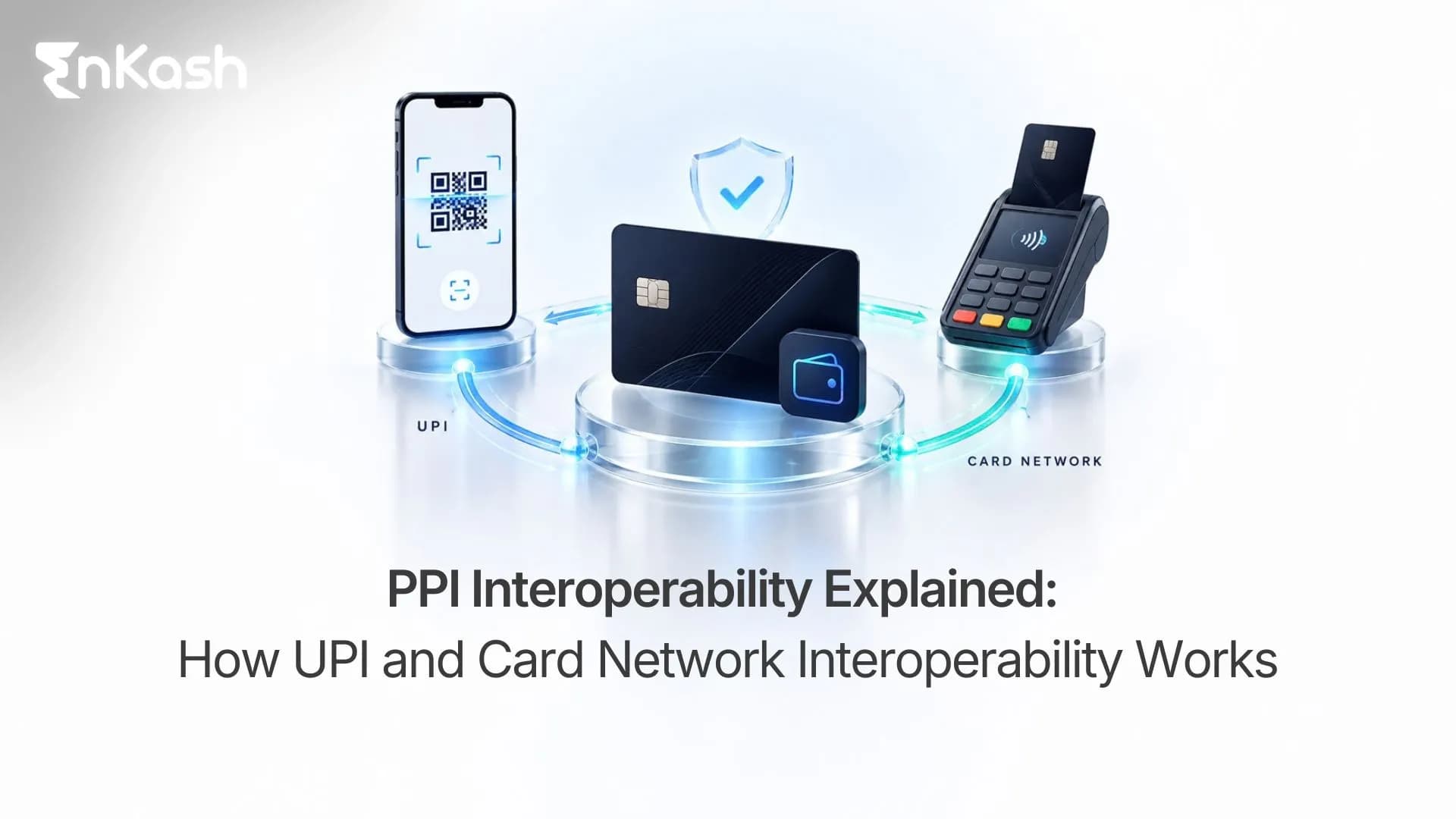
PPI interoperability allows eligible prepaid wallets and cards to work across common payment infrastructure instead of remaining limited to an issuer-specific acceptance environment. Under the current RBI framework, Full-KYC wallets use UPI for interoperability, while PPIs issued as physical or virtual cards use authorised card networks.
The RBI Master Directions on PPIs, updated on 27 December 2024, remain the operative framework as of 1 October 2026. RBI also issued Draft Master Directions on PPIs in April 2026, but those proposed directions have not yet replaced the 2021 framework.
What Is PPI Interoperability?
PPI interoperability allows an eligible prepaid instrument to work with another payment system through compatible technical infrastructure. Consider a wallet with stored prepaid value. Without interoperability, its use may remain within the issuer’s own payment environment. Once the wallet is connected to a permitted common rail, the holder can use that same stored value across a wider acceptance network.
PPI interoperability is the technical compatibility that allows an eligible prepaid payment instrument to work with another payment system. For example, a Full-KYC wallet can use UPI to make supported payments beyond the issuer's own acceptance environment, while a prepaid card can use an authorised card network.
The balance remains stored with the PPI issuer. Interoperability changes the payment infrastructure through which the transaction can be carried and accepted; it does not turn the wallet into a bank account or change the underlying PPI category.
Which PPIs Are Eligible for Interoperability
Not every PPI receives the same interoperability treatment. The category of the instrument matters, and so does its form. The current framework separates them this way:
| PPI Type or Form | Interoperability Position | Payment Rail |
|---|
| Full-KYC wallet PPI | Mandatory | UPI |
| Full-KYC physical or virtual card PPI | Mandatory | Authorized card network |
| Small PPI | Not eligible for interoperability under the current framework | Not applicable |
| Gift PPI | Optional for issuer | Applicable permitted rail based on the instrument's form |
| PPI-MTS | Exempt | Not applicable |
This creates a straightforward split. Wallet-form Full-KYC PPIs enter UPI interoperability, while card-form PPIs use card network interoperability. Gift PPIs have greater issuer choice. Small PPIs remain outside the ordinary interoperability framework, and PPI-MTS has a specific exemption.
How Does UPI Interoperability Work for Full-KYC Wallet PPIs
For Full-KYC wallets, RBI requires PPI issuers to provide interoperability through UPI. The issuer therefore has to participate in the UPI framework and meet the applicable NPCI technical, operating and settlement requirements. Once that connection exists, the customer can reach the wallet through different app environments.
UPI interoperability works across the following layers:
The PPI Issuer Enters the UPI Ecosystem
The PPI issuer participates in UPI as a Payment System Provider (PSP). NPCI issues the issuer a UPI handle in accordance with its applicable policies and risk-management requirements. In its capacity as a PSP, the PPI issuer can link only its own Full-KYC PPIs to its UPI handle and cannot onboard customers of another bank or PPI issuer. The issuer’s role remains connected with its own prepaid customers. This gives the wallet access to UPI interoperability while keeping the original PPI relationship intact.
Payment Through the Issuer’s Own App
The simplest path begins inside the PPI issuer’s application. The Full-KYC wallet is linked with the issuer’s UPI handle. When a UPI transaction is initiated from the PPI issuer's own app, the customer is authenticated using existing PPI credentials. The transaction then enters UPI with the Full-KYC wallet balance as the funding source. The transaction then enters UPI with the wallet balance serving as the funding source. For the customer, the experience may feel much like an ordinary UPI payment. The source of funds is different because the payment is drawn from stored prepaid value.
Payment Through a Third-Party UPI App
A PPI issuer may also enable its Full-KYC PPIs to be discovered and linked on supported third-party UPI apps. Transactions initiated through the third-party app are authenticated using UPI credentials rather than the issuer's PPI credentials. The customer can then link the eligible PPI inside the third-party app. The wallet balance appears as a funding source for supported UPI transactions. Authentication changes under this path. UPI credentials are used when the transaction begins from the third-party app. This expansion is significant for PPI on UPI because the customer is no longer confined to the issuer’s own interface when the facility is available.
Settlement for a Non-Bank PPI Issuer
For UPI settlement, a non-bank PPI issuer participates through a sponsor bank and must comply with the sponsor-bank arrangement as well as applicable NPCI requirements. A non-bank PPI issuer participates in UPI settlement through a sponsor bank. The issuer and sponsor bank then follow the applicable settlement arrangement for those transactions. The wallet balance funds the payment at the customer end, while the settlement layer handles the movement between participating entities afterward.
Also read: Payment Service Providers(PSP) in India: Who they are and What they Do?
How Does Card Network Interoperability Work for PPI Cards
Prepaid cards follow a different path. A physical or virtual PPI card reaches wider acceptance through an authorized card network. UPI participation on the wallet side does not automatically give a prepaid card the same network reach. For a PPI issued as a physical or virtual card, interoperability is achieved by affiliating the card with an authorised card network. The issuer must comply with the network's applicable membership, technical, security and settlement requirements.
The PPI Card Joins an Authorized Card Network
The card must be affiliated with an authorized card network. Once connected, it can use the network’s acceptance infrastructure at participating merchants. The customer still spends prepaid value held with the PPI issuer. The card network provides the common transaction rail.
Non-Bank Issuers Participate in the Network
A non-bank PPI issuer can participate in an authorized card network under the applicable membership structure. Membership or associate membership brings the issuer into the operating framework of that network. Technical requirements, processing rules, settlement arrangements, and other operating standards then apply.
The Card Uses Network Merchant Acceptance
Network participation changes where the prepaid card can be accepted. The merchant can process the interoperable card through participating card-network infrastructure. The merchant does not need a separate bilateral acceptance arrangement with every participating PPI issuer because the card network provides the common acceptance infrastructure. This wider acceptance footprint is a central outcome of card network interoperability.
Card-Network Settlement
Settlement can follow a direct arrangement where permitted or move through a sponsor bank. The route depends on the issuer’s network participation structure. Either way, settlement follows the framework of the card network carrying the transaction.
Card Security Requirements
Newly issued and renewed PPI cards generally follow EMV Chip and PIN requirements. Gift PPIs retain a specific exception and may be issued with or without EMV Chip and PIN under the applicable rules.
What Is Acceptance-Side PPI Interoperability
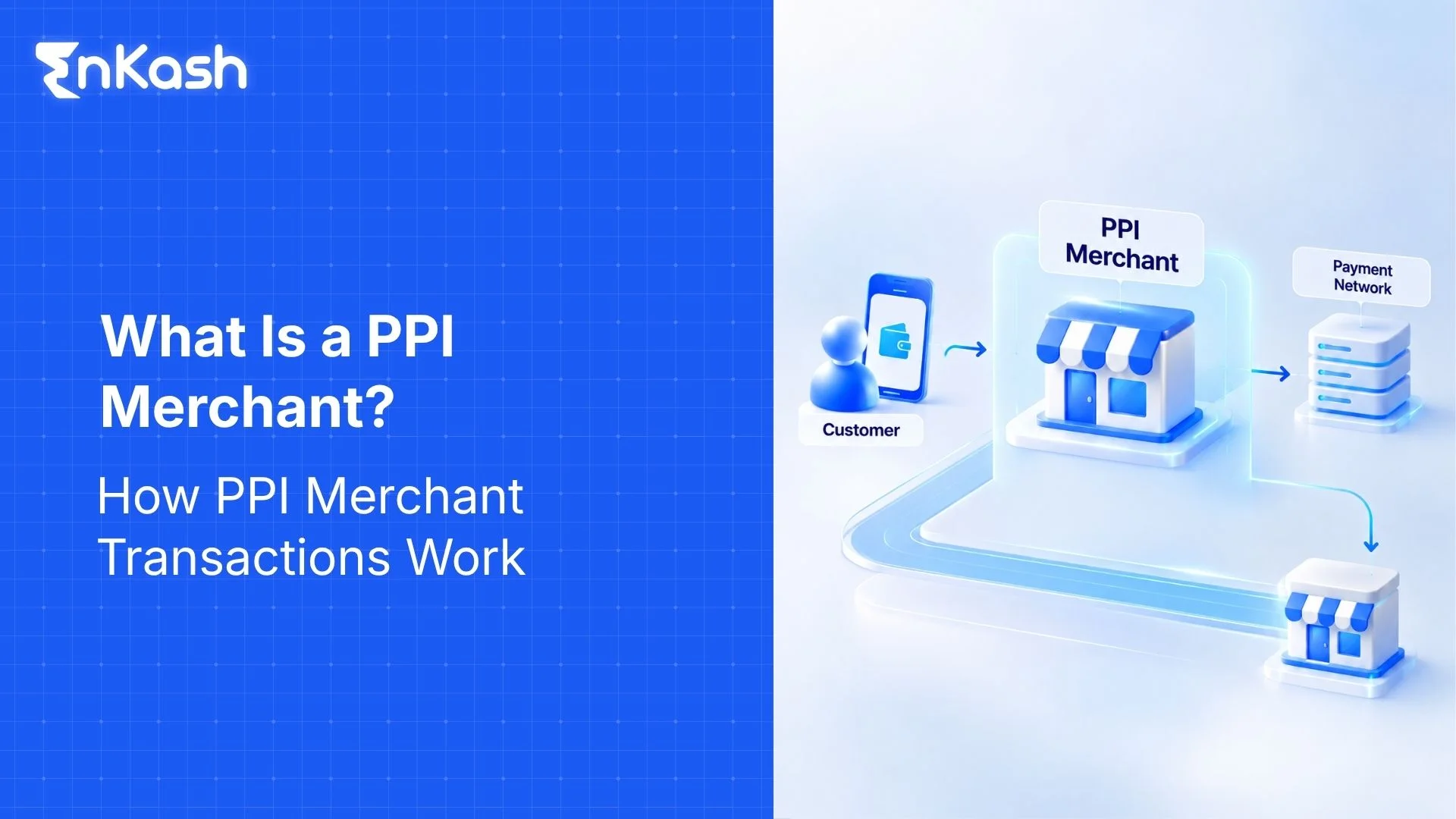
Customer-side connectivity solves only half of the problem. A wallet or prepaid card can reach a common payment rail, yet the merchant also needs infrastructure capable of receiving the payment. Acceptance-side interoperability deals with that part of the transaction. It broadens merchant reach in two main ways:
Interoperable QR Acceptance
RBI requires QR-code acceptance to be interoperable. For a Full-KYC wallet using UPI, this allows eligible PPI-funded transactions to reach merchants through interoperable UPI QR infrastructure rather than through a wallet-specific proprietary QR. For a Full-KYC wallet using UPI, this means eligible prepaid value can reach a merchant through common UPI QR infrastructure where the necessary arrangements are in place. A customer does not need a merchant to support the original wallet as a separate closed payment environment.
Common Merchant Acceptance Across Issuers
Where the applicable UPI arrangements support the transaction, an eligible Full-KYC PPI-funded payment can be accepted through the common UPI merchant infrastructure. This changes the old issuer-by-issuer model. The merchant does not need a separate bilateral arrangement for every compatible prepaid wallet reaching it through UPI. The same broad idea applies on the card side, where card-network infrastructure connects participating issuers and merchants.
What Rules Must PPI Issuers Follow After Becoming Interoperable
Network access creates new operating responsibilities for the issuer. Connecting a PPI to UPI or a card network involves governance, technical compliance, financial reconciliation, and post-transaction handling. The main areas are below.
Board-Approved Interoperability Policy
The issuer needs a Board-approved policy covering its approach to interoperability. The policy creates an internal framework for how the organization will enter, manage, and supervise its interoperable payment activity.
Technical Standards and Certification
Each payment network has technical and operating requirements. The issuer must comply with the applicable UPI or card-network requirements, including membership criteria, technical specifications, certifications, audits, governance standards and other operating rules before and after joining the network. The exact requirements depend on whether the PPI is using UPI or a card network.
PPI issuers must reconcile interoperable transactions at the frequency required by the relevant UPI or card-network framework, whether daily, weekly, monthly or more frequently. Those positions need regular reconciliation at the frequency required by the relevant payment system. The schedule can differ according to the network and transaction environment. Reconciliation keeps issuer records aligned with the payment system carrying the transactions.
Dispute and Grievance Handling
A payment may fail, be disputed, or require customer support after completion. The issuer must work within the dispute and grievance framework of the payment system used for that transaction. A UPI-based PPI payment follows the applicable UPI process, while a card transaction follows the relevant card-network framework.
What Does PPI Interoperability Not Change
PPI interoperability expands connectivity. The underlying nature of the prepaid instrument remains the same. Three boundaries are worth keeping clear:
- The balance remains prepaid stored value: Connecting a wallet with UPI does not convert the balance into money held in a bank deposit account.
- The original PPI rules continue to apply: Interoperability cannot create withdrawal, loading, transfer, or other functionality beyond what the PPI category permits.
- International use follows separate rules: Domestic connectivity through UPI or a card network does not create automatic permission for cross-border payments.
These boundaries explain why interoperability should be understood as a connectivity feature, not a redesign of the PPI product.
Why Does PPI Interoperability Matter for Indian Merchants and Customers
The technical framework matters because it changes how far prepaid value can travel through India’s payment infrastructure. The impact looks different for each participant:
| Stakeholder | What Changes |
|---|
| PPI holder | Wider acceptance and greater app choice for eligible wallets |
| Merchant | Eligible PPI-funded payments can arrive through common UPI or card acceptance |
| PPI issuer | Wider access to existing payment-network infrastructure |
| Payment ecosystem | Lower dependence on isolated proprietary wallet environments |
For customers, the immediate benefit is wider usability. An eligible wallet can move beyond a single issuer-controlled payment experience.
Merchants gain a simpler acceptance environment. They can receive compatible PPI-funded payments through common infrastructure instead of building a separate payment relationship with every issuer. Issuers gain reach through payment networks that merchants and customers are already using.
Closing Insights
PPI interoperability is about connectivity, not a change in the underlying instrument. Under the current RBI framework, Full-KYC wallets use UPI for interoperability, while physical and virtual PPI cards use authorised card networks. Acceptance infrastructure must also be interoperable. The PPI's original balance, transaction limits and permitted functions continue to apply even when the transaction moves through a common payment rail.
FAQs
Are Customers Charged for Using a PPI Through UPI?
There is currently no separate customer charge merely for making an eligible UPI payment from a Full-KYC PPI wallet. Merchant-side or inter-participant charges, where applicable under the relevant payment framework, are separate from what the customer pays. The Full-KYC wallet balance can be used through UPI without a customer transaction charge under the present framework.
What Happens if an Interoperable PPI Transaction Fails?
If an interoperable PPI transaction fails, the applicable turnaround-time, reversal and compensation rules depend on the payment system carrying the transaction. UPI-based transactions follow the applicable UPI framework, while card transactions follow the relevant card-network and RBI requirements. A UPI transaction follows the applicable UPI framework, while a card-based payment follows the relevant card-network process.
Does Interoperability Allow a PPI to Be Used Internationally?
Domestic interoperability does not create automatic international usage rights. Cross-border PPI use follows separate Indian regulatory and foreign-exchange requirements.
Are the Draft PPI Directions, 2026 in Force?
As of 1 October 2026, RBI's 2021 Master Directions on PPIs, updated on 27 December 2024, remain the operative framework. RBI issued Draft Master Directions on PPIs, 2026 on 22 April 2026, but those proposals have not yet replaced the existing Directions.