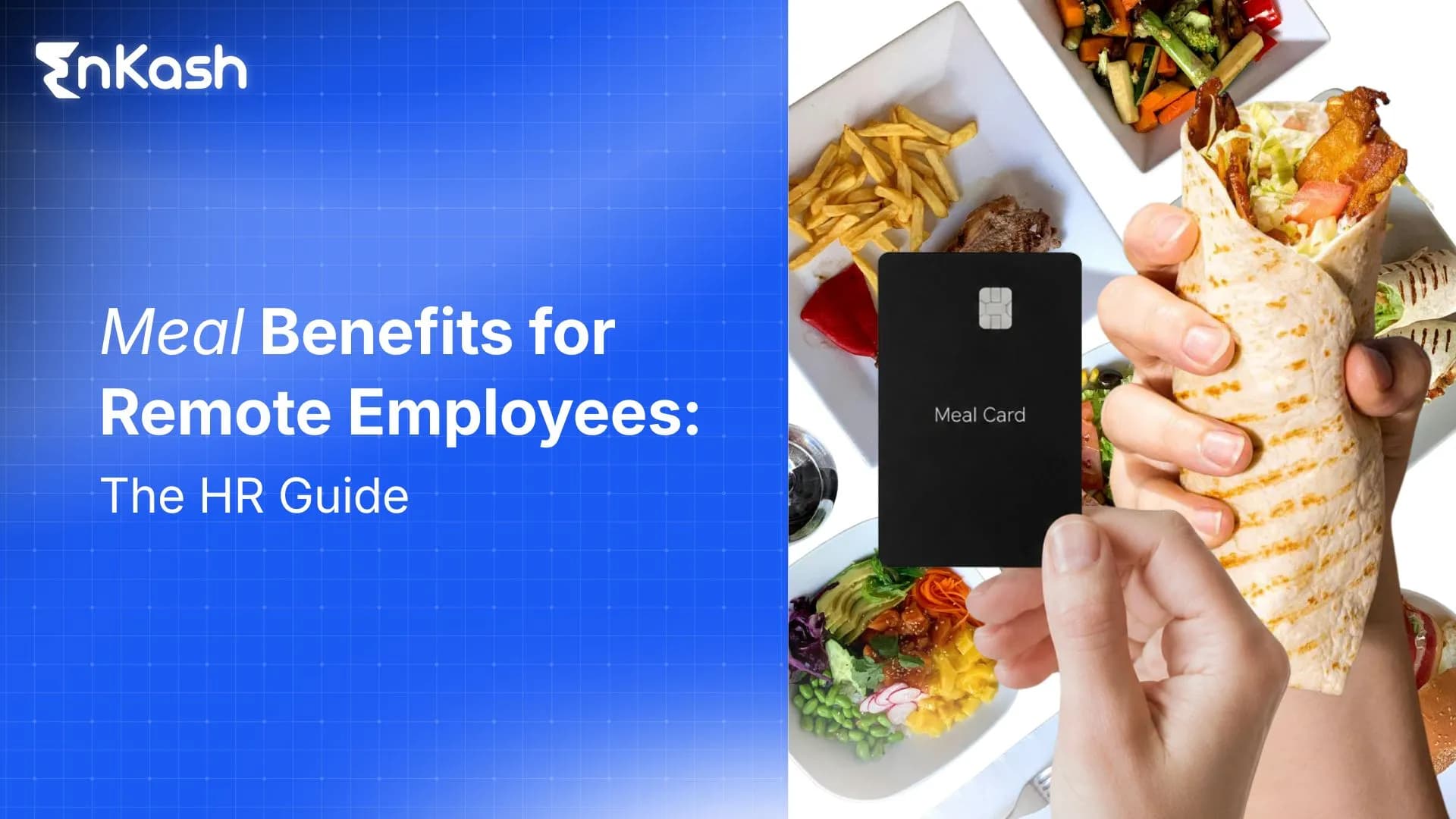
Meal benefits were once designed mainly for office employees through cafeterias, food coupons or meal cards. But as remote and hybrid work have become common, HR teams now need to rethink how these benefits are offered.
Employees working from home still need to arrange and pay for meals during the workday. However, office-based meal programmes may not always work for employees living across different cities or locations.
From choosing the right meal benefit model to setting clear policies and handling tax requirements, HR teams need a plan that works for employees wherever they work.
Should Remote Employees Receive Meal Benefits?
Yes, remote employees should be considered when meal support is already part of the company’s benefits programme.
An office employee may receive subsidised food through a cafeteria, while a remote employee may receive a meal card, digital wallet or another suitable benefit. The method can be different, but the company should follow a fair and clearly documented process when deciding eligibility and value.
This helps prevent meal support from becoming a benefit that employees receive only because they work from a particular location.
What Are Meal Benefits for Remote Employees?
Meal benefits are employer-funded benefits that help employees pay for food during their working days.
For remote employees, the benefit may be offered through:
- Digital meal card or wallet
- Food vouchers
- Credits for food-delivery platforms
- Bill-based reimbursements
- Fixed food allowance
A regular meal benefit is different from the reimbursement of meals during business travel, client meetings or company events. Those expenses arise from specific business activities and are generally claimed as official expenses. A meal benefit is provided regularly as part of the employee’s compensation or benefits package.
Why Meal Benefits Matter for Remote and Hybrid Employees
When meal support is limited to an office cafeteria, the benefit becomes dependent on where an employee works. A remote employee may work the same hours as an office employee but receive no equivalent support simply because they are working from home or another city. Extending meal benefits across work locations helps create a more consistent employee experience.
Meal benefits are also practical because employees can use them for an expense they incur regularly. Employees continue to value essentials such as cost-of-living-aligned compensation, flexible work and wellbeing benefits. A structured meal benefit can make the overall rewards package more relevant to employees’ everyday needs.
HR teams should keep the benefit fair while giving employees some freedom in how they use it. The amount and eligibility rules can remain the same for everyone, while employees use the benefit based on their location and daily routine. This makes the programme consistent for the company and practical for employees.
Types of Meal Benefits HR Can Offer Remote Employees
There is no single meal benefit model that works for every remote team. The right choice depends on where employees live, how easily they can use the benefit, the company’s budget and the amount of work HR wants to manage.
Here are the main options HR teams can consider:
| Meal benefit | How it works | What HR should consider |
|---|
| Digital meal card or wallet | The company loads a fixed meal balance onto a card or digital wallet. Employees can use it at eligible food outlets and online merchants. | It gives the company better control and visibility, but the benefit is useful only when employees can find eligible merchants in their location. |
| Meal vouchers | Employees receive prepaid vouchers that can be used to buy meals from selected restaurants or food outlets. | They are easy to understand, but limited acceptance can make them less useful for employees working in smaller cities. |
| Food-delivery credits | The company provides a fixed amount that employees can use on a selected food-delivery platform. Spending limits, delivery locations, and usage times can usually be controlled. | This works well for occasional team lunches or urban remote teams, but employees may have fewer options in locations with limited delivery coverage. |
| Meal reimbursement | Employees pay for their meals, submit bills, and receive the approved amount later. | It gives HR proof of spending, but employees must pay first and the company has to review and process every claim. |
| Food allowance | A fixed amount is added to the employee’s salary each month. | It is the easiest option to manage, but the employer has little control over how it is spent. Allowances are generally treated as taxable salary unless a specific exemption applies. |
The right option depends on employee location, ease of use, administrative effort, spending controls and applicable tax treatment.
Tax and Compliance Rules for Meal Benefits in India
Meal benefits can offer tax advantages, but only when they are structured according to the applicable income-tax rules. Simply adding a “food allowance” to an employee’s salary does not make it tax-free.
From April 1, 2026, the Income-tax Rules, 2026 increased the per-meal threshold for nil perquisite valuation from ₹50 to ₹200, subject to the prescribed conditions. The benefit applies to food and non-alcoholic beverages provided during working hours:
- At the employer’s office or business premises
- Through paid vouchers that can be used only at eligible eating joints
Nil perquisite valuation is available only up to ₹200 per meal when the prescribed conditions are met. HR and payroll teams should confirm the treatment of any amount above this threshold with a qualified tax adviser.
For example, suppose a company provides benefits for two meals on 22 working days:
₹200 × 2 meals × 22 working days = ₹8,800 per month
Over 12 months, this can amount to ₹1,05,600. However, this is only an illustration. The actual benefit depends on the company’s policy, number of eligible working days, meals covered and employee attendance.
HR teams should also understand the difference between a meal benefit and a cash allowance. A fixed food or tiffin allowance paid through salary is generally taxable. To apply the prescribed tax treatment, the benefit should be provided by the employer, limited to eligible food purchases and used during working hours.
The term “remote area” in the tax rules should not be confused with remote working. An employee working from home does not automatically fall under the separate tax provision for food provided in a legally recognised remote area.
Since salary structures and employee circumstances can differ, HR and payroll teams should have the final policy reviewed by a qualified tax professional before implementation.
Read our detailed guide to tax-efficient meal cards in India.
How to Design a Meal Benefits Policy for Remote Employees
A good policy tells employees who can receive the benefit, how much they will get and how they can use it. It also gives HR and finance teams a clear process to follow.
1. Decide the Purpose of the Benefit
Define what the company wants the programme to achieve.. The objective may be to:
- Maintain fairness across work locations
- Replace manual meal reimbursements
- Offer a useful daily benefit
- Provide structured meal support under applicable tax rules
This decision will help HR choose the amount and delivery method.
2. Define Who is Eligible
The policy should explain whether the benefit applies to:
- Permanent employees
- Employees on probation
- Interns and trainees
- Part-time employees
- Remote employees
- Hybrid employees
- Employees working from client locations
Eligibility should follow a common company rule rather than depending on the decision of individual managers.
3. Choose a Fair Benefit Model
Companies can use different methods to calculate the benefit.
Equal-value model: Every eligible employee receives the same amount.
Attendance-based model: The amount depends on eligible working days or attendance.
Equivalent-benefit model: Remote employees receive a digital benefit similar in value to the cafeteria or meal subsidy offered to office employees.
The right model depends on how the workforce operates. Whichever option the company chooses should be clearly explained and applied consistently.
4. Calculate the Benefit Amount
HR and finance teams should consider:
- Number of working days
- Number of meals covered
- Existing cafeteria costs
- Total benefits budget
- Leave and unpaid absence rules
- Applicable tax limits
The policy should also explain how the benefit will be calculated when an employee joins or leaves during the month.
5. Set Usage Rules
Employees should know where and how they can use the balance. The policy may cover eligible restaurant meals, food delivery, cafés, non-alcoholic beverages and permitted food purchases.
It should also clarify:
- Which transactions are not allowed
- Whether unused balances are carried forward
- How mixed orders are handled
- What happens when a transaction fails
- How refunds are credited
The ability to use a card at a particular merchant does not automatically decide the tax treatment of that purchase. Employers should confirm that the programme and eligible transactions meet the applicable income-tax conditions.
6. Cover Day-to-Day Processes
The policy should mention the monthly loading date, balance validity, support process and steps employees should take when a card or mobile device is lost.
It should also explain what happens during long leave, unpaid absence, employee transfers and exits.
What to Check Before Choosing a Meal Benefits Provider
The programme is useful only when employees can activate, access and use the benefit in their location. Before choosing a provider, HR teams should look beyond pricing and compare how well the solution works for employees across different locations.
| What to check | Why it matters |
|---|
| Merchant acceptance | Check whether employees can use the benefit at eligible restaurants, food outlets, and online platforms in the cities where they live. |
| Payment options | Support for both card and UPI payments can give employees more ways to use their meal balance. NPCI allows eligible prepaid payment instruments to be used for UPI merchant payments, but HR should confirm whether the provider supports this facility. |
| Eligible-spend controls | The solution should restrict the balance to approved food and non-alcoholic beverage categories according to the company policy. |
| RBI authorisation | Check whether the prepaid instrument is issued by an RBI-authorised bank or non-bank PPI issuer. RBI requires entities issuing prepaid payment instruments to obtain the necessary authorisation. |
| HR administration | HR should be able to add or remove employees, load balances in bulk, set limits, and view usage without managing individual claims. |
| Reports and integration | Transaction reports and payroll or HRMS integration can make reconciliation and employee updates easier. |
| Employee support | Review how the provider handles activation problems, failed transactions, refunds, lost access, and complaints. RBI directions also require PPI issuers to maintain a customer grievance redressal process. |
How to Implement a Meal Benefits Programme
Once the policy and provider are ready, HR can begin the rollout.
Start by reviewing what office, remote and hybrid employees currently receive. This will help the company decide whether the new programme should replace an existing benefit or work alongside it.
Review employee locations, merchant availability and commonly used payment methods before finalising the programme. A programme designed only around large cities may not work well for employees in smaller locations.
After that, HR can configure:
- Employee eligibility
- Benefit amounts
- Loading schedules
- Spending rules
- Employee access
- Reporting requirements
Before launching the programme for everyone, test it with a small employee group. A pilot can help identify activation problems, payment failures, unclear instructions and gaps in merchant acceptance.
Employees should receive clear information about:
- How to activate the benefit
- When the balance will be loaded
- Where it can be used
- Which purchases are allowed
- Whether balances carry forward
- Who to contact for support
Communication should continue after the launch. Short reminders and FAQs can help employees understand and use the benefit properly
Review and Improve the Programme
Review the programme after the first 60 to 90 days. Check how many employees have activated the benefit, how regularly it is being used, how much balance remains unused and where payments are failing.
Compare usage across locations to identify acceptance gaps in certain cities. Employee feedback can also reveal problems with activation, payment options or policy rules. Use these insights to improve communication, adjust the benefit amount or review the provider where needed.
How EnKash Supports Meal Benefits for Remote Teams
EnKash enables HR and finance teams to issue and manage meal benefits for office, hybrid and remote employees from a central platform.
Employers can issue physical or virtual RuPay meal cards, load balances individually or in bulk and manage the programme from a central dashboard.
| HR need | How EnKash supports it |
|---|
| Employees across multiple cities | Physical, virtual, and supported UPI payment options. |
| Manual benefit distribution | Bulk employee onboarding and balance loading. |
| Limited usage control | Configurable merchant and spending controls. |
| Low visibility | Real-time balance and transaction reporting. |
| Reimbursement workload | Pre-funded benefit distribution instead of repeated claims. |
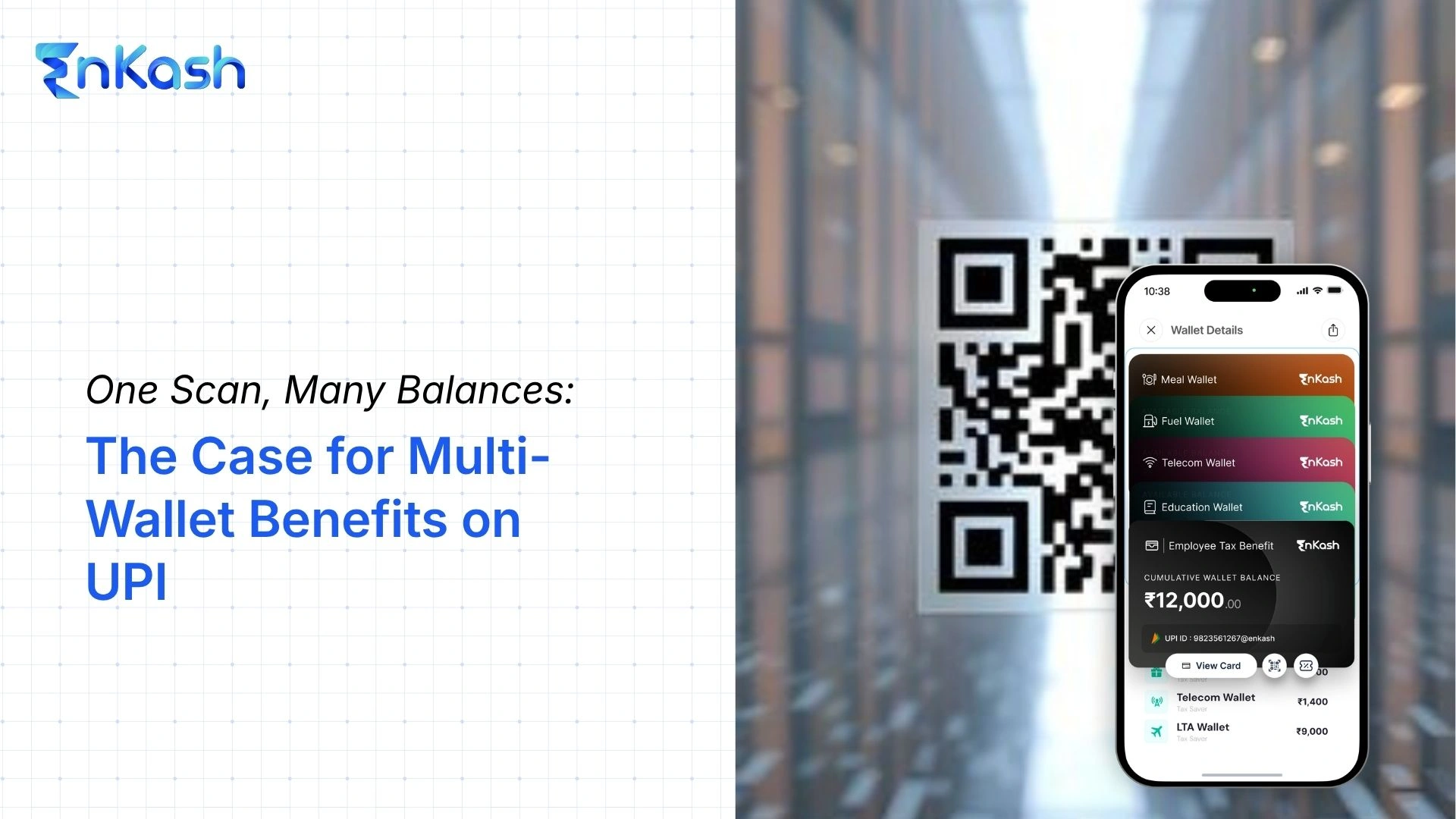
Employees can tap, swipe, scan eligible UPI QR codes or use supported online payment options. HR and finance teams get clearer control over fund allocation and usage without managing paper vouchers or repeated reimbursement claims.
Frequently Asked Questions
Are meal benefits taxable for remote employees?
The tax treatment depends on how the benefit is provided. Under the Income-tax Rules, 2026, eligible food and non-alcoholic beverages provided during working hours can have a nil taxable value up to ₹200 per meal when the required conditions are met. A cash food allowance added to salary is generally taxable unless a specific exemption applies.
What happens to meal benefits when an employee is on leave?
A company can continue the full monthly benefit or calculate it according to eligible working days. The policy should explain how paid leave, unpaid leave, joining dates and employee exits affect the amount.
Where Can Remote Employees Use Their Meal Benefits?
Remote employees may be able to use their meal benefits at eligible restaurants, food-delivery platforms and selected grocery stores. The exact usage depends on the provider’s merchant network, the company’s policy and the spending controls applied to the benefit.
HR teams should clearly explain which purchases are allowed and confirm whether online food orders and grocery transactions are supported before launching the programme.