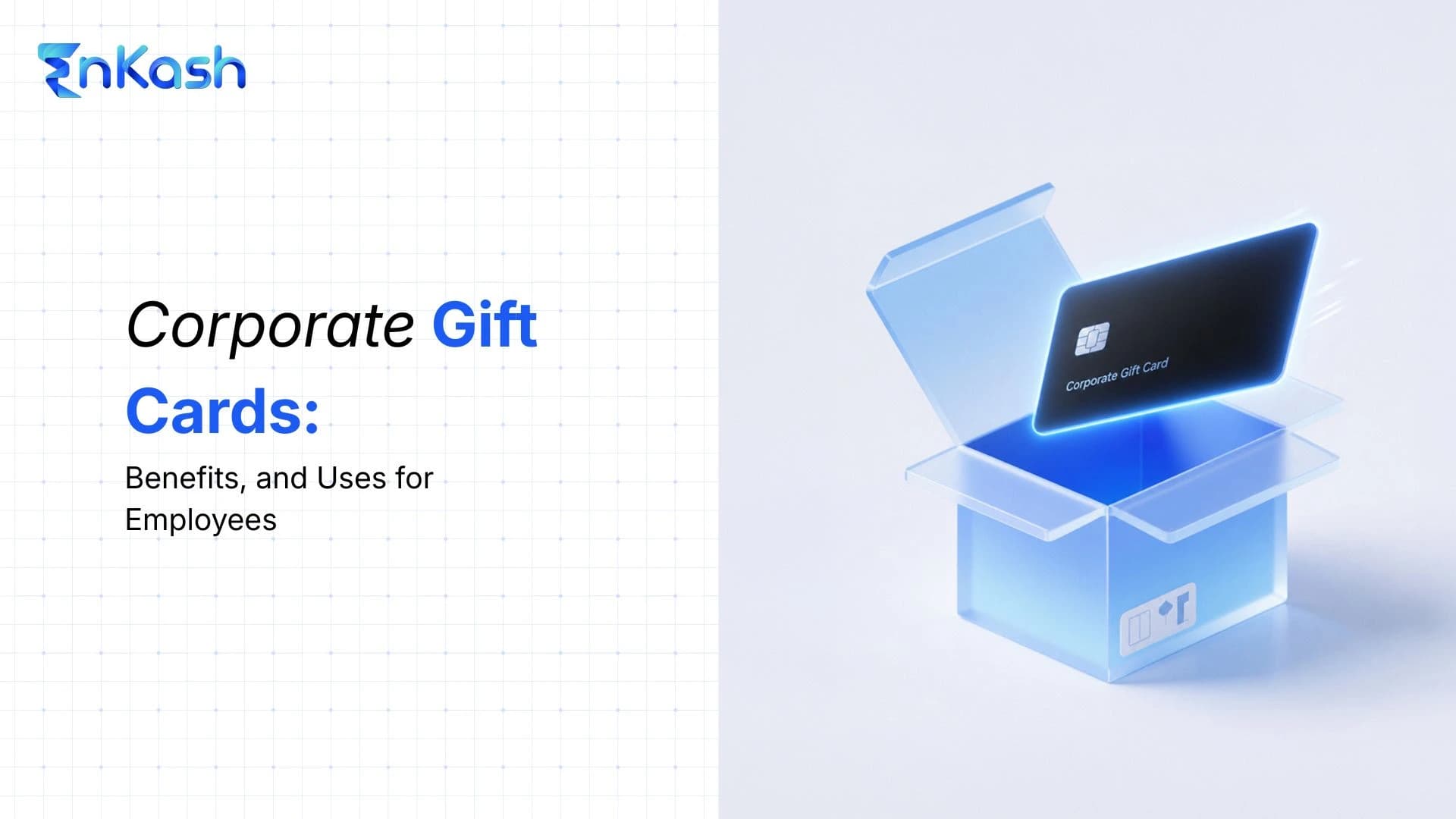
Corporate gift cards give companies a simple way to reward employees without having to guess what each person wants. HR teams can send them for festivals, target wins, onboarding, work anniversaries, or quick recognition, while finance teams can keep the spend within approved budgets. A well-planned corporate gift card program can reduce messy physical corporate gifting, delivery delays, and unclear reward records.
Employee gifting often feels weak when companies treat every team member the same. A coffee mug may work for one employee, but another may prefer groceries, food delivery, fashion, travel, or entertainment. Gift cards reduce this mismatch because employees choose what they value, and the company still controls the reward amount.
This blog explains how corporate gift card programs in India work, where companies use them, and what HR, finance, and procurement teams should check before buying corporate gift cards online.
It will cover:
- Meaning and purpose of corporate gift cards
- Business use cases with practical examples
- Employee reward and recognition scenarios
- Finance checks for budgets, approvals, and records
- EnKash’s role in digital gift card issuance and tracking
What Are Corporate Gift Cards
Corporate gift cards are prepaid reward instruments that businesses issue with a fixed value and a defined redemption method. Companies can send them to employees, clients, partners, sales teams, or channel networks for approved gifting and reward purposes. The reward can work as a digital code, email voucher, SMS voucher, physical card, or brand-linked reward, depending on the format the business selects.
A corporate prepaid gift card differs from cash in that the company can link it to a specific occasion, budget, recipient list, and redemption rules. It also differs from a physical gift because the reward value is flexible at redemption, whereas the purchase amount is fixed for the business.
What a Corporate Gift Card Includes
A standard gift card setup includes:
- Recipient details such as name, mobile number, or email address.
- Reward value such as ₹500, ₹1,000, ₹2,000, or ₹5,000 and above.
- Delivery format such as email, SMS, digital code, or physical card.
- Redemption terms such as brand, category, validity, and usage limits.
- Purchase and issue records for finance review.
- Approval details for budget owners and admin teams.
Why Businesses Use Gift Cards Instead of Cash
Companies use corporate gift cards when they need a reward format that carries a fixed value, clear redemption terms, and usable records for internal approval. Cash rewards may get mixed with salary or general payouts if teams do not document and classify them correctly. Gift cards create a separate reward event that the business can link to a festival, target, campaign, milestone, or incentive plan.
Corporate Gift Cards vs Cash Rewards vs Physical Gifts
| Reward type | What works well | What can go wrong | Best suited for |
|---|
| Corporate gift cards | Fixed value, flexible redemption, digital delivery, easier tracking, and clearer reward records | Needs accurate recipient data, expiry communication, approval control, and tax review | Employee rewards, festive gifting, sales incentives, referral rewards, partner appreciation, and customer campaigns |
| Cash rewards | Simple to understand and easy to transfer | Can get mixed with salary, payroll, or general payouts if not documented and classified correctly | Cases where the company wants to pay a direct monetary incentive through payroll or approved payout channels |
| Physical gifts | Feels personal and works well for selected occasions | Requires product selection, size or preference checks, delivery coordination, address management, and replacement handling | Small teams, leadership gifts, premium milestone rewards, or occasions where the company wants a more personal touch |
How Corporate Gift Cards Fit Into a Reward Program
A corporate gift card program works best when every issue has a business reason, a budget owner, a recipient list, a validity rule, and a redemption trail. HR teams can use the program for recognition, sales teams for incentives, and finance teams to review spend without later having to chase down scattered purchase details.
Uses of Corporate Gift Cards for Businesses
Businesses use corporate gift cards when they need a quick, measurable, and flexible reward for a specific occasion or outcome. The card works well when the company wants to reward many people at once, recognize a smaller group, or send value to teams across different cities. Each use case should carry a clear purpose, approved value, and recipient list before issue.
Festival and Celebration Gifting
Companies can use corporate gift card programs during Diwali, New Year, regional festivals, annual day celebrations, or company foundation events. For example, an HR team can issue ₹2,000 gift cards to all employees before Diwali instead of arranging the same hamper for every location.
Sales leaders can use corporate reward gift cards for target achievers, high-performing branches, dealer teams, or referral winners. A business may give a ₹5,000 gift card to employees who cross quarterly targets, without managing it through the same operational flow as regular commission payouts, subject to payroll and tax review.
Joining and Onboarding Gifts
A company can welcome new hires with a digital gift card during onboarding. This works well for remote employees because HR can send the reward without waiting for the physical kit to be delivered or for address confirmation.
Work Anniversary and Milestone Rewards
HR teams can use Corporate gift cards for one-year completion, five-year service milestones, project completion, or internal award programs. A fixed-value card keeps the reward consistent across employees in the same category.
Client and Partner Appreciation
Businesses can send gift cards to clients, vendors, channel partners, or referral partners after campaigns, renewals, or business milestones. The company should check its internal gifting policy and tax treatment before sending high-value rewards.
Marketing teams can use corporate gift cards online for cashback-style promotions, contest rewards, survey incentives, and loyalty campaigns. The reward should match the campaign rules, customer segment, and redemption conditions.
Corporate Gift Cards for Businesses
Corporate gift cards give companies a cleaner way to handle rewards when different teams request gifts for different reasons. Instead of buying separate items for every occasion, a business can approve a fixed reward value and send it through a controlled gifting process. This keeps the experience flexible for recipients and makes the spending easier to review.
The business value lies in execution:
- HR teams can launch recognition campaigns without sorting products, sizes, colors, brands, or delivery addresses.
- Finance teams can verify the approved amount before cards go out, rather than questioning spending after distribution.
- Procurement teams can reduce scattered vendor orders during festivals, annual events, or reward campaigns.
- Sales leaders can issue target rewards quickly, without waiting for hampers or physical dispatch.
- Admin teams can support employees across branches, remote locations, and field offices with less coordination work.
A corporate gift card program should still have clear operating rules. The company should define who can request cards, who approves them, which value bands apply, which occasions qualify, and how teams record expenses.
For example, a company can approve a monthly reward pool for employee wins and distribute gift cards from that pool after manager approval. This makes corporate gift cards in India easier to control without slowing down genuine reward moments.
How Corporate Gift Cards Work
A corporate gift card program operates on a planned cycle of issuance, delivery, redemption, and review. The company first decides why it wants to send the reward, then fixes the value, selects recipients, sends the cards, and checks usage records after distribution. This process keeps gifting organized without turning every reward into a separate manual task.
Step 1: Set the Reward Purpose
The team should identify the reason before buying cards. The purpose may be Diwali gifting, sales achievement, employee referral, onboarding, campaign reward, or work milestone recognition.
Step 2: Fix the Card Value
The company should decide the amount before distribution. For example, HR may allocate ₹1,500 for festive gifting, while the sales team may allocate ₹5,000 for target-based rewards.
Step 3: Prepare the Recipient List
The team should verify names, mobile numbers, email addresses, employee IDs, and department details. Wrong recipient data can delay delivery or create duplicate reward issues.
Businesses can issue digital codes, email vouchers, SMS vouchers, physical cards, or brand-linked cards. Corporate gift cards online work better when teams need fast distribution across cities.
Step 5: Send and Track the Cards
The company should track delivery, redemption status, unused value, failed delivery, and expired cards. These checks help finance teams close reward records cleanly.
EnKash Corporate Gift Cards for Employees
EnKash helps businesses buy, manage, and distribute corporate gift cards through a digital platform. Companies can issue gift cards with preset amounts, send them to recipients, and track activity on a single dashboard. EnKash gift cards work for employee rewards, sales incentives, loyalty programs, promotions, partner rewards, and customer engagement.
Digital Issuance With Preset Amounts
Companies can sign up on EnKash, add funds to the company account, and request gift cards when needed. They can distribute cards with preset amounts for occasions such as employee rewards, festive gifts, or incentive payouts.
Verified Brand Voucher Access
EnKash gives businesses access to verified brand vouchers across shopping, food, travel, and entertainment. This helps companies offer reward choices without having to buy separate products for each recipient.
Role-Based Access and Approvals
EnKash supports secure digital issuance with role-based access and approvals. This helps companies control who can issue gift cards, approve requests, and manage distribution.
GST-Compliant Invoices
EnKash provides GST-compliant invoices for gift card purchases. Finance teams can use these invoices for accounting review and internal expense records.
Dashboard Tracking
Companies can track gift card issuance, redemption, and balances from a centralized dashboard. This helps teams check which cards were sent, which were redeemed, and which balances remain unused.
Important Usage Limits
Where applicable under the product terms, EnKash gift cards are non-reloadable and non-transferable, and recipients cannot cash out the value or transfer funds. These controls help businesses keep gift cards tied to the intended reward purpose.
Bulk and API-Based Distribution
EnKash supports bulk issuance, APIs, and white-label options for large-scale gift card distribution. This helps businesses run employee rewards, customer programs, and channel campaigns without building a separate gifting system.
Who Should Use Corporate Gift Cards?
Corporate gift cards suit businesses that need a reward format with clear intent, simple access, and controlled value bands. They work best when the company already knows who should receive the reward, why it is being issued, and how its value will be classified internally. Teams should avoid using gift cards casually without a clear policy reason.
Companies With Distributed Teams
Businesses with employees across cities, branches, remote roles, or field locations can use corporate gift cards online when a physical gift creates uneven access. A digital reward gives every eligible recipient the same value regardless of location.
Organizations With Recurring Reward Moments
Companies that run monthly, quarterly, or annual reward cycles can use Corporate gift cards to maintain consistent recognition. This fits teams that already follow calendars for festivals, sales wins, onboarding, referrals, or service milestones.
Teams That Need Value Bands
Gift cards work well when the company wants different reward values for different categories. For example, a referral reward may carry a higher value than a festive gift, while a milestone reward may follow a separate internal band.
Businesses With External Reward Recipients
Companies can use gift cards in corporate programs for channel partners, dealers, customers, referral partners, or survey participants. The business should define eligibility and redemption rules before sending rewards outside the employee base.
Companies That Need Digital Reward Trails
Businesses should use corporate reward gift cards when they need a clear record of the issue date, recipient details, reward amount, and redemption status. This helps teams review gifting activity without depending on informal purchase notes.
Growing Companies Building Reward Discipline
A growing company can start with corporate gift cards for employees when it wants a formal reward system without building a heavy recognition platform. The company can begin with clear value bands and add deeper controls later.
Conclusion
Corporate gift cards create stronger reward control when companies plan them before purchase. HR teams should map the occasion, audience, message, and reward value before sending anything out. Finance teams should check approval limits, invoices, tax treatment, and redemption data before closing the expense. Procurement teams can reduce scattered gifting orders by moving rewards into a cleaner, repeatable process. Companies that want a simpler way to issue employee rewards, sales incentives, and partner gifts can explore EnKash Corporate Gift Cards for structured digital gifting.
FAQs
Are corporate gift cards taxable for employees in India?
Corporate gift card tax treatment depends on the value of the gift, the form of reward, employer policy, payroll classification, and applicable perquisite rules. Companies should review current income-tax rules and payroll treatment before treating employee gift cards as non-taxable.
Can corporate gift cards be issued in bulk?
Yes, corporate gift cards can be issued in bulk when the platform supports bulk upload, recipient validation, preset values, and digital delivery. Bulk issuance is useful for festivals, onboarding, milestone rewards, sales incentives, and customer campaigns.
Who can use corporate gift cards?
Corporate gift cards can be used by employees, sales teams, customers, channel partners, dealers, referral partners, or campaign participants, depending on the company’s reward policy and the selected gift card terms.
What information is needed before issuing corporate gift cards?
Companies need recipient names, contact details, the reason for the reward, approved value, delivery format, and the budget owner before issuing corporate gift cards. Clean input data prevents wrong delivery, duplicate issuance, and weak expense records.
How are corporate gift cards different from cash rewards?
Corporate gift cards carry a fixed reward value and defined redemption terms. Cash rewards can be merged with salary or general payouts, while gift cards provide a clearer reward entry for HR, finance, and approval review.
What value should companies choose for corporate reward gift cards?
The right value for corporate reward gift cards depends on the occasion, recipient group, and approval policy. Companies can keep festive rewards lower, performance rewards higher, and milestone rewards in a separate value band.
How do companies track corporate gift card distribution?
Companies track corporate gift cards through recipient lists, issue dates, card values, delivery status, redemption updates, and invoice records. This creates a cleaner trail for internal review and campaign-level reward reporting.
What causes corporate gift card delivery errors?
Corporate gift card delivery errors usually occur due to incorrect email IDs, incorrect mobile numbers, duplicate recipients, expired links, or incomplete recipient files. Teams should verify data before sending cards in bulk.
How should companies manage unused corporate gift cards?
Companies should review unused corporate gift cards through expiry dates, redemption status, reissue rules, and accounting treatment. Clear employee communication before expiry reduces complaints and avoids unresolved reward balances.
What tax checks apply to employee gift cards in India?
Employee gift card tax treatment depends on aggregate gift value, employer policy, and payroll classification. Companies should review the current Income-tax Rules before treating corporate gift cards for employees as non-taxable.
How do corporate gift cards help distributed teams?
Corporate gift cards online help distributed teams receive rewards without address checks, courier delays, or location-based gift differences. Digital delivery works better for employees across branches, remote roles, and field locations.
What controls make a corporate gift card program safer?
A safer corporate gift card program requires approval limits, verified recipient data, fixed-value bands, redemption tracking, expiry communication, and invoice records. These controls reduce misuse, confusion, and last-minute finance corrections.
When should businesses avoid corporate gift cards?
Businesses should avoid corporate gift cards when the reward purpose is unclear, recipient data is incomplete, approval is missing, or tax treatment has not been checked. Weak planning can turn a simple reward into a financial issue.