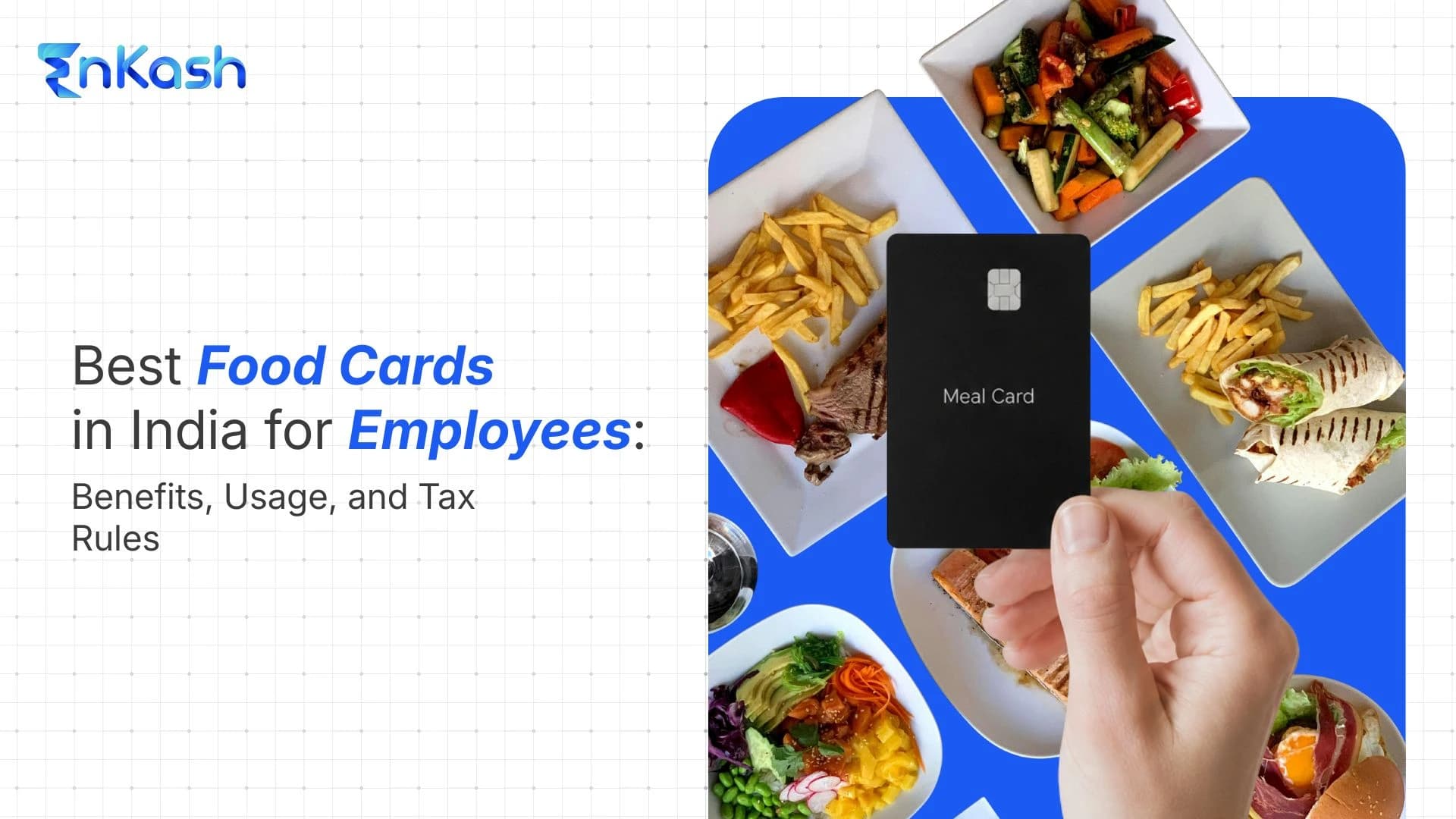
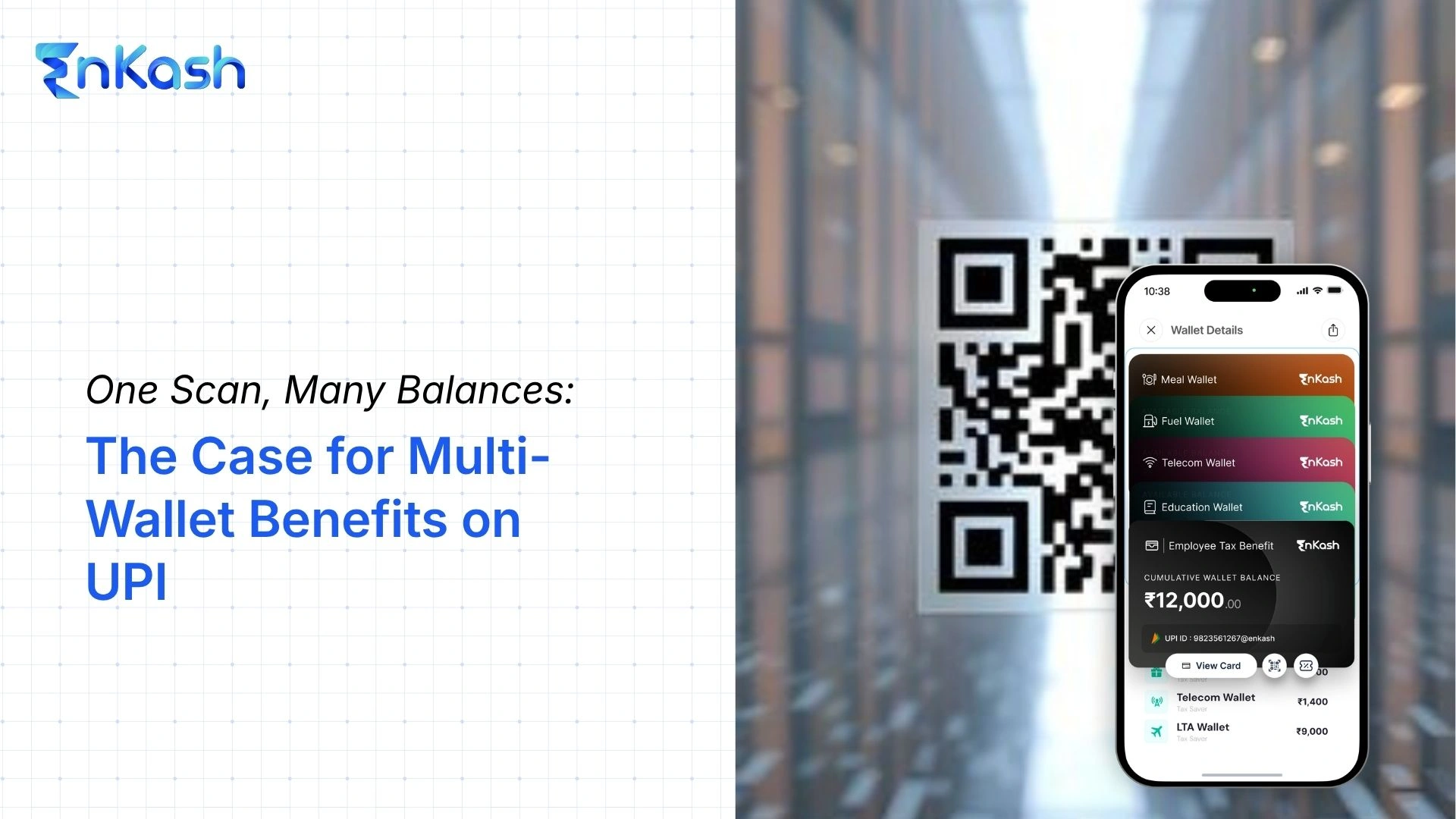
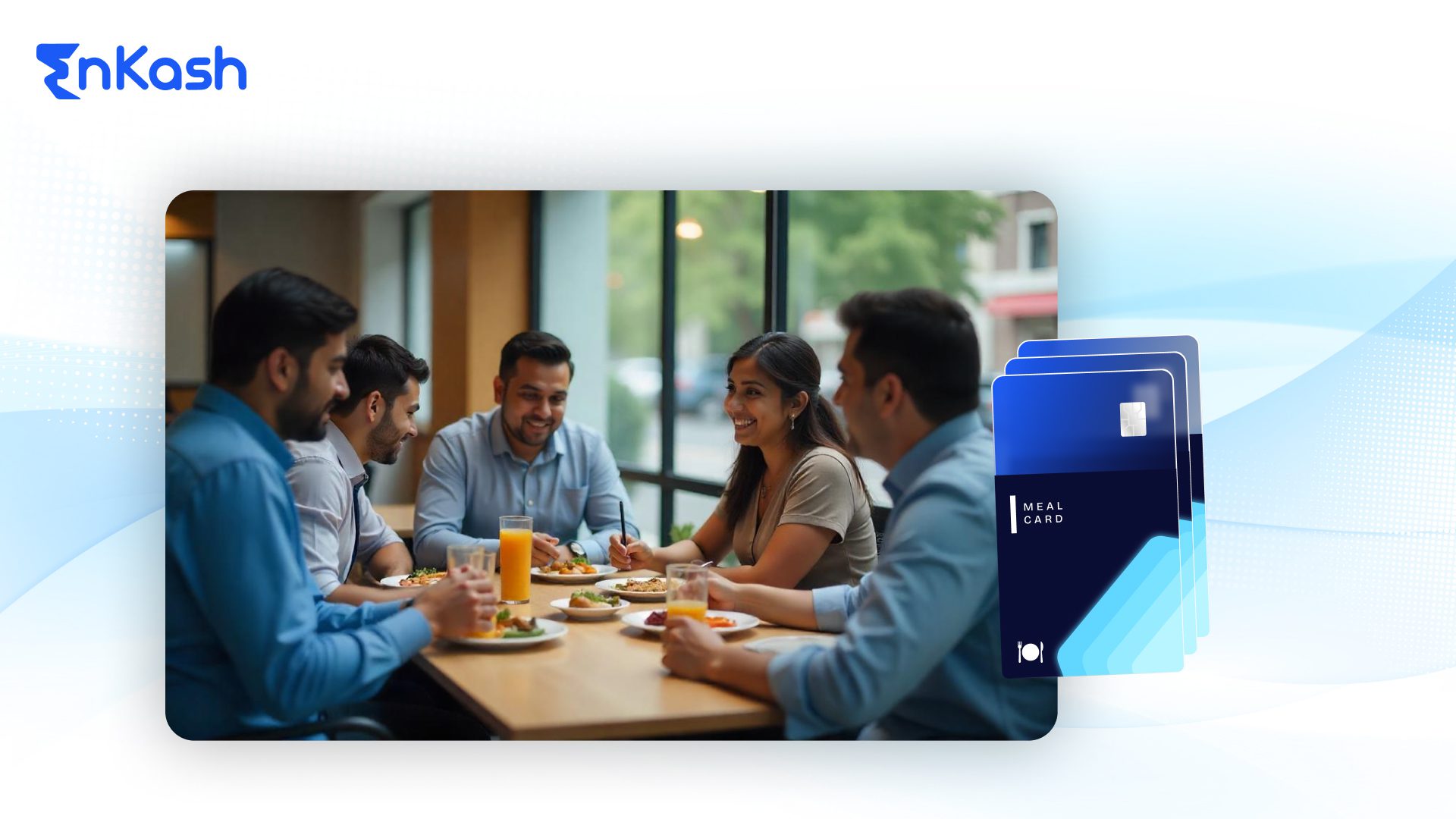
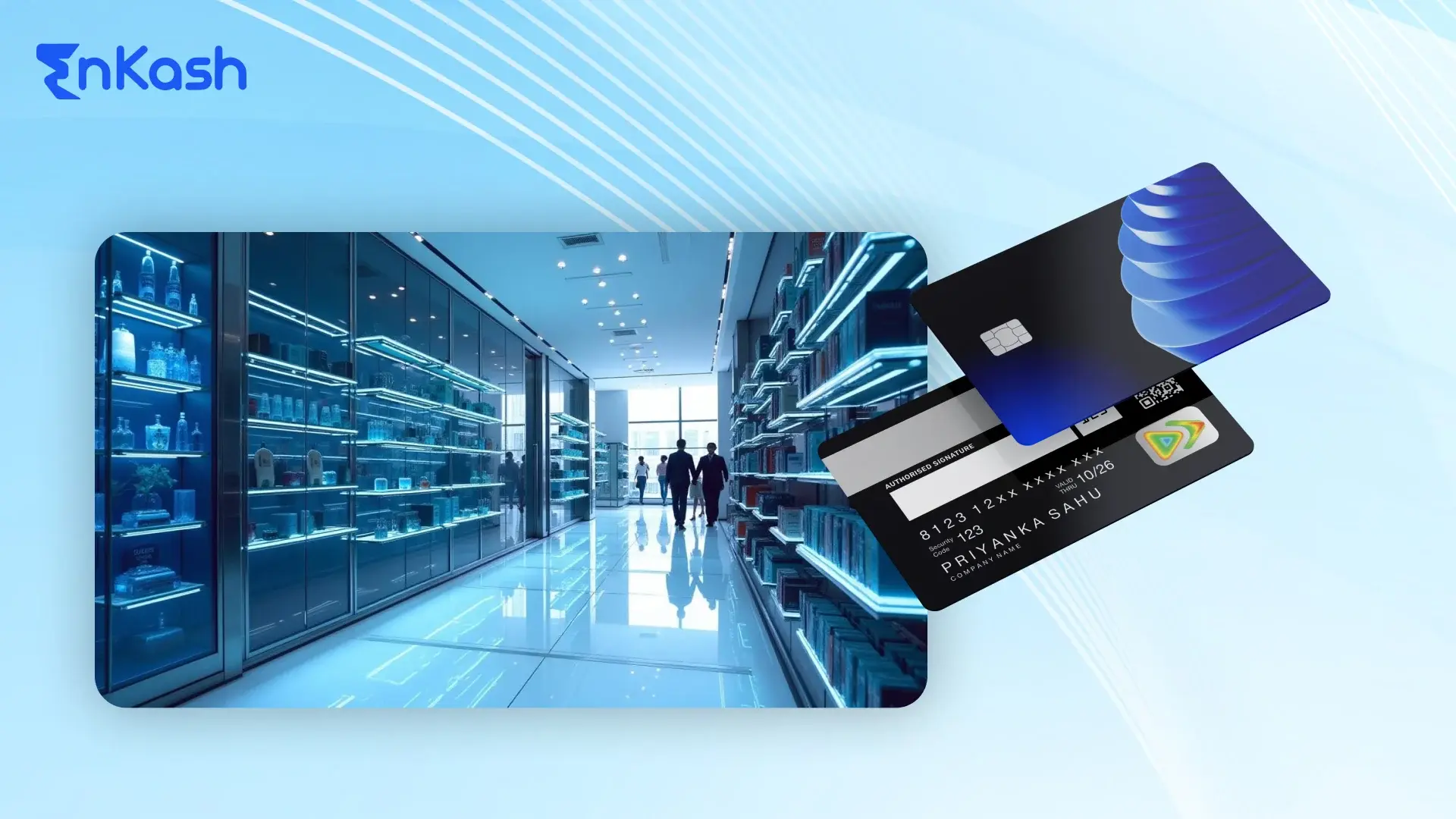
A food card lets companies fund eligible meal expenses through a controlled prepaid card instead of cash allowances or manual reimbursements. Employees use it for approved food purchases, and finance teams track funding, usage, balances, and records in a single structured system. In India, employers get better value from a food card for employees when they align card value, merchant usage, and payroll treatment with the applicable tax rules.
Companies use food cards to give employees a practical meal benefit without creating monthly reimbursement work. HR teams can issue the benefit more cleanly, finance teams can track spending with better records, and employees can use the loaded value for approved food expenses.
This blog covers:
- What a food card means in an employee benefit structure
- How food cards work for employees and employers
- Why companies issue food cards instead of meal reimbursements
- What tax rules influence food card planning in India
- How to assess the best food cards in India
- How to choose the best food card online
- Where employees can use food cards under the card rules and company policy
What is a Food Card
Employers issue a food card as a prepaid meal-benefit instrument for approved food purchases. They load a set amount onto the card, and employees can spend it at permitted food outlets, grocery stores, cafeterias, or food platforms, , employer policy, and applicable tax treatment.. Unlike a cash allowance, a food card for employees carries a defined spending purpose and can follow food-category controls.
A food card has three clear parties:
- Issuer: The bank, fintech platform, or card provider that enables the prepaid instrument
- Sponsor: The employer that funds the employee’s meal benefit
- User: The employee who spends the loaded amount within approved food categories
A food card differs from a salary credit in that the employer assigns it for meal-related use. It also differs from a normal debit card because employees cannot use it freely across every merchant when category controls apply.
For payroll teams, this distinction is important. They must correctly classify the benefit, set the monthly value, explain usage rules, and keep food-card records aligned with salary documentation and tax treatment.
How Does a Food Card Work
A food card operates on a fixed-benefit cycle among the employer, the card platform, and the employee. Employers set the meal benefit value, load funds, and define eligible uses. Employees then use the card for approved food purchases while the system records each transaction.
The process usually follows these steps:
- Employer sets the food benefit policy
HR and payroll teams decide the monthly value, eligible employees, loading cycle, and usage rules. - Employer creates or updates employee records
The company adds employee details, assigns cards, and completes required onboarding steps. - Employer loads the card balance
Finance teams fund the food card for employees based on the approved benefit amount. - Employee activates the card
The employee completes activation, checks the balance, and understands permitted usage categories. - Employee makes approved food purchases
The employee uses the card at eligible food merchants, cafeterias, grocery stores, or food platforms allowed by the card rules. - Employer tracks usage and records
Finance teams review transactions, balances, failed payments, unused values, and card status through digital reports.
This process gives companies better control over meal benefits and gives employees a simpler way to manage food-related spending.
Why Do Companies Offer Food Cards to Employees
Companies offer food cards because meal benefits need a cleaner system than cash payments or monthly bill claims. HR teams use them to give employees a visible benefit, while finance teams use them to reduce claim checks, improve records, and manage benefit spending with defined rules. A food card for employees also supports tax-aware salary planning when the employer follows the prescribed limits and usage conditions.
Food Cards for Employees
Employees use food cards to pay for approved food expenses without submitting small meal bills every month. The card gives them a dedicated balance for meals, food delivery, groceries, cafeterias, and other permitted food purchases under company policy.
For employees, the value comes from practical use:
- They receive a separate meal benefit instead of using personal funds first.
- They avoid repeated reimbursement forms for routine food expenses.
- They can check the loaded balance before spending.
- They can track food-related transactions separately from personal bank payments.
- They may receive better tax treatment when the benefit follows the eligibility rules.
A food card also makes the benefit easier to understand. Employees know the loaded value, the permitted usage categories, and the balance available for approved food purchases.
Food Cards for Employers
Employers use food cards to reduce manual reimbursement work and improve benefit governance. HR teams can issue meal benefits at scale, and finance teams can review funding, usage, employee status, and unused balances through digital records.
For employers, food cards help with:
- Monthly meal benefit distribution
- Payroll-linked allowance planning
- Reduced bill collection and claim checking
- Clearer employee-wise records
- Better visibility over recurring benefit costs
- Faster handling of card blocking, replacement, or employee exit cases
Companies also gain stronger policy control. They can define eligible employees, load values, usage rules, and spending categories before rollout. This helps the business offer a useful employee benefit without turning meal support into an unstructured cash allowance.
Food Card Tax Benefits in India
A food card can support tax-efficient meal benefits when employers structure it under the applicable income-tax rules. Under the Income-tax Rules, 2026, the meal benefit limit is increased to ₹200 per meal, subject to conditions such as provision during working hours and use of paid vouchers only at eating joints. Employers should verify the final rule text and payroll applicability before rollout.
Companies should check these tax points before issuing a food card for employees:
- The employer should define the meal benefit as part of salary or employee benefits.
- The company should keep the card linked to eligible food-related spending.
- The employee should use the card only at permitted food merchants.
- The payroll team should calculate the monthly value based on the allowed meal limit, working days, number of eligible meals, employee eligibility, and taxable excess.
- The finance team should keep card load, usage, and employee-wise records.
- The employer should handle any excess value carefully when computing salary.
A common working calculation looks like this:
| Tax planning point | Amount |
|---|
| Allowed meal value | ₹200 per meal |
| Meals considered per working day | 2 meals |
| Daily meal value | ₹400 |
| Working days considered per month | 22 days |
| Monthly food benefit value | ₹8,800 |
| Annual food benefit value | ₹1,05,600 |
This calculation helps employers plan structured meal benefits, but it does not remove the need for payroll review.
Understanding with an Example:
Suppose an employer wants to structure a monthly food card benefit based on two eligible meals per working day.
If the allowed meal value is ₹200 per meal, and the company considers 22 working days in a month, the calculation may look like this:
₹200 × 2 meals × 22 working days = ₹8,800 per month
On an annual basis, this becomes:
₹8,800 × 12 months = ₹1,05,600 per year
This is an illustrative calculation. It does not mean every employee automatically receives the same tax treatment. HR and finance teams should confirm employee eligibility, workday assumptions, card usage rules, and taxable excess before rollout.
A food card gives the best tax value when the company treats it as a documented meal benefit rather than a general spending card.
Best Food Cards in India
The best food cards in India help companies deliver meal benefits with clear employee access, usage controls, reporting, and tax-rule alignment. Businesses should compare each option through official product details, because meal benefits affect payroll records and employee tax planning. The section below covers only the approved providers for this comparison and keeps each claim tied to official information.
Before choosing a card, companies should check:
- Meal-benefit purpose and tax alignment
- Food merchant acceptance and usage categories
- Reload process for HR and finance teams
- Employee balance checks and transaction visibility
- Card controls, replacement support, and reporting
- Fit with company payroll and benefit policy
Comparison of Food Cards and Employee Benefit Card Options in India
| Provider | Card type | Best for | Employee usage | Employer controls | Tax-fit caution |
|---|
| EnKash Meal Card | Meal-benefit prepaid card, available as physical or virtual card subject to product setup | Companies that want to manage employee meal benefits with digital loading, usage tracking, and category controls | Employees can use it at eligible online and offline food merchants, subject to MCC controls, provider rules, and employer policy | Bulk or individual loading, usage tracking, food-category controls, card blocking, and digital benefit administration | Employers should align load value, working-day assumptions, permitted usage, payroll records, and employee eligibility with applicable tax rules |
| HDFC FoodPlus Card | Prepaid meal card | Organisations that want a bank-issued meal card for employee meal allowances | Employees can use it at eligible food-related merchants as per HDFC’s current product terms | Employer-led loading, card issuance, and meal-benefit administration through the provider’s process | Employers should verify current merchant acceptance, usage restrictions, non-cash withdrawal terms, and tax treatment before rollout |
| Axis Bank Meal Card | Prepaid meal card | Corporates that want to disburse meal allowance through a bank-issued card | Employees can use it at eligible food and non-alcoholic beverage merchant outlets, subject to Axis Bank’s terms | Card loading, employee-level issuance, balance enquiry options, and card management support | Employers should check current load limits, fees, validity, merchant restrictions, and payroll treatment before treating it as a tax-aligned meal benefit |
| Happay FlexiBenefits Card | Employee benefits or flexi-benefits card | Companies that want to manage multiple employee benefits, including food or meal benefits where supported | Employees may use the card for approved benefit categories based on the company’s configuration and Happay’s current product terms | Benefit distribution, employee-level records, usage visibility, and policy-based controls depending on setup | Employers should verify whether meal-specific controls, food-category restrictions, and tax-rule alignment are supported for their use case |
| Volopay Prepaid Business Card | Wider employee expense or prepaid business card, not necessarily a dedicated food card | Companies that want broader employee expense control for business spending | Employees may use it for approved business expenses such as travel, subscriptions, or operational costs, depending on company policy | Spend limits, approvals, expense tracking, and employee-level controls depending on setup | This should not be treated as a dedicated food card unless meal-benefit controls, food-category restrictions, and payroll tax treatment are clearly supported |
EnKash Meal Card
EnKash Food Card gives companies a structured way to offer meal benefits through physical or virtual prepaid cards. Employers can provide tax-free meal benefits up to ₹8,800 per month or ₹1,05,600 annually from April 1, 2026, when they structure the benefit under applicable rules.
Companies can reload cards individually or in bulk through the EnKash dashboard. Employees can use the card across eligible online and offline food or grocery merchants. The card also supports MCC-based food category controls, usage tracking, card blocking, and digital benefit administration.
HDFC FoodPlus Card
The HDFC food card helps organisations issue prepaid meal cards for employees. Organisations use the FoodPlus Card for meal allowances, and employees can use it at food-based outlets or online sites for meals, groceries, supermarkets, and restaurant bills.
The FoodPlus Card does not allow cash withdrawals because it supports meal-related expenses. This restriction helps companies keep the card aligned with its food-benefit purpose.
Axis Bank Meal Card
The Axis Bank food card helps corporates disburse meal allowance through prepaid cards. Corporates use the Meal Card for tax-exempt meal benefit disbursal, subject to applicable rules, and employees can use it at food and non-alcoholic beverage merchant outlets.
Companies can load amounts on the card, and employees can check their balance through available balance enquiry channels. Businesses should check current fees, load limits, validity, and terms before rollout.
Volopay Prepaid Business Card
Volopay offers prepaid business cards for Indian companies. Companies can issue virtual and physical prepaid cards to employees and manage travel, subscriptions, and operational costs from one place.
Volopay suits companies that want wider employee expense control. Businesses should verify meal-benefit suitability, food-category restrictions, and payroll treatment before treating it as a dedicated food card.
Happay FlexiBenefits Card
Happay offers FlexiBenefits cards for employee tax benefit management. Its employee benefits solution covers food or meal cards and coupons, along with electronic benefit distribution on employee Happay cards.
Companies should check meal-specific controls, card usage categories, payroll integration, and current tax alignment before using it for food benefits.
How to Choose the Best Food Card for Employees
Companies should choose the best food card online by checking tax alignment, card controls, employee usability, merchant access, reporting, and support. A strong food card for employees should simplify meal benefits without weakening documentation or tax discipline.
Check Tax and Payroll Alignment
Employers should confirm the allowed meal value, loading cycle, employee eligibility, and taxable excess before issuing cards.
- Match the monthly card value with the salary structure.
- Keep food usage separate from general spending.
- Maintain employee-wise load and usage records.
Review Employee Usage Controls
The food card should support approved food spending and restrict unrelated purchases where card controls allow it.
- Check merchant category restrictions.
- Confirm online and offline food acceptance.
- Explain permitted and non-permitted usage to employees.
Assess Employer Reporting
Finance teams should choose a card that gives clear records for audits, payroll checks, and monthly expense review.
- Track loads, balances, failed payments, and card status.
- Check card blocking and replacement support.
- Review dashboard access for HR and finance users.
Where Can These Food Cards Be Used
A food card works only when the card provider, merchant category, and employer policy permit the transaction. Employees should check acceptance before payment because a food outlet may decline the card if the merchant registration does not match approved food usage. Employers should document allowed use clearly to protect payroll records, tax treatment, and internal policy compliance.
Common Eligible Locations
Employees may use a food card for employees across approved:
- Office cafeterias and canteens.
- Restaurants, cafes, and food courts.
- Grocery stores and supermarkets.
- Food delivery platforms.
- Bakeries, sweet shops, and food retail stores.
Usage Checks for Employers
- Confirm merchant categories before launch.
- Test online and offline payments.
- Define non-food restrictions in writing.
- Review failed transaction patterns monthly.
The best food card online should support daily food spending while keeping reporting, controls, and compliance discipline intact.
Final Word
A food card works best when companies clearly define the meal benefit, align its value with tax rules, and restrict its use to approved food purchases. HR and finance teams should review merchant acceptance, card controls, payroll records, and reporting before rollout. The right food card for employees improves convenience, reduces reimbursement work, and keeps meal benefits organized, traceable, and policy-ready.
FAQs
What is a food card for employees?
A food card for employees is a prepaid meal-benefit card funded by the employer. Employees use it for approved food purchases, while HR and finance teams manage loading, limits, balances, and records digitally.
What expenses can employees pay through a food card?
Employees can use a food card for approved food-related expenses, such as meals, cafeteria purchases, grocery purchases, and food delivery, subject to provider rules, merchant categories, and company policy settings.
What are the tax benefits of a food card in India?
A food card can support tax-efficient meal benefits when employers follow prescribed limits and usage conditions. Rule 15 covers food and non-alcoholic beverages during working hours or paid vouchers usable only at eating joints, up to ₹200 per meal.
Who should get a food card in a company?
Companies should issue a food card to employees who receive meal benefits as part of their salary or workplace benefits. HR teams should define eligibility by role, grade, location, attendance pattern, or internal benefit policy.
Where can employees use food cards?
Employees can use food cards at approved food merchants, based on provider rules and employer policy. Eligible places may include cafeterias, restaurants, food courts, grocery stores, supermarkets, bakeries, and food delivery platforms.
How should a company choose the best food card online?
Companies should choose the best food card online by checking tax alignment, merchant controls, dashboard reporting, card replacement support, employee activation, online acceptance, offline acceptance, and payroll record quality before rollout.
What records should employers maintain for food cards?
Employers should maintain employee-wise load records, card status, balance details, transaction history, failed payment reports, policy documents, and payroll mapping. These records help finance teams support audits, salary reviews, and tax treatment checks.
Can food cards replace meal reimbursements?
Companies can replace meal reimbursements with food cards to achieve cleaner benefit delivery. The card reduces bill collection, claim approvals, and manual checks, while giving employees direct access to approved food spending.
What mistakes should employers avoid with food cards?
Employers should avoid unclear usage rules, unrestricted spending, weak merchant controls, poor payroll mapping, missing employee records, and incorrect tax assumptions. A food card for employees needs documented limits, allowed categories, and regular review.