A salary package may include LTA, yet the listed amount does not receive automatic tax relief. The employee must complete an eligible journey within India, opt for the old tax regime where applicable, and retain valid proof of the permitted travel cost.
Suppose an employee receives ₹60,000 under this salary component but spends ₹42,000 on a qualifying fare. The unused ₹18,000 remains taxable because the exemption cannot exceed the eligible amount actually supported. The final figure also depends on the prescribed fare cap and the employee’s available journey entitlement.
The legal framework changed on April 1, 2026. Income for tax years beginning on or after April 1, 2026, is governed by the Income-tax Act, 2025, and the Income-tax Rules, 2026. Tax years beginning before April 1, 2026, continue to be governed by the earlier Income-tax Act, 1961 framework. In this blog, you will read about the current eligibility conditions, exemption limits, calculation method, claim process, and employer-side controls without mixing the two legal periods.
What is Leave Travel Allowance (LTA)
Leave Travel Allowance (LTA) is a salary benefit given by an employer to help employees cover eligible travel expenses for leave travel within India. Under income tax rules, the exempt portion of LTA can be claimed only for actual travel costs, such as air, rail, or other approved transport fares, and not for hotel stays, food, sightseeing, or local expenses.
Employees can claim LTA exemption for themselves and eligible family members by submitting valid travel proof and employer-required documents.
Eligibility for LTA
An employee can qualify for LTA when the benefit comes from a current or former employer and the employee takes part in the journey. Eligible family members (Spouse, Children, Dependent siblings, and parents) may travel with the employee, subject to the dependency and child-related rules.
Who Can Receive LTA
LTA may apply to:
- Salaried employees who receive it from their current employer
- Retired employees who receive travel assistance from a former employer
- Employees who receive the benefit after their employment ends
The employee must take part in the journey. A trip made only by family members does not qualify under the employee’s claim.
Which Family Members Are Eligible for LTA?
| Family Member | Eligibility Condition |
|---|
| Spouse | Included as an eligible family member |
| Children | Generally limited to two surviving children |
| Parents | Must be wholly or mainly dependent on the employee |
| Brothers and sisters | Must be wholly or mainly dependent on the employee |
The two-child restriction does not apply to children born before October 1, 1998. It also allows an exception when multiple children are born after the birth of the first child.
Relationships alone do not establish eligibility for parents, brothers, or sisters. The employee must be able to support the dependency condition if the employer or tax authority requests clarification.
What Expenses Are Covered Under Leave Travel Allowance
Leave Travel Allowance (LTA) covers only the eligible travel fare paid for a journey within India. It does not cover the full cost of a holiday. Employees can claim LTA exemption only for permitted transport expenses such as air, rail, or approved public transport fare, subject to the limits prescribed under income tax rules.
LTA does not cover hotel stays, food bills, sightseeing, shopping, entertainment, local cab rides, or other personal travel expenses.
| Expense Type | Covered Under LTA? | Explanation |
|---|
| Airfare within India | Yes | Allowed up to the permitted fare limit for the eligible route |
| Train fare | Yes | Allowed based on the eligible rail fare for the shortest route |
| Bus or recognised public transport fare | Yes | Allowed where rail travel is not available, and public transport exists |
| Hotel stay | No | Accommodation expenses are not covered under LTA |
| Food and beverages | No | Meals, snacks, and restaurant bills are not eligible |
| Sightseeing and entertainment | No | Tourist activities are personal expenses and cannot be claimed |
| Shopping expenses | No | Personal purchases are not covered |
| Local travel at the destination | No | Local cab, auto, or transport after reaching the destination is generally not eligible |
| International travel | No | LTA exemption applies only to travel within India |
| Cancellation charges | No | Cancelled tickets and cancellation fees do not qualify |
If an employee books a tour package, only the clearly identifiable travel fare portion may be considered for LTA exemption. The package cost must be separated into transport, hotel, food, and activity charges. If the invoice does not show a clear travel fare breakup, the full package amount may not qualify for exemption.
Exemption Limit Under LTA
The LTA exemption limit is the lowest of three amounts: the LTA provided by the employer, the eligible travel fare actually paid, and the maximum fare allowed under the applicable tax rules.
The exemption, therefore, has no fixed rupee ceiling for every employee. The salary structure, travel cost, and statutory cap determine the final amount in each case.
The calculation follows this order:
- Check the LTA in salary for the relevant period.
- Identify the eligible fare supported by valid records.
- Apply the maximum amount permitted under Rule 278.
- Treat the lowest figure as the exempt amount.
Any balance remains taxable.
Taxable LTA = Employer-provided LTA − Eligible exempt amount
For example, an employer may provide ₹50,000, while the employee supports ₹44,000 in eligible fare, and the applicable rule allows ₹40,000. The exemption will be ₹40,000, and the remaining ₹10,000 will be treated as taxable salary.
What is a Block Year Under LTA
For the four-year LTA cycle, the block beginning in calendar year 2022 covered 2022 to 2025. The next block runs from 2026 to 2029. For income and claims governed by the 2026 framework, employees should consider the 2026–2029 block while also checking whether any eligible carryover from the previous block applies.
The current block runs from January 1, 2026, to December 31, 2029.
| LTA Block | Period Covered |
|---|
| Previous block | 2022 to 2025 |
| Current block | 2026 to 2029 |
| Next block | 2030 to 2033 |
The block follows calendar years rather than financial years or assessment years. Therefore, travel completed in December 2029 belongs to the current block, while a journey beginning in January 2030 belongs to the next block.
Under Rule 278 of the Income-tax Rules, 2026, an employee may claim exemption for two qualifying journeys during one four-year LTA block. The rule does not limit the employee to one journey per calendar year. Both claims may fall in different years or within the same year, provided each journey meets the prescribed conditions.
Carryover of Unclaimed LTA or LTC
An employee can use one unused journey entitlement from the 2022–2025 block during calendar year 2026. Rule 278(3) of the Income-tax Rules, 2026 allows this carryover only in the first year of the next block.
For example, an employee who claimed exemption for only one journey during 2022–2025 may treat the first qualifying journey taken in 2026 as the carried entitlement. Rule 278(4) keeps this journey separate from the two journeys available for the 2026–2029 block.
The carried entitlement expires after December 31, 2026. It cannot roll over into 2027, and it does not preserve any unused salary.
How to Calculate Leave Travel Allowance
The easiest way to calculate LTA is to compare the three eligible amounts and use the lowest figure. The examples below show how the rule works when the employer-provided LTA, actual eligible fare, or prescribed fare ceiling becomes the limiting amount.
Example 1: Employer-Provided LTA Is the Lowest Amount
An employee travels from Delhi to Bengaluru with a spouse and submits eligible return-flight tickets totaling ₹48,000. The permitted fare ceiling for the journey is ₹45,000, while the employer provides ₹36,000 as LTA.
- Employer-provided LTA: ₹36,000
- Eligible ticket cost: ₹48,000
- Permitted fare ceiling: ₹45,000
Exempt LTA: ₹36,000
The exemption stops at ₹36,000 because the employee cannot claim more than the amount provided under the salary component.
Example 2: Eligible Fare Is the Lowest Amount
An employee travels from Mumbai to Jaipur and submits eligible return tickets worth ₹22,000. The employer provides ₹30,000 as LTA, with a permitted fare ceiling of ₹26,000.
- Employer-provided LTA: ₹30,000
- Eligible ticket cost: ₹22,000
- Permitted fare ceiling: ₹26,000
Exempt LTA: ₹22,000
Taxable LTA: ₹8,000
The employee can exclude only the cost of the supported ticket. The unused part of the salary component remains taxable.
Example 3: The Prescribed Fare Ceiling Is the Lowest Amount
An employee spends ₹54,000 on eligible family travel and receives ₹50,000 as LTA. Rule 278 limits the qualifying fare for that journey to ₹42,000.
- Employer-provided LTA: ₹50,000
- Eligible ticket cost: ₹54,000
- Permitted fare ceiling: ₹42,000
Exempt LTA: ₹42,000
Taxable LTA: ₹8,000
The higher ticket price does not increase the exemption beyond the prescribed ceiling. Actual claims must use the employee’s own tickets, salary records, and the fare limit applicable to the completed journey.
Calculate Your Income Tax
Leave Travel Allowance (LTA) Under the New Tax Regime
The LTA exemption is not available under the new tax regime. Any LTA paid by the employer is included in the employee’s taxable salary, even if the employee has completed an eligible journey and maintained valid travel records.
A salaried employee without business or professional income can generally choose the old tax regime while filing the income tax return, subject to the applicable return-filing rules. In that case, the employee can claim the eligible LTA exemption once the required conditions are met.
Leave Travel Allowance (LTA) Under the Old Tax Regime
Under the old tax regime, an approved LTA claim reduces the employee’s taxable salary. The employer excludes the accepted amount from salary income, while any unapproved portion remains taxable.
For income earned from April 1, 2026, this treatment falls under Section 11 read with Schedule III, serial number 8 of the Income-tax Act, 2025, and Rule 278 of the Income-tax Rules, 2026.
Employees should compare their total tax under both regimes before making a choice. The old regime may offer an LTA benefit, but the final saving also depends on the employee’s income, deductions, exemptions, and applicable tax rates.
For income governed by the 2026 Rules, the employee should submit Form No. 124 with valid travel proof to the employer before the payroll processing cut-off so the employer can consider the eligible exemption while computing TDS.
Follow these steps:
- Submit Form 124 with tickets, booking invoices, payment proof, travel dates, and passenger details.
- For income governed by the Income-tax Rules, 2026, check the approved exemption in Form No. 130, the salary TDS certificate issued by the employer. For earlier periods governed by the old framework, employees should refer to Form 16.
- Compare the certificate with the LTA amount included in the salary.
- Enter an eligible claim in the income tax return when the payroll did not consider it, and complete records support the amount.
The return claim cannot exceed the LTA included in the salary. Employees should retain all supporting documents when the amount entered on the return differs from the amount on Form 16.
LTA Exemption for Vacation During Holidays
An LTA claim can remain valid when the journey includes weekends or public holidays. The tax rules do not reject a trip only because some travel dates fall on non-working days.
The journey should connect with approved leave under the employer’s policy. For example, an employee may take leave on Friday and Monday and travel during the adjoining weekend. The Saturday and Sunday dates do not affect eligibility.
A trip taken entirely during weekly holidays, without approved leave, may not meet the condition of traveling while on leave. Employers may also require the leave period and journey dates to match before approving the claim.
EnKash LTA Wallet for Employees
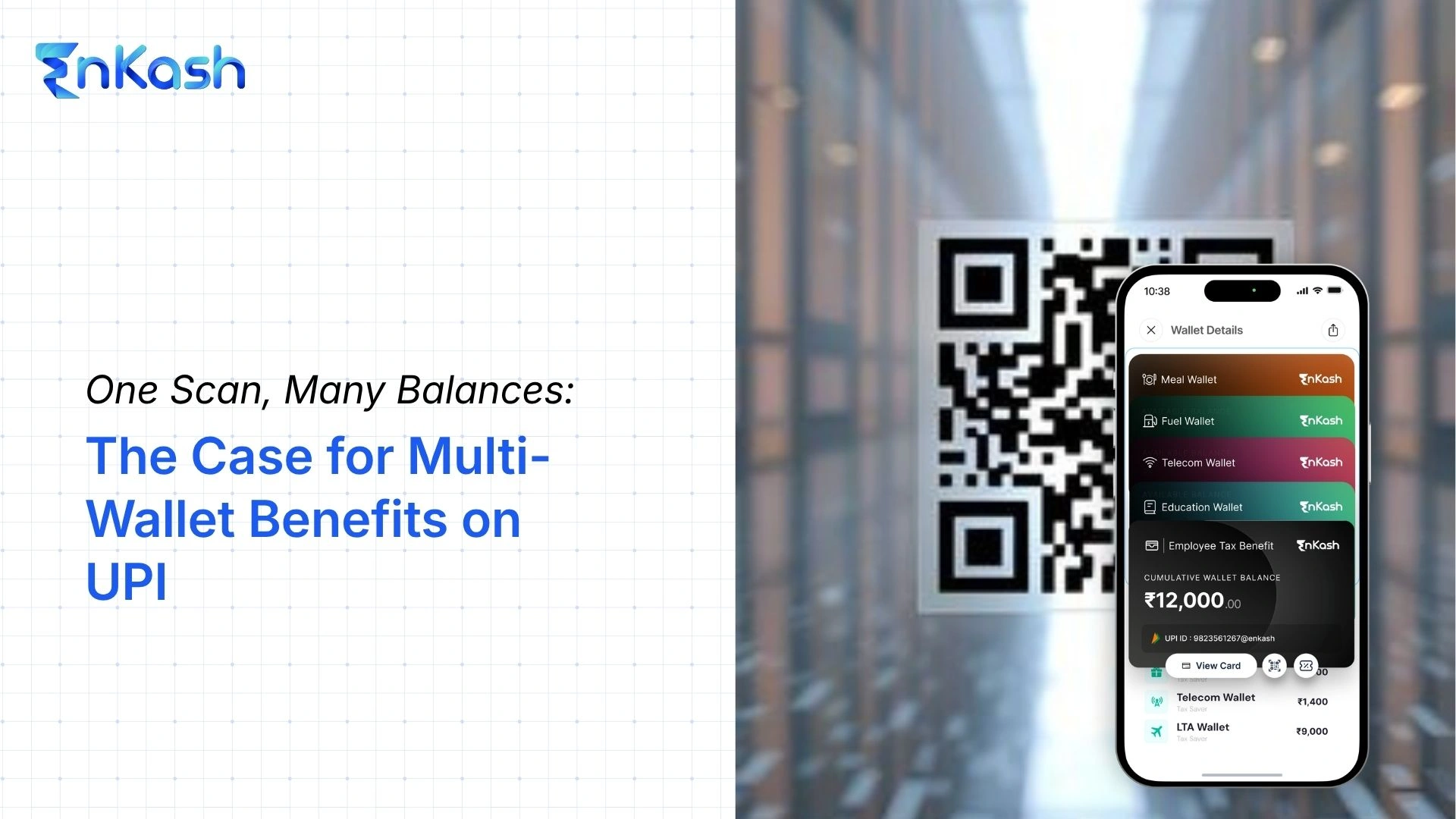
The EnKash LTA Wallet allows employers to place the employee’s travel benefit in a separate balance on the EnKash Multi-Wallet Card. Companies can control where the balance is used and monitor transactions through the EnKash platform.
The LTA balance remains separate from meal, fuel, gift, and telecom wallets linked to the same card. Merchant category controls restrict wallet usage to approved travel-related categories, which helps employers apply their benefit policy before employees spend the funds.
EnKash operates the card under its RBI-issued prepaid payment instrument license, and the card uses the RuPay network. The wallet simplifies benefit distribution and transaction tracking, but employers must use their payroll process to review travel proof and approve the final claim.
Conclusion
Employees can make better use of Leave Travel Allowance by checking the rules before booking a trip. They should confirm the available journey, keep valid travel records, and submit the claim within the employer’s deadline.
Employers should explain the policy clearly and apply the current tax rules correctly. This reduces claim errors, prevents incorrect tax treatment, and makes the benefit easier for employees to use.
The EnKash LTA Wallet can make LTA administration more organized for both employers and employees. Dedicated balances, controlled usage, and central transaction visibility help businesses manage the benefit with greater confidence.
FAQs
Is LTA mandatory in every salary package?
Employers do not have to include LTA in every salary package. The benefit depends on the company’s compensation policy and employment terms. Tax exemption applies only when the employer provides travel assistance, and the employee meets the prescribed conditions.
Can self-employed individuals claim LTA?
Self-employed individuals cannot claim LTA because the exemption applies to travel assistance received from an employer or former employer. A business owner's payment of personal travel costs does not create an employer-provided salary benefit for this purpose.
Can both working spouses claim LTA?
Both spouses may claim LTA from their respective employers when each has salary benefits and the claims comply with the rules. They should not use the same fare amount twice, because each exemption must reflect supported expenditure actually incurred.
Does changing jobs reset the LTA block?
Changing employers does not restart the LTA block or restore used journey entitlements. The four-year limit applies to the employee, not to each job. Employees should disclose earlier claims when a new employer reviews a claim during the same block.
Can a pension-receiving parent qualify for LTA?
A parent who receives a pension is not automatically excluded from an LTA claim. Eligibility depends on whether the parent remains wholly or mainly dependent on the employee. The employee should keep evidence that supports the claimed dependency.
Can canceled tickets support an LTA claim?
Canceled tickets do not support an LTA exemption because the employee did not complete the journey. Refund deductions or cancellation charges are also not eligible for travel fare. Payroll should review the travel record rather than the original booking alone.
Can LTA be claimed before the journey?
Paying for tickets in advance does not create an immediate LTA exemption. The employee must complete the qualifying journey before claiming the benefit. An employer may collect booking details earlier, but final approval should follow actual travel.
Can employees claim LTA for multi-city travel?
A multi-city trip can qualify, but personal detours do not increase the exempt amount. The permitted fare is measured through the shortest path to the qualifying destination. Employees should retain an itinerary that separates eligible travel from optional stops.
Can an employer pay LTA every month?
An employer may distribute LTA monthly, annually, or through another payroll schedule, depending on company policy. Payment frequency does not determine tax exemption. The employee must still satisfy the applicable conditions before any amount can be excluded from salary.
What is the difference between LTA and LTC?
LTA and LTC are commonly used interchangeably to refer to the same employer travel benefit in salary discussions. LTA means Leave Travel Allowance, while LTC means Leave Travel Concession. The tax rules use the broader phrase travel concession or assistance.
Is LTA exemption available under the new tax regime?
No, the LTA exemption is not available under the new tax regime. Any LTA paid by the employer is treated as taxable salary.
Employees who want to claim eligible LTA exemption generally need to opt for the old tax regime, subject to applicable tax rules.
What is the current LTA block year?
The current LTA block year is 2026 to 2029. During this four-year block, an employee can claim exemption for up to two eligible journeys.
The block follows calendar years, not financial years.
Can LTA be claimed for international travel?
No, LTA cannot be claimed for international travel. The exemption applies only to eligible travel within India.
If a trip includes foreign travel, only the qualifying domestic travel portion may be considered, if it is separately supported and allowed under the rules.
Can LTA be claimed without travel proof?
No, LTA should not be claimed without valid travel proof. Employees must keep records such as tickets, invoices, boarding passes, payment proof, travel dates, and passenger details.
Employers may reject the exemption if the employee cannot support the completed journey and eligible fare.
Does LTA cover hotel and food bills?
No, LTA does not cover hotel stays, food bills, sightseeing, shopping, local travel, or other holiday expenses.
The exemption is limited to the eligible travel fare for reaching the destination, subject to the prescribed fare limits.
Can LTA be claimed for parents?
Yes, LTA can be claimed for parents if they are wholly or mainly dependent on the employee and travel with the employee.
The employee should keep documents that support the journey, fare, and dependency condition if required by the employer or tax authority.
Can LTA be claimed twice in one year?
Yes, LTA can be claimed twice in one year if the employee has two eligible journey entitlements available within the same four-year block. The tax rules limit the number of exempt journeys in a block, not necessarily one journey per calendar year.
What happens if LTA is paid but not claimed?
If LTA is paid but not claimed with valid eligibility and proof, the unclaimed amount becomes taxable salary.
The employee cannot treat LTA as tax-exempt only because it appears in the salary structure. The exemption applies only when the journey, fare, proof, and tax-regime conditions are satisfied.