Employee satisfaction is one of the cornerstones of a successful business. To keep your employees happy, just paying salaries on time is not enough anymore.
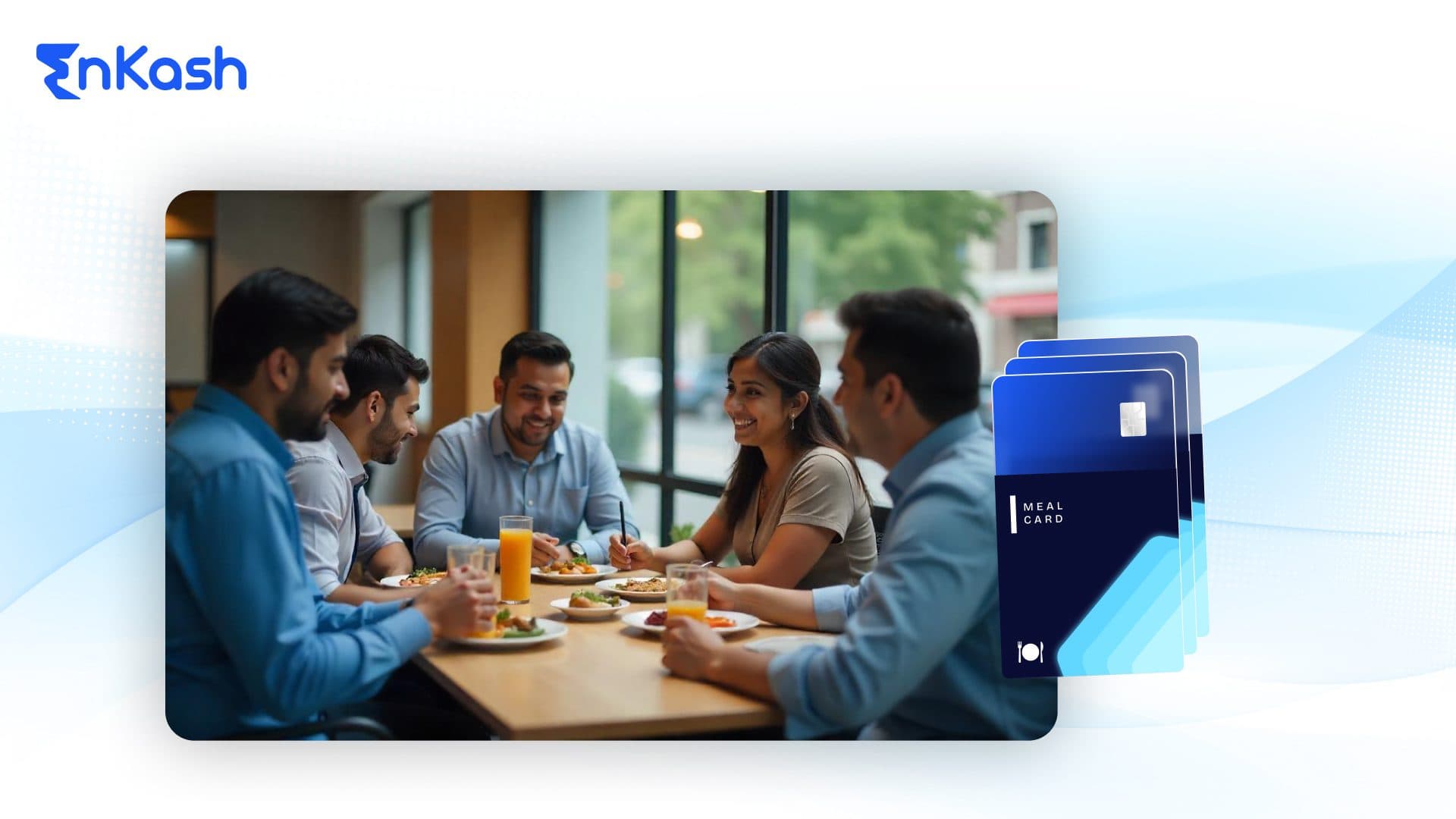
Many businesses are introducing modern perks for employees, including meal cards for employees. This service is quite popular in the corporate sector and has proven effective in boosting productivity. This blog will help you understand everything about meal cards and their benefits.
What is Tax free Meal Card?
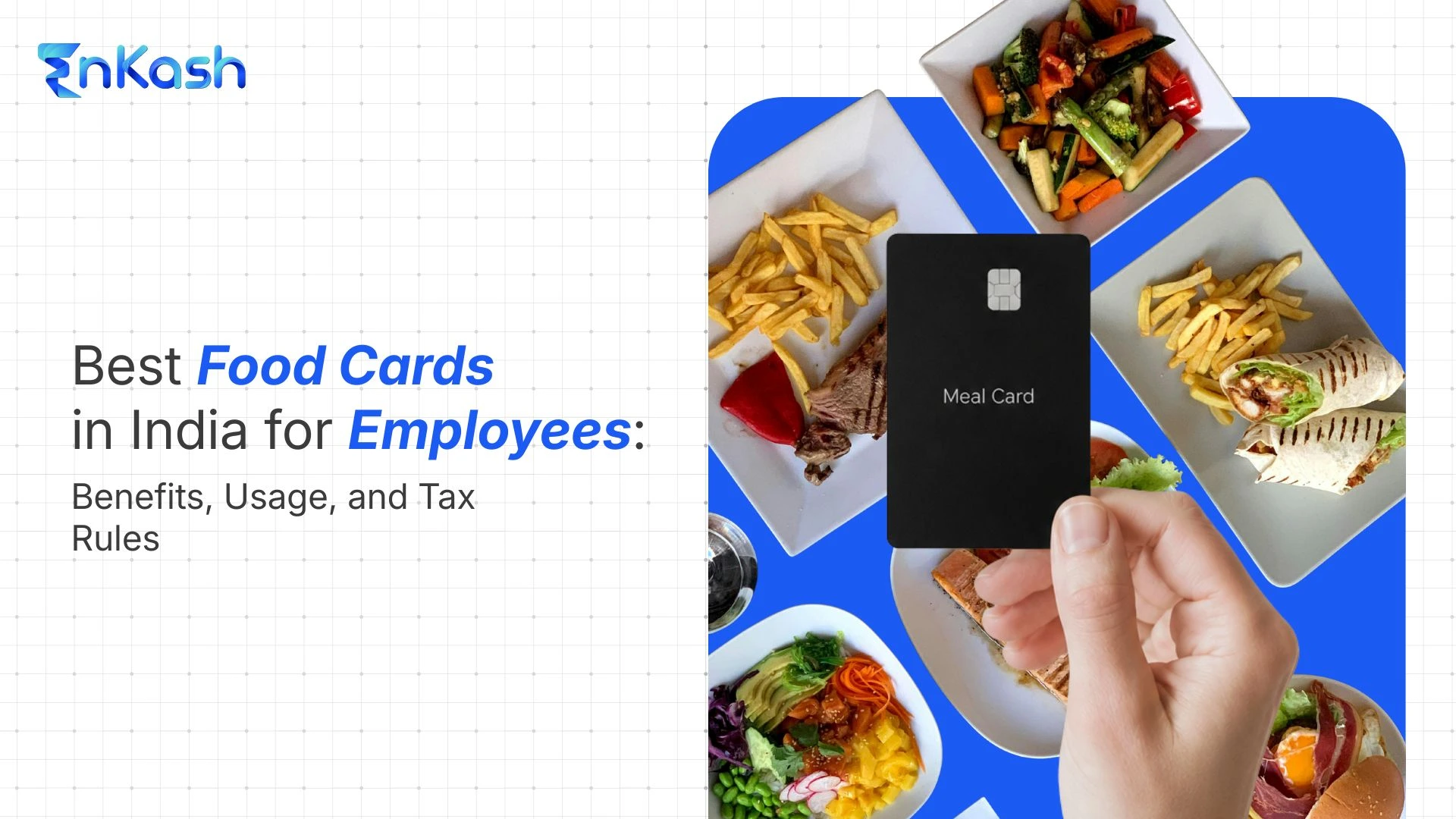
A Tax Free Meal Card is a prepaid card for employee benefits used for food expenses that qualifies for tax exemption under Indian income tax rules. It helps employees save tax on meal allowances while enabling businesses to offer structured, compliant benefits.
Instead of giving meal allowances as taxable salary, companies provide meal benefits through regulated instruments like meal cards, which are treated as tax-exempt perquisites within prescribed limits. These cards work like debit cards but are restricted to food-related purchases at eligible restaurants, grocery stores, food delivery platforms, and office cafeterias.
How Tax-Free Meal Cards Work
- Employer Add Allowance
The company allocates a fixed monthly meal allowance to employees via the meal card.
- The card is used for Food Only
Transactions are restricted to food and beverage merchants (MCC-based controls).
- Tax Benefit Applies
As per Indian tax guidelines, meal benefits provided through non-cash modes (like meal cards) are tax-exempt up to the allowed limit.
- Digital Tracking & Compliance
Employers get centralized dashboards for monitoring usage and ensuring regulatory compliance.
Are you wondering how the employees will handle the meal card?
Now, the question remains: how to disburse the amount to each employee? How to keep track of the meal amounts being used? These burning questions are answered easily by EnKash– Asia’s 1st Spend Management Platform, helping businesses with a wide range of products and solutions that enable savings, operational efficiency, and fast-track growth.
EnKash offers a gamut of corporate cards- both credit and preloaded cards. These meal cards are easy to use, convenient, and versatile. They can be used at all food and non-alcoholic beverage merchant outlets, including restaurants, sweet shops, etc. Further, one can use these meal cards to get food delivered from online apps like Zomato, Swiggy, Dominos, Pizza Hut, Chai Point, and Cafe Coffee Day, etc.
5 Benefits of Using EnKash Meal Cards
Use as a Physical or Virtual Card
Employees can use this card either physically at an outlet or a digital outlet for online food delivery or online payment. Meal cards for employees can either be issued physically as a plastic card or digitally as a virtual card.
Flexible To Recharge
You can either preload the meal card with the monthly meal allowance amount or you can top up the meal card daily with the daily food allowance amount, as per your convenience.
Easy Tracking
These meal cards also come with an option to get on board their smart and intuitive card management platform that can allow you to keep track of all expenses on all cards from a single dashboard.
No Restrictions
The meal cards for employees are PCI-DSS Certified and RBI Compliant, so there is no hassle of federal compliance. The platform helps you maintain a real-time check on all spending while it happens on the meal cards. So, you can rest assured that the expense is well within the authorized limits and merchants.
Tax savings
One of the major benefits of a meal card allowance is the tax exemption that employees get on their salaries. Receiving a lunch allowance as part of the salary enables employees to save on taxes annually.
Food Allowance Exemption under Section 10
Certain allowances are provided to salaried employees under the Indian Income Tax Act as non-taxable income. Among the most effective of these tools is the prepaid meal card, which serves as a popular method for offering food allowances to employees.
Meal card-based allowances are covered under Section 10(14), read with Rule 2BB of the Income Tax Rules under the Indian Income Tax Act. However, the practical applicability of the tax exemption related to meal benefits is most often enforced under Section 17(2)(viii), which specifically deals with perks provided by employers to employees in the form of food and beverages.
When employers provide a meal card or meal vouchers that do not exceed Rs 200 per meal, and the meals are provided during office hours, these benefits allow for full tax exemption. This allows employees to receive meal allowances without increasing their taxable income.
If the meal card benefits are structured properly—i.e., distributed electronically, used strictly for food and non-alcoholic beverages, and do not exceed the specified limits—both employers and employees get the benefits of tax savings from their gross income.
The use of digital platforms like EnKash adds another layer of clarity and convenience, ensuring that compliance conditions are easily met while removing the manual tracking burden from company HR and finance departments.
Under Section 10 of the Indian Income Tax Act, specific allowances and reimbursements that are offered by employers are exempt from taxation, provided that they meet the specified conditions mentioned under Section 10. Meal cards qualify under this exemption as a part of the food allowance benefit to the employees.
Tax Exemption Rule in India for Food Allowance
Here's a breakdown of how tax savings work with meal card allowances:
| Criteria | Value | Explanation |
|---|
| Allowance Per Meal | Rs 200 | As per Section 17(2)(viii) of the Income Tax Act |
| Meals Allowed Per Day | 2 meals | Usually breakfast and lunch are during working hours |
| Total Daily Allowance | Rs 400 | Rs 200 x 2 meals |
| Typical Working Days per Month | 22 days | Based on a typical 5-day work week |
| Monthly Tax-Free Allowance | Rs 8,800 | Rs 400 x 22 days |
| Annual Tax-Free Allowance | Rs 1,05,600 | Rs 8,800 x 12 months |
This structured format and using meal cards that follow regulatory guidelines, employees can reduce their taxable salary, and employers can offer a meaningful, high-impact benefit to employees at no additional tax cost. According to Section 17(2)(viii):
- Employers can offer a meal allowance of Rs 200 per meal to employees.
- Two meals per working day translate it to Rs 400 per day.
- Only for 22 working days a month, the monthly exemption totals Rs 8800 per month.
- Over 12 months, this adds up to Rs 1,05,600 in tax-free income annually.
To claim these exemptions, employees must:
- Ensure that the allowance is provided in the form of a compliant meal card.
- Retain digital transaction records for future reference as proof.
- Report these exemptions while filing their annual income tax return (ITR)
This structured system offers clarity and simplicity to both employees and the HR and finance teams of the companies.
What type of meal allowance should you offer?
As an employer, you can offer different types of meal allowances in the form of a cash stipend, reimbursement for meal expenses, or in the form of prepaid meal cards, which employees can use in designated restaurants, food chains, or grocery purchases.
Prepaid meal cards are preloaded, rechargeable cards that can be issued and used in the form of both physical and digital cards. These cards are the easiest way to provide meal allowance to employees as they can be accessed easily from anywhere in the world.
How to set up a food allowance
One of the ways this could be achieved is by disbursing tax-free meal amounts to your employees. According to Indian federal law, the income tax bracket ranges from 5% to 30%. Under the Income Tax Act Section 17(2)(viii), food allowance can be provided to your employees, which is entirely tax-free.
Under this act, you can offer a meal card allowance of Rs 200 per meal. If you decide to provide 2 meals during the day, it comes up to Rs 400 per day. If your company follows a weekends-off policy, your employees work approximately 22 days a month.
As per the above work duration, the food allowance adds up to Rs 8800 per month, which is Rs 1,05,600 per annum. This means that your employees can save tax on Rs 1,05,600 annually if you provide them with meal allowances. This is a significant amount of tax savings, and your employees will be grateful to you for being so thoughtful towards their savings via meal card allowance. It will also foster goodwill and trust in your organization, which in turn helps in forging long-lasting employee bonds.
Implementing meal cards in your company/organization is very easy and cost-efficient:
- Choose a trusted platform like EnKash that offers RBI-compliant solutions to businesses.
- Decide on the amount (daily or monthly) and issue physical or digital cards to the employees of your company.
- Complete e-KYC of your employees for activation.
- Allowance payouts can be automated or manually topped up, based on your policy
- Monitor the spending of employees with real-time dashboards and generate audit-ready reports
Manage Remotely, Anytime
You can also remotely block the card if it appears to have fallen into the wrong hands. The preloaded nature of these cards helps in safeguarding against fraud as the expenditure cannot go over the amount present on the card.
These cards can be issued directly from the card platform and can be activated instantly through e-KYC. One of the significant benefits that the finance team enjoys with meal cards is the paperless process of disbursal and reporting.
With a remote-friendly platform, finance managers can monitor the cards from anywhere and take action with a single touch of a button. Audits are easier because of flawless digital bookkeeping and maintenance of expense records on a digital database that is secure and backed up on the cloud.
Enjoy this host of benefits and enhance your business by applying the meal cards for employees scheme in your firm. Boost spirits and sales without worrying about additional overheads. EnKash is here to back you up in your journey to make your business smarter.
FAQs
1. Where are meal cards accepted?Meal cards can be used across different categories for food and non-alcoholic beverages at the following places:
- Restaurants & Eateries
- Fast food chains
- Bakeries and dairy product shops
- Supermarkets and grocery shops
- Food retail outlets
- Convenience stores and specialty markets
- Sweets and confectionery shops
2. Are there any tax exemptions for using this meal card?Yes, you can get tax exemptions of Rs 1,05,600 annually by using this meal card.
3. Do I need to get a KYC done to get this card?You need to register yourself and get your KYC done to activate the meal card.
4. Can I use this meal card to withdraw money?No, you cannot use your meal card to withdraw cash or for any other purpose except for purchasing food.
5. Are these cards reloadable? Is there any limit to the amount?Yes, these cards are reloadable. Every month, these can be recharged with an annual limit of Rs 1,05,600.
6. How can I keep track of my meal card balance?You will receive a text message for every transaction you make on purchasing food or related products using a meal card. You can log in to EnKash and check your balance on the dashboard.
7. Can I use these cards online?Yes, you can use these cards online and offline to make purchases only related to food items.
8. What do to in case my card is lost/stolen?If your meal card is stolen or lost, you can reach out to us at
support@enkash.com or call us at 8530490475.