What Is a GST Invoice?
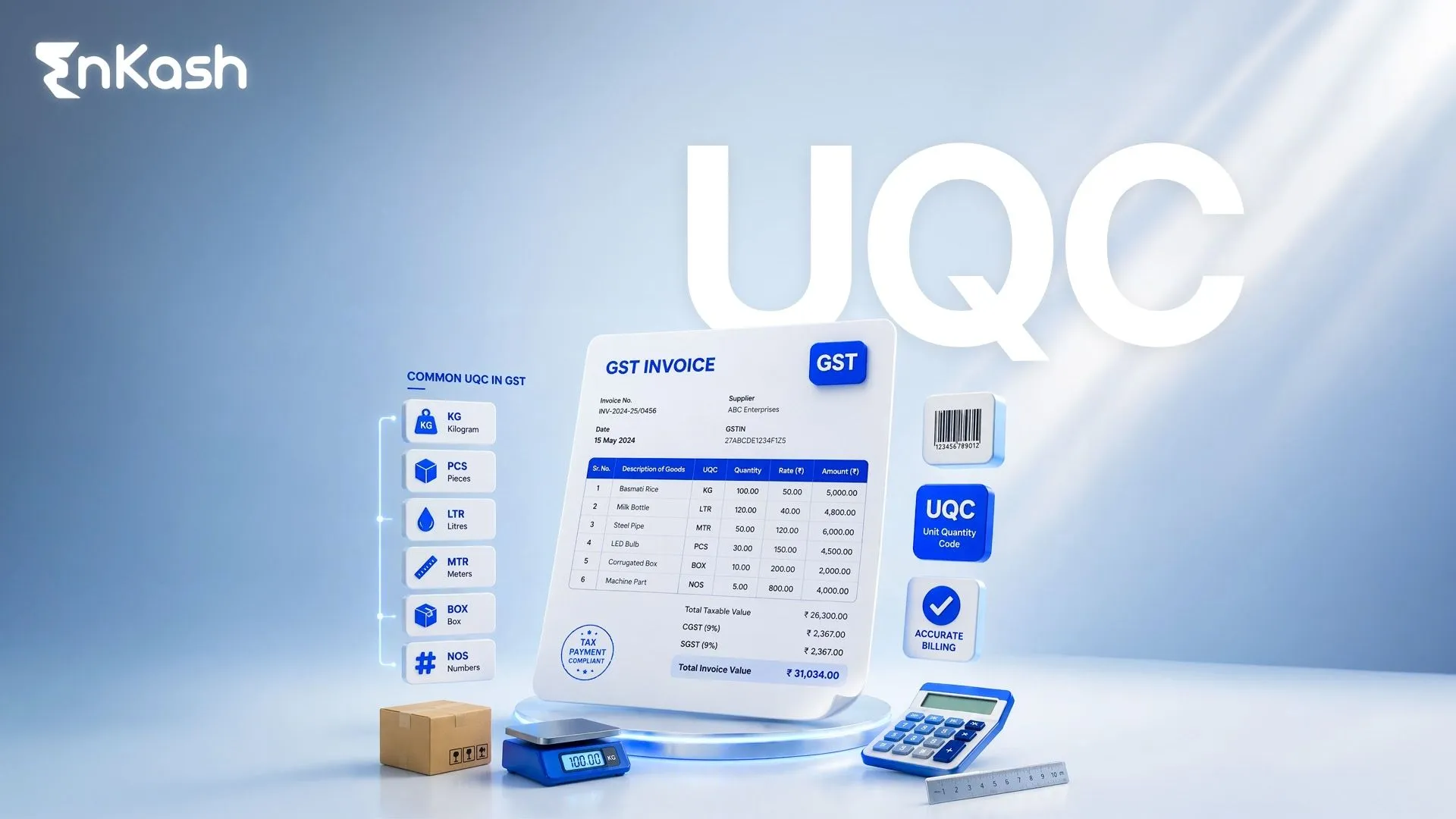
A GST invoice is a tax document that a GST-registered supplier issues to a buyer for the supply of goods or services in India. It contains all key details of the transaction, including the names and addresses of the supplier and buyer, GSTIN, invoice number and date, description of goods or services, quantity, HSN or SAC codes, taxable value, and the GST breakup (CGST, SGST or IGST).
GST was introduced in India on 1 July 2017 as a comprehensive indirect tax. Every registered business must issue GST-compliant invoices, as they ensure accurate tax reporting, facilitate buyers' claims for input tax credit, and maintain proper documentation for compliance and audits. A properly formatted GST invoice is essential for both suppliers and recipients under GST regulations.
Pay Your GSTTypes of Invoices under GST
Different types of invoices can be issued depending on the nature of the supply:
- Tax Invoice - Issued for taxable supplies where GST is charged.
- Bill of Supply - Issued when supplying exempt goods or services, or when the supplier is registered under the Composition Scheme.
- Credit Note - Issued when the taxable value or GST charged on a previous invoice needs to be reduced.
- Debit Note - Issued when the taxable value or GST charged needs to be increased.
Read More:
What is the Difference between Credit Note and Debit Note in GST?Key Elements of a GST Invoice
A GST invoice must contain specific mandatory details to be considered valid. These include:
- Supplier’s information (Name, address, and GSTIN)
- Buyer’s information (Name, address, and GSTIN)
- Invoice Number
- Date of Invoice
- Description of Goods/Services
- HSN Code or SAC Code
- Tax Details
- Total Amount
Read More:
What is a Tax Invoice?What Are the GST Invoice Rules in India?
Businesses registered under GST must follow specific rules while issuing invoices. These rules ensure consistency, traceability, and compliance with tax laws.
1. When to Issue a GST Invoice
- For goods: At or before the time of removal or delivery.
- For services: Within 30 days from the date of supply.
- Banks and financial institutions: Within 45 days from the date of supply.
2. Invoice Numbering Rules
- Invoice numbers must be unique, consecutive, and follow a fixed format for the entire financial year.
- Numbers cannot be duplicated or rearranged mid-year.
3. Number of Copies Required
- For goods: 3 copies, Original (buyer), Duplicate (transporter), Triplicate (supplier).
- For services: 2 copies, Original (recipient), Duplicate (supplier).
4. Timeline Compliance
Invoices must be issued within the prescribed time limits. Delays or missing invoices can lead to penalties and affect the buyer’s ability to claim Input Tax Credit (ITC).
Read More:
Benefits of Registering GST for Businesses.An invoice has to be created in a prescribed format to conform to the requirements of the Goods and Services Tax (GST) regime. The layout of an invoice and the details it contains are of utmost importance to ensure that the invoice created is in a readable format that facilitates tax compliance and record keeping.
A company can customise invoices to suit its branding, but the invoice must still include all mandatory GST details.
3. Describe Goods or Services Provided
Clearly list:- Description of goods or services
- Quantity and unit of measurement (for goods)
- Unit price
- Total taxable value
For services, include a brief description and the total chargeable amount.
4. Include HSN or SAC Codes
Mention the correct HSN (Harmonized System of Nomenclature) code for goods or SAC (Services Accounting Code) for services. These codes help classify the supply under GST and apply the correct tax rate.
5. Specify the GST Rates
Depending on the type of supply:
- CGST + SGST for intra-state transactions
- IGST for inter-state transactions
Mention the tax rate and the exact tax amount under each head.
6. Calculate the Total Amount Payable
Add:- Taxable value
- GST amounts
- Final invoice value
Show the breakup clearly to avoid confusion for the recipient.
Calculate GST7. Add Payment Terms
Include:
These details help ensure timely payment.
8. Review and Finalize the Invoice
Before issuing the invoice:
- Verify the invoice number and date
- Check GSTINs
- Reconfirm HSN/SAC codes
- Ensure tax calculations are accurate
Then:
- Send the original to the buyer
- Keep a duplicate copy for your records
- Provide transporter copy (for goods) if required
The GST bill format differs from business to business and can differ from transaction to transaction. Though the basic format stays the same, due to the industry’s requirements, there can be changes in the invoice format.
Customising the GST Bill Format for Your Business
Businesses across different industries often need to tailor their GST bill format to better suit their operations.
Retail Businesses
The retail GST bill format typically includes:
- Product descriptions, HSN codes, quantities, and unit prices.
- Discounts (if applicable) for promotional offers.
- Total amount payable, including GST breakdown.
For retail businesses that handle a large number of small transactions, GST rules allow you to avoid issuing individual invoices for supplies under ₹200 to unregistered customers who do not ask for an invoice. In such cases, you can issue a consolidated invoice at the end of the day instead of separate invoices for each sale.
Read More: GST State Code List
Service-Based Businesses
Normally, service providers, such as a consultant, a contractor, or a freelancer, issue GST invoices that describe the services rendered, their value, and applicable GST.
- Service description, SAC codes, and the duration or quantity of service provided.
- The applicable GST rates and the total amount charged for services.
- Payment terms, as many services are billed based on milestones or time-based work (hourly, monthly, or project-based).
E-Commerce Businesses
For e-commerce operators who supply goods or services through an electronic facility or platform, the GST bill format should also contain the following details:
- The platform’s GSTIN (if applicable) and the supplier’s GSTIN.
- The unique Invoice Reference Number (IRN) if e-invoicing is mandatory.
- Information on inter-state or intra-state sales and corresponding tax calculations (CGST, SGST, or IGST).
- Manufacturing and Wholesale Businesses
Bulk orders are common for businesses that are involved in manufacturing or wholesale distribution. The GST bill format for these businesses should allow for the documentation of a larger quantity and detailed descriptions of the products. The essential parts are:
- Detailed HSN codes, quantity of goods, and unit prices.
- Delivery details, including transportation charges (if applicable).
- Any applicable trade discounts or bulk order discounts.
What Is an E-Invoice Under GST?
An e-invoice is a digitally authenticated invoice that is generated in the supplier’s billing or ERP software and then registered on a government-approved Invoice Registration Portal (IRP). The IRP verifies the invoice details and issues a unique Invoice Reference Number (IRN) and a QR code.
This digitally authenticated invoice becomes a valid GST invoice for reporting, Input Tax Credit (ITC), and compliance.
How to Generate an E-Invoice
Businesses do not create e-invoices on the GST portal. Instead, the process works as follows:
Step 1: Create the invoice in your billing softwareEnter all mandatory fields such as buyer/supplier details, invoice number, HSN/SAC, taxable value and GST.
Step 2: Upload to the Invoice Registration Portal (IRP)Your billing software automatically pushes invoice data to the IRP through APIs.
Step 3: IRP Validates and Generates IRNThe IRP checks the details and generates:
Step 4: Download the authenticated e-invoiceThe IRP sends back the digitally signed invoice with IRN + QR code. This becomes your legally valid GST invoice.
Mandatory E-Invoicing Threshold
For businesses with an annual aggregate turnover of more than ₹5 crore in any financial year from 2017–18 onwards, e-invoicing is currently mandatory as per the latest GST notifications. The threshold is subject to change by the government, so businesses should keep track of updates from CBIC and the GST Council.
Businesses that are not yet required to use the e-invoicing system can still voluntarily adopt it to make their tax processes easier and prepare for future compliance.
Are Handwritten GST Invoices Allowed?
Yes, handwritten GST invoices are allowed under GST law, provided they include all mandatory details and follow invoice rules. GST does not restrict businesses from issuing manual invoices, but they must be clear, complete and compliant.
1. All Mandatory Fields Must Be PresentA handwritten invoice must include:
- Supplier and buyer details
- GSTIN
- Invoice number and date
- Description of goods or services
- Quantity, unit price, and taxable value
- HSN/SAC codes
- GST rate and breakup (CGST, SGST or IGST)
- Total invoice amount
Any missing mandatory field makes the invoice non-compliant.
2. Invoice Numbering Must Be ProperEven for handwritten invoices, businesses must ensure:
- Unique and consecutive invoice numbers
- Same numbering pattern throughout the financial year
- No repetition or alteration of invoice series
3. Handwriting Must Be Clear and LegibleIf handwriting is unclear or unreadable:
- The invoice can be treated as invalid
- Buyers may face ITC rejection
- Authorities may raise compliance issues
4. Not Allowed Where E-Invoicing Is MandatoryIf a business falls under mandatory e-invoicing (turnover above ₹5 crore):
- A handwritten invoice alone is not valid
- You must generate an IRN and QR code through the IRP
- A manual invoice without an IRN is considered “not issued.”
5. Manual Invoices Are More Error-ProneHandwritten invoices often lead to:
- Mistakes in GST calculations
- Wrong GSTIN or HSN/SAC codes
- Missing fields
- ITC mismatches
These issues increase compliance risks.
6. Digital Invoices Are RecommendedUsing invoicing software helps:
- Auto-populate required fields
- Reduce human errors
- Maintain consistent formats
- Ensure compliance with GST and e-invoicing rules
- Speed up invoice processing and record-keeping
Conclusion
GST invoicing helps both buyers and sellers avoid compliance issues and makes tax filing easier and more transparent. The format of the invoice and invoicing rules are important, as any error can lead to a penalty.
So, whether you’re a small business or a big corporation, you’ll make your life easier by ensuring that your invoice complies with GST standards, is easy to read and searchable, and supports accurate GST return filing with all required documents. Use e-invoicing and software to simplify processing, catching errors before they are sent out, and be sure that you have all the required fields.
Good invoicing is not just about complying with the law; it is essential to good business and proper tax management.
FAQs
1. What is the difference between a GST invoice and a bill of supply?A GST invoice is issued if a registered business supplies taxable goods or services with tax details such as CGST, SGST or IGST. However, if a business supplies exempt goods or services or is registered under the Composition Scheme, they are required to issue a bill of supply, which does not contain any tax details.
2. Can I issue a GST invoice without a GSTIN?No. A registered business will indicate its GSTIN (Goods and Services Tax Identification Number) on the invoice. If no GSTIN is mentioned for a registered supplier, the invoice will be non-compliant under GST law and the buyer may not be able to claim ITC.
3. How do I correct an error in a GST invoice?If there is an error in a GST invoice, a credit note or a debit note must be issued. If the value of the invoice needs to be reduced, a credit note must be issued. On the other hand, if the value needs to be increased, a debit note must be issued.
4. What happens if I don’t issue a GST invoice on time?If a registered business fails to issue a GST invoice as required, it may face a penalty of ₹10,000 or the amount of tax involved, whichever is higher, under Section 122 of the CGST Act.
5. Is it mandatory to issue a GST invoice for exports?Yes, for exports, a GST invoice is mandatory. It should clearly mention that the supply is an export with or without payment of IGST and include export-related details, such as the shipping bill number, where available.
6. Can a GST invoice be issued for advance payments?When you receive an advance, you should issue a receipt voucher with all prescribed details and pay GST on the advance if applicable. A regular tax invoice is then issued at the time of actual supply, adjusting the advance received.
7. What should I do if I lose my GST invoice?If you lose an invoice, the GST software or billing system you used to create it can regenerate it for you. For auditing purposes, the supplier must also retain a copy of the invoice for at least six years.