Government departments and utilities often collect payments through multiple channels, including departmental portals, banks and physical collection centres. Matching these payments to individual bills can require reconciliation across several systems.. This can leave citizens navigating different portals and finance teams reconciling multiple data sources.
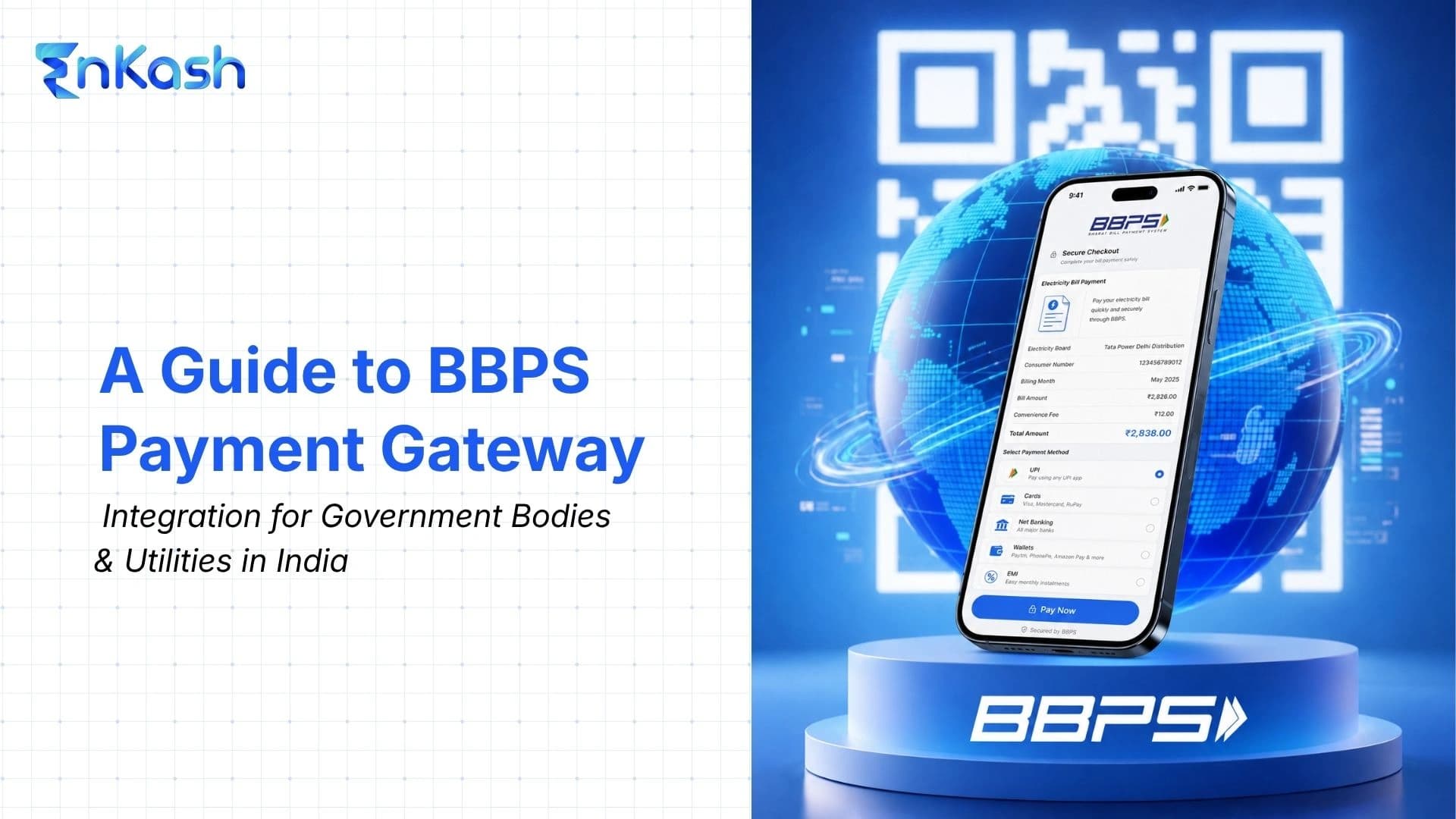
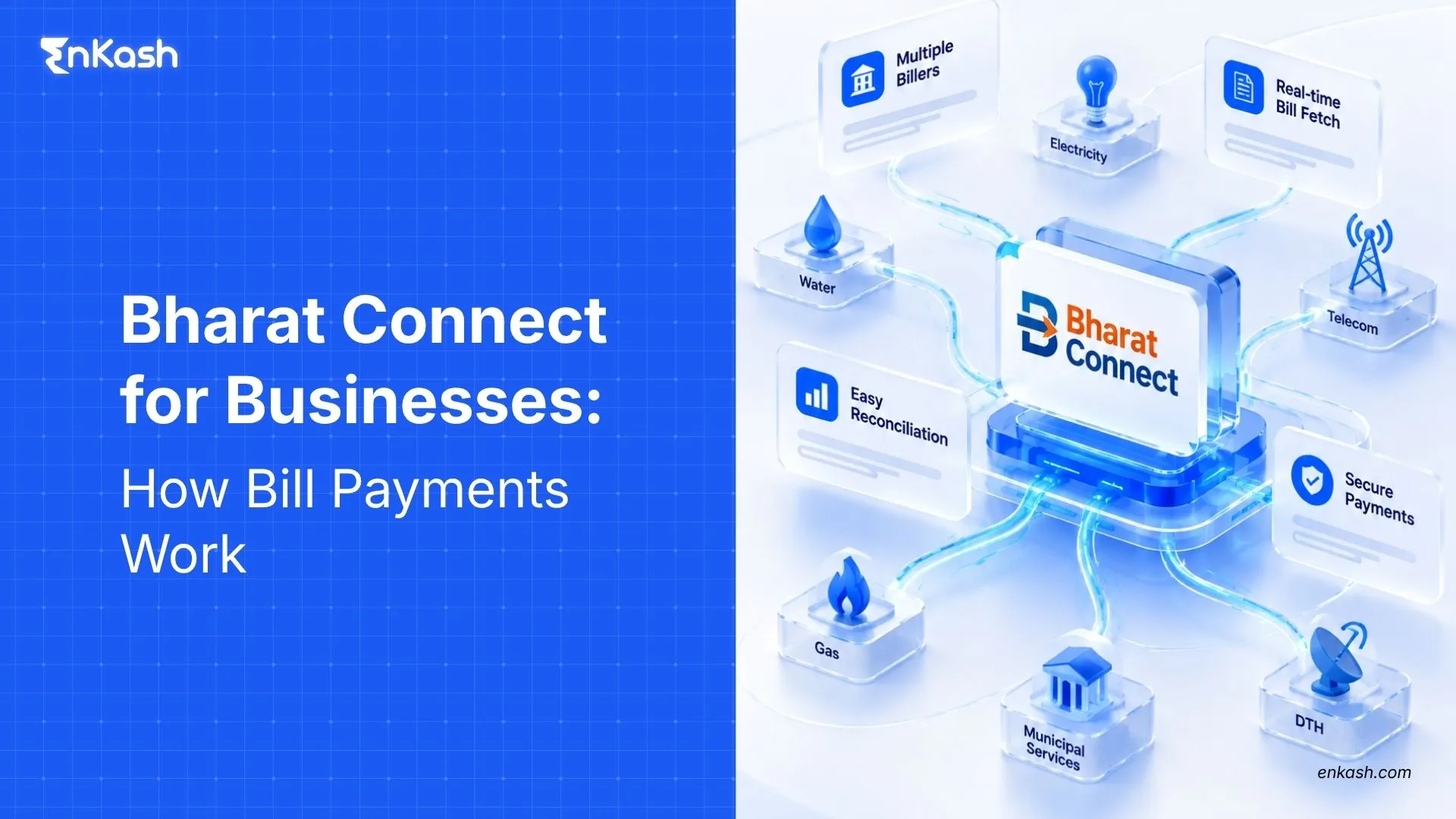
Bharat Connect is the current brand identity of the RBI-regulated Bharat Bill Payment System (BBPS), an interoperable network for eligible bill payments.. Once the biller is onboarded and activated through the BBPS network, its supported bills can become accessible through participating digital and assisted customer channels.
BBPS integration goes beyond adding another payment option. It connects a biller's billing and collection systems to an interoperable network of participating payment channels.
What Does BBPS Integration Mean for a Government Body?
BBPS is an RBI-regulated bill-payment system operated centrally by NPCI Bharat BillPay Limited (NBBL). Bharat Connect is the current name used for the ecosystem and its customer-facing identity.
Under the Reserve Bank of India (Bharat Bill Payment System) Directions, 2024, a biller can include a Central or State Government department, public sector undertaking or another entity connected to BBPS through a BOU.
The four participants are:
- Biller: The department, municipal body, utility or other entity raising the bill and receiving the payment.
- Biller Operating Unit: The BBPS participant that onboards the biller and connects it to the network.
- Customer Operating Unit: The participant providing the app, website, bank branch or agent interface used by the customer.
- BBPCU: NBBL, which sets operating standards and undertakes central clearing and settlement functions.
A government department or utility seeking to collect its bills through BBPS generally joins as a biller through a Biller Operating Unit (BOU), either directly or through a biller aggregator. It does not need to build a separate customer payment network merely to collect eligible bills.
Is BBPS the Same as a Payment Gateway?
No. A payment gateway provides technology for initiating and processing payments through a website or app. Where merchant funds are collected and settled by a payment aggregator, that entity performs a separate regulated role. BBPS connects eligible billers to participating customer-facing payment channels.
| Payment gateway | BBPS or Bharat Connect |
|---|
| Provides payment-processing and routing technology for supported checkout and collection channels. | Makes supported bills available across participating customer channels |
| Facilitates transaction routing, payment processing and communication with the relevant payment-system participants | Supports bill discovery or validation, payment confirmation, receipts and network-level operating processes |
| The merchant usually owns the customer interface | The customer may pay through a bank, payment app, agent outlet or other enabled channel |
| Usually integrated with the organisation’s website or app | Integrated with the biller’s billing system through a BOU |
The two can coexist. A utility may retain its website and payment gateway while using BBPS to extend its collection reach.
Where Can Government Bodies and Utilities Use BBPS?
Relevant biller categories include electricity, water, piped gas, municipal taxes, municipal services and eChallans. These categories may include government, public-sector or other eligible billers. Other use cases may qualify subject to category approval and BOU confirmation.
The RBI’s definition of a bill includes recurring and non-recurring payments and prepaid-service recharges. However, every government fee is not automatically eligible; the entity, service and proposed category must be evaluated during onboarding.
Government bodies and utilities may benefit from BBPS integration when they manage:
- A defined relationship between the citizen and the biller
- A stable consumer, account, property or challan identifier
- A bill or payable demand that can be fetched or validated
- High payment volumes across several locations or jurisdictions
- A need for digital and assisted collection channels
- A requirement for consistent transaction references and reconciliation
Citizens gain more ways to access bills, while billers gain standardised transaction handling and wider collection reach.
What Should Be Ready Before BBPS Integration?
Unclear billing rules and inconsistent customer records can delay integration and create payment-processing errors. The following decisions should be documented before detailed development begins..
1. Define the Biller and Collection Scope
Identify the legal entity, service, geographical coverage and proposed category. Where several departments share a platform, determine whether they require separate biller configurations, settlement accounts or reports.
2. Establish a Reliable Customer Identifier
The biller must define reliable identifiers for bill retrieval or validation. Persistent accounts may use connection or property IDs, while one-time demands may use unique challan or bill references. Each identifier must resolve to the correct payable record. Document its format and any mandatory secondary fields.
3. Finalise Billing Rules
The biller and BOU should document the following payment rules:
- Is only the exact bill amount accepted?
- Are partial, advance or overdue payments allowed?
- How does the payable amount change after the due date?
- How multiple dues, revised bills, penalties, rebates and arrears are handled
These rules must be applied consistently in the bill-fetch response and the biller’s own ledger.
4. Assess the Existing Technology
The billing system or integration layer should provide current bill data, support payment-status updates, prevent duplicate ledger posting and enable reconciliation. The interface and message flow depend on the BOU's specifications. A legacy application may need middleware between the BOU and billing engine.
5. Assign Operational Ownership
Assign owners for technology, settlement reconciliation, exceptions, refunds, complaints, security and production incidents before go-live.
How Does BBPS Biller Integration Work?
A typical transaction follows this sequence:
- The customer selects the biller through an enabled digital or assisted channel.
- The customer enters the configured identifier, such as a consumer number or property ID.
- The bill is fetched or validated. The request travels through the COU, central BBPS infrastructure and BOU to the biller’s system.
- The biller returns current information required for its configured category, such as the amount, due date and billing period.
- The customer pays using a mode available on that channel.
- The biller receives the payment information, posts it to the correct account and responds.
- The customer receives the applicable transaction confirmation and reference. The biller then reconciles successful transactions, ledger postings and settlement records according to the agreed operating process.
Exact APIs depend on the BOU, biller type and NBBL standards. Common functions include bill fetch or validation, payment posting, status enquiry, receipt generation and reporting.
Understanding with an Example: BBPS Integration for a Municipal Water Utility
Consider a municipal water utility that wants residents to pay outstanding water bills through Bharat Connect-enabled banking and payment applications.
1. The resident selects the biller.
The customer opens a participating payment application, selects the water bill category and chooses the relevant municipal water utility.
2. The resident enters the connection number.
The application sends the request through the BBPS network to retrieve the bill associated with that connection.
3. The billing system returns the payable details.
The utility's integrated billing system provides the applicable amount, bill reference, due date and other required information.
4. The customer completes payment.
The payment is processed through the supported channel, and the transaction receives a BBPS reference.
5. The utility updates its records.
After receiving and validating the successful payment information, the utility records the payment against the correct consumer account.
6. Finance reconciles the collection.
The finance team matches the transaction reference, bill details, payment posting and settlement records.
If the payment notification is delayed or repeated, the integration uses transaction-status verification and duplicate-safe processing to prevent incorrect account updates.
This example illustrates the typical workflow. Exact message formats and operational steps depend on the BOU's integration specifications.
Design for Asynchronous Events and Retries
Networks can time out after one side completes an action. Every payment should therefore have unique external and internal references. Before posting another receipt or ledger entry, the system must check whether that payment reference was already processed. This prevents duplicate ledger posting when the same payment notification is retried.
Step-by-Step BBPS Integration Process
Step 1: Confirm Eligibility and Select a BOU
Share the entity, use case, expected volumes, category and billing architecture with prospective BOUs. Confirm eligibility before committing development resources.
Step 2: Complete Biller Onboarding
The BOU conducts due diligence and collects the applicable agreements, consent, banking information, and entity-specific documents. Requirements vary by category.
The biller’s category, identifiers, payment rules, and customer-facing fields are then configured for approval.
Step 3: Map the Integration
The BOU and biller should jointly document:
- Request and response fields
- Customer-identifier rules
- Bill amount and date logic
- Payment and receipt references
- Success, failure, pending, retry and timeout behaviour
- Refund, reversal and reconciliation processes
- Authentication and network controls
Map BBPS references to the consumer account, bill number, receipt and accounting entry.
Step 4: Build and Test the APIs
Use masked or synthetic test data in non-production environments. Define clear error responses instead of returning generic failures.
Step 5: Complete UAT and Certification
User acceptance testing should cover the complete journey, including:
- Valid and invalid consumer identifiers
- No outstanding amount and already-paid or revised bills
- Exact, partial or late payment where supported
- Successful, failed and pending transactions
- Duplicates, repeated callbacks and timeouts
- Refunds, reversals and reconciliation
High-volume utilities should also test peak load, failover and recovery.
Step 6: Pilot Before Full Rollout
Before wider rollout, test a controlled set of live bill payments and confirm that bill details, receipts, account postings, settlement records and support workflows match the agreed acceptance criteria.
The time required depends on biller approval, data readiness, API development, UAT, applicable certification and production activation. Obtain a milestone-based implementation plan from the BOU rather than assuming a standard go-live period.
Post-Integration Operations and Controls
Settlement and Reconciliation
Reconciliation should not rely only on the message that initially marked a payment successful. For each transaction, the biller should be able to match:
- The BBPS or channel transaction reference
- The BOU transaction and settlement record
- The biller’s bill and receipt number
- The ledger entry against the consumer account
- The amount credited through the agreed settlement process
Unmatched transactions should enter an exception queue with an assigned owner, ageing status, investigation history and resolution record.. Settlement cycles, cut-offs, holidays, fees and adjustments must be documented in the BOU agreement.
Failed, Pending and Reversed Transactions
Define procedures for debit-without-posting, notification timeouts and conflicting statuses. Verify the transaction through available status enquiries and reconciliation records before making manual ledger adjustments. Refunds, failed transactions and complaints must follow NBBL's centralised dispute-resolution framework and applicable RBI turnaround-time and customer-compensation requirements. The BBPS reference number should be used to track transaction-related disputes.
Security and Resilience
Controls should reflect the organisation’s risk assessment and BOU specifications. Address:
- Encrypted transport and approved authentication
- Network access restrictions and secret management
- Data minimisation and masking outside production
- Role-based access and controlled manual actions
- Audit logs, vulnerability testing and patch management
- Monitoring for downtime, unusual failures and duplicate activity
- Documented incident response, backup and disaster-recovery procedures
Also apply departmental cybersecurity, hosting, privacy, accessibility and records-retention requirements.
How to Select a BBPS Integration Partner
Government RFPs and partner assessments should examine:
| Area | Questions to ask |
|---|
| Regulatory role | In what capacity does the provider participate in Bharat Connect, and who will act as the BOU? |
| Relevant experience | Has the provider onboarded utilities, PSUs, municipal bodies or other high-volume billers? |
| Integration | Can it support the required billing model, legacy systems, middleware and reporting interfaces? |
| Testing | Which party is responsible for test cases, defect resolution, certification coordination and production validation? |
| Operations | Are settlement reports, reconciliation, refunds, complaints and exception dashboards included? |
| Reliability | What availability, capacity, monitoring, incident-response and disaster-recovery commitments are documented? |
| Security | What audits, controls, data-handling practices and security evidence can the provider supply? |
| Change management | How will new NBBL requirements, category changes and API versions be implemented? |
The agreement should define settlement schedules, charges, refund and adjustment responsibilities, reconciliation files, service levels, complaint escalation, data ownership, audit access, technology changes and exit or transition arrangements.
Common BBPS Integration Mistakes
Government and utility implementations commonly run into problems when teams:
- Treat BBPS as only a payment gateway or front-end project
- Use consumer identifiers that are duplicated, unstable or inconsistently formatted
- Return stale bill amounts after a fee or payment changes the balance
- Post a receipt again when the same payment notification is retried
- Test only successful transactions and ignore pending or timeout cases
- Involve finance and support only after development
- Treat a success message as proof of ledger posting and settlement
Identifying these issues during design can reduce the risk of incorrect consumer balances, duplicate postings and reconciliation problems after launch..
How EnKash Supports Bharat Connect Integration
EnKash operates as an Operating Unit with NBBL and provides Bharat Connect-related technology and integration solutions for eligible business use cases.
For government bodies and utilities evaluating bill collection through Bharat Connect, EnKash can help assess the proposed use case, biller onboarding requirements and integration approach.
Depending on the approved arrangement and applicable technical requirements, organisations can explore API-based integration or supported portal-based workflows.
EnKash's Bharat Connect offering also includes settlement, reconciliation and reporting support, helping organisations connect collection activity with finance operations.
Before implementation, the responsible BOU, approved biller category, integration responsibilities and operational scope should be confirmed for the specific project.
Explore EnKash Bharat Connect Solutions
Conclusion
BBPS can extend collections beyond a government body’s own portal while keeping its billing system as the source of truth. Successful integration depends on accurate bill data, reliable payment-status handling, and reconciliation between the BBPS network and the biller's accounting system.. Bharat Connect should therefore be treated as collection infrastructure, not merely another payment button.
Frequently Asked Questions
1. Does a government body need a separate BBPS licence?
No separate BBPOU authorisation is ordinarily required merely to participate as a biller and collect eligible bills through an authorised BOU. Operating an independent payment-system function is a separate regulatory question. Onboarding remains subject to due diligence and NBBL requirements.
2. Is a new website or mobile app required?
No. The organisation can retain its portal or app, provided its backend supports the required bill and payment workflows.
3. Can BBPS support partial payments and changing late fees?
Yes, where the category and configuration allow them. The billing system must return the current amount and define whether exact, partial, minimum or overdue payments are accepted.
4. What should be tested during BBPS UAT?
Test identifiers, bill availability, amount rules, success, failure, pending status, duplicates, timeouts, refunds, receipts and reconciliation. Utilities should also test peak load and recovery.
5. What happens if payment succeeds but the bill is not updated?
Use status enquiry and reconciliation to establish the final state before adjusting the ledger or asking the customer to pay again.
Can a Government Department Integrate Directly With NBBL?
A government department participating as a biller generally connects to the BBPS ecosystem through a Biller Operating Unit (BOU), either directly or through a biller aggregator. The BOU manages the applicable biller onboarding responsibilities and the connection to the network.
Does BBPS Integration Replace an Existing Payment Gateway?
No. A government department or utility can continue using its existing payment gateway or departmental collection portal while making eligible bills available through Bharat Connect. The billing and accounting systems should reconcile payments received through the different arrangements.
Does Every Government Fee Qualify for BBPS?
No. RBI's definition of a bill includes recurring and non-recurring payments, but the proposed collection must fit an applicable biller category and satisfy the relevant onboarding requirements. Eligibility should be confirmed with the BOU.
How Long Does Government BBPS Integration Take?
There is no single implementation timeline for every government department or utility. The schedule depends on biller onboarding, billing-system readiness, API development, UAT, applicable certification and production activation. The BOU should provide a project-specific implementation plan.
What Happens if a BBPS Payment Succeeds but the Consumer Account Is Not Updated?
The biller should investigate the BBPS transaction reference, payment status and its internal ledger records. Any correction should follow the agreed reconciliation and dispute process. The customer should not be instructed to make a duplicate payment while the original transaction remains unresolved.