Key Takeaways
- A merchant accepting a prepaid payment instrument receives payment against an underlying sale of goods or services.
- PPI merchant transactions involve several parties, and each party has a separate role in the payment environment.
- Small PPIs and Full-KYC PPIs have different usage rights. The instrument category affects how the stored value can be spent.
- Merchant acceptance needs to be set up before the customer reaches checkout.
- Payment confirmation and merchant settlement happen at different stages. Failed, reversed, and refunded payments need separate handling.
A prepaid card or wallet payment can look fairly simple at checkout. The customer selects a payment method, completes the required authentication, and receives a payment result. The business sees only one part of a larger payment arrangement.
Behind the purchase are the holder, issuer, merchant, acceptance channel, and other participants needed for that payment method. For businesses, understanding the PPI Merchant side becomes useful when setting up acceptance or working through settlement and transaction records. This guide covers the merchant's role, eligible PPI types, acceptance setup, payment flow, settlement, interoperability, and transaction exceptions in India.
What is a PPI Merchant
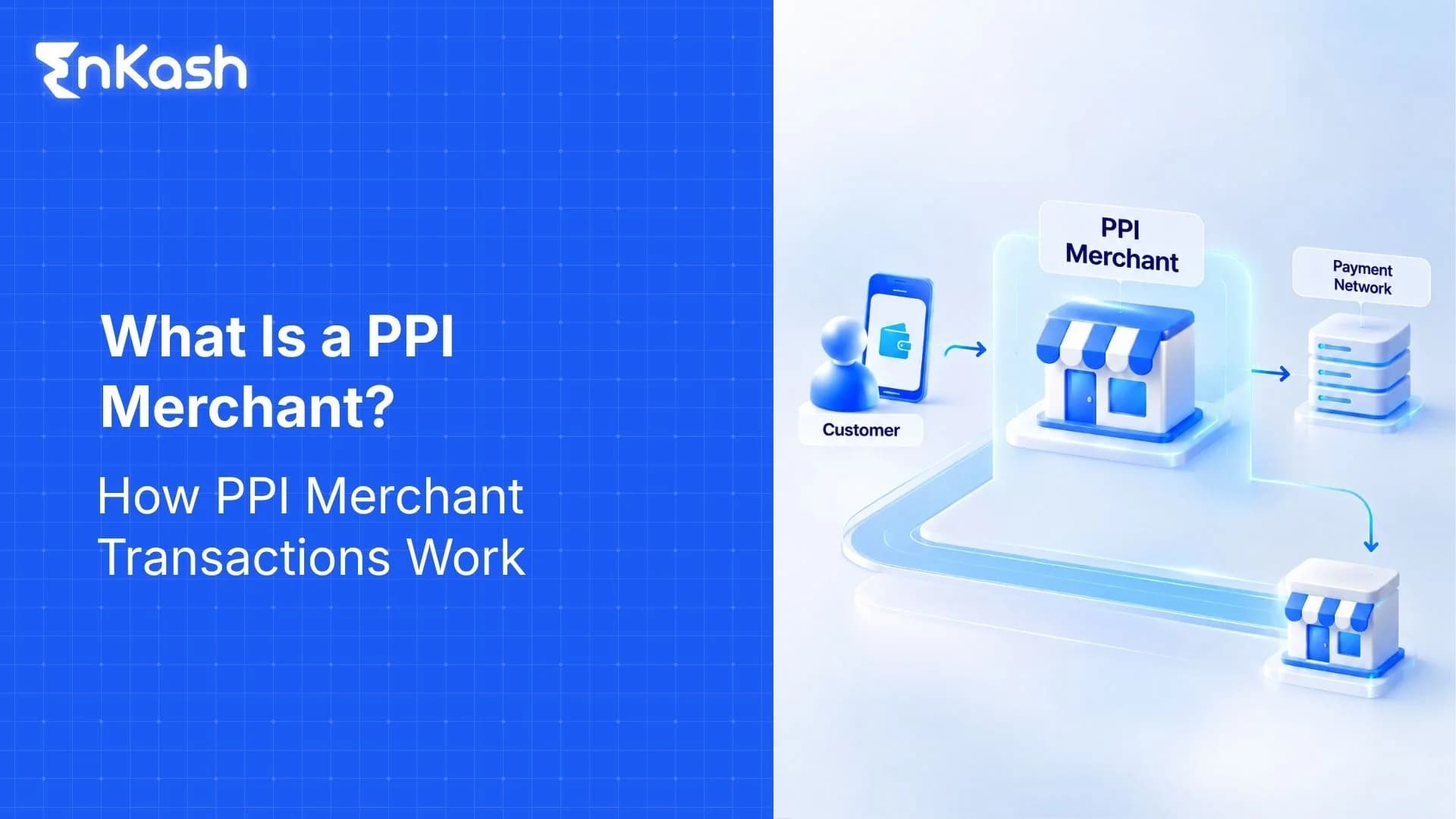
A PPI Merchant is an establishment that accepts a prepaid payment instrument against the sale of goods or services. The merchant may have a direct acceptance arrangement with the PPI issuer or may connect through a payment aggregator or payment gateway.
The merchant supplies the underlying product or service. The PPI issuer performs a separate function by issuing and operating the prepaid instrument used by the customer.
A retail store, online business, clinic, travel service, or another eligible establishment can operate as a merchant under the applicable acceptance arrangement. The checkout method may change from one setup to another. The merchant's basic role remains accepting eligible prepaid value as payment for the purchase.
Who Is Involved in a PPI Merchant Transaction
Several parties may take part in the same payment. Their responsibilities are easier to understand when the roles are separated from the sequence of events.
| Participant | Main Role |
|---|
| PPI holder | Holds the prepaid instrument and uses the available stored value |
| PPI issuer | Issues and operates the instrument and maintains the holder relationship |
| PPI Merchant | Supplies the goods or services and accepts the eligible payment |
| Payment aggregator or gateway | May connect the merchant with the relevant payment infrastructure |
| Acquiring, banking, or network participant | Performs the applicable acquiring, routing, banking, or network function |
The exact participant mix changes with the payment setup. A wallet linked to UPI can follow a different technical arrangement from a prepaid card operating through an authorized card network.
The table only identifies who may be involved. The live payment sequence is covered separately below.
Which PPIs Can Be Used for Merchant Payments
The instrument category determines what the holder can do with the prepaid value. RBI-regulated PPIs are broadly divided into Small PPIs and Full-KYC PPIs. Closed-system instruments form a separate case because they operate within the issuing entity's own environment.
Small PPIs
Small PPIs are issued after minimum customer details are obtained. They are intended for the purchase of goods and services. Cash withdrawal and funds transfer are unavailable from these PPIs. Merchant purchases also take place within the acceptance conditions applicable to the instrument. Small PPIs can carry up to ₹10,000 outstanding at a time. Their permitted loading and usage limits depend on the type of Small PPI involved.
Full-KYC PPIs
A Full-KYC PPI is issued after the holder completes the required KYC process. It can be used for purchases of goods and services and can also permit funds transfer and cash withdrawal under the applicable rules. The outstanding balance can reach ₹2 lakh. Full-KYC status is also important for interoperability, since this category can connect with broader UPI or card-network acceptance infrastructure.
Closed-System Instruments
A closed-system instrument is issued by a business for purchases from that same business. It does not operate as a payment system for third-party merchants. A store-value balance usable only with the issuing business is a common way to understand the difference. Its acceptance remains inside that entity's own commercial environment. For merchants, the important point is the instrument's permitted use. A payment method must be eligible for the acceptance environment where the purchase is taking place.
Are There Charges on PPI Merchant Transactions?
A PPI merchant transaction does not automatically mean that the customer is charged for making the payment. Customer charges, interchange fees, merchant charges, and other commercial costs are separate parts of the payment ecosystem and can apply to different participants.
For example, NPCI has clarified that the interchange introduced for interoperable PPI wallet transactions on UPI applies to PPI merchant transactions, while the customer or PPI holder is not charged for making the transaction. Bank-account-to-bank-account UPI transactions continue to remain separate from this PPI interchange framework.
What Charges Can Be Involved in a PPI Merchant Transaction?
| Charge or cost | Who it relates to | What it means |
|---|
| Customer charge | PPI holder | A charge directly payable by the customer for using the payment method. A PPI merchant transaction does not, by itself, mean that the customer has to pay a transaction charge. |
| Interchange | Payment-system participants | A payment-system level charge between participating entities involved in processing the transaction. It is different from a fee charged directly to the customer. |
| Merchant commercial charge | Merchant | Charges payable by the merchant may depend on its arrangement with the acquiring bank, payment aggregator, payment gateway, PPI issuer, or other acceptance partner. |
| Loading or withdrawal charges | PPI holder | Charges associated with loading money into a PPI or withdrawing funds, where applicable. These are separate from the merchant purchase itself. |
| Refund or operational charges | Merchant or other participant | Charges, if any, associated with refunds or other operational services depend on the commercial arrangement and payment provider involved. |
Is the Customer Charged for a PPI-on-UPI Merchant Payment?
The customer or PPI holder is not charged merely because an eligible PPI is used to make a UPI merchant payment.
NPCI's clarification on PPI interoperability states that the interchange applicable to certain PPI merchant transactions does not represent a charge to the customer. The interchange operates between participants in the payment ecosystem rather than as a fee automatically added to the customer's purchase.
This distinction is important because interchange, merchant pricing, and customer charges are not the same thing.
Does the Merchant Pay a Charge for Accepting PPI Payments?
The amount, if any, that a merchant pays for accepting a PPI transaction depends on the payment channel and commercial arrangement used to accept the payment.
A merchant may receive PPI-funded payments through arrangements involving an acquiring bank, payment aggregator, payment gateway, UPI infrastructure, card network, or PPI issuer. The commercial terms applicable to the merchant can therefore vary from one acceptance setup to another.
Merchants should check their agreement with the relevant acquiring or payment partner rather than assuming that every PPI transaction carries the same merchant charge.
Interchange vs Merchant Charge vs Customer Charge
The three concepts should not be used interchangeably:
- Interchange is a payment-system level charge between participating entities.
- Merchant charges arise from the merchant's acceptance or commercial arrangement.
- Customer charges are fees, if any, payable directly by the PPI holder.
Therefore, when a payment is described as a PPI merchant transaction, the description identifies the source and nature of the payment. It does not, by itself, indicate that the customer has been charged an additional fee.
How Can a Merchant Accept PPI Payments
Acceptance needs to be arranged before a customer starts the payment. The exact setup changes with the prepaid instrument and payment channel.
The following three areas need attention at this stage:
Merchant Acceptance Arrangement
The business needs an applicable commercial and technical relationship for accepting the payment instrument. This relationship may be directly with the issuer or through a payment aggregator or payment gateway. It establishes the business within the relevant merchant acceptance setup.
Payment Acceptance Channel
Customers also need an interface through which they can make the payment. Depending on the setup, acceptance can take place through a QR code, card or point-of-sale terminal, online checkout, or another supported interface. UPI merchant integrations can use methods such as QR, intent, application-based payment, or collect, depending on the available setup.
Merchant Settlement Details
The acceptance arrangement also needs the merchant and account information used for subsequent fund settlement. At this point, the details are being established before payment begins. The actual settlement of a successful transaction happens later and follows its own process.
How Does a PPI Merchant Transaction Work
The live payment starts when the customer chooses an eligible prepaid instrument at checkout. The next few stages deal only with the purchase transaction itself.
1. Customer Starts Payment
The customer initiates the purchase using the available acceptance channel. For example, the customer may scan a QR code, present an eligible prepaid card, or choose a supported wallet during an online checkout.
2. Request Enters Processing
The payment request moves into the infrastructure used for that transaction. Its technical path depends on the instrument. Wallet-based interoperability can use UPI, whereas card-form instruments can move through authorized card networks.
3. Required Checks Run
The payment environment checks the information needed for the transaction. These checks can include available prepaid balance, transaction limits, customer authentication, and other validations relevant to the payment method.
4. Transaction Gets Authorized
A transaction that clears the applicable checks can be authorized. The purchase amount is then debited from the prepaid value under the relevant transaction process.
5. Merchant Gets Confirmation
The merchant receives the successful payment result through its acceptance setup. At checkout, the purchase can then move forward as a paid transaction.
What is a PPI merchant transaction in practical terms
It is a purchase where value held in an eligible prepaid instrument is used to pay a merchant through the applicable payment infrastructure. The successful payment confirmation ends the live transaction flow covered in this section. Settlement begins afterward.
How Does PPI Merchant Settlement Work
Settlement starts after a successful approved purchase. At this stage, the issue is no longer customer authorization. The focus moves to the merchant amount due from that completed transaction.
Successful transactions enter the applicable reconciliation process. The payable merchant amount is established, and funds then move under the settlement arrangement connected with the acceptance setup.
For non-bank PPI issuers, funds collected against PPIs and amounts due to merchants are covered by RBI's prescribed escrow framework. Merchant-settlement funds are kept separate from unrelated business handled by the issuer.
Commercial terms can also affect the amount eventually credited to the merchant. Applicable charges, if any, depend on the acceptance and settlement arrangement in use. The settlement timing can vary with the parties and infrastructure involved.
How Does Interoperability Affect PPI Merchants
Interoperability gives eligible prepaid instruments access to wider payment infrastructure.
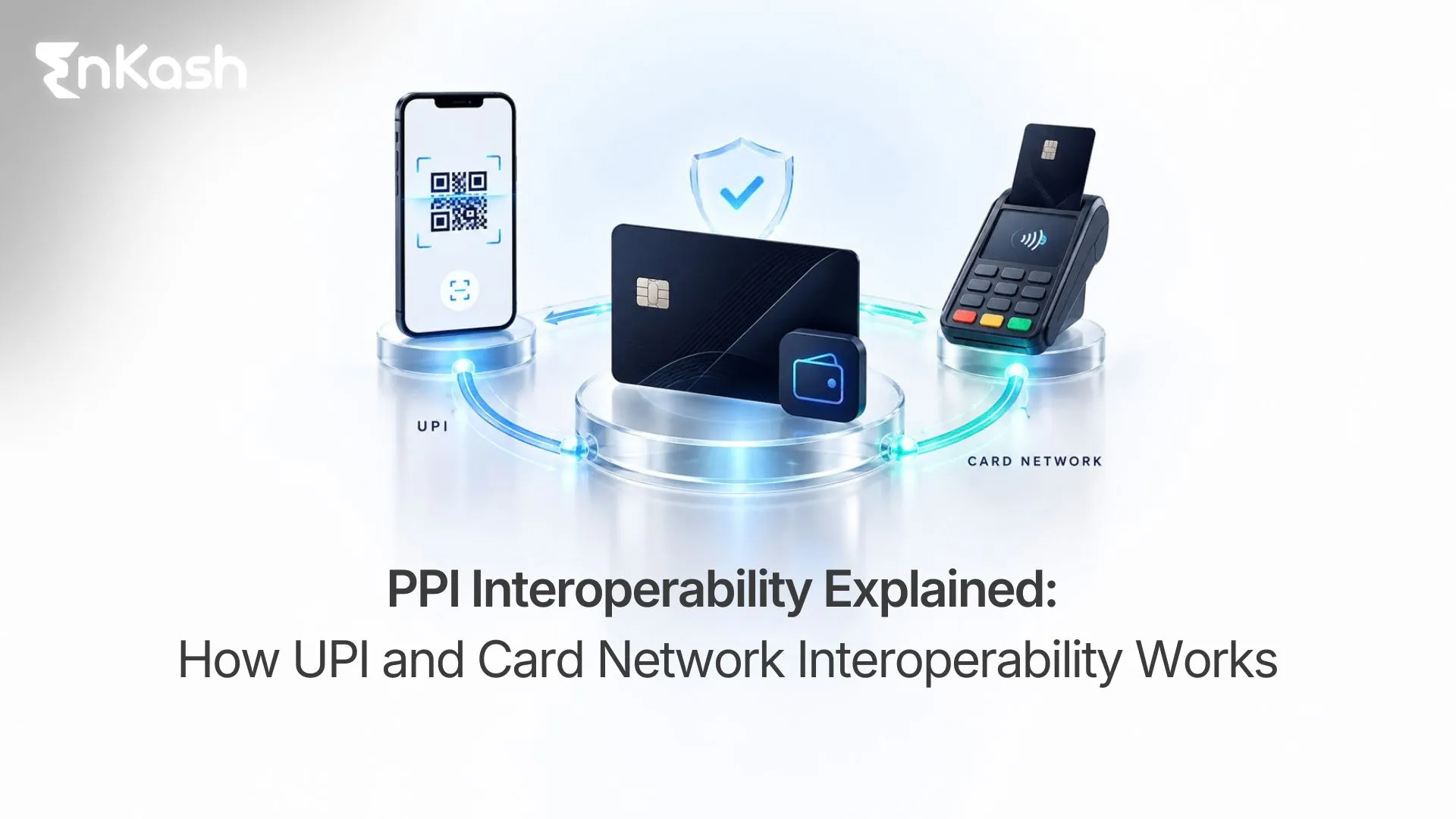
Full-KYC PPIs issued as wallets use UPI for interoperability. Full-KYC PPIs issued in card form use authorized card networks. Acceptance infrastructure, including QR-based acceptance, also forms part of the interoperability framework.
For a merchant already accepting UPI, this can widen the range of eligible payment sources reaching the same UPI acceptance environment. A Full-KYC PPI wallet connected through UPI does not require the merchant to create a separate direct acceptance arrangement with each individual wallet issuer.
Card-form PPIs work through the applicable authorized card-network structure. Their acceptance therefore follows the network arrangement available to the merchant. Interoperability changes acceptance reach. It does not change the underlying PPI category or the usage rights attached to that instrument.
What Happens When a PPI Merchant Transaction Fails, Is Reversed, or Is Refunded
The normal payment flow ends in successful confirmation. A transaction can also leave that path before or after completion.
These outcomes mean different things:
| Transaction State | What Happens |
|---|
| Failed | Required processing or authorization does not complete successfully |
| Reversed | A debit or processed amount is subsequently returned because the transaction cannot remain completed |
| Refunded | Money is returned after the underlying purchase, such as after a return or cancellation |
A failed payment does not create the usual successful merchant receivable. A reversal deals with an amount that needs to be returned through the applicable payment-system process. For an on-us PPI transaction where the instrument is debited but the merchant does not receive transaction confirmation, the RBI turnaround framework sets a reversal timeline.
A refund begins from a different point. The purchase has already taken place, and money is being returned afterward under the relevant merchant and payment process. Separating these three states keeps payment follow-up and accounting clearer for the customer, merchant, and other participants.
Final Take
A PPI Merchant operates at the acceptance side of a prepaid payment. The process starts with an eligible instrument and the required merchant setup. The customer payment then moves through processing, validation, authorization, and confirmation before a successful transaction reaches settlement. Full-KYC interoperability can extend acceptance through UPI or authorized card networks. Failed payments, reversals, and refunds sit outside the normal successful path and need their own treatment.
FAQs
Does a merchant need an RBI license to accept PPI payments?
A business does not need RBI authorization simply because it accepts eligible PPI payments for its goods or services. RBI approval or authorization applies to entities issuing and operating PPIs. The merchant still needs the relevant acceptance or acquiring arrangement for the payment channel being used.
What does a prepaid merchant payment mean on a bank or payment record?
Such a description generally points to a purchase funded through a prepaid payment instrument. Exact labels can vary between issuers, banks, networks, and payment platforms. The transaction reference, merchant details, and amount can be checked when the statement description alone does not identify the purchase clearly.
Can prepaid instruments be used for an international merchant purchase?
Certain Full-KYC PPIs issued by banks with an Authorised Dealer Category-I licence can be enabled for permitted cross-border purchases of goods and services. The facility requires the holder's explicit request. The current ceiling is ₹10,000 for one transaction and ₹50,000 in a month.
Does accepting a PPI change the tax treatment of the sale?
Using a prepaid instrument as the payment method does not create a separate tax category for the underlying sale. GST treatment continues to depend on the supply itself, including the goods or services involved, place of supply, value, and the other applicable tax rules.
Can a merchant accept wallet-based and card-based PPIs?
Yes, where the merchant has the relevant acceptance setup for those channels. Full-KYC wallet interoperability can operate through UPI, and card-form PPIs use authorized card networks. The required merchant or acquiring arrangement will depend on the channel being used.