Key Takeaways
- A PPI Wallet lets you spend money that has already been added to the wallet.
- Small PPIs and Full-KYC PPIs do not offer the same functions.
- Small PPIs are meant for purchases. They do not support fund transfers or cash withdrawal.
- Full-KYC wallets can support a wider set of transactions, including fund transfers and eligible cash withdrawals.
- Full-KYC PPI wallets must be interoperable through UPI. Eligible Full-KYC PPIs may also be linked to supported third-party UPI apps where the issuer enables that facility.
- Wallet balance, loading, debit, and transfer limits are separate. They should be checked individually.
A wallet payment can look much like any other digital payment. The difference is where the money comes from. With a prepaid wallet, the amount is already available inside the wallet before you pay. KYC then affects what else you can do with that balance.
What Is a PPI Wallet?
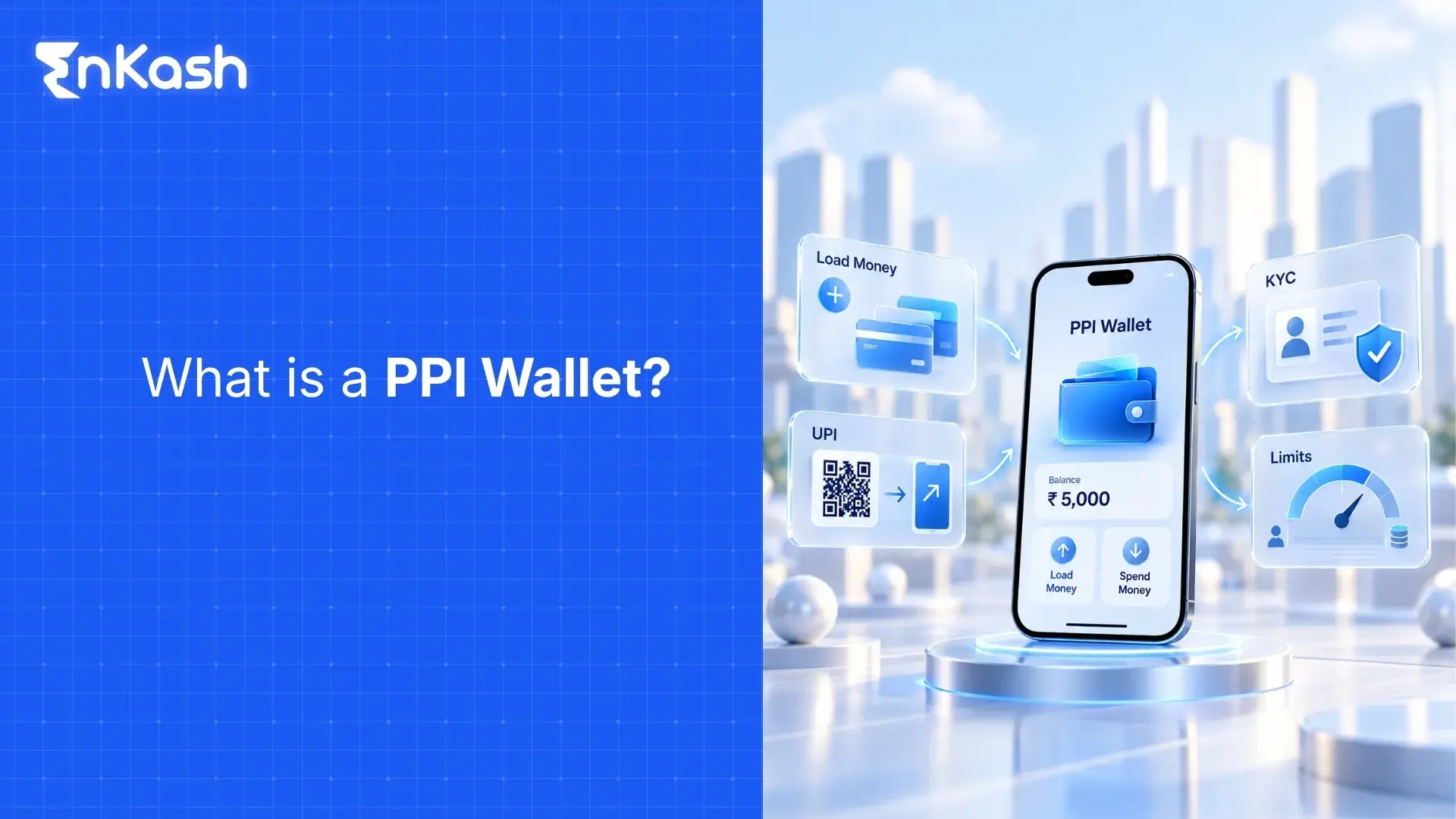
A PPI Wallet is a digital form of a Prepaid Payment Instrument. Money is added to the wallet first and used later for permitted transactions. The wallet gives the user access to that prepaid balance through an app or another electronic interface.
So, what are PPI wallets in practical terms? Think of them as stored-value wallets. The money available inside the wallet has already been funded. When the user pays from the wallet, the transaction uses that balance.
For PPI wallets in India, another distinction is useful. “Wallet” tells you the form of the product. It does not tell you the full set of rules attached to it. A wallet may operate as a Small PPI or a Full-KYC PPI. Those categories determine what the user can do with the money.
A digital payment app is not automatically a PPI wallet either. An app may simply connect to a bank account and send payments through UPI without holding a prepaid balance of its own.
You may also see the term PPI Account used informally. A PPI wallet holds prepaid value. It is not the same as a savings or current bank account, and interest cannot be paid on a PPI balance.
| Feature | PPI Wallet | Bank Account via UPI |
|---|
| Where money sits | Preloaded wallet balance | Bank account |
| Needs funds loaded first | Yes | No |
| Regulatory category | Small or Full-KYC PPI | Bank deposit account |
| UPI availability | Full-KYC wallets via interoperability | Available through linked bank account |
| Cash withdrawal | Only where permitted for Full-KYC PPI | Depends on bank/account facilities |
| Earns interest | No | Depends on account type |
Also read: Understanding PPI: Meaning, Types & Licensing in India
How Does a PPI Wallet Work?
PPI wallet works by storing money that has been loaded in advance. When the holder uses the wallet for an eligible transaction, the payment is deducted from that prepaid balance.
The process is straightforward:
- Money is loaded into the wallet in advance.
- The holder selects the wallet for an eligible payment.
- The transaction amount is deducted from the stored balance.
- Features such as fund transfer or cash withdrawal depend on the PPI category and applicable rules.
For example, if a wallet has a balance of ₹2,000 and the holder spends ₹600 at an eligible merchant, the remaining wallet balance becomes ₹1,400. The payment is made from the prepaid wallet balance rather than being debited directly from a bank account at the time of purchase.
How Do You Open a PPI Wallet
Opening a wallet does not follow one identical screen-by-screen process across every provider. The issuer decides how the application looks, but it still has to collect the details and complete the verification required for the PPI being issued.
The exact onboarding process varies by issuer, but it generally involves the following steps:
- Pick the issuer: Choose a bank or authorized non-bank PPI issuer that offers the type of wallet you need.
- Register your details: Enter the basic information requested by the issuer.
- Complete verification: Follow the verification process required for the selected PPI category.
- Get wallet access: Once the checks are complete, the issuer can activate the wallet for use.
The verification step can look different from one provider to another. A Full-KYC wallet needs full customer verification. A Small PPI can be opened with the prescribed minimum details. Those details include a verified mobile number and specified identity information.
What KYC Does a PPI Wallet Require?
KYC affects what a PPI Wallet can be used for. A person who needs a wallet mainly for purchases may have a different setup from someone who needs transfers, wider payment access, or cash withdrawal.
There are two main categories to understand:
Small PPI
A Small PPI can be issued after the required minimum details are collected. It can be used to buy goods and services, but money cannot be transferred out to another person or withdrawn as cash. There are two versions. One allows cash loading. The other accepts only permitted non-cash funding. A cash-loadable Small PPI must be converted into a Full-KYC PPI within 24 months of issuance. If it is not converted within that period, no further credit can be added, although the existing balance can still be used.
Full-KYC PPI
A Full-KYC PPI requires the complete KYC process. Once that is done, the wallet can offer a wider range of functions. It can be used for purchases and can support fund transfers. Cash withdrawal can also be available under the applicable conditions. The actual features offered to a customer can vary with the issuer's product setup, even when the rules permit a particular function.
How to Load a PPI Wallet
Adding money to a wallet depends on the kind of PPI you have. It also depends on the funding methods the provider has made available. A method allowed under the rules may not appear as an option with every issuer.
A wallet may accept money through sources such as:
- Cash: This is possible only for PPIs that allow cash loading.
- Bank account: Money can be added from a permitted bank account.
- Credit or debit card: Card funding may be available through the issuer.
- Full-KYC PPI: An eligible Full-KYC PPI can be used as a funding source where permitted.
- Other regulated payment instruments: Certain other payment instruments can also be used within the applicable rules.
The distinction between the two Small PPI variants is important here. A Small PPI without cash loading can receive money from a bank account, credit card, or Full-KYC PPI. Cash is excluded.
Full-KYC PPIs are reloadable. The actual options visible in the app or wallet interface depend on what the provider supports.
How Does a PPI Wallet Work With UPI?
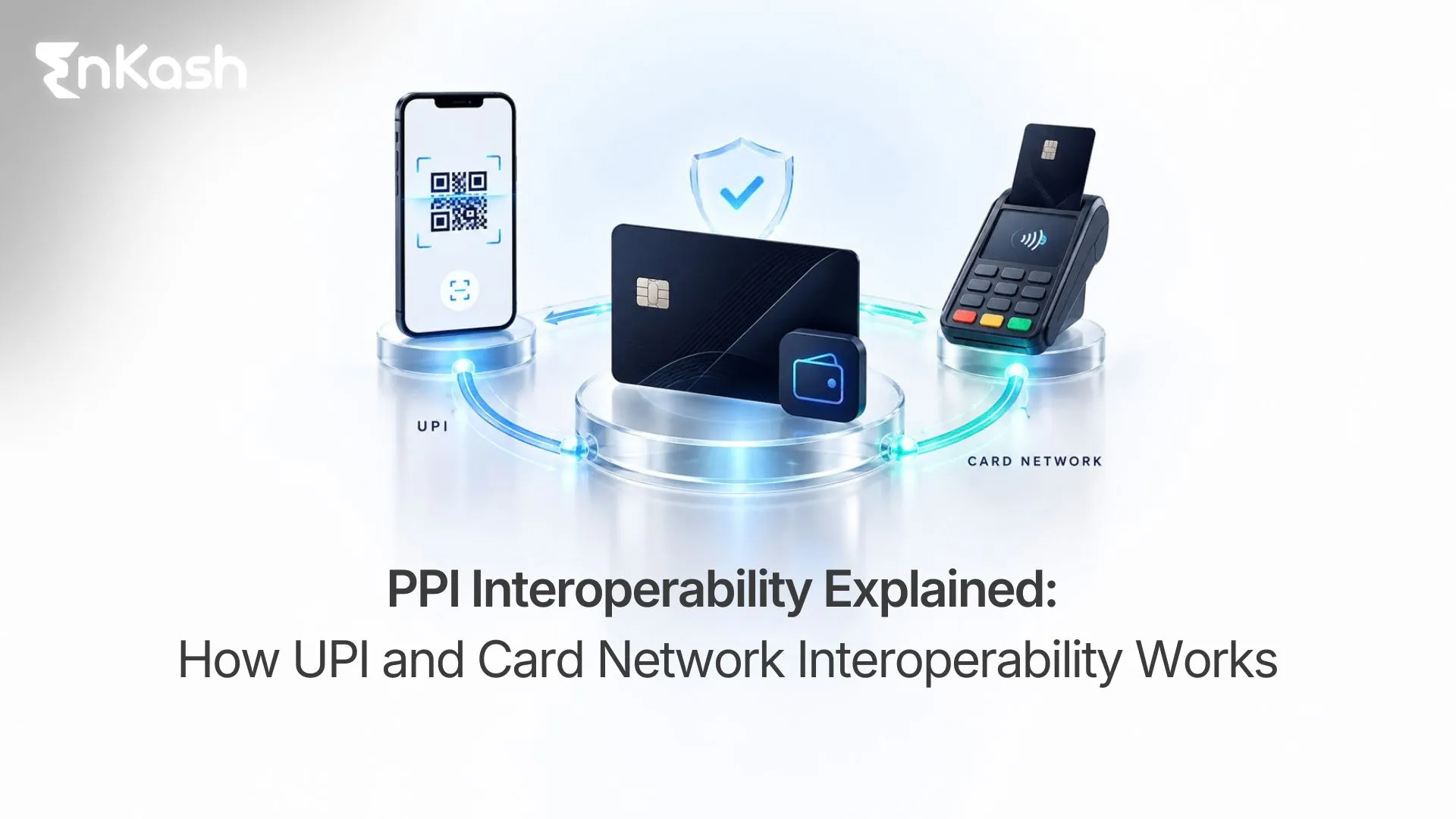
UPI can be used with an eligible PPI Wallet, but UPI and the wallet are doing different jobs. The wallet holds the prepaid money. UPI acts as the interoperability layer that allows an eligible Full-KYC PPI wallet to be used for supported UPI transactions. The money used for a payment comes from the prepaid balance in the wallet rather than directly from the user's bank account. Full-KYC PPI wallets must be enabled for UPI interoperability by the issuer. RBI also permits issuers to enable eligible Full-KYC PPIs to be discovered and linked on supported third-party UPI apps.
Suppose a person scans a merchant QR code. If a bank account is selected in the UPI app, the payment comes from that bank account. If a linked Full-KYC PPI is selected instead, the amount comes from the money already available in the wallet.
This is useful because the user does not have to move back to the wallet issuer's app for every supported payment. A Full-KYC PPI can be linked to a third-party UPI app where both sides support the feature.
A user should still check whether the particular wallet and UPI app offer the connection. While UPI interoperability is mandatory for Full-KYC PPI wallets, third-party app linking depends on whether the PPI issuer and the particular UPI app support that facility.
Read more: RBI allows UPI payments from PPI wallets via third-party applications
What Are the PPI Wallet Limits in India
A PPI wallet Limits need a little context. A wallet can have a cap on the amount kept in it, a separate cap on how much is loaded, and another limit on certain outgoing transactions. Treating all of these as the same number can be misleading.
The main figures are easier to compare side by side:
| Limit | Small PPI With Cash Loading | Small PPI Without Cash Loading | Full-KYC PPI |
|---|
| Maximum balance at any time | ₹10,000 | ₹10,000 | ₹2,00,000 |
| Full-KYC PPI, Maximum loaded in a month | ₹10,000 | ₹10,000 | No general monthly loading cap specified under the Full-KYC provision; cash loading across PPIs is capped at ₹50,000 per month, subject to applicable PPI and issuer limits |
| Maximum loaded in a financial year | ₹1,20,000 | ₹1,20,000 | No equivalent ₹1,20,000 annual cap |
| Monthly debit | ₹10,000 | No separate monthly debit cap specified, but the ₹10,000 balance and monthly loading limits still apply | No general monthly purchase cap stated under this provision |
| Fund transfer | Not available | Not available | Available within applicable transfer limits |
These figures come from the rules for Small and Full-KYC PPIs. The ₹2 lakh amount for Full-KYC PPIs is the maximum balance that can remain in the instrument at one time. It should not be read as a ₹2 lakh monthly loading allowance.
For Full-KYC PPIs, transfers to a pre-registered beneficiary can be permitted up to ₹2 lakh per month per beneficiary. Transfers in other cases are limited to ₹10,000 per month. Issuers may set lower limits based on their risk policies. An issuer can set a lower limit after considering its risk controls.
Cash loading across PPIs also has a broader cap of ₹50,000 per month, subject to the lower limit that applies to the individual PPI. For example, a small PPI with cash loading has its own ₹10,000 monthly loading ceiling.
Read more: What is a UPI Wallet and How Does It Work? Online Payments Without a Bank Account
Summing Up
A PPI Wallet is easier to understand once you look past the app or product name. Check the PPI category first. From there, you can see what verification is required, how money can be added, which payments are available, if UPI can be linked, and what limits apply. The issuer's own terms then tell you which of those permitted features are actually offered.
FAQs
Does money kept in a PPI wallet earn interest?
No interest is paid on a PPI balance. Money held in the wallet remains prepaid value available for the transactions supported by that PPI. It does not work like money kept in an interest-bearing savings account.
Can a PPI issuer provide more than one wallet or PPI to the same customer?
Yes, but the RBI rules distinguish between PPI types. A particular issuer can issue a customer one of the three core PPI types: a cash-loadable Small PPI, a non-cash-loadable Small PPI, or a Full-KYC PPI. Multiple PPIs within that type may be issued for reasons such as different co-branding programmes or form factors, but the applicable balance and transaction limits must be monitored on a combined basis. Gift PPIs and PPI-MTS follow separate rules.
What happens if a PPI wallet is not used for a long time?
A PPI with no financial transaction for one consecutive year must be made inactive after the issuer sends notice to the holder. It can be reactivated after validation and applicable due diligence. The user can get it reactivated after the required validation and checks are completed.
Can the remaining balance be taken out when a PPI wallet is closed?
The answer depends on the wallet category. Small PPIs allow closure proceeds to go back to the original payment source or, after the required verification, to a bank account. Full-KYC PPIs also provide ways to move the remaining amount under the applicable conditions.
Can a PPI wallet expire?
Yes. A PPI must have a minimum validity period of one year from the date of its last loading or reloading. An issuer may provide a longer validity period and must disclose the expiry period to the customer. Users should check the validity shown by their wallet provider and any notice sent before expiry.