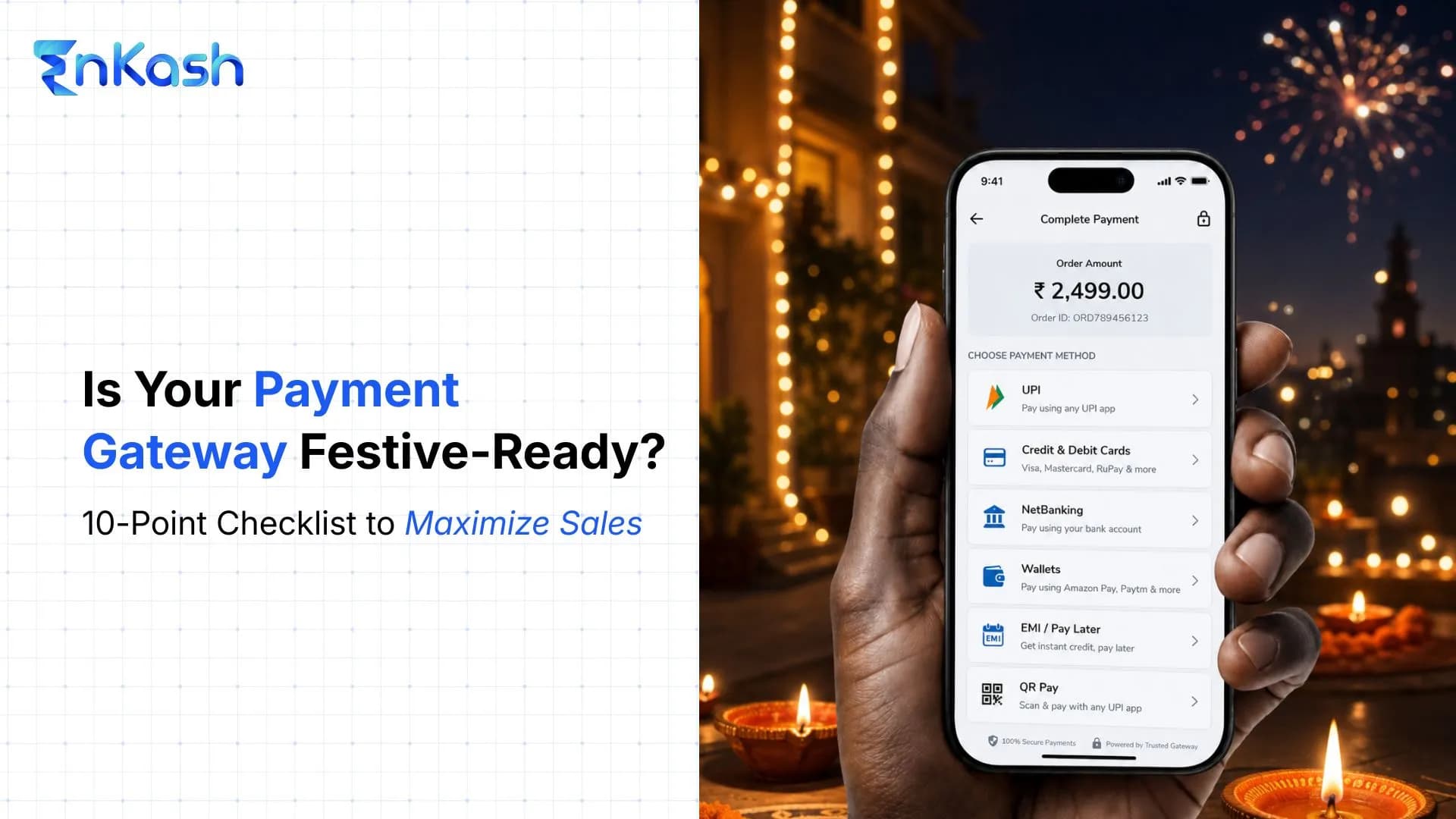
What Makes a Payment Gateway Festive-Ready?
Festive sales can bring some of the year’s highest traffic, but they also put every weak point in the payment flow under pressure.
Businesses usually prepare by increasing ad budgets, stocking inventory, launching discounts and strengthening delivery operations. Yet the final step often receives less attention: can customers actually complete their payments when demand peaks?
During the first two days of India’s 2025 festive sale period, online retail sales reportedly grew by 32% to 35% compared with the previous year. When such demand arrives within a short sale window, even a brief slowdown or small decline in payment success can affect a large number of orders.
A festive-ready payment gateway should do more than accept payments. It should continue performing when transaction volumes rise, support the payment methods customers prefer and maintain fast, reliable checkout across mobile devices. It should also recover failed or pending transactions, update order statuses accurately, protect payment data and give finance, technology and support teams enough visibility to manage refunds, settlements and customer queries.
The real question is: will your complete payment setup work as reliably during your busiest sale hour as it does on a normal day?
Use this ten-point checklist before your festive campaigns go live.
1. Can It Handle Sudden Transaction Spikes?
Festive traffic rarely grows in a steady, predictable line. A flash sale, app notification, influencer post or limited-period offer can send thousands of customers to the checkout within minutes.
Test the complete flow using the volume expected during your busiest hour, not your average daily volume. This includes your website or app, payment APIs, order management system, webhooks and confirmation messages.
Microsoft notes that performance problems often remain hidden until an application is under load. High-scale load testing helps teams simulate traffic, measure response times and identify bottlenecks before customers face them.
Also confirm rate limits, scaling capacity, timeout behaviour and the recovery process after a traffic burst.
2. Is the Checkout Fast and Mobile-Friendly?
A customer who reaches the payment page is already close to buying. A slow page, confusing layout or repeated redirects can make them leave at the final step.
Keep the checkout lightweight and easy to use on smaller screens. Customers should clearly see the amount payable, applied discount, delivery fee and available payment methods. Switching between UPI, cards or other options should not erase information already entered.
Google’s Core Web Vitals recommend that the main content should load within 2.5 seconds and interactions should respond within 200 milliseconds for a good user experience. These targets should be assessed separately across mobile and desktop traffic.
Test older phones, common browsers and slower mobile networks, not only high-end devices on office Wi-Fi.
3. Does It Offer the Right Payment Mix?
Festive shoppers do not all pay in the same way. Some shoppers prefer UPI for speed; repeat customers may use saved cards; and EMI or pay-later options can make high-value purchases more affordable.
According to NPCI, UPI processed approximately 22.72 billion transactions in June 2026, illustrating the scale of UPI usage in India. However, UPI should not be the only reliable option. Cards, net banking, wallets, and relevant affordability methods provide alternatives when a bank or payment rail is unavailable.
Use past transaction data to decide which methods should appear first. Also review payment-method charges, offer funding and EMI terms so higher conversion does not come at the expense of festive margins.
4. Can It Protect Payment Success During Peak Hours?
A payment attempt contributes to a completed order only after the payment is successfully processed and the order is confirmed. During festive sales, even a small decline in the success rate can translate into a meaningful number of lost orders.
Do not monitor one overall success-rate figure. Review performance by payment method, bank, issuer, device, transaction value, and time of day. This makes it easier to identify whether failures are concentrated around one route.
Your payment setup should direct transactions through reliable processing routes and use a fallback when a route slows down or becomes unavailable. Clear failure codes are equally important because they help teams separate customer errors from bank, network or integration problems.
5. Can Customers Recover From a Failed Payment?
A failed payment does not always have to become a lost order. What happens next can determine whether the customer retries or leaves.
Avoid vague messages such as “transaction failed.” Explain whether the customer should retry, wait for confirmation or choose another method. Keep the cart intact and preserve entered information so the purchase does not have to begin again.
Pending payments require special attention. A customer may see a debit while the merchant’s system has not yet received final confirmation. Your system should verify the final payment status before marking the order as unpaid. It should also use server-side idempotency controls and temporarily disable repeated submissions to reduce the risk of duplicate charges.
6. Are Fraud and Payment Security Controls Ready?
Festive sales create unusual purchasing patterns. New customers, larger baskets, repeated orders and transactions from unfamiliar devices may be genuine, but fraudulent activity can be harder to detect amid higher transaction volumes.
Review velocity limits, unusual order values, device signals, repeated failures, account takeover indicators, coupon abuse and high-risk order patterns. Controls should detect meaningful risk without rejecting every transaction that deviates from normal purchasing patterns.
Payment-page security also matters. PCI DSS requirements effective from March 31, 2025, focus on authorising payment-page scripts, checking their integrity and monitoring them for tampering to reduce the risk of e-skimming attacks.
7. Has the Complete Integration Been Tested?
A gateway can remain operational while another integration failure still prevents order completion. Your checkout, payment provider, order system, inventory software, and customer notifications must all agree on the transaction status.
Test successful, failed, pending, and timed-out payments. Include delayed confirmations, duplicate callbacks, customers closing the page before receiving confirmation, full and partial refunds, and cases where the payment succeeds, but the order is not created.
Webhooks help applications receive updates when events such as bank confirmations or disputes happen asynchronously. They should be tested, secured, and designed to handle retries safely. Idempotency controls, commonly implemented using an idempotency key, ensure that retrying the same request does not create a duplicate payment or order operation.
8. Can Your Team Monitor and Act in Real Time?
During a festive sale, an end-of-day report is too late. Teams need to know when payment performance changes while customers are still trying to buy.
Monitor payment success, API response time, pending transactions, failure reasons, performance by payment method, performance by bank, refunds, and settlement status. Alerts should be triggered when important metrics cross a defined threshold.
Define who receives each alert and what action they can take. A developer may investigate a webhook delay, while the payments team may contact the gateway or change how available methods are displayed.
Payment data can also reveal customer preferences, order values by payment method and differences between repeat and first-time buyers.
9. Are Settlements, Refunds and Reconciliation Ready?
Festive readiness continues after the payment is completed. Higher transaction volumes can increase the number of refunds, reversals, chargebacks and mismatches between payment and order records. They can also make settlement and reconciliation workflows more demanding.
Map campaign dates against your settlement schedule. Advertising, inventory, logistics and vendor costs may need to be paid before sale proceeds reach the bank account. This can create a working-capital gap during back-to-back campaigns.
Finance teams should be able to match orders, payments, fees, refunds and settlements at the transaction level. Customer support should also be able to see refund status without waiting for a manual update from finance.
Review the total payment-processing cost across payment methods, settlement options, refunds and disputes rather than considering only the advertised transaction fee.
10. Will You Get Support When Something Goes Wrong?
A payment incident during your busiest sale cannot remain in a general support queue. Before the campaign, confirm who will respond, how the issue will be escalated and what information the provider will require.
Keep merchant IDs, affected transaction IDs, screenshots, logs and escalation contacts ready. Your developers, finance team, customer support team and business owners should know their roles.
Prepare a short incident plan covering who investigates, contacts the payment provider, updates customers and decides whether a campaign needs to be paused. Avoid unnecessary production changes during the busiest period unless they have been tested properly.
A Simple Pre-Festive Payment Timeline
Payment readiness should begin before campaign traffic reaches the website.
Four to six weeks before: Review integrations, payment methods, tokenisation, offer configurations and fraud rules.
Two to four weeks before: Run load tests, check mobile checkout performance and test routing, failover and failed-payment recovery.
One to two weeks before: Confirm settlements, refund workflows, reconciliation reports, alerts and escalation contacts.
During the sale: Monitor payment success, response time, pending payments, refund queues and bank-wise performance in real time.
Do not leave the complete review until the day before launch. Some issues require changes across your website, gateway configuration, banking routes and internal operations.
How EnKash Helps Brands Prepare for Festive Sales
EnKash Payment Gateway helps businesses address payment challenges that become more visible during festive sales, including checkout friction, failed transactions, settlement requirements and payment-related support issues.
Fast checkout: EnKash supports online checkout and tokenised card-payment flows, where enabled and consented, helping reduce repeated data entry for eligible returning customers
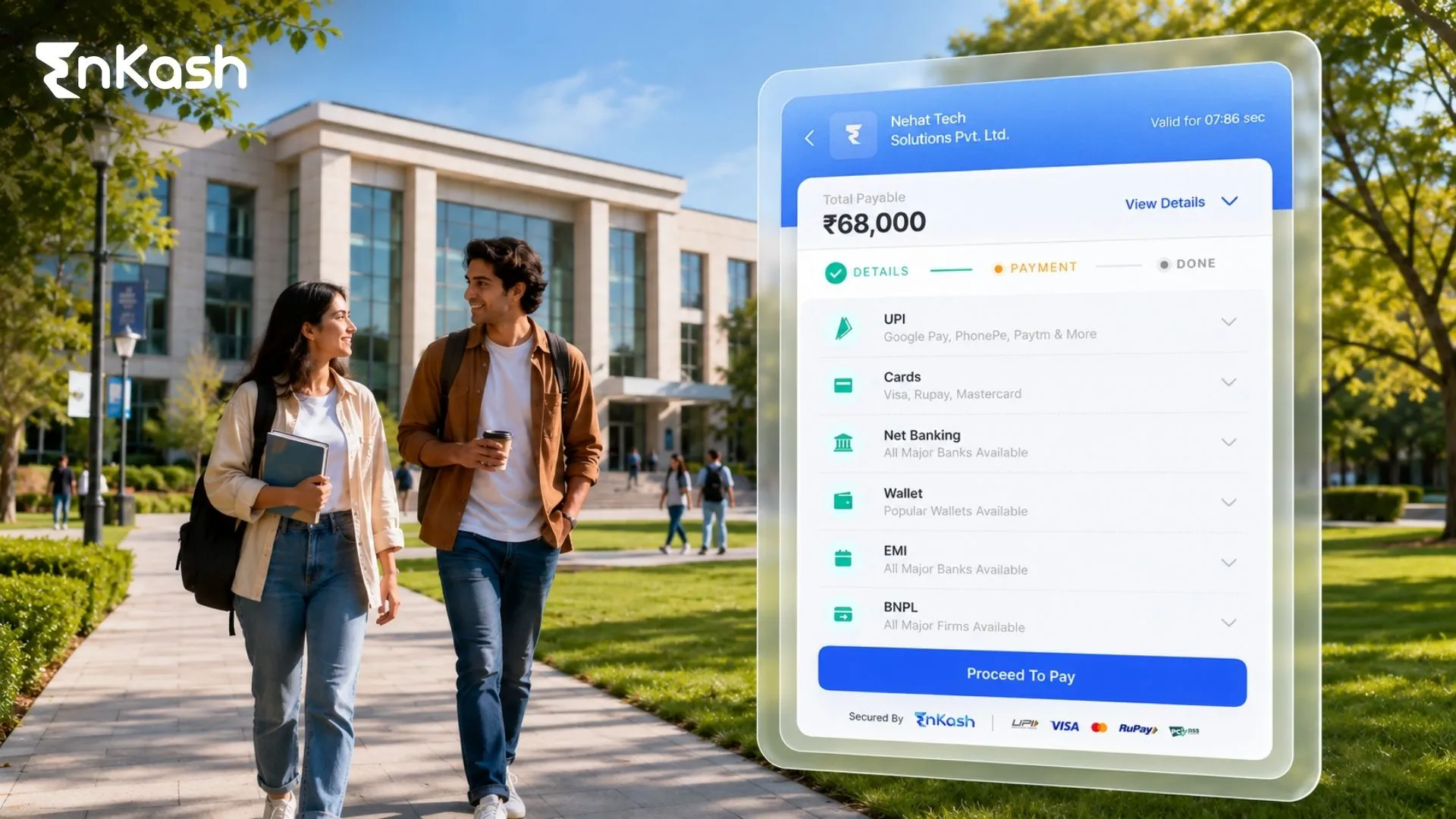
100+ payment options: Merchants can offer UPI, cards, net banking, wallets and eligible EMI or pay-later options through one checkout.
E-commerce integrations: Plugins for Shopify, WooCommerce and Magento, along with APIs and SDKs, make integration and testing easier.
Instant settlements: Faster access to sales proceeds can help businesses manage advertising, inventory and vendor payments during the festive season.
Real-time visibility: Businesses can view payment statuses, refunds and settlements through a central dashboard.
24/7 human support: EnKash provides round-the-clock technical and merchant support through available support channels to help address payment issues during live campaigns.
EnKash is an RBI-authorised online payment aggregator and PCI DSS compliant, providing businesses with regulated payment infrastructure and industry-standard protection for cardholder data.
Conclusion
Festive payment readiness depends on the complete checkout and order flow, not gateway uptime alone. Test capacity, payment-status accuracy, failure recovery, security, settlements and incident ownership before traffic peaks. Problems identified before launch are significantly easier to resolve than failures discovered by customers during a live sale.
Frequently Asked Questions
Which payment methods should brands offer during festive sales?
Brands should support UPI, cards, net banking, wallets, EMI and BNPL. The right mix depends on order value, customer profile and past transaction data, so the most-used options should appear first at checkout.
How can a payment gateway reduce festive checkout drop-offs?
A fast mobile checkout, securely stored, tokenised payment details, where enabled and consented, clear pricing and fewer redirects can make payment easier. Failed-payment recovery and alternative payment options also give customers another chance to complete the order.
What should businesses test before a festive campaign?
Test peak traffic, payment success, webhooks, refunds, mobile checkout and failed or pending transactions. Also confirm settlement timelines, fraud rules, alerts and escalation contacts before the campaign goes live.
How can brands improve payment success during traffic spikes?
Track success rates by payment method, bank and device, and use smart routing with reliable fallback options. Real-time monitoring helps teams identify underperforming routes and act before failures affect more customers.
Why are settlements important during festive sales?
Festive campaigns often increase spending on advertising, inventory, logistics and vendors. Faster settlements help brands access sale proceeds sooner and reduce pressure on working capital.
How can payment data improve festive campaigns?
Payment data can reveal preferred methods, high-performing offers, repeat buyers and checkout drop-off patterns. Brands can use these insights to improve payment placement, affordability offers and future checkout, offer and payment-method planning.