India, a country with a population of 138 crores, is growing by leaps and bounds in the digital sector. This transformation of payment modes in India has also resulted in the way we do business, and the banking sector has evolved gradually. While the conventional style of sending money to someone is still prevalent in a few villages and towns, digital banking has taken the nation by storm. From shopping on websites to paying for small mom & pop shops, from e-wallets to UPI payments, the options are varied, and many include RTGS/NEFT/UPI.
While these may seem cumbersome for some, these security measures were put in for a reason. What we find an inconvenience could be a security benefit when it comes to preventing misuse. Let's discuss what those limitations could be and what are the different modes of payment/banking available in India.
What are Payment Methods?
Payment methods are different ways in which individuals or businesses pay for goods and services, either offline or online. These methods define how money is transferred from a buyer to a seller.
Types of Payment Methods in India
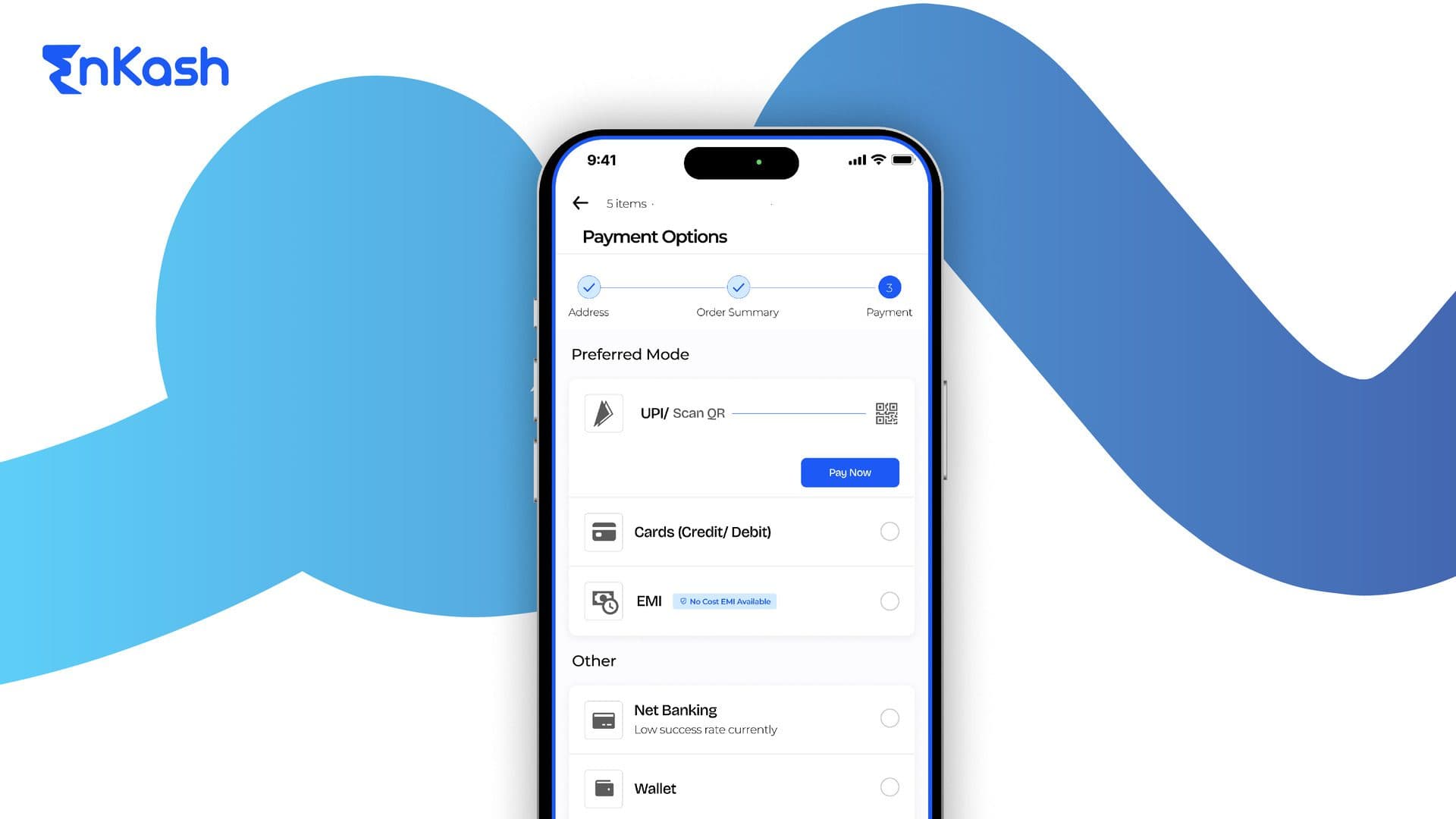
There are multiple methods of payment in India, including cash transfers, bank payments like NEFT, RTGS, and IMPS, cash payments (debit and credit cards), and mobile payments like UPI, QR code payments, and wallets.
Different Modes of Payment
Payments Methods
About
Pros
Cons
Credit Card
Use now and pay later
Rewards, cashback, builds credit score
Interest charges, risk of overspending
Debit Card
Directly linked to your bank account
Easy to use, no debt risk
Limited rewards, fraud risk if compromised
UPI
Real-time bank transfer via mobile apps like Google Pay, PhonePe
Instant, free, widely accepted
Requires internet, transaction limits
Digital Wallet
Stores money digitally (e.g., Paytm wallet)
Fast checkout, offers & cashback
Needs wallet loading, limited acceptance vs UPI
Bank Transfer (Like NEFT, RTGS and IMPS)
Direct account-to-account transfers via bank
Secure, suitable for large transactions
Can take time (NEFT), requires details like IFSC
BNPL
Short-term credit for purchases
No upfront payment, easy access
Hidden fees, encourages overspending
Cash
Physical currency transactions
Universal acceptance, no tech needed
No tracking, risk of loss/theft
Prepaid Cards
Pre-loaded cards with fixed balance
Budget control, safer than cash
Limited usability, reload required
Cheque
Paper-based bank payment method
Useful for large, documented payments
Slow processing, risk of bounce
AutoPay (NACH/ACH/UPI autopay)
Automated recurring payments
Convenience, no missed payments
Risk of auto-debit errors, less control
Payment Methods in India
Let us know about bank payment modes in India in detail, and one of the most popular modes of payment, which is making its place internationally.
1. NEFT 2. RTGS 3. IMPS 4. UPI
Both NEFT and RTGS are regulated by the Reserve Bank of India, while IMPS and UPI payments are monitored by NPCI. Let us get to know more about them in detail below.
NEFT
Short for National Electronic Funds Transfer, the NEFT form is one of the oldest and most common modes of funds transfer in the country. NEFT payments are done in batches and can only be done between banks that offer NEFT services.
One of the best things about this service is that it can be done via both online and offline sources, i.e., through digital banking, and with the help of cash, cheque or demand draft in a bank branch. There is no set limit for the amount to transfer in this mode; however, a fee is levied on each transaction. The transaction fee varies according to the amount to be transacted.
How much time does NEFT take?
The time taken for NEFT transaction of money varies from bank to bank. However, the minimum transaction time via NEFT is 15 minutes, and the maximum goes to 2 hours. But it's best to transfer the money during the working days before 7:45 p.m.
RTGS
RTGS stands for Real-Time Gross Settlements; as the name suggests, this mode of transfer is done in real-time and is optimized for high-volume transfers. The minimum amount for an RTGS transaction is 2 lacs, while the cap for per day transaction is 10 lacs. If you plan on transferring more than 2 lacs to a recipient, RTGS is the only solution.
Available in both offline and online modes, RTGS can be accessed 24*7, any time of the year. As per RBI guidelines, there is no charge associated with RTGS transfer if done online; however, for offline charges, banks may charge some fees.
IMPS
Short for Immediate Payment Services, IMPS is an online-only mode of payment that is done in real-time and is available 24/7. The minimum transfer amount for an IMPS transaction is Re. 1, while the maximum amount is currently at 5 lacs per transaction.
The charges for IMPS transactions vary from bank to bank. The best thing about IMPS is that you do not need to add beneficiaries to start transactions, and it can be done without the need to add account numbers.
Difference between NEFT, RTGS and IMPS
The prime difference between the three modes of payment services is the amount of money transferred and the time taken during the process. In NEFT mode, there is no minimum transaction limit, but the upper cap is Rs 10 lakh, and the time consumed during the process is a maximum of 2 hours.
However, in RTGS payment mode, the minimum amount that can be transferred is Rs 2 lakh, and that can go up to Rs.10 lakh. Moreover, in the RTGS payment process, the real-time in transferring the fund is 30 minutes.
In IMPS mode, the maximum transaction limit is Rs 5 lakh, and it can be done instantly. So, these were the basic difference between the NEFT, RTGS, and IMPS.
Difference between NEFT, RTGS & IMPS
UPI
Short for Unified Payments Interface, UPI is the fastest-growing digital payment mode currently in India. Payments/Fund transfers can be done to another recipient through phone numbers, unique QR codes, virtual payment addresses or Aadhar numbers. There is no need to enter the recipient account number to make a transaction.
UPI payments are made in real-time, can start with a minimum of Re.1 and has a cap of Rs 1 lac per day. You'll need to link your bank account with your phone number/Aadhar number to start using the UPI mode of transaction. Currently, there are no charges or fees associated with using UPI.
Digital Payment Advantages And Disadvantages
In any mode of the financial banking system, whether it's online or offline, there are certain sets of pros and cons, and you must become familiar with them because you are putting your hard-earned money into the bank.
Advantages of Digital Payment Services
Fast and Simple
Minimum Transaction Cost
No Geographical Bar in the transaction
Disadvantages of Digital Payment Services
High risk of forgery
Untraceable
Security Concerns
Bottom Line
While all 4 modes are equally helpful for transferring funds, they also have their own set of pros and cons. For quick day-to-day payments, UPI is the best service available. If your transfer amount falls between 1-5 lacs, IMPS is the quickest and best solution.
If you're not tech-savvy and prefer the old-school method of sending money through a bank, NEFT should be your go-to mode if the amount transferred is less than 2 lacs. For anything above 2 lacs, RTGS is highly recommended. These payment modes not only make transactions and fund transfers easier but also help in bringing a change in the financial banking process of the nation.
FAQs
What are the most common payment modes in India?
India uses cash, cards (credit/debit), UPI, digital wallets, bank transfers (NEFT, RTGS, IMPS), BNPL, prepaid cards, cheques, and AutoPay systems as payment methods.
What is the most popular digital payment method in India?
UPI is the most widely used digital payment method due to ease and instant transfers.
What is the difference between UPI and a digital wallet?
UPI directly transfers money between bank accounts, while a digital wallet stores money that needs to be preloaded before use.
Which payment mode is best for large transactions?
Bank transfers via RTGS are ideal for large-value transactions, while NEFT and IMPS are suitable for smaller amounts.
What is BNPL, and how does it work?
BNPL (Buy Now Pay Later) enables you to make purchases instantly and pay later, either in full or through EMIs.
What is AutoPay, and where is it used?
AutoPay is used for recurring payments like subscriptions, EMIs, utility bills, and SIPs. It is done via NACH, ACH, or UPI.
What to do if a digital payment fails but money is debited?
Do not panic. Wait for 24 to 48 hours for auto-reversal of money. If not refunded within this time period, raise a complaint with your bank or payment app.
Which payment method is best for everyday use?
UPI is the most famous and convenient payment mode due to its speed, convenience, and security.