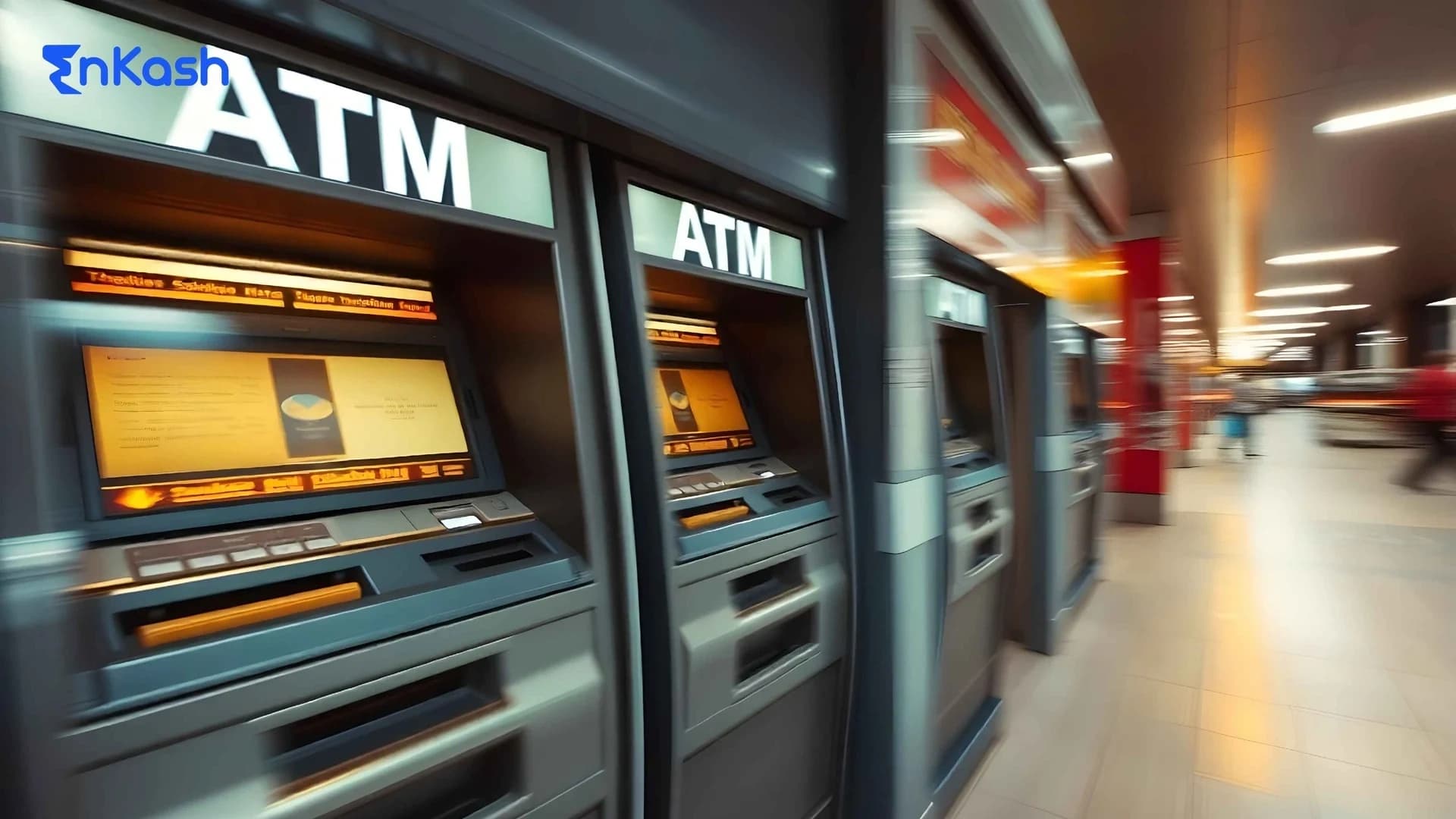
Whether you’re withdrawing cash, checking your account balance, or depositing money, Automated Teller Machines (ATMs) have become an integral part of our daily lives, and they offer convenience and accessibility 24/7. However, despite their widespread use, many people still have questions about what ATMs are and how they work. In this article, we will delve into the workings of ATMs, their evolution over the years, and their significance in modern banking.
What is an ATM?
ATM stands for Automated Teller Machine. It is a device that helps customers of banks and other financial institutions complete financial transactions, such as cash withdrawals, deposits, online money transfers, bill payments, and balance checks. In India, customers can easily check their account balance and access basic banking services using an ATM.
ATMs allow customers to initiate transactions without interacting with a bank cashier or representative. Customers can withdraw money using debit cards, credit cards, or prepaid cards. It allows customers to access banking services 24 hours a day, making banking more convenient, faster, and easily accessible.
Evolution of ATMs
ATMs have undergone significant evolution since their introduction in the late 1960s.
The first modern ATM was introduced by Barclays Bank in London in 1967. Initially, ATMs could only dispense cash, but advancements in technology have expanded their functionalities significantly. Today’s ATMs are equipped with features such as touch screens, cardless access, multi-language support, and contactless payment options.
Read more: Role of e-Banking in IndiaTypes Of ATM
- White-label ATMs: These ATMs are owned and operated by a non-bank entity, such as a retail store or financial services company. They may charge higher fees for using them compared to your bank’s ATMs.
- Brown-label ATMs: These ATMs are owned by a bank but outsourced to a third-party service provider to operate.
- Green-label ATMs: These ATMs are found primarily in India and are dedicated to agricultural transactions, such as disbursing crop loans and subsidies.
- Orange-label ATMs: These ATMs are also found primarily in India and are used for stock market transactions.
- Yellow-label ATMs: These ATMs are designed for e-commerce transactions. They may not be widely available.
- Pink-label ATMs: These ATMs are designed specifically for female customers and are typically found in countries where safety is a concern. They may offer features like security guards or well-lit locations.
Types of ATMs and Their Features| Type of ATM | Full Form / Meaning | Primary Use / Function | Key Features |
|---|
| On-site ATM | On-site Automated Teller Machine | Located within the bank premises for customers’ convenience | Direct access to bank staff, typically with higher security |
| Off-site ATM | Off-site Automated Teller Machine | Located outside bank branches (e.g., malls, petrol pumps) | 24/7 accessibility, often shared by multiple banks |
| Full-service ATM | Full-service Automated Teller Machine | Offers complete banking services | Cash withdrawal, deposit, account statement, fund transfer, PIN change |
| Cash-dispensing ATM | – | Dispenses only cash | Limited to withdrawals, usually simpler machines |
| Cash & Cheque Deposit ATM | – | Accepts both cash and cheque deposits | Can process deposits directly into the account, and often issues a receipt |
| White-label ATM | – | Operated by non-bank entities, but connected to interbank networks | Cash withdrawals only, supports multiple banks’ customers |
| Brown-label ATM | – | Operated by non-bank entities under a bank’s brand | Cash withdrawals, sometimes deposits, are managed by service providers |
| Mobile ATM | – | Portable ATM service, usually on vans or in temporary locations | Used for events, remote areas, or emergency cash needs |
| Off-line ATM | – | Operates without a constant connection to the bank network | Performs basic transactions; updates account when online |
| Interactive / Smart ATM | – | Provides advanced banking services | Video banking, account management, loan applications, and card services |
Benefits of ATMs
ATMs offer numerous advantages for both individuals and businesses:
- Convenience: Unmatched 24/7 access to your bank account, freeing you from branch operating hours
- Speed: Conduct transactions quickly and efficiently without waiting in line for a teller
- Security: ATMs employ robust security measures, including PIN verification and encrypted communication
- Reduced Costs: Using your own bank’s ATMs often incurs no fees, compared to teller-assisted transactions
- Accessibility: ATMs are widely available in various locations, including banks, grocery stores, gas stations, and airports.
How to Use an Automated Teller Machine (ATM)
An ATM (Automated Teller Machine) allows you to withdraw cash, check your account balance, deposit money, and more without visiting a bank branch. Follow these steps to use it safely:
Step 1: Insert Your ATM/Debit Card
- Insert your card with the chip facing the correct direction.
- Wait for the machine to recognize your card.
Step 2: Enter Your PIN
- Type your 4- or 6-digit PIN securely.
- Ensure no one can see your PIN while entering it.
Step 3: Select Your Transaction Type
Common options include:
- Cash Withdrawal – Take out money from your account.
- Balance Inquiry – Check available account balance.
- Cash Deposit – Deposit cash (if the ATM supports it).
- Mini Statement – View recent transactions.
Step 4: Enter Transaction Details
- For withdrawal: choose an amount.
- For deposit: follow instructions to insert cash or cheques.
Step 5: Collect Cash and Receipt
- Collect your cash and receipt
- Some ATMs allow email or SMS receipts instead of printing.
Step 6: Remove Your Card
- Always remove your card before leaving the ATM.
- Double-check you have cash, a card, and a receipt to avoid issues
Read more: How to Withdraw Cash from an ATM?
What Are ATMs Used For?
An ATM (Automated Teller Machine) is a convenient banking tool that allows users to perform financial transactions without visiting a bank branch. ATMs serve multiple purposes for both individuals and businesses.
Key Uses of ATMs
- Cash Withdrawal
The most common use of ATMs is to withdraw money from a savings or current account anytime.
- Balance Inquiry
Users can check their account balance to stay updated on available funds.
- Cash and Cheque Deposits
Many ATMs now allow cash or cheque deposits, instantly updating your account.
- Mini Statement & Transaction History
Users can view recent transactions or print a mini statement for quick reference.
- Fund Transfers
Some ATMs enable the transfer of money between accounts within the same bank.
- PIN Change & Card Services
You can change your PIN, activate new cards, or manage other card-related services at select ATMs.
- Bill Payments & Recharge
Modern ATMs offer utility bill payments, mobile recharges, and other financial services.
Security Tips for ATM Usage
While ATMs are generally secure, it’s important to be vigilant:
ATMs and the Future of Banking
ATMs continue to evolve, integrating new technologies for enhanced user experiences. Here are some things to watch:
- Contactless payments: ATMs with contactless technology allow users to withdraw cash by tapping their debit or credit card or mobile wallet.
- Biometric authentication: Fingerprint or facial recognition systems may replace PINs for added security.
- Voice-activated interfaces: ATMs with voice-activated interfaces offer accessibility for visually impaired users.
- Advanced cash dispensing: ATMs might dispense personalized denominations or allow cash recycling for deposits.
Conclusion
In conclusion, ATMs have transformed the way we interact with our finances, providing a convenient and secure means of accessing cash and banking services. As technology advances and consumer preferences shift, ATMs will continue to adapt to meet the changing needs of customers. By understanding the history, functionality, and security features of ATMs, consumers can make informed decisions about how they manage their finances in an increasingly digital world.
Frequently Asked Questions
1. Who Invented the ATM?The Automated Teller Machine (ATM) was invented by John Shepherd-Barron, a Scottish inventor, in 1967. He developed the first cash-dispensing machine to allow bank customers to withdraw cash outside of banking hours, revolutionizing personal banking.
- The first ATM was installed by Barclays Bank in London in 1967.
- Early ATMs used cheque-based tokens, while modern ATMs use debit or credit cards with PIN authentication.
- John Shepherd-Barron’s invention laid the foundation for 24/7 banking access worldwide, making financial services more convenient and accessible.
2. What is the full form of ATM?ATM stands for Automated Teller Machine. It allows you to withdraw cash, check balances, and perform other banking services.
3. What fees are associated with using ATMs?Fees can vary depending on several factors:
- Your bank: Using your own bank’s ATM typically incurs no fees or minimal fees.
- Out-of-network ATM: If you use an ATM outside your bank’s network, you may be charged a fee by both your bank and the ATM owner.
4. Can I withdraw more cash than my account balance?No, ATMs won’t allow you to withdraw more than your current account balance. You might be able to access an overdraft facility if available, but this typically incurs additional fees and charges.
5. What should I do if I forget my ATM PIN?Most banks offer options to reset your PIN online or through their mobile app. You might also be able to visit a bank branch for a PIN reset with proper identification.
6. My ATM card got stuck in the machine. What should I do?Don’t force the card out. Contact your bank immediately to report the issue. They might be able to remotely release the card or guide you through further steps.
7. Can I use a debit card as a credit card at an ATM?No, ATMs typically only dispense cash using debit cards. Credit cards are not designed for ATM withdrawals, and attempting to do so might incur fees or be declined.
8. What if the ATM dispenses incorrect cash?Immediately contact your bank and report the discrepancy. They’ll investigate the issue and help rectify the error.
9. What are some alternatives to using ATMs?Many banks offer online banking and mobile banking options for accessing account information, transferring funds, and even making bill payments.
10. Will ATMs ever become obsolete?While digital banking options are growing, ATMs are likely to remain relevant in the foreseeable future. They offer a convenient and secure way to access cash, particularly for those who might not have easy access to online banking services.