Key Takeaways
- PPI authorisation permits eligible entities to issue and operate RBI-regulated prepaid payment instruments, such as eligible wallets and prepaid cards. Closed-system instruments are treated separately.
- Payment Aggregator (PA) authorisation permits a non-bank entity to aggregate payments made by customers to merchants through permitted payment channels and settle the collected funds under RBI's prescribed framework.
- RBI formally uses approval, authorization, and Certificate of Authorization. “License” remains common industry language.
- Non-bank PPI applicants require at least ₹5 crore in positive net worth at application, increasing to ₹15 crore by the prescribed deadline. Non-bank PA applicants require ₹15 crore initially, increasing to ₹25 crore. Both must maintain the applicable minimum net worth thereafter.
- PPI rules focus on stored value and the holder. PA rules focus heavily on merchants, collection, and settlement.
- A company may need both permissions if it carries out both regulated activities.
- A payment gateway is a technology role and should not be confused with either stored-value issuance or merchant fund aggregation.
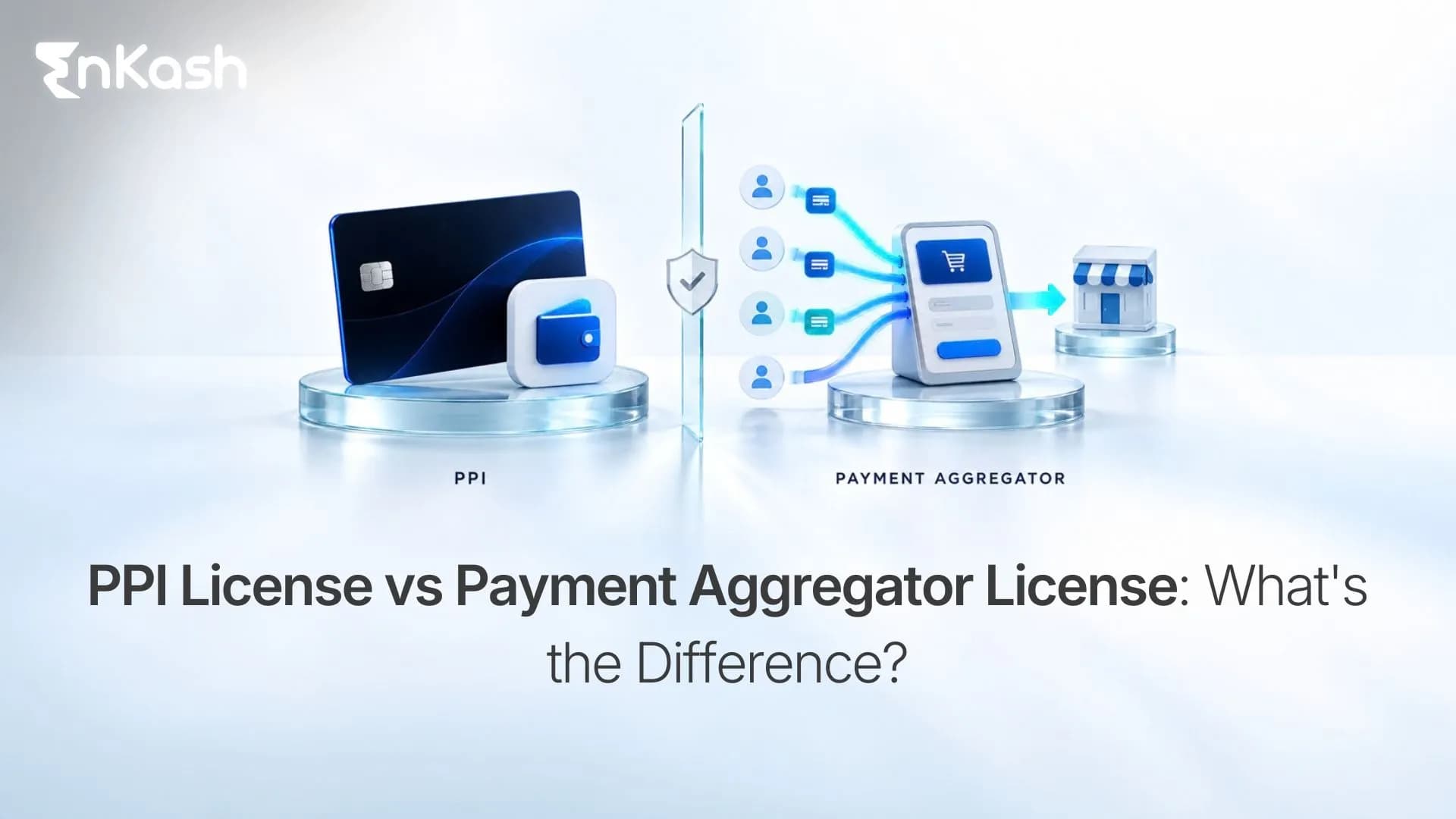
A fintech building a prepaid wallet and a company collecting online payments for merchants may both need RBI authorisation. However, the permissions cover different activities. The business behind each permission is different. PPI authorisation covers the issuance and operation of regulated prepaid instruments that allow holders to use previously loaded value. PA authorisation covers the collection of payments on behalf of merchants and the subsequent settlement of those funds. RBI's June 15, 2026 Master Directions establish common requirements for payment-system authorisation. However, businesses must still satisfy the separate regulatory conditions applicable to PPI issuance and Payment Aggregator operations. The authorisation a business needs depends on whether it issues prepaid value, aggregates merchant payments, or provides only payment technology.
PPI License vs Payment Aggregator License: Key Differences
| Comparison | PPI Authorisation | Payment Aggregator Authorisation |
|---|
| Regulatory activity | Issuance and operation of regulated prepaid instruments | Aggregation of merchant payments and settlement |
| Primary purpose | Enable holders to use prepaid stored value | Help merchants collect payments through permitted payment channels |
| Typical products or services | Prepaid wallets, cards and eligible stored-value instruments | Merchant checkout, collections and settlement services |
| Customer relationship | PPI issuer and holder | PA and onboarded merchant |
| Fund flow | Value is loaded before eligible use | Payment is collected for an underlying merchant transaction |
| Minimum non-bank net worth at application | ₹5 crore | ₹15 crore |
| Higher prescribed net-worth requirement | ₹15 crore | ₹25 crore |
| Deadline for newly authorised entities | End of the third financial year from final authorisation | End of the third financial year from authorisation |
| KYC focus | Holder or purchaser, as applicable to the PPI category | Merchant onboarding, verification and monitoring |
| Escrow requirement | Non-bank issuers safeguard outstanding PPI liabilities under the PPI framework | Non-bank PAs safeguard eligible merchant collections under the PA framework |
| Merchant relationship | Merchant acceptance arrangements | Merchant onboarding and payment-settlement arrangements |
| RBI framework | Master Directions on PPIs, 2021, as amended | Regulation of Payment Aggregators Directions, 2025, as amended |
| Common authorisation framework | June 15, 2026 directions | June 15, 2026 directions |
| Covers the other regulated activity automatically? | No | No |
What is PPI Authorisation?
A PPI authorization permits the issue and operation of prepaid payment instruments. Money is loaded in advance and recorded as prepaid value associated with the instrument, which the holder can use for permitted transactions. The holder later uses that value for functions permitted for the relevant PPI category. RBI recognizes Small PPIs and Full-KYC PPIs, along with specific categories such as Gift PPIs. Banks need RBI approval, while eligible non-bank issuers need authorization.
What is a Payment Aggregator Authorization?
A payment aggregator authorization covers merchant payment collection and settlement. A PA facilitates customer payments for merchants it has onboarded, receives the money within the permitted structure, and later settles it to those merchants. RBI’s 2025 Directions brought online, physical, and cross-border aggregation under one framework.
Core Difference Between PPI License and Payment Aggregator License
The primary difference is the activity RBI permits each entity to undertake.
| Comparison Point | PPI Authorization | Payment Aggregator Authorization |
|---|
| Core activity | Issuing prepaid stored value | Aggregating merchant payments |
| Main relationship | Issuer and PPI holder | PA and onboarded merchant |
| Money function | Value is loaded before use | Customer money is collected for merchant settlement |
| Typical output | Wallet, prepaid card, or other permitted PPI | Merchant payment-acceptance service |
| Main framework | RBI PPI Master Directions | RBI PA Directions, 2025 |
| Covers the other activity | No | No |
How Does Money Move Under a PPI and a Payment Aggregator?
The money flow shows why the permissions are separate. In a PPI model, value is loaded before it is used for permitted transactions. In a PA model, the aggregator collects payment for an underlying merchant transaction and facilitates settlement.
PPI Fund Flow
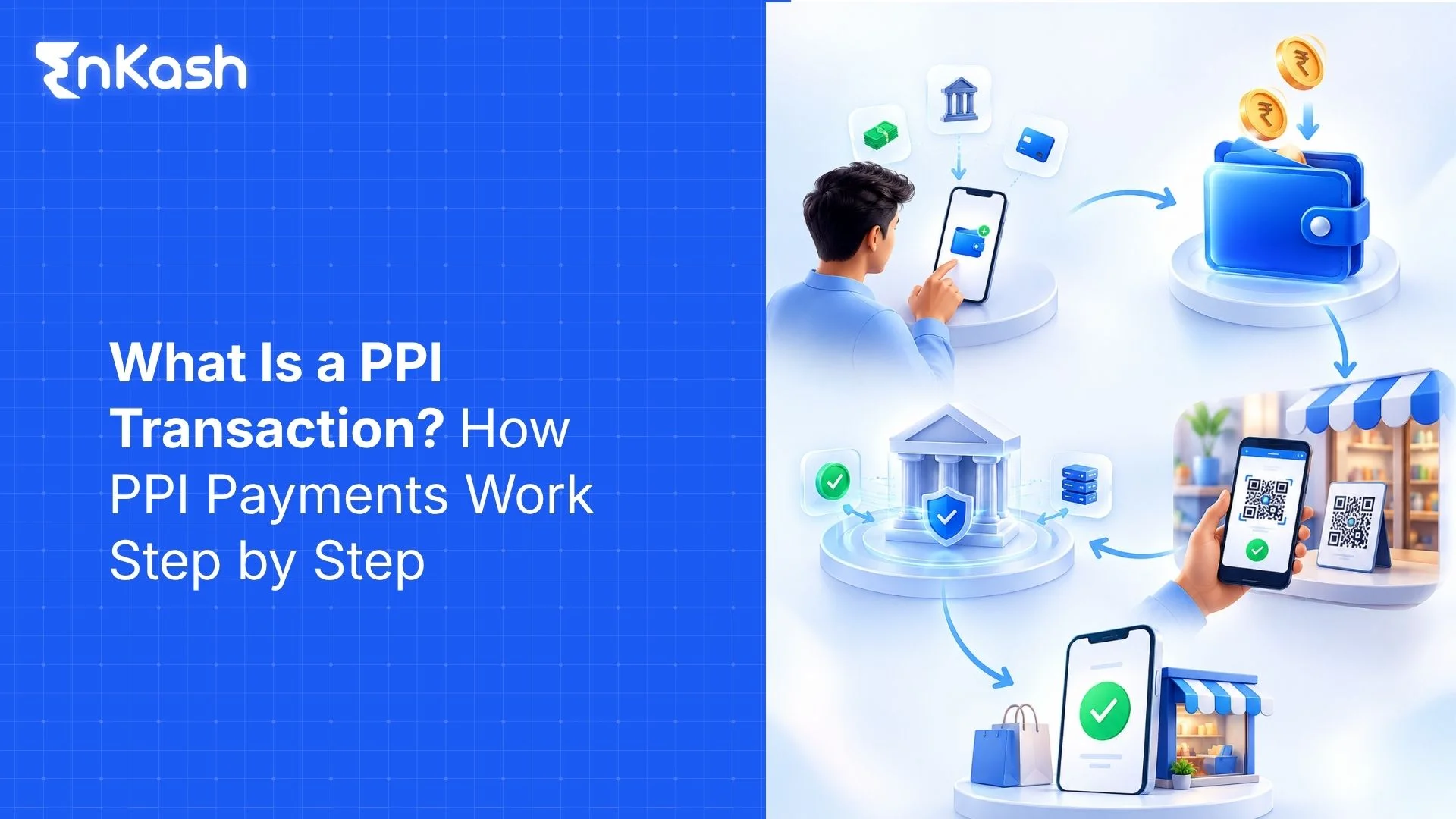
A customer loads a PPI or receives prepaid value through a permitted arrangement. The loaded amount forms part of the outstanding prepaid value for which the issuer is responsible. The holder uses the prepaid balance for eligible transactions, while the issuer manages settlement and other obligations under the PPI framework.
Payment Aggregator Fund Flow
A customer pays for a merchant purchase. The PA facilitates the transaction, aggregates the payment under its merchant arrangement, and settles the collected amount to the merchant under the applicable rules.
What Business Activities Can Each Authorization Support?
The commercial product follows the regulated activity.
PPI Business Models
PPI issuers may offer regulated prepaid instruments in permitted forms, such as wallets and prepaid cards. The applicable category, including Small PPI, Full-KYC PPI or Gift PPI, determines the instrument's permitted functions and restrictions. Permitted transaction types and limits vary according to the PPI category and applicable KYC requirements.
Payment Aggregator Business Models
The PA framework covers online (PA-O), physical (PA-P) and qualifying cross-border (PA-CB) payment aggregation. An authorised PA seeking to commence another PA category must meet the applicable requirements and intimate RBI at least 30 days before commencing that activity. The 2025 framework recognizes these PA categories separately.
Who Can Apply for PPI and PA Authorization?
Applicants must meet the applicable incorporation, business-object, regulatory, and net-worth requirements.
| Eligibility Area | PPI | Payment Aggregator |
|---|
| Non-bank applicant | Indian incorporated company | Indian company under the PA framework |
| Memorandum of Association | Must cover PPI issuance | Must cover PA activity |
| Banks | Need RBI approval under PPI rules | No separate PA authorization under the 2025 framework |
| Other regulatory status | Relevant sector conditions continue | NOC may apply where another regulator supervises the applicant |
| Fit-and-proper requirements | Apply | Apply |
A company’s objects and legal structure need to cover the activity for which it seeks RBI permission. Banks do not require separate PA authorisation from RBI to carry on PA business. However, they remain subject to the applicable provisions of the PA Directions.
PPI and Payment Aggregator Capital Thresholds
RBI’s 2026 common authorization framework leaves activity-specific capital requirements to the relevant payment-system directions.
| Requirement | Non-Bank PPI Issuer | Non-Bank Payment Aggregator |
|---|
| At application | ₹5 crore minimum positive net worth | ₹15 crore |
| By end of third financial year after authorization | ₹15 crore | ₹25 crore |
| Ongoing level after reaching threshold | ₹15 crore | ₹25 crore |
The PPI thresholds come from the current PPI Master Directions. The PA thresholds come from the 2025 PA framework.
How RBI Authorizes PPI Issuers and Payment Aggregators?
The June 15, 2026 Master Directions created a common authorization framework for payment-system operators. RBI accepts payment-system authorisation applications on an on-tap basis. New authorisations have perpetual validity, subject to continued compliance and RBI's supervisory powers. Existing authorised payment-system operators may receive perpetual validity when their CoA becomes due for renewal, subject to the prescribed conditions. PPI and PA directions remain relevant for the business-specific conditions.
The RBI authorisation process generally involves the following stages:
- Identify the Payment Activity
Work out whether the proposed business issues stored value, aggregates merchant payments, or performs another regulated payment-system activity. - Meet the specific eligibility rules
The applicant must satisfy the prescribed legal, financial, governance, and operational requirements for the proposed payment activity. - Submit the RBI application
The prescribed application goes through RBI’s payment-system authorization process. - Complete regulatory assessment
RBI reviews eligibility, promoters and management, systems, governance, and other applicable conditions. - Begin Authorised Operations and Maintain Compliance
The authorized entity continues to follow the specific PPI or PA rules that govern its business.
KYC Requirements for PPI Issuers and Payment Aggregators
PPI issuers must carry out applicable customer due diligence, while PAs have specific due diligence obligations relating to their merchants.
PPI Customer Due Diligence
PPI rules focus on the person obtaining or holding stored value. Small PPIs use minimum-detail requirements, while Full-KYC PPIs require complete holder KYC. The PPI category determines applicable loading, spending, transfer, and withdrawal permissions.
PA Merchant Due Diligence
PA rules focus heavily on the merchant being onboarded. PAs must conduct merchant customer due diligence under RBI's applicable KYC requirements. They must retrieve available CKYCR records with merchant consent and follow the prescribed alternative verification processes where necessary. In multi-PA arrangements, the PA directly onboarding the merchant carries the relevant due diligence responsibility.
Why Do Both Models Use Escrow Accounts?
Non-bank PPI issuers and non-bank Payment Aggregators are subject to different RBI escrow requirements. PPI escrow safeguards outstanding prepaid value and related merchant dues, while PA escrow safeguards eligible customer collections awaiting merchant settlement.
| Escrow Question | PPI Issuer | Payment Aggregator |
|---|
| Money being protected | Outstanding prepaid value and related dues | Customer collections for merchants |
| Liability arises from | Issued PPI value | Merchant payment collected |
| Main destination | Eligible merchant or permitted PPI flows | Onboarded merchant or permitted PA flows |
| Ordinary operating cash | No | No |
For non-bank PPI issuers, RBI requires the end-of-day escrow balance to cover outstanding PPI value and amounts due to merchants. A non-bank PA's escrow account holds funds collected on behalf of merchants and supports permitted settlements, refunds, and other transactions specifically allowed under RBI's PA escrow rules.
Merchant Relationships Under PPI and PA Models
PPI issuers establish merchant acceptance arrangements, while PAs onboard merchants for payment collection and settlement.
Merchant Acceptance Under a PPI
The merchant accepts the PPI as a payment instrument. RBI permits the acceptance relationship to exist directly with the issuer or through a payment aggregator or payment gateway.
Merchant Onboarding Under a PA
The PA has a contractual relationship with the merchant it onboards. Merchant due diligence and aggregation responsibilities flow from that regulated relationship.
Types of Payment Aggregators Under RBI Rules
PA-O
PA-O covers online or non-proximity transactions where the payment instrument and acceptance device are not physically close during payment.
PA-P
PA-P covers physical transactions where both are present in close proximity.
PA-CB
PA-CB covers specified inward and outward cross-border payment aggregation for permitted current-account transactions through e-commerce. Not every international card transaction qualifies as PA-CB activity; the actual foreign-exchange and settlement arrangements determine the classification.
How is a Payment Gateway Different From Both PPI and PA
A Payment Gateway (PG) provides technology infrastructure to route and process payment transaction information without handling the funds. Under RBI’s 2025 PA framework, a PG does not handle merchant funds in the same way as a PA. A pure Payment Gateway provides transaction-routing and processing technology without handling merchant funds. The entity undertaking regulated payment aggregation remains responsible for the applicable PA obligations. “Payment gateway license” should not be treated as another name for PA authorization.
Can a Company Hold Both PPI and Payment Aggregator Authorisation?
Yes. A company can hold both permissions when it independently carries out the regulated activities covered by each framework.
For example, a fintech may issue prepaid wallets or cards while also offering payment collection and settlement services to merchants.
PPI authorisation governs the issuance and operation of the regulated prepaid instruments. PA authorisation governs the separately regulated merchant-payment aggregation activity.
EnKash is an example of a fintech operating under both RBI PPI and PA authorisations. These permissions support distinct capabilities across prepaid payment products and merchant payment acceptance.
Holding both permissions does not remove the need to comply with the separate operational, KYC, escrow, and reporting requirements applicable to each activity.
Businesses planning similar models should assess each regulated activity independently rather than assuming that one authorisation covers the complete payments infrastructure.
Which Payment Activities May Fall Outside Either Authorization?
Some payment-related business models do not, by themselves, require PPI or PA authorisation, although other regulatory requirements may still apply.
Closed-System Stored Value
A store balance usable only for goods or services supplied by the same issuing entity is outside RBI’s regulated PPI payment-system framework. The instrument cannot be used to make payments to unrelated third-party merchants.
Pure Payment-Gateway Technology
Technology that only routes transaction information, without the PA fund-handling role, does not, by that fact, become PPI issuance or payment aggregation.
Merchant Using a Third-Party PA
An ordinary merchant receiving payments through an authorized PA does not become a PA simply because the service settles customer collections to it.
Which RBI Authorisation Does Your Business Need?
The type of authorisation depends on the regulated activity, not simply on whether the business offers digital payments.
| Business scenario | Likely regulatory position | Why |
|---|
| A fintech independently issues regulated prepaid wallets that users can load and spend from | PPI authorisation | The business issues and operates regulated stored value |
| A company independently aggregates online payments for onboarded merchants and settles the funds | PA authorisation | It performs regulated payment aggregation |
| A fintech independently operates both a prepaid wallet programme and a merchant payment aggregation service | Both permissions may be required | Two distinct regulated activities are being undertaken |
| A SaaS company provides only payment-routing technology without handling funds | Neither PPI nor PA authorisation solely for that technology role | It performs a pure technology function, though other obligations may apply |
| An online retailer uses an authorised PA to collect payment for its own sales | Ordinarily no separate PA authorisation merely for using that service | The merchant is not independently undertaking the PA role |
| A retailer issues a balance redeemable only for its own goods or services | Generally outside the regulated PPI authorisation framework if genuinely closed-system | It does not enable payment to unrelated third-party merchants |
The actual regulatory position depends on legal entities, contracts, fund flows, product features and the applicable RBI framework.
Conclusion
The authorisation required depends on the payment activity a business undertakes. PPI authorization covers stored-value issuance. PA authorization covers merchant payment aggregation and settlement. RBI’s 2026 framework now supplies the common authorization layer, while the PPI and PA directions continue to govern their respective capital and operating requirements. Before applying, businesses should map their products, fund flows, and contractual responsibilities against the relevant RBI directions.
FAQs
Is a PPI License the Same as a Wallet License?
A wallet is a common PPI form, but PPI authorization can cover a broader range of prepaid instruments. The RBI framework includes Small PPIs, Full-KYC PPIs, and specified categories such as Gift PPIs.
Does a Payment Aggregator License Allow a Company to Issue a Wallet?
A Payment Aggregator authorization does not permit regulated stored-value issuance on its own. A company creating a regulated wallet needs the applicable PPI permission.
Does a PPI Issuer Need Separate PA Authorization to Accept Its Own PPI?
PPI acceptance does not automatically create a separate PA business. The transaction structure, contracts, and fund flow need to be examined before deciding whether PA authorization also applies.
How Long Does an RBI Payment-System Authorization Remain Valid?
Under RBI’s June 15, 2026 framework, newly granted Certificates of Authorization have perpetual validity, subject to continued compliance and RBI’s powers under the Payment and Settlement Systems Act, 2007.
Can a Payment Aggregator Hold Customer Money Like a Wallet?
A Payment Aggregator does not hold customer money as stored value for later spending. It collects payment for a merchant transaction and settles the funds onward under the PA framework.
Does Every Fintech Company Need a PPI or Payment Aggregator License?
A fintech does not automatically need either permission. The requirement depends on what the company actually does, including whether it issues stored value, aggregates merchant payments, or only provides payment technology.
Can a Fintech Offer a Wallet Without Its Own PPI License?
A fintech may provide wallet-related technology or services through an arrangement with an authorised PPI issuer, depending on the business model and applicable regulatory requirements.
However, the fintech cannot independently undertake regulated PPI issuance merely by describing its product as a technology service. The authorised issuer must retain its prescribed responsibilities, and the commercial arrangement must comply with RBI rules.
Is the PPI or Payment Aggregator Minimum Net Worth a License Fee?
No. RBI's minimum net-worth requirements are financial eligibility conditions, not one-time licence fees.
A non-bank PPI applicant must satisfy the prescribed ₹5 crore initial net-worth requirement, while a non-bank PA applicant must satisfy the ₹15 crore requirement. Both categories have higher net-worth thresholds to be achieved and maintained within the applicable timelines.