In business, every transaction plays a role in shaping financial outcomes. While most organizations focus heavily on high-value payments for profitability and compliance, small day-to-day expenses are often overlooked. These small transactions, commonly known as petty cash expenses, may seem insignificant individually but can collectively affect expense visibility and budget control, especially for large enterprises operating across multiple branches.
To record and manage such routine operational spends, businesses rely on petty cash systems. However, without proper tracking and control, these small expenses can lead to financial leakage, lack of visibility, and operational inefficiencies.
Effective petty cash management improves control, visibility, and reconciliation of small expenses. In this article, you will understand what petty cash is, how businesses can manage it, the common challenges faced in petty cash management. Businesses often address these challenges by implementing digital expense and prepaid card-based controls. You will also learn how petty cash is treated from an accounting perspective and why managing it correctly is essential for sustainable financial control and business growth.
What is Petty Cash?
In many organizations, making payments through cheques or electronic methods like IMPS, NEFT, or RTGS is not operationally efficient for every small transaction. For routine day-to-day expenses such as food, beverages, office supplies, employee reimbursements, or small office purchases, businesses often rely on cash.
To handle these minor operational expenses, organizations allocate a budget called petty cash.
Petty cash is a small amount of money kept on hand by an enterprise to manage daily and incidental expenses. It typically covers minor employee reimbursements or office refreshments, subject to company policy.
The size of petty cash funds depends on the scale of the organization and the number of employees. In large enterprises, petty cash is usually managed department-wise. In smaller organizations, it may be handled centrally by a single person, such as an HR or admin representative.
Regular reconciliation of petty cash is important to maintain transparency and accountability. Proper tracking ensures that even small cash transactions are accurately recorded and reflected in the company’s financial statements.
Manage Petty CashPetty Cash Example
Petty cash is commonly used in businesses to handle small but urgent operating expenses that cannot always be paid through digital modes. These are real-life scenarios where petty cash is used by organizations:
Office Supplies PurchaseA branch admin in a Gurgaon office notices that printer paper has run out during the day. Instead of raising a purchase order and waiting for approval, the admin uses petty cash to buy A4 sheets and pens from a local stationery shop.
Local Travel Reimbursement to EmployeeA field sales executive in Mumbai travels by auto to visit a client in a nearby area. Since the fare is small and paid in cash, the amount is later reimbursed through petty cash to the field sales executive.
Emergency PurchaseIn a Bengaluru office, a meeting room extension cable stops working just before an important client presentation. The office assistant uses petty cash to buy a replacement cable from an electronics store near the office.
Courier ChargesA finance team in Delhi needs to urgently send signed documents to a vendor. They pay a local courier service in cash using petty cash instead of waiting for vendor onboarding or online payment setup.
List of Petty Cash Expenses
Petty cash is typically used for small, immediate business expenses that do not require formal payment processing. The table below outlines common petty cash expense categories along with practical use cases and the reasons they are handled through it.
| Expense Type | Example | Why Petty Cash is Used |
|---|
| Office Supplies | Buying pens, paper, and printer ink from a local store | Quick purchase needed without procurement delay |
| Local Travel | Auto fare for employee client visit | Small reimbursement paid immediately |
| Refreshments | Tea, snacks for team meetings | Minor daily operational expense |
| Emergency Repairs | Replacement of damaged cable or plug | Urgent need requiring instant payment |
| Courier Charges | Sending signed documents to the vendor | Small cash payment for local courier |
| Minor Maintenance Expenses | Buying cleaning supplies or light fixtures | Low-value operational requirement |
| Employee Reimbursements | Small out-of-pocket purchases | Immediate settlement without payroll delay |
| Client Hospitality | Tea or working lunch for visitors | On-the-spot service expense |
| Branch Expenses | Drinking water or local supplies | Day-to-day branch-level needs |
| Miscellaneous Purchases | Batteries, extension cords, stationery | Small incidental business costs |
Types of Petty Cash System
Organizations use different petty cash systems based on their operational needs and control requirements.
A fixed petty cash amount is allocated and replenished after expenses are recorded. This ensures better expense tracking, transparency, and financial discipline.
Ordinary Petty Cash System
Cash is issued as required without a fixed limit. It offers flexibility but provides less control over spending.
Emergency Petty Cash
Some organizations also maintain a separate emergency reserve within petty cash to address urgent operational requirements. It helps ensure operations continue smoothly without approval delays.
Importance of Petty Cash in Business Operations
After working with and discussing expense processes with finance teams, branch managers, and admins who manage petty cash, one clear insight that we get is that small expenses play a crucial role in keeping operations moving efficiently.
Petty cash supports smooth day-to-day functioning, especially in businesses where quick, low-value payments are part of routine operations.
- Ensures Operational Continuity
In real-world scenarios, teams often need to make payments such as local transport for field staff, minor office repairs, or urgent stationery purchases. Petty cash allows these expenses to be handled instantly without waiting for formal payment approvals.
- Supports Branch-Level Agility
For multi-branch businesses, local teams may need funds for courier charges, emergency vendor payments, or on-site maintenance. Petty cash enables branches to manage day-to-day needs independently while maintaining financial control.
- Reduces Administrative Delays
Processing small payments through banking channels for every transaction can slow operations. Petty cash simplifies low-value payments like employee meal reimbursements or office supplies, reducing dependency on formal payment cycles.
- Improves Financial Tracking of Small Expenses
Many businesses overlook small expenses, but when recorded properly through petty cash, they provide visibility into recurring operational costs that impact overall budgets.
- Enables Emergency Readiness
Unexpected situations, such as equipment breakdowns or urgent purchases, require immediate spending. Petty cash ensures teams can act quickly without disrupting workflow due to the long approval process from the finance department.
Petty Cash Accounting
Based on standard accounting practices and internal control frameworks followed by finance teams in multi-branch organizations, one thing becomes clear: structured accounting of small expenses is essential for financial accuracy and audit readiness.
Petty cash accounting records and reconciles small cash transactions through a petty cash book and periodic replenishment entries. It is the process of maintaining a systematic record of petty cash transactions for audit and compliance. Petty cash accounting is recorded in accordance with standard double-entry bookkeeping principles and internal control practices recommended under generally accepted accounting policies.
Petty Cash Journal Entry
The following journal entries are recorded in the books of accounts, generally in the Petty Cash Book:
Issue of Petty Cash| Particulars | Debit (₹) | Credit (₹) |
|---|
| Petty Cash A/c | 10,000 | |
| To Bank A/c | | 10,000 |
| (Being petty cash issued to the office admin) |
| Particulars | Debit (₹) | Credit (₹) |
|---|
| Office Supplies A/c | 3,000 | |
| Travel Expense A/c | 2,000 | |
| Courier Expense A/c | 1,000 | |
| To Petty Cash A/c | | 6,000 |
| (Being petty expenses recorded) |
| Particulars | Debit (₹) | Credit (₹) |
|---|
| Office Supplies A/c | 3,000 | |
| Travel Expense A/c | 2,000 | |
| Courier Expense A/c | 1,000 | |
| To Bank A/c | | 6,000 |
| (Being office expenses paid through the bank) |
Imprest System Accounting
Under the imprest system, petty cash is maintained at a fixed amount. Only the amount spent is replenished to restore the original balance.
ExampleA company maintains a fixed petty cash fund of ₹10,000.
During the month, the following expenses are incurred:
- Stationery: ₹3,000
- Local Travel: ₹2,000
- Courier Charges: ₹1,000
Total Expenses = ₹6,000
To restore the petty cash back to ₹10,000, the company replenishes ₹6,000.
Imprest Replenishment Entry
| Particulars | Debit (₹) | Credit (₹) |
|---|
| Stationery Expense A/c | 3,000 | |
| Travel Expense A/c | 2,000 | |
| Courier Expense A/c | 1,000 | |
| To Bank A/c | | 6,000 |
| (Being petty cash replenished under the imprest system) |
Best Practices for Managing Petty Cash
Petty cash works best when it is structured, not informal. Implementing the right controls helps businesses manage small incidental expenses efficiently without losing visibility or accountability over expenses.
- Setting Clear Spending Limits
Define a fixed petty cash amount for teams or branches to prevent uncontrolled usage and maintain financial discipline.
- Assigning a Petty Cash Custodian
Designate a responsible individual to manage, record, and safeguard petty cash transactions.
- Monthly Reconciliation
Regularly match petty cash balances with recorded expenses to ensure accuracy and prevent discrepancies.
- Conducting Periodic Audit Checks
Routine internal reviews help maintain transparency and ensure funds are used for approved business purposes.
- Implementing Branch-Level Controls
For multi-location businesses, decentralized petty cash with central visibility improves operational efficiency while maintaining oversight.
How Does a Petty Cash Management System Work?
In growing businesses, managing petty cash manually often leads to limited visibility and slow tracking of small operational expenses. A modern petty cash management system brings structure by digitizing how funds are issued, used, and monitored.
Based on practical implementation across multi-branch environments, here is how an effective system typically works:
- Digital Logging of Expenses
Every petty cash transaction is recorded instantly through a digital interface instead of manual registers. This ensures small expenses are captured in real time.
- UPI-Based Petty Cash Usage
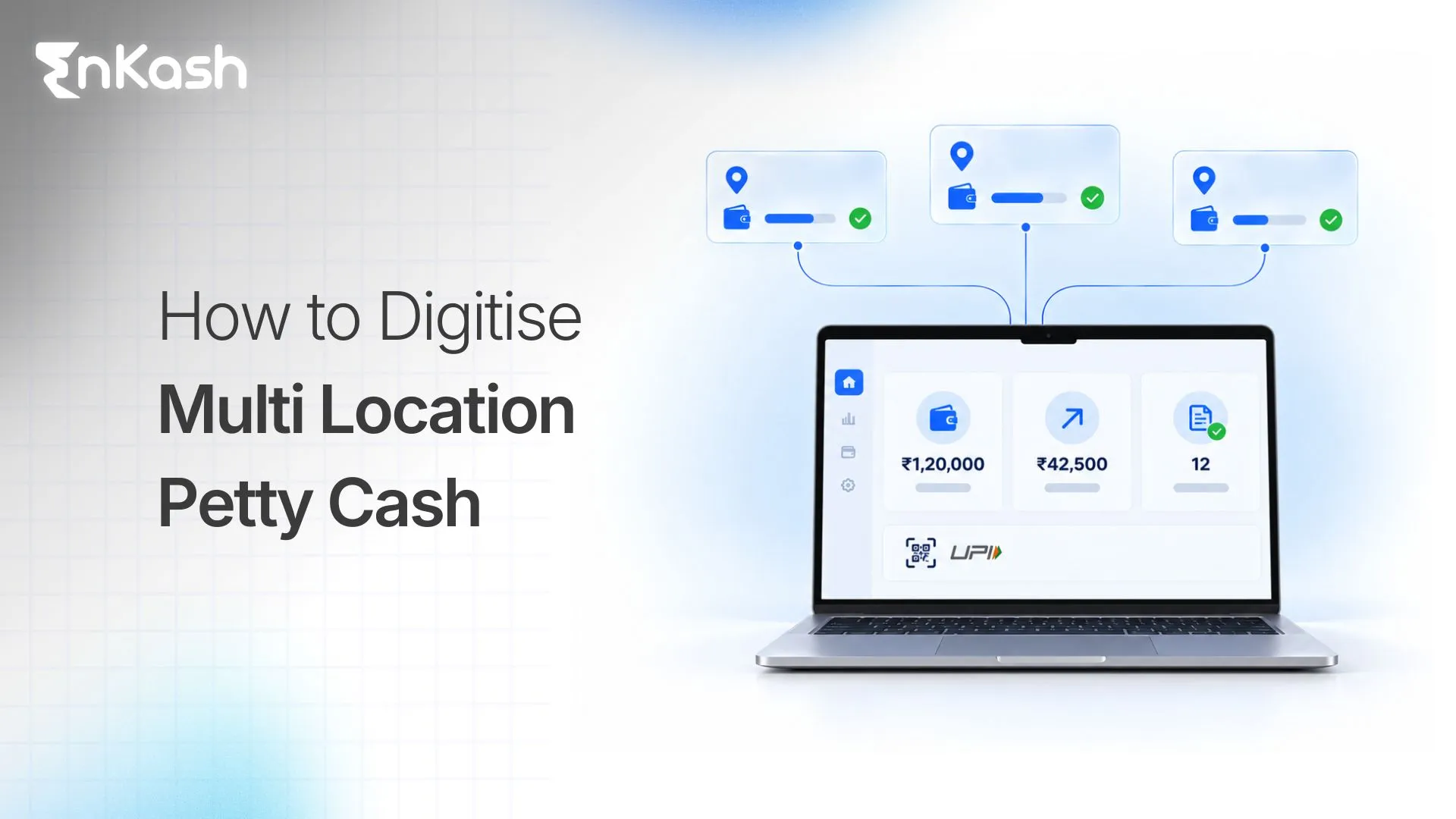
Instead of handling physical cash, teams can make day-to-day petty payments using UPI. EnKash replaces physical petty cash with UPI-based allocations and prepaid cards, giving finance teams real-time visibility across branches while eliminating cash leakage risks.
- Use of Prepaid Cards
Purpose-based prepaid cards can be issued for specific teams or locations to manage petty expenses within defined limits. Different types of prepaid cards can be issued to departments.
- Real-Time Dashboards
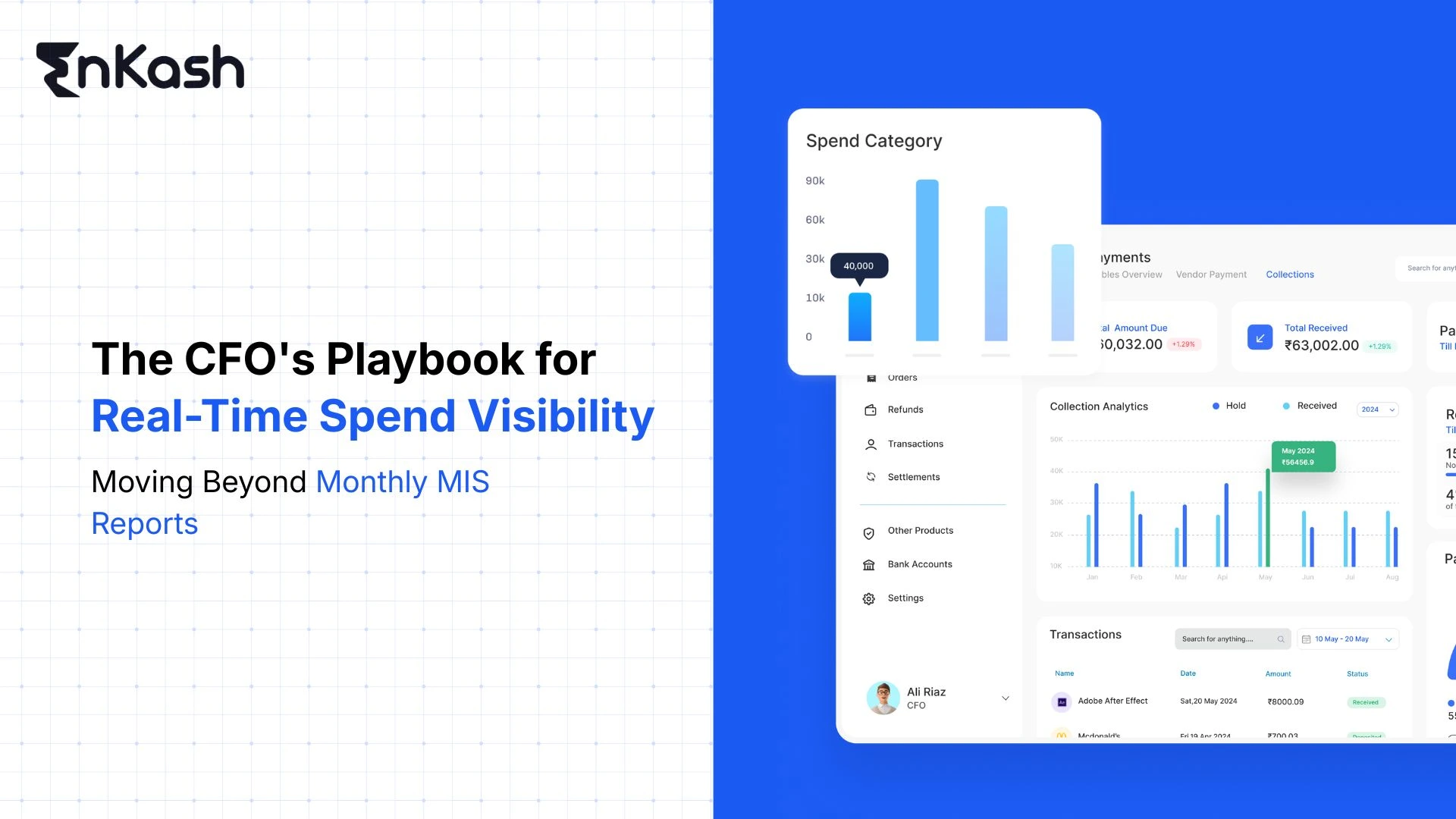
Finance teams gain live visibility into petty cash usage across departments or branches through centralized dashboards and analytics.
- Automated Approval Workflow
Expenses can be routed for approval based on predefined rules, ensuring controlled usage and policy alignment.
Advantages and Limitations of Petty Cash
| Advantages of Petty Cash | Limitations of Petty Cash |
|---|
| Immediate payment of small expenses – day-to-day needs can be settled instantly without waiting for long approvals and bank processing. | Risk of gaps in recording – Physical cash can lead to delays in entries, missing receipts, or incomplete documentation. |
| Lower administrative burden – Reduces the need for formal approval workflows for minor transactions, saving accounting time. | Hard to manage at high volume – As transactions increase, manual handling becomes inefficient and error-prone. |
| Controlled spending limits – Predefined petty cash amounts create natural boundaries and prevent overspending. | Less transparency than digital systems – Cash payments do not create automatic audit trails or real-time visibility. |
| Supports on-site operations – Useful in locations or situations where digital payments are not practical. | Dependent on strict discipline – Effectiveness relies heavily on proper procedures, monitoring, and responsible handling. |
Challenges in Petty Cash Management
After working closely with finance heads and CFOs across distributed and multi-branch organizations, one thing becomes clear: when petty cash rarely appears in risk reports, it quietly affects the financial discipline of the organization.
Here’s how these challenges show up in real business environments:
- Receipt Loss
A branch admin buys emergency office supplies from a local vendor but forgets to collect the receipt. At month-end, the expense cannot be verified, which leads to reconciliation gaps.
- Fraud Risk
A field employee submits handwritten claims for local travel without proof. Without verification, finance teams often approve these, increasing the risk of inflated claims.
- Manual Reconciliation
When the finance team receives petty cash statements from 12 branches in Excel format, matching them with physical vouchers takes days and delays month-end closing.
- Lack of Real-Time Visibility
A regional office exceeds its petty cash budget mid-month. Head office learns about it only during reconciliation, when corrective action is too late.
- Branch-Wise Petty Cash Leakage
Multiple branch managers withdraw cash for daily operations. Without centralized tracking, small unrecorded spends accumulate into significant losses.
- Delayed Reporting
Petty cash reports from remote locations arrive weeks late. This impacts financial reporting and disrupts expense planning.
- Cash Misuse
Cash allocated for operational needs is sometimes used for informal staff spending or non-approved purchases — simply because there are no usage controls.
Read More: Petty Cash Management
How EnKash Solves Petty Cash Management Challenges
For multi-branch enterprises, digitizing petty cash is no longer optional; it is a control necessity. EnKash addresses these operational challenges by digitizing petty cash through structured controls, UPI-based payments, prepaid cards, and real-time tracking.
| Challenge | Traditional Method | EnKash Solution |
|---|
| Branch-wise petty cash control | Separate cash handled locally with limited oversight | Centralized branch-wise allocation with controlled digital access |
| UPI-based petty cash | Personal UPI used, no tracking | Official UPI-based petty cash linked to the business expense management system |
| Cash handling risks | Physical cash issued to employees | Prepaid cards reduce dependency on cash |
| Lack of real-time visibility | Spending is reviewed at the month-end | Real-time dashboards track expenses instantly |
| Policy violations | Manual approval dependency | Policy-based spend limits are auto-enforced |
| Reconciliation delays | Manual matching of receipts | Automated reconciliation through digital logs |
| Expense misuse | Limited monitoring of usage | Purpose-based allocation for controlled spending |
Conclusion
Petty cash remains an essential part of daily business expense management operations, supporting small but necessary expenses that keep teams and branches running smoothly. Understanding what petty cash is, how it is recorded through proper accounting entries and books, and how it is controlled through defined policies helps businesses maintain financial discipline even at the smallest transaction level.
Accurate petty cash accounting improves transparency, strengthens reconciliation, and supports audit readiness. Structured controls, such as defined limits, assigned custodians, and periodic reviews, ensure that small expenses do not turn into unnoticed financial leakage.
FAQs
1. What is a petty cash book?A petty cash book is a record used to track small daily cash expenses like stationery, travel, or refreshments. It helps maintain transparency and proper accounting.
2. What is petty cash?Petty cash is a small amount of money kept by a business to handle routine and minor day-to-day expenses quickly.
3. What is the imprest system of petty cash book?Under the imprest system, a fixed petty cash amount is maintained and only the amount spent is replenished to restore the original balance.
4. When petty cash is kept, what should be maintained?A fixed limit, proper receipts, a responsible custodian, and regular reconciliation should be maintained to ensure control and accuracy.
5. What is imprest cash?Imprest cash is a fixed petty cash fund that is replenished after expenses to maintain a constant balance.
6. What is an example of petty cash?Examples include buying office supplies, paying local travel fare, or covering small courier charges.
7. Is petty cash an expense or an asset?Petty cash is an asset until it is spent. Once used, it is recorded as an expense in the books.
8. Why do we use petty cash?Petty cash is used to quickly manage small operational expenses without formal banking processes.