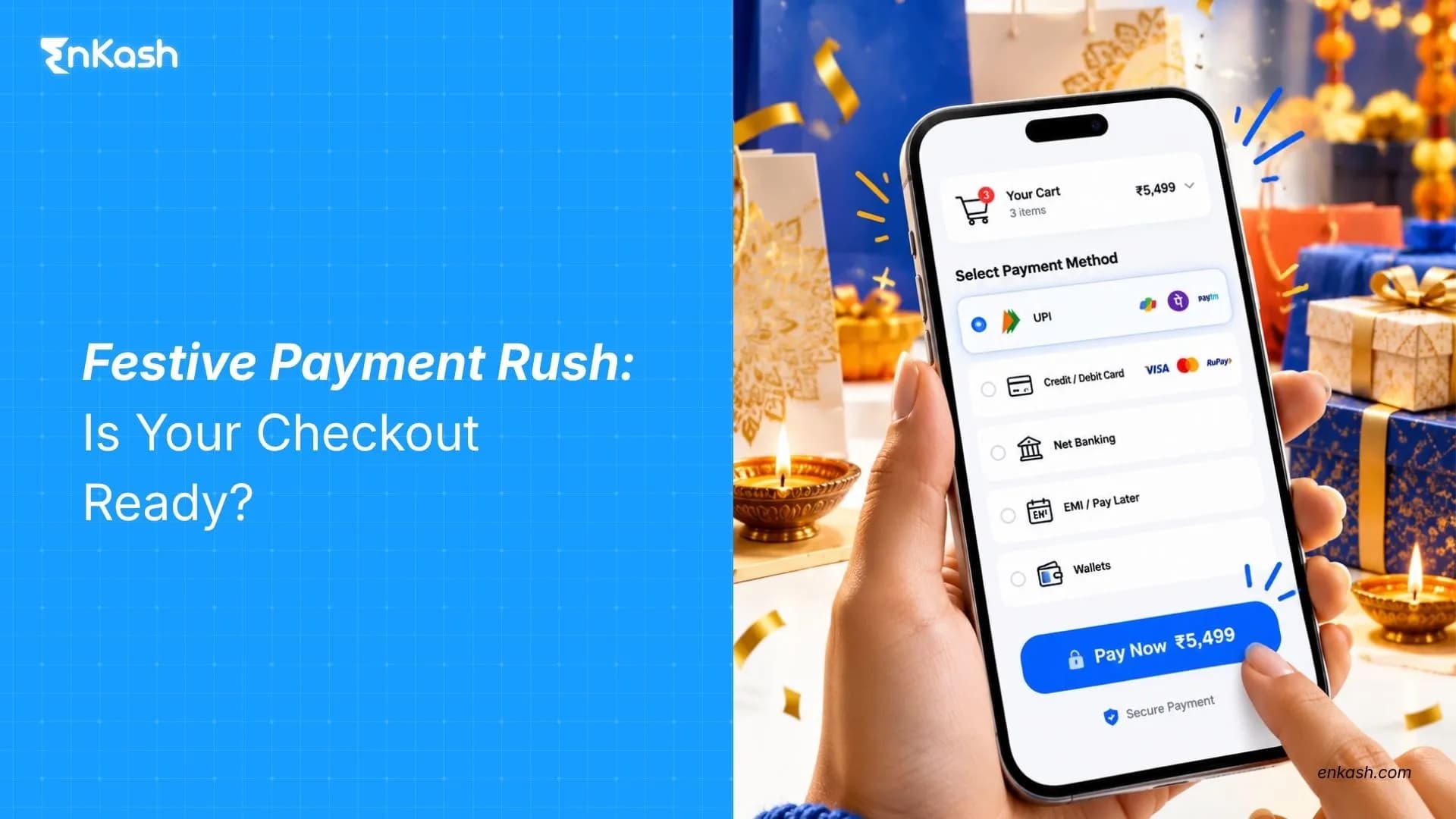
A shopper places an order, approves a UPI payment, and sees money leave their account. The merchant website, however, still says "Payment pending." The shopper tries again. Two payments may eventually succeed, while the order remains unconfirmed.
That glitch can mean a lost sale, duplicate charge, delayed dispatch, and support escalation.
Festive readiness means making every payment outcome visible, recoverable and reconcilable.
India recorded 24.07 billion UPI transactions in September 2026, according to NPCI's official statistics. Customers expect digital payments to work seamlessly at that scale.
But a high-traffic sale exposes weaknesses that ordinary days can conceal: overloaded checkout services, issuer-side declines, incomplete redirects, delayed notifications and unresolved refunds. Marketing sees abandonment; finance finds mismatches later.
The right question is not "Can our gateway handle more transactions?" It is "Can our business handle every possible transaction outcome?"
1. Measure Completed Orders, Not Just Successful Payment Attempts
Gateway success rates cannot tell the whole story. Customers can abandon, retry or pay without receiving order confirmation.
Track three separate measures:
- Checkout completion rate: Paid orders divided by checkout sessions, using a consistent definition.
- Payment-attempt success rate: Successful attempts divided by all initiated payment attempts.
- Unresolved-payment rate: Attempts still pending beyond your agreed investigation threshold.
Break these down by UPI, cards and net banking, then by time, device and relevant bank or processor. Blended averages hide weak routes.
A simple example shows why these distinctions matter. If success falls from 96% to 93% across 10,000 attempts, that represents 300 fewer successful attempts. It does not automatically mean 300 lost orders: some customers retry successfully. Measure final paid orders before attributing revenue loss.
Set alert thresholds using normal traffic patterns, and review changes by failure reason. A sudden rise in issuer declines needs a different response from growing webhook delays or checkout abandonment.
2. Offer Recovery Options Without Creating Duplicate Payments
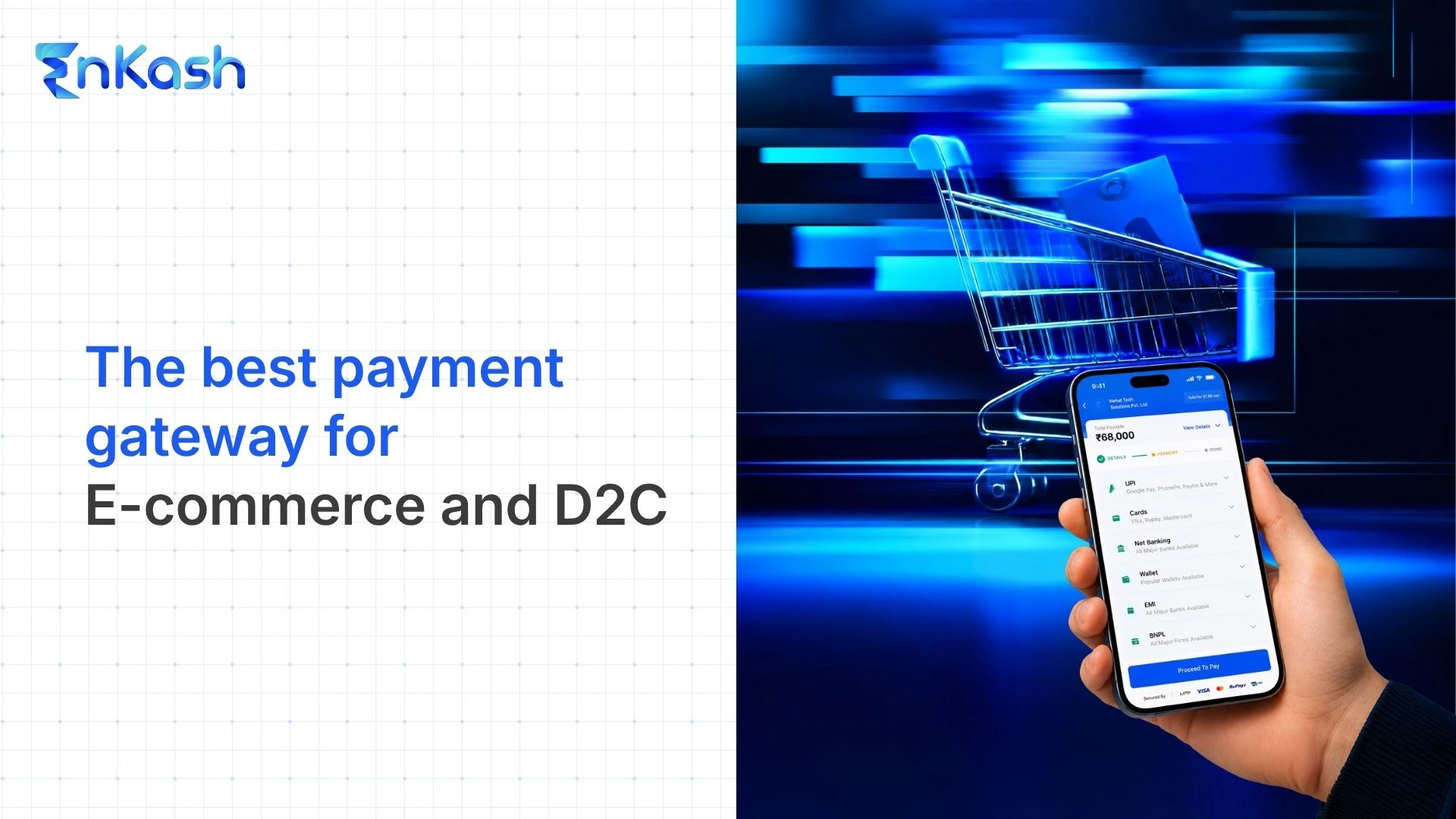
When a method is unavailable, show eligible alternatives such as UPI, cards, or net banking, with clear next steps.
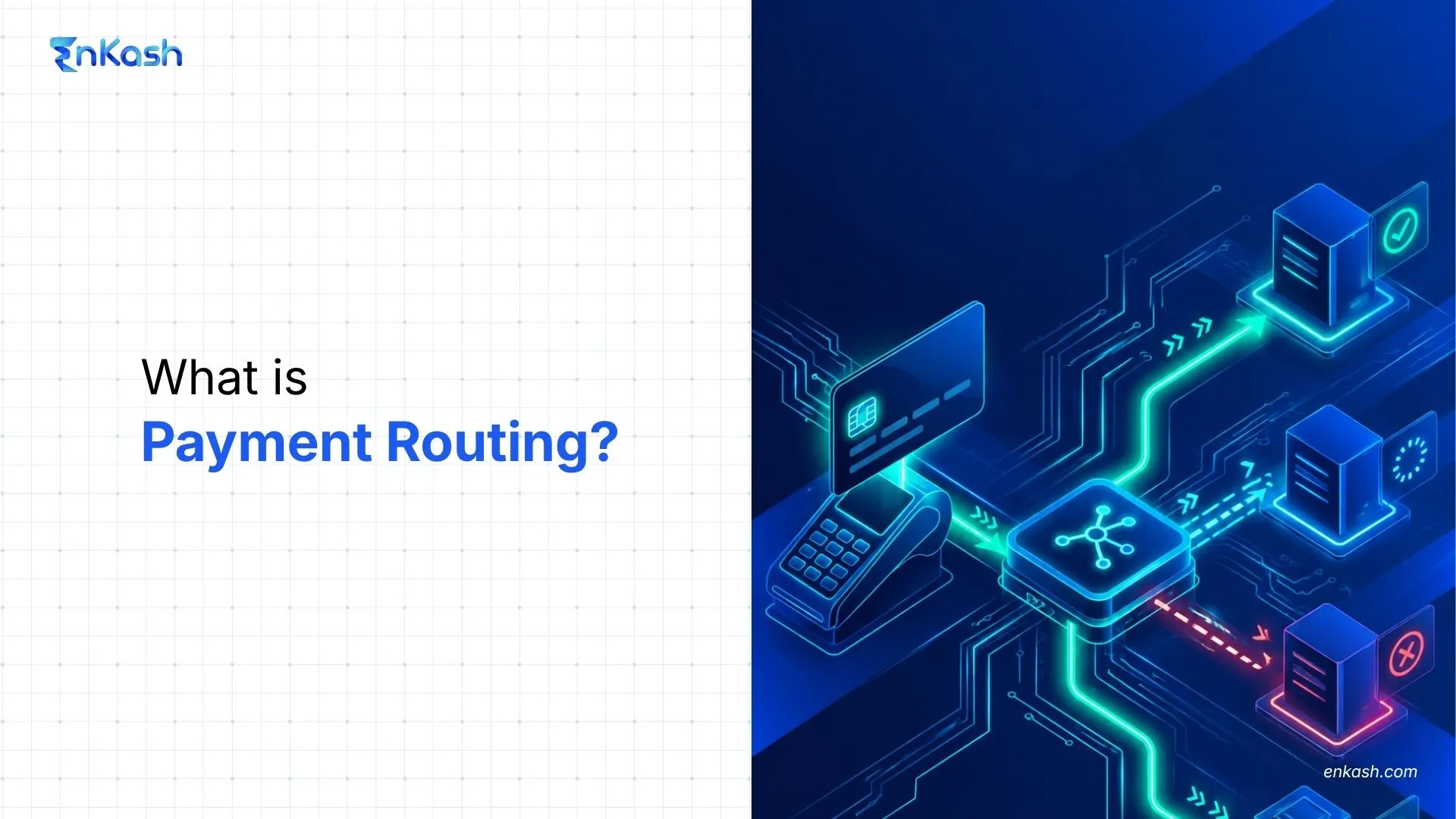
Smart payment routing may help select between supported processing paths using performance and availability signals. But routing is not a cure for every decline: an issuer rejection, insufficient funds or incorrect credentials may require a different customer action.
Never automatically retry an unknown payment. Verify its status first to avoid duplicate charges.
3. Treat "Pending" as a Real Payment State
A customer returning to your success page does not prove payment completion. Equally, a closed browser or failed redirect does not prove failure.
Base confirmation on authenticated server-side events and status checks. Payment gateway webhooks can report status changes, while transaction-status APIs help resolve missing or delayed notifications. Use valid state transitions and idempotency to prevent duplicate fulfilment.
EnKash's payment gateway integration documentation, for example, separates the customer return URL, webhook notification, and transaction-status verification. That distinction matters when traffic is heavy, and network journeys break.
4. Tell Customers What Is Happening, Especially When It Is Uncertain
"Transaction failed" is a damaging message when the payment may still be processing. Use clear states such as "We're confirming your payment. Please don't pay again yet," followed by a status update and support reference.
Give service teams the order ID, payment reference, amount, attempt history, and current verified status in one place. Reduce repeated explanations.
Never dispatch goods solely because someone shares a payment screenshot. Fake payment confirmations can look convincing; verify receipt through merchant-side records.
5. Reconcile Sales, Refunds and Settlements Every Day
Problems also surface after checkout: mismatched payments, incomplete refunds and unexplained settlement deductions.
Use a shared reference to match order records, payment attempts, gateway reports and bank settlements. Track mismatches, ageing pending payments and open refunds in an owned exception queue.
RBI's failed-transaction turnaround-time framework sets reversal and compensation requirements for covered scenarios. Merchants should distinguish automatic reversals of failed payments from refunds against completed purchases, and give customers the applicable timeline.
For a deeper operating model, see how to identify the need for better payment reconciliation.
6. Run a Failure Drill Before the Next Demand Spike
Do not test only successful payments. Simulate a bank timeout, a delayed UPI confirmation, repeated webhooks, a customer clicking Pay twice, and a refund requested during an outage.
Assign decision-makers from engineering, payment operations, finance, and customer support. Define when to pause a route, when to enable a permitted alternative, when to escalate, and how to communicate with affected customers.
A useful peak-day dashboard should show paid-order conversion, success by payment method, pending-payment age, webhook delays, and unresolved settlement differences. Watch trends throughout the day.
Festive readiness is not proven by a flashy checkout or a single uptime number. It is proven when a payment fails gracefully, an uncertain transaction gets resolved, a customer receives an accurate answer and finance can account for the money.
At EnKash, our view is that payment experience and payment operations cannot be managed separately. The businesses best prepared for seasonal demand are those that design for recovery and accountability, not merely transaction volume.
Frequently Asked Questions
How Can Merchants Reduce Payment Failures During Festive Sales?
Monitor success by payment method and route, provide eligible alternatives, investigate failure causes, and test recovery flows before traffic peaks. Avoid retries while the original outcome is unconfirmed.
What Should a Merchant Do When a UPI Payment Is Debited but the Order Is Pending?
Keep the order pending, verify the transaction through server-side status checks or merchant records, and communicate clearly. Do not ask for another payment until the original attempt is resolved.
Which Checkout Metrics Matter Most During Peak Sales?
Track paid-order conversion, payment-attempt success, pending-payment ageing, notification delays, and settlement mismatches together rather than relying on gateway uptime alone.