Employees drive businesses and keeping them motivated at work requires going beyond annual appraisals because that is the standard practice. Salary increments are crucial but today’s employees are looking for workplaces where they feel recognized in meaningful ways and get benefits that make their everyday lives better.
When companies invest in their employees, they willingly perform at their highest potential and deliver their best. One meaningful way to do this is by having an employee meal program. With this program, employees' daily meal expenses are covered by the company and this benefit is incorporated in their salary structure helping them save taxes.
While traditional meal coupons have been in the market for so long, today’s digital meal solutions are designed to meet the needs of this evolving workforce. These app-based meal programs allow contactless UPI payments offering convenience, flexibility and better control over their meal expenses. Alongside, it also helps in employee satisfaction, improved retention, and a stronger workplace culture. Let's dig deep into how these modern meal programs are redefining employee experience while adding measurable value to businesses.
Employee Meal Programs
Employee meal programs cover daily meal expenses for employees. This allows them to focus more on their work and not think of their out-of-pocket expenses as they are already covered. These programs promote convenience while contributing to better productivity and employee’s overall well-being.
Types of Employee Meal Programs
Employers provide a variety of meal programs to keep their employees motivated. These include:
Digital Meal Cards: Companies provide digital meal cards to their employees which are preloaded with money. These cards are used by employees to purchase meals from restaurants, online platforms and grocery stores.
Catering Services: Employers arrange for freshly cooked meals on a daily basis in their company’s campus. These meals are fulfilling, and allow employees to eat healthy home-like meals.
Cash Allowances: Employers provide cash allowance to their employees. This allowance is a part of their payroll and distributed via per-diem apps to remote employees.
Benefits of Employee Meal Programs For Employees
Employee meal programs not just cover food expenses for them, they give them a sense of belonging. Here are some of the benefits they enjoy:
Financial Burden: With employers offering employee meal programs, the employees are free from their daily food expense which helps them save their out-of-pocket expenses removing their financial burden.
Healthy Food Choices: Employers using meal program benefits can make healthy food choices using their digital meal cards. They don’t have to think twice before ordering food even if it’s beyond their daily meal budget because it is being taken care of.
Convenience: With digital meal cards, employees can order food as per their convenience from their choice of online food delivery app or offline restaurant. They can simply tap their card and make the payment.
Improved Work-Life Balance: With meal cards by their side, employees get more time to socialize with their colleagues and improve collaboration beyond work.
Benefits of Employee Meal Programs for Employers
Employee meal programs are not just another benefit, they are an investment to establish a positive and happy workplace. Here's how employers benefit:
Employee Experience: These digital meal cards work across different online food ordering platforms and at restaurants, supermarkets and food outlets. This helps employees order food without any friction helping improve their experience.
Improves Employee Retention: When employees leave, organizations lose more than just talent; they lose time, productivity, and the cost invested in hiring and training. Offering meaningful benefits like employee meal programs helps employees feel appreciated, builds loyalty, and encourages them to stay with the organization longer.
Works Remotely: Modern day meal cards allow employees to avail these benefits irrespective of their work place. They could be working remotely, at their office or in a hybrid setup. This ensures all the employees enjoy the same benefits regardless of their location.
Budget Control: Finance and HR teams get access to digital reports with these meal cards where they can know the spending trends, utilization of meal cards and employee involvement. This helps prevent misuse and better decision making to improve their company’s ROI.
Why Are These Meal Programs Required?
Meal programs are a strategic investment for employee’s well-being and business growth. They help employers:
Motivate Employees: Today’s employees consider all the benefits before joining the organization. Meal benefit is one such differentiator in a competitive market. Offering meal benefits to employees reflects that an organization cares about employees’ well-being.
Employee Engagement: Employees are more involved at work when they feel valued beyond their responsibilities. Modern meal programs help address everyday concerns such as rising food costs, access to healthy meals, and maintaining a better work-life balance.
Retain Employees: These daily use meal benefits are a great way to retain employees. Benefits like this enhances overall employee experience encouraging their loyalty and job satisfaction.
Features of Employee Meal Programs
Employee meal programs have multiple features to accommodate employees needs.
Prepaid Cards & Wallets: Employers provide meal benefits to employees by adding a fixed amount to their prepaid cards and wallets.
Merchant Networks: Employees can use these preloaded meal cards across a wide network of restaurants, grocery stores and online food delivery platforms.
Tax Exempted: These tax benefit cards are exempted from taxes under the Income Tax Act under Section 17(2)(viii) which in turn increases the in-hand salary for employees.
Spending Limit: Employers can customize their meal programs as per their workforce by setting strict per-person daily or monthly spending limits.
How EnKash Meal Card Works
EnKash meal cards follow this step-by-step process to onboard and function:
Step 1: Employer Onboards EnKash As Their Meal Card Provider
The employer onboards EnKash as a meal card provider by sharing their business requirements including the headcount. Then the amount decided upon is loaded in the HR account to allocate it further.
Step 2: Allocates the Benefit
The HR further allocates this amount digitally to eligible employees into their respective meal card or meal wallet.
Step 3: Employee Get Their Card/Wallet Loaded
Employees get their meal card/wallet loaded instantly. They can view their available balance through the EnKash app or via the portal
can instantly view their available meal balance through a mobile app or employee portal—no physical vouchers or paperwork required.
Step 4: Pay Using UPI or Card
When purchasing food or beverages at eligible merchants, employees simply:
- Scan a UPI QR code (if supported), or
- Tap/swipe their Meal Card at the payment terminal
Step 5: Secure & Instant Payment
The payment is processed instantly, and the amount is deducted from the employee's meal wallet.
Step 6: Track Every Transaction
Employees can view their transaction history and remaining balance in real time, while employers get a centralized dashboard to monitor spending and manage allocations.
Step 7: Simplified Compliance & Reporting
Since all transactions are digitally recorded, employers can generate reports, simplify reconciliation, and maintain compliance with applicable company policies and tax regulations.
How Meal Card Works For Tax Benefit
Meal card is an important prepaid tool that helps employees with their food expenses and also helps them increase their take home salary by reducing taxes. Under the newly implemented Income Tax Rules 2026, effective April 1, 2026, the tax-exempt limit for meals has been increased from ₹50 to ₹200 per meal. This revision allows employees to claim tax-exempt meal benefits of up to ₹1.05 lakh annually making meal cards an important component of a compensation package.
These UPI-enabled meal cards offer cashless benefits to employees while giving them convenience and flexibility along with tax savings. Meal cards have undoubtedly become an essential workplace benefit for both employers and employees.
Things to Consider Before Choosing a Meal Card
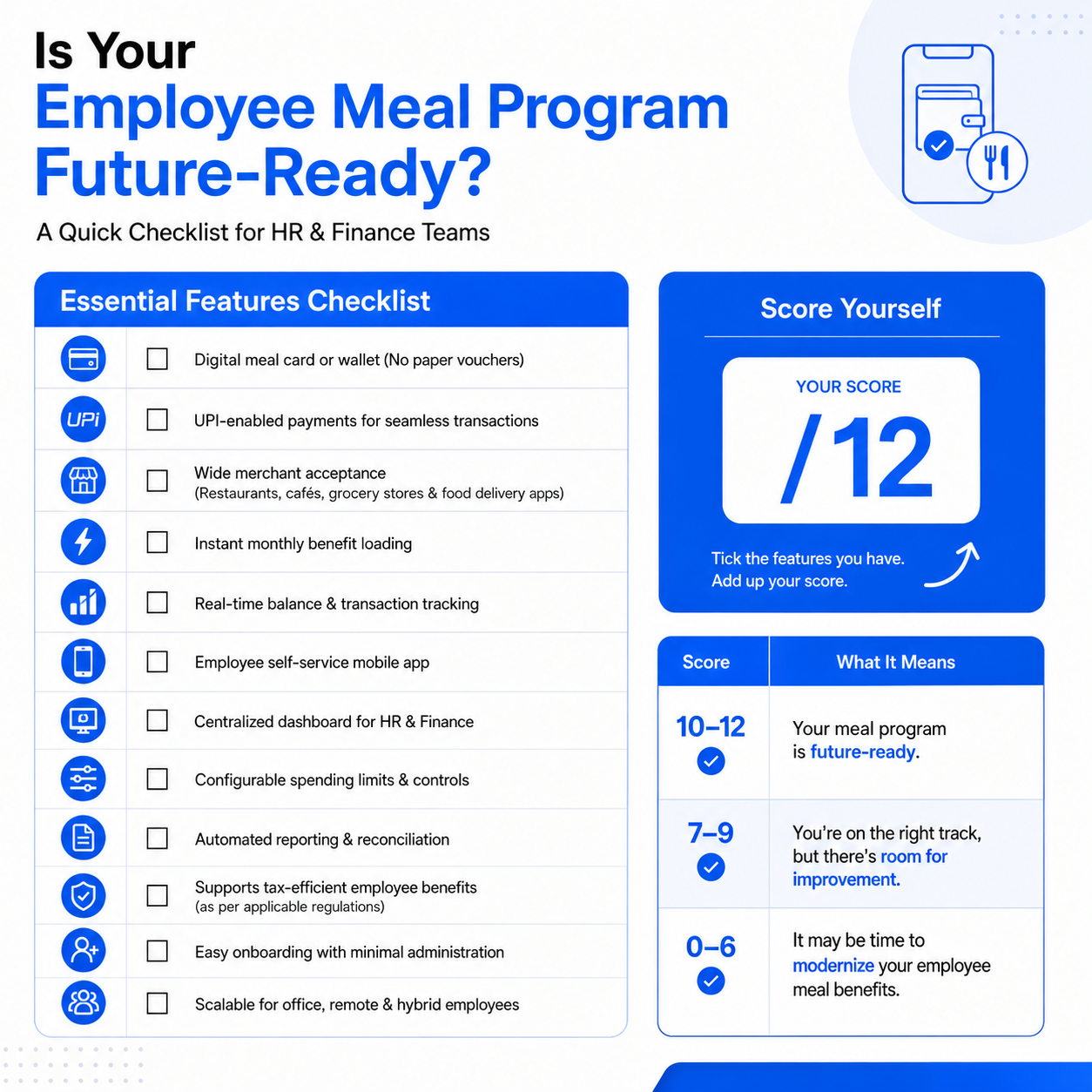
Why EnKash Meal Card Is The Best Choice
EnKash meal card has been designed to become a seamless digital experience for both employees and employers using which:
- Employees get access to a wide network of merchants and can pay using UPI and card in both online and offline modes
- Employers have smooth digital onboarding which reduces administrative efforts and fastens program implementation
- Finance and HR teams can monitor card usage and fund allocation from a centralized dashboard
- Companies can offer an employee benefit program that increases employee engagement and supports tax-efficient compensation
Conclusion
Modern meal programs have evolved to become an integral investment decision that helps improve business performance and employee well-being. These meal cards empower employees and help improve work culture simultaneously.
As businesses continue to modernize their benefits strategy, digital meal cards can easily become an essential part of a future-ready rewards ecosystem. They combine flexibility, convenience, and compliance driving value for both employers and employees.
FAQs
1. What is an Employee Meal Program?
An employee meal program is a benefit offered by companies to their employees to pay for their daily meals with a meal card, voucher, or cash allowance.
2. What is a Digital Meal Card?
A digital meal card is a prepaid card that is given to employees to purchase their meals across participating merchants. This meal card works at online food delivery platforms, grocery stores and food outlets.
3. How are meal cards better than meal allowances?
Meal cards are a digital way to pay for food with better convenience, tracking and spend control which is not the case with a meal allowance.
4. Is it possible for hybrid employees to use meal benefits?
Yes. Meal cards have been designed to be used by employees of the same organization irrespective of where they are operating from - remote, hybrid or office-based.
5. Can meal cards be used for online food delivery?
Yes. EnKash meal cards can be used to make online food delivery payments.
6. Are employee meal cards tax-efficient?
Yes, these meal cards help employees save taxes and increase their in-hand salary.
7. Why is a digital meal card better than paper meal vouchers?
Digital meal cards improve security, eliminate manual errors and provide better reporting helping generate a better employee experience.