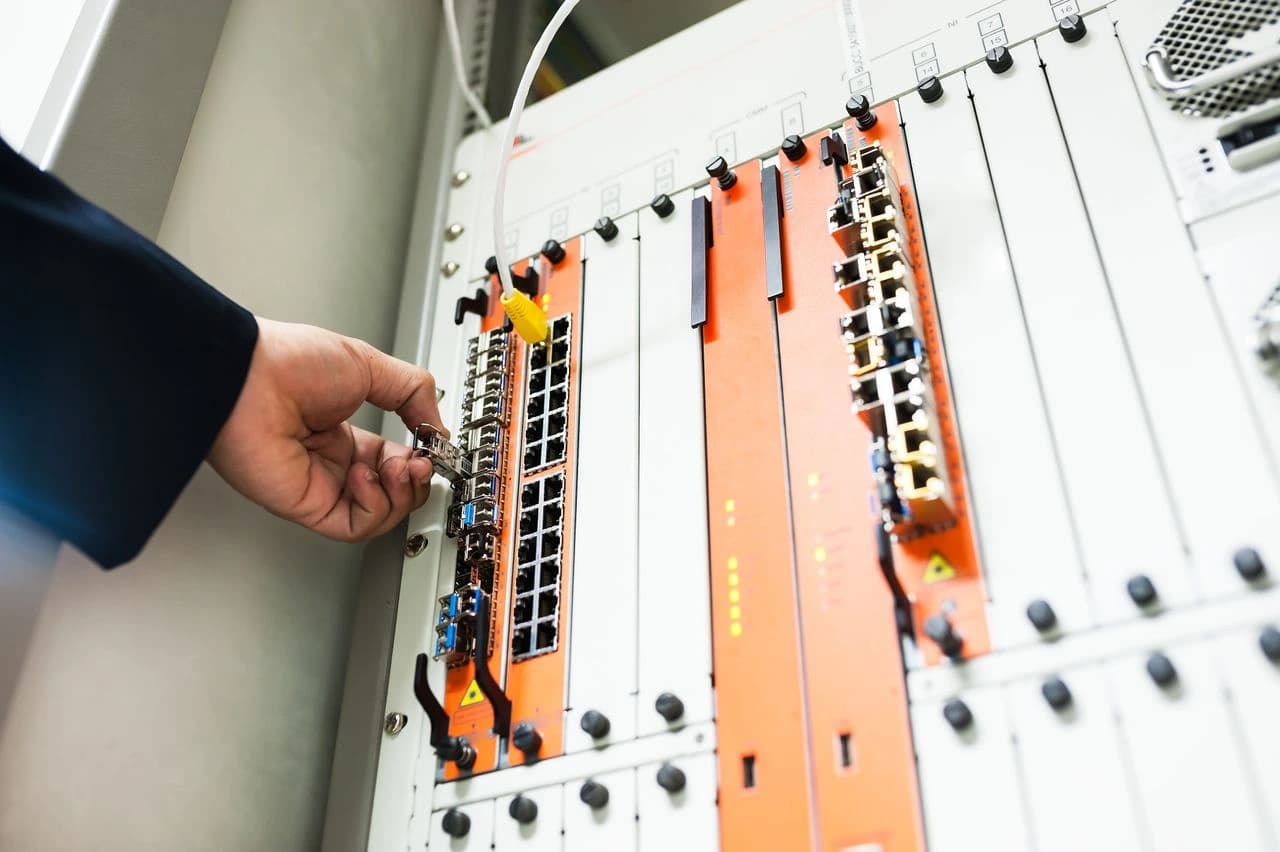
Your industrial operations run successfully when all the devices perform at their peak with minimal to no disruption. Age-related wear is a different factor. In large settings, multiple types of electronic devices are used. Among them, industrial switches are common additions, as they play an important role in maintaining smooth network communication, performance, and the safety and security of network connections, as well as operational excellence. Since 2015, manufacturing and industrial processes have changed significantly due to the use of modern digital technologies, data, and automation. This transformation has made networking a central focus, and that’s where Cisco industrial switches and others have become almost indispensable.
However, their capabilities may differ based on their models and configurations. You should have a clear understanding of your requirements and needs when shopping for them. Typically, most people falter when choosing between managed and unmanaged switches. Some are attracted to unmanaged options because of their lower prices. Do not make this mistake. There is a reason why managed IE switches cost more. Let's explore a few areas to understand why managed industrial switches are best suited for industrial operations.
Flat vs. Segmented Networks
Unmanaged switches can be used in flat network environments or in small, fixed machine-cell setups. However, they cannot efficiently handle diverse network traffic as network complexity grows. Systems do not scale beyond a certain point. They cannot manage increasing background traffic. On the contrary, managed switches let you isolate network traffic, expand network connectivity, and achieve more. More precisely, if you need to separate traffic in the future, managed switches make a better case. As networks continue to expand, adding new switches to a flat network can create downtime risks. Therefore, it’s better to install managed switches from the start.
Predictable Network Traffic
When a network is expected to carry different types of traffic, managed switching is more effective. Modern industrial networks deal with diverse types of traffic simultaneously. For example, cyclic I/O traffic carries real-time data between machines, sensors, and controllers to ensure smooth operations. The network may also have to provide engineering access during equipment troubleshooting or configuration. It may also handle activities like firmware transfers to update devices, large data uploads for storage and operational needs, and video streaming from surveillance cameras. All these tasks are performed on the same network. That's why it has to be managed well to avoid delays in data transfers. Unmanaged switches rely on built-in buffering and queuing mechanisms. If you need to classify, prioritize, or limit traffic to ensure other operations run smoothly, managed switches are a better choice.
Multicast Traffic Control
Multicast networking enables devices to share data with a select group of devices simultaneously. Since the sender does not transmit separate copies of the data to each device, this process helps avoid unnecessary network traffic. Your network performance may become unstable if you don’t address this area from the beginning. The addition of industrial video and discovery protocols can only complicate communication patterns over time. Without proper control, the traffic load can increase, causing data packet loss and latency issues. Unmanaged switches provide limited control over multicast traffic. However, you can rely on managed industrial switches. They can forward multicast traffic only to the required ports to prevent network congestion.
Assessing both existing and future business requirements is crucial when adopting advanced technologies. It is always better to plan accordingly from the beginning. Small upgrades are easy to implement over time because the risk of downtime is often minimal. However, you cannot afford to take risks with industrial switches.
Enhanced Network Security
Production systems are increasingly linked to company networks and cloud platforms, making them a favourite target for cyber attacks. Security issues may result in production downtime, equipment damage, or even safety issues. Managed IE switches consist of advanced security features that help minimize these risks.
For example, administrators can block unauthorized devices from joining the network using port security. Only authorized personnel and equipment are allowed to access critical infrastructure through authentication features. Some industrial switches, particularly managed ones, also support Access Control Lists (ACLs) that enable organizations to specify what devices can talk to one another. This additional layer of security effectively minimizes the risk of unauthorized access and contributes to the industry's adherence to cybersecurity protocols.
Simplified Remote Monitoring & Diagnostics
Today, a lot of manufacturing plants have several manufacturing lines or even two or more manufacturing lines. It is time-consuming and costly to have technicians go through each networking problem. Convenience of maintenance is offered with managed switches, as they have remote monitoring capabilities.
Network administrators will be able to monitor switch health, bandwidth usage, port health and device connectivity from a single management platform. In the event of a fault, they can be raised instantly, and maintenance personnel can determine the fault source before it impacts production. The ability to make remote diagnostics also saves on maintenance expenses by limiting the need to come to the site when necessary, and also quickens reaction times in the event of unforeseen network failures.
Improved Quality of Service (QoS)
Industrial data is not always of equal value. A programmable logic controller (PLC) or emergency shutdown system will need to get commands without delay, while software updates or employees using the internet may be able to afford a little delay.
Managed switches are capable of Quality of Service (QoS), which enables businesses to assign higher priority to important traffic compared to unimportant traffic. Manufacturers can ensure that machines are synchronized during high network traffic by giving operational communications top priority. This helps to ensure better consistency in production and also lessens communication delays between industrial devices.
Implement Redundancy in the Network to ensure High Reliability
Manufacturing downtime can lead to huge financial losses. Without backup communication, one of the failed connections could end up blocking an entire production line.
Managed industrial switches can enable network redundancy protocols like Rapid Spanning Tree Protocol (RSTP) and Media Redundancy Protocol (MRP). These technologies will automatically switch traffic to another path when the connection is unavailable. The network restores to normal operation automatically in seconds, without manual intervention, to minimize disruption to operations.
In sectors like automotive production, food processing, the energy sector, mining, and logistics, where seamless communication is vital, this reliability is particularly beneficial.
Easier Scalability for Growing Operations
The industrial facilities are not necessarily stable over their life cycle. New production lines, robotic systems, sensors, and Industrial Internet of Things (IIoT) devices are being introduced for enhanced productivity on a regular basis.
For future expansion, managed IE switches can be configured to provide flexibility. The ability to integrate more devices with ease and keep the network stable, with features like Virtual LANs (VLANs), advanced traffic management, and centralized configuration.
Organizations can incrementally expand the network without having to replace it every few years, keeping the network efficient.
Improved Troubleshooting and Maintenance
In an unmanaged network, it's hard to determine the cause of communication problems when there's limited visibility into network activity.
Managed switches provide detailed diagnostic information such as port statistics, event logs, traffic analysis, and network monitoring protocols such as SNMP. These capabilities enable IT personnel to easily detect damaged cables, overloaded ports, incorrect configurations, or malfunctioning devices.
With quick troubleshooting, the time spent on maintenance is reduced, production downtime is minimized, and engineers can address issues before they become significant operational issues.
Long-Term Return on Investment
Managed IE switches are the most expensive type of switches to purchase in the beginning, but can offer better value over time. They feature sophisticated management technology that minimizes unplanned downtime, maintenance costs, network inefficiencies and the life cycle of industrial infrastructure.
Organizations also enjoy lower operating risks, enhanced cybersecurity, simpler scalability, and reliability. These savings, over the life of the facility, are often more than the initial investment for most industrial facilities.
Conclusion
When implementing advanced technologies, you need to consider the business needs, which are essential for both assessing the needs of the present and the future. It is always better to plan accordingly from the beginning. Small improvements can be made over time as the risks of downtime are often small. It is not something you can do with experimental switches, though.
Managed IE switches offer much more than just connectivity. They provide more robust security, single-point monitoring, traffic prioritization, network redundancy, scalability, and easier maintenance, all of which help to improve their operational efficiency. Although unmanaged switches might seem like a cheap option at first, managed industrial switches can help organizations avoid expensive downtime, provide better connectivity visibility, and future-proof their network. Managed IE switches are a sensible choice for businesses looking for a secure and future-proof industrial network, offering long-term value.
Disclaimer: This article is a guest contribution. The opinions and views expressed are solely those of the author and do not necessarily reflect the views, policies, or position of EnKash.