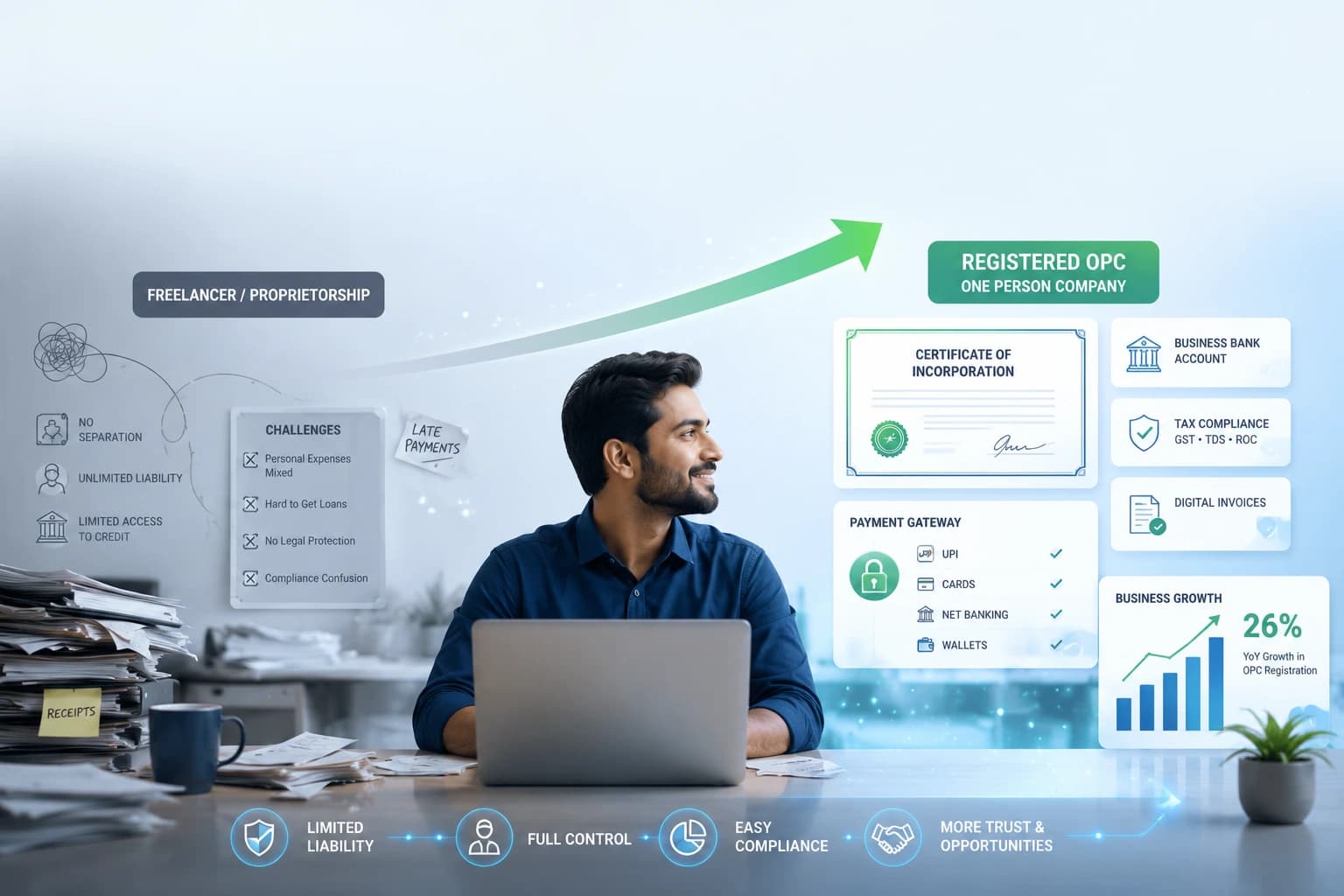
OPC registration is quickly becoming the default way India's solo founders formalize their business. Roughly 6,281 One Person Companies were incorporated by mid-2025, a 26% jump from the year before, according to the MCA data. That's not a small number for a structure most people still associate with heavy paperwork and confusion. Instead, it points to something simpler: freelancers, consultants, and single-founder ventures are running their businesses off a personal bank account and a GST number.
For years, the standard advice for a solo founder was to just start as a proprietorship and worry about "proper" registration later. That advice, however, is ageing badly. In mid 2025, One Person Company registration grew around 20% year-on-year, even as business formation across India climbed overall, per Ministry of Corporate Affairs figures. India now has more than 31.4 lakh registered companies, spanning OPCs, private limited companies, and public limited companies, as of May 2026.
This shows that founders aren't just registering more; they're registering often before their first big client contract lands rather than after.
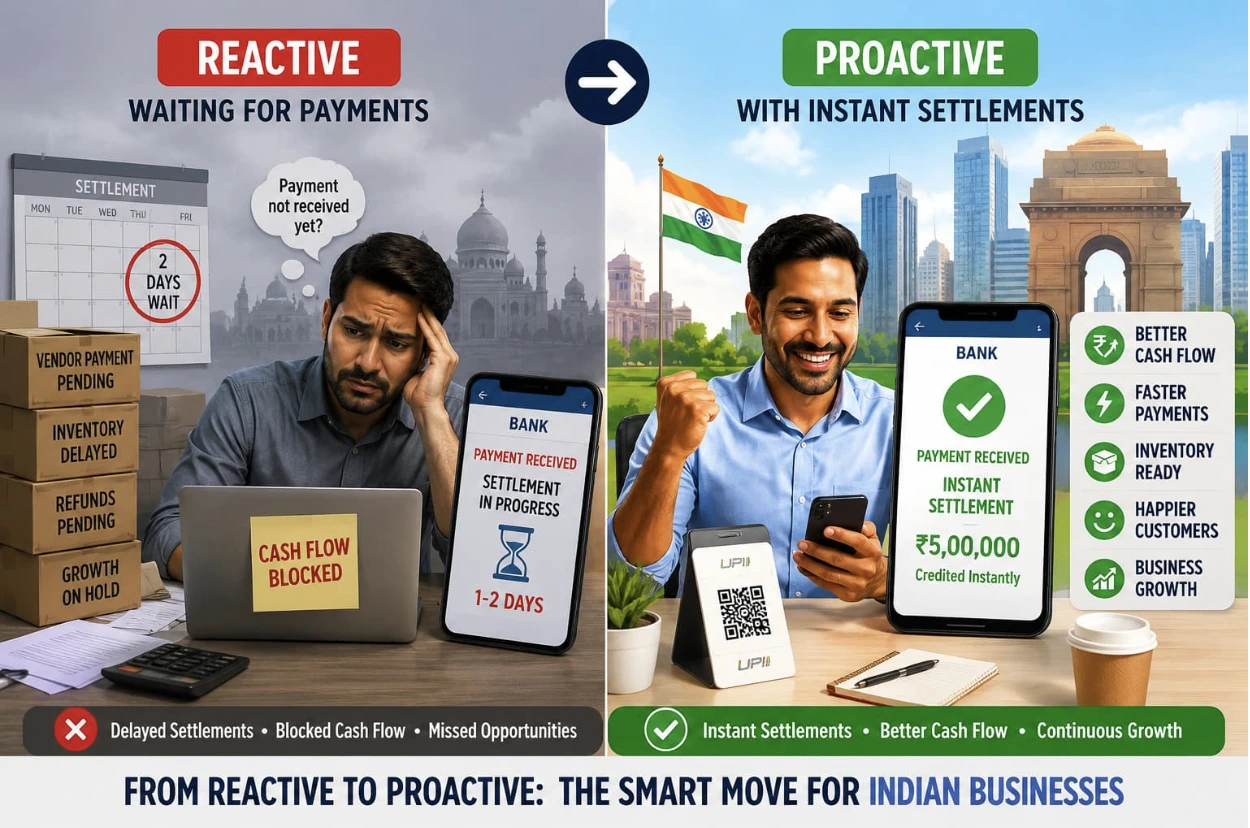
Fact: Formalizing via an OPC unlocks merchant infrastructure like the Payment Gateway, enabling solo founders to secure institutional trust and process seamless B2B credit card payments instantly.
Why are Proprietorships Losing Their Appeal?
A sole proprietorship sounds simple until something goes wrong. There's no legal wall between the founder and the business, so if a client sues, a vendor disputes payment, or a loan goes bad, personal assets are on the table. Banks know this too, which is part of why they're often reluctant to extend credit or open certain accounts for an unregistered entity. As solo founders start chasing bigger contracts, that lack of separation stops being a minor inconvenience and starts being a real liability.
An OPC fixes most of that without forcing the founder to bring on a co-founder or give up control. A single person remains the sole shareholder and director. Moreover, liability stays limited to what's invested in the company, not the founder's personal savings or property.
Following the 2021 amendment rules, an OPC can also grow its capital and turnover freely without being forced to convert into a private limited company, which used to be a real headache for anyone scaling fast. NRIs holding Indian citizenship can now set one up too, since the residency requirement was cut from 182 days to 120. The whole process runs online through the MCA's V3 portal and usually wraps up in 7 to 10 working days.
OPC Compliance Got a Little Easier
In December 2025, the MCA raised the thresholds that define a "small company" to paid-up capital up to ₹10 crore and turnover up to ₹100 crore, up from ₹4 crore and ₹40 crore. Since most OPCs fall under this bracket, a lot of them now qualify for lighter filing requirements and fewer governance obligations than before. This small regulatory change quietly makes running a solo company less exhausting on paper.
The Part Nobody Warns You About
Getting the Certificate of Incorporation sounds like the last step, but actually, it isn't. The real work starts right after, which is keeping business capital and personal money apart, not just meaning to. Most founders open a current account, feel like the job's done, and stop there. Then, a software subscription gets charged to a personal card because setting up proper controls felt like a task for next month. Give it a few months, and there's a pile of receipts, a reconciliation that hasn't happened since March, and nobody notices until tax season forces the question.
None of this is hard to avoid. Simply open the business account before the first invoice goes out, decide early what counts as a company expense, and find some way to log spending.
The Post-Incorporation Playbook: Setting Up Your Revenue Stack
Once the Ministry of Corporate Affairs issues your Certificate of Incorporation, the clock starts ticking to operationalize. Instead of stitching together fragmented banking and billing apps, solo founders are streamlining operations using the EnKash End-to-End Payments Stack:
- Instant Payment Acceptance: Use the EnKash Payment Gateway or seamless Payment Links via WhatsApp/SMS to collect revenue without checkout drops.
- Flexible Payment Options: Offer clients multiple payment modes, including RuPay, Visa, Mastercard, Net Banking, and Wallet infrastructure.
- Automated Financial Reconciliation: Every inward transaction matches up perfectly with accounting records, taking the headache out of future tax filings.
Where This is Headed
The paperwork side of starting an OPC in India has gotten noticeably less painful, with easier NRI eligibility, no forced conversion once you cross a turnover limit, and a lighter compliance load than a few years ago. Now, company registration in India isn't the bottleneck it used to be.
What still trips founders up is everything that comes right after: opening the right account, keeping expenses under control, and not discovering six months in that half the company's spending has no paper trail.
The good news is none of that is complicated to fix. It just requires treating the first few weeks after incorporation as part of the setup, not something to circle back to once the company feels "real enough" to bother.
Disclaimer: This article is a guest contribution. The opinions and views expressed are solely those of the author and do not necessarily reflect the views, policies, or position of EnKash