Payment gateways are an essential component, enabling businesses to accept online payments securely and efficiently. In this article, we will delve into the inner workings of payment gateways, explaining how they operate and the role they play in facilitating online transactions.
How payment gateways work?
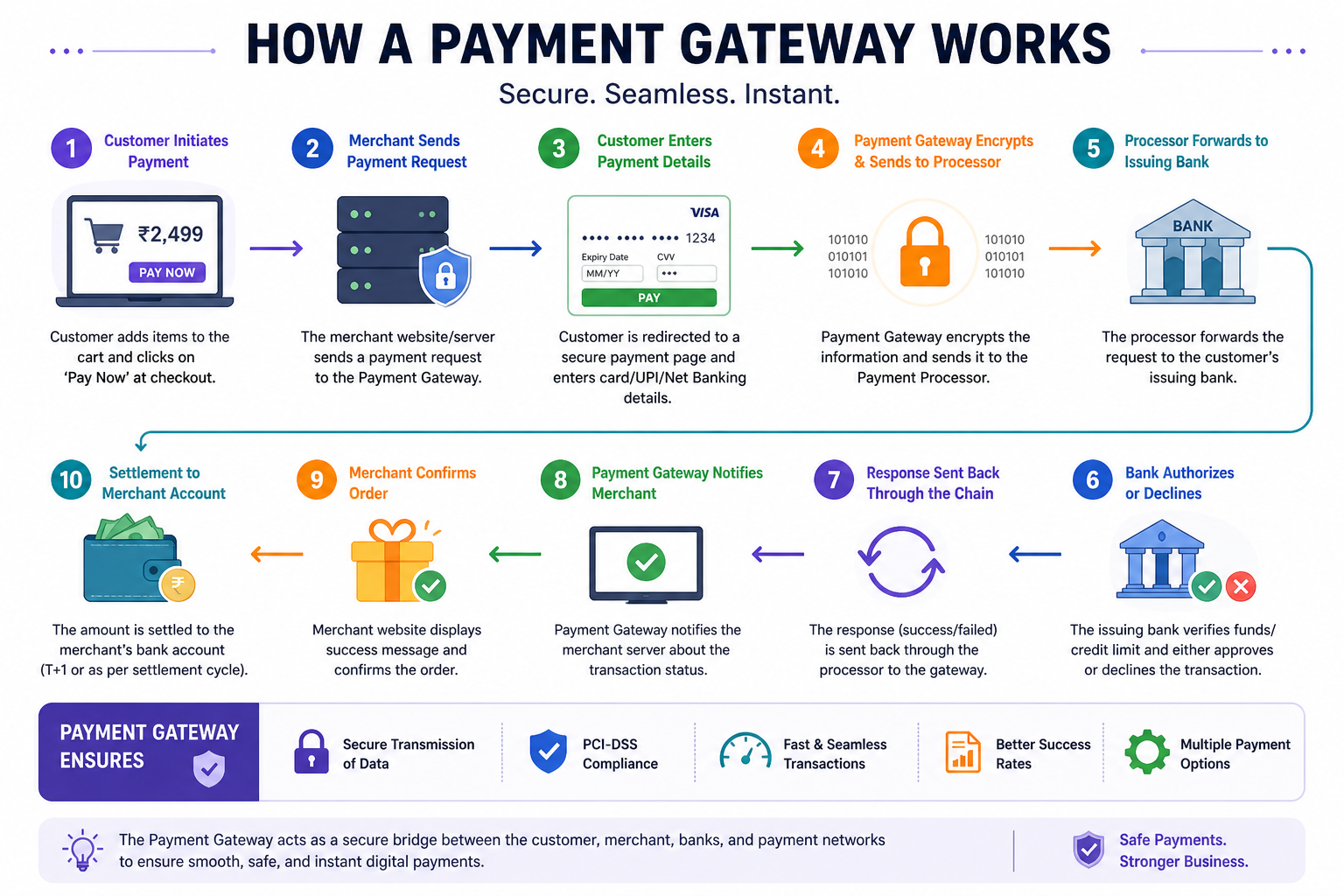
Payment gateways act as the intermediary between the merchant's website or application and the financial institution that processes the payment. When a customer makes a purchase, the payment gateway securely collects the payment information, such as credit card details, and encrypts it to ensure the data is protected during transmission.
Once the payment information is received, the payment gateway sends it to the payment processor, which is responsible for communicating with the customer's bank or credit card issuer to authorize the transaction. The payment processor verifies the customer's account balance, confirms the availability of funds, and checks for any suspicious activity or fraud indicators.
Role of payment processors
Payment processors are distinct entities that work in conjunction with payment gateways. While payment gateways focus on securely transmitting payment data, payment processors handle the authorization and settlement of the transaction.
Transaction Verification: Payment processors play a crucial role in the payment ecosystem by managing the complexities of transaction authorization and settlement.
Data Security: They protect sensitive data during transaction processing to ensure there is no data leakage.
Fund Settlement: They ensure that transactions are processed securely, funds are transferred accurately, and any disputes or chargebacks are handled efficiently.
Multiple Payment Methods: Payment processors allow merchants to collect payments via multiple payment modes.
Facilitate Communication: They communicate with the customer’s bank or credit card issuer to verify the transaction details and ensure the funds are transferred from the customer’s account to the merchant’s account.
Fraud Detection: Payment processors ensure to employ security measures like checking CVV to detect fraudulent activities timely.
Key differences between payment gateways and payment processors
It's important to distinguish between payment gateways and payment processors, as they serve distinct functions within the payment process. Payment gateways focus on securely transmitting payment data between the customer and the merchant, while payment processors handle the authorization and settlement of the transaction.
Payment gateways act as the interface between the customer and the merchant's website, facilitating the secure collection and transmission of payment information. They encrypt the data to protect it from unauthorized access and ensure the privacy and security of customer information.
On the other hand, payment processors are responsible for verifying the transaction details, communicating with the customer's bank or credit card issuer, and facilitating the transfer of funds from the customer's account to the merchant's account. They handle the complexities of transaction authorization, settlement, and reconciliation.
Benefits of using a payment gateway
Using a
payment gateway offers numerous benefits for businesses and customers alike.
| Aspect |
Benefits |
| Convenience |
Payment gateway provides a seamless and convenient payment experience for customers, enabling them to make purchases securely and efficiently. |
| Multiple Payment Methods |
Payment gateways support various payment methods, including credit cards, debit cards, and digital wallets, giving customers flexibility in choosing their preferred payment option. |
| Automation |
For businesses, payment gateways streamline the payment process, reducing manual efforts and ensuring accurate and timely transaction processing. |
| Security |
They provide robust security measures to protect against fraud and data breaches, safeguarding sensitive customer information. |
| Analytics |
Payment gateways provide real-time detailed analytics of transactions, sales data and customer behaviour for better business decisions. |
| Advanced Features |
Payment gateways offer features such as recurring billing, subscription management, and multi-currency support, catering to the diverse needs of businesses operating in the global marketplace. |
Common features and functionalities of payment gateways
Payment gateways offer a range of features and functionalities to enhance the payment experience for businesses and customers. Some common features include:
Payment method support: Payment gateways support various payment methods, including credit cards, debit cards, e-wallets, and bank transfers.
Security measures: Payment gateways incorporate robust security measures to protect sensitive payment data. These measures include data encryption, tokenization, fraud detection, and PCI DSS compliance.
Integration options: Payment gateways provide integration options for seamless integration with e-commerce platforms, shopping carts, and mobile applications. This simplifies the implementation process for businesses and ensures smooth payment processing.
Recurring billing and subscription management: Many payment gateways offer features for recurring billing and subscription management, enabling businesses to automate regular payments and manage subscriptions efficiently.
Multi-currency support: Payment gateways with multi-currency support allow businesses to accept payments in different currencies, expanding their reach to international customers and facilitating cross-border transactions.
Conclusion
Payment gateways stand as the linchpin of secure and efficient online transactions, acting as the vital bridge between merchants and financial institutions. As we've unraveled their workings, differentiated them from payment processors, and outlined their myriad benefits and features, it becomes evident that these gateways not only streamline the payment process for businesses but also enhance the overall experience for customers. From robust security measures to support for diverse payment methods and global transactions, payment gateways continue to play a pivotal role in shaping the future of e-commerce, ensuring seamless, reliable, and secure digital transactions worldwide.
FAQs
- What is a payment gateway?
A payment gateway is a technology that securely captures and transfers payment data from a customer to the merchant’s bank for processing.
- How does a payment gateway work?
When a customer clicks “Pay”:
Customer enters details → Data is encrypted → Sent to issuing bank → Bank approves/declines → Response sent back → Payment status shown
- Is a payment gateway the same as a payment processor?
No. The gateway handles the front-end (collecting and securing payment data), while the processor communicates with banks to complete the transaction.
- How long does a payment transaction take?
Authorization happens within seconds, but settlement (money reaching the merchant account) can take 1–3 business days.
- What payment methods do gateways support?
Cards (credit/debit), UPI, net banking, wallets, EMI, and sometimes BNPL options.
- Are payment gateways secure?
Yes, they use encryption, tokenization, and comply with standards like PCI-DSS to keep transactions safe.
- What is a payment failure and why does it happen?
Failures can occur due to poor network, incorrect details, bank declines, or technical issues at the gateway or bank level.
- What is a payment success rate?
It’s the percentage of successful transactions out of total attempts—a key metric for checkout performance.
- What is settlement in payments?
Settlement is when the collected funds are transferred from the payment gateway to the merchant’s bank account.
- Can businesses customize the checkout experience?
Yes, most gateways offer APIs and SDKs to create seamless, branded checkout flows.
- What is tokenization in payments?
It replaces sensitive card details with a secure token to reduce fraud risk and improve security.
- How can a business improve payment success rates?
By choosing a reliable gateway, enabling multiple payment options, optimizing checkout speed, and having smart retry mechanisms.