Two people can retire with the same savings, earn the same average return over the next decade, withdraw the same amount every year, and still end up in very different places. The difference comes down to timing. When losses arrive matters almost as much as how large they are, and the stretch right after the paychecks stop is when timing hurts most. It is a risk that fiduciary advisors, Harding Financial Group Columbus among them, tend to raise well before a client's retirement date, because the best time to prepare for it is before it shows up.
What Sequence Risk Actually Means
Sequence-of-returns risk is the danger that poor market returns happen early in retirement, at the same time withdrawals begin. While someone is still working and contributing, a market drop is painful but temporary, and new contributions even buy shares at lower prices. Once withdrawals start, the math flips. Selling investments during a decline locks in losses, and the shares sold are no longer around to benefit from the recovery.
The average return over 20 or 30 years tells only part of the story. A retiree's actual experience depends on the order those returns arrive in. That is why a retirement income plan, such as the kind built by a Harding Financial Group Columbus advisor, typically looks beyond expected returns and tests how a portfolio holds up if the first few years go badly.
Two Retirees, Same Returns, Different Results
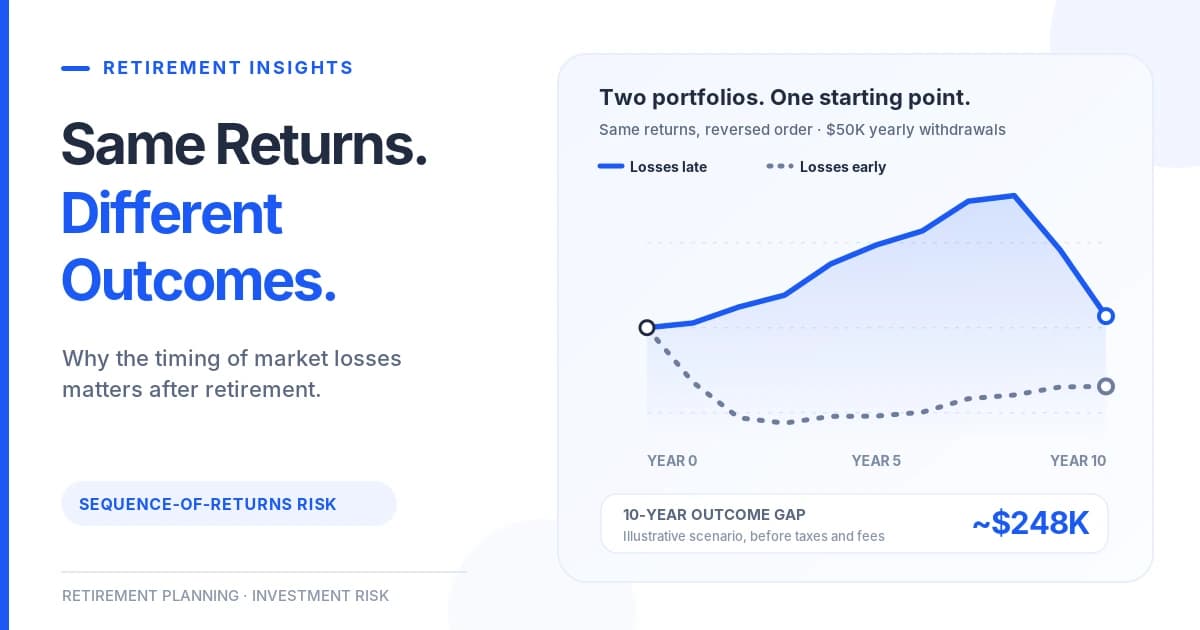
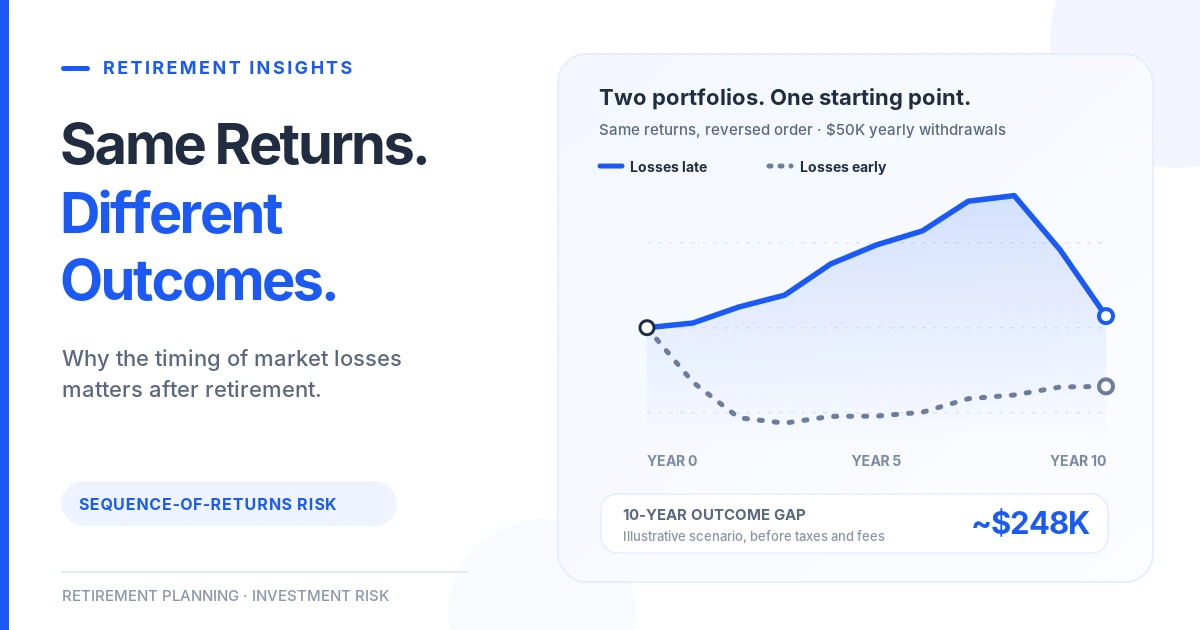
A simple example makes the risk concrete. Imagine two retirees who each start with $1,000,000 and withdraw $50,000 at the beginning of every year. Over ten years, both earn the same set of annual returns: minus 15 percent, minus 10 percent, then gains of 5, 12, 8, 10, 15, 9, 11, and 7 percent. The only difference is order. The first retiree gets those returns in that sequence, with the losses up front. The second gets them in reverse, with the losses at the end.
Both portfolios average 5.2 percent a year. Here is how they compare
End of Year | Losses Early | Losses Late |
Year 1 | $807,500 | $1,016,500 |
Year 2 | $681,750 | $1,072,815 |
Year 3 | $663,338 | $1,114,868 |
Year 5 | $687,893 | $1,292,058 |
Year 10 | $792,598 | $1,040,903 |
After a decade, the retiree who faced losses first has roughly $248,000 less, despite identical returns and identical spending. Stretch that over a 30-year retirement, and the early-loss retiree faces a real chance of running short while the other has a comfortable cushion. The numbers here are illustrative and ignore inflation, taxes, and fees, but the pattern holds in real market history.
The Retirement Red Zone
Planners often describe the five years before retirement and the five to ten years after it as the red zone. During this period, portfolio balances are usually at their largest, so a given percentage loss removes the most dollars, and there is little time left to recover through new savings.
History offers clear examples. People who retired right before the 2000 to 2002 bear market, or just ahead of the 2008 financial crisis, saw large declines at the worst possible moment. Those who began withdrawals during strong early markets, such as the early 1980s, often finished with far more money than they expected. This is also why the well-known 4 percent guideline, first published by planner William Bengen in 1994, was based on the worst historical starting years rather than the average ones.
Ways to Reduce the Damage
No strategy removes market risk completely, but several approaches can soften the impact of a poor start.
Hold a Cash or Bond Reserve
Keeping one to three years of planned withdrawals in cash or short-term bonds allows a retiree to cover spending during a downturn without selling stocks at depressed prices. The reserve is refilled once markets recover.
Use Flexible Withdrawals
Rigid withdrawals are the main reason early losses do so much damage. Rules that trim spending modestly after a bad year, and allow raises after strong years, can significantly extend how long a portfolio lasts. Even skipping an annual inflation increase in a down year helps.
Adjust Allocation Around the Retirement Date
Some investors gradually raise their bond allocation in the years leading up to retirement, then slowly increase stock exposure again once the red zone has passed. This approach, sometimes called a bond tent, reduces exposure during the most sensitive window.
Build a Floor of Guaranteed Income
Delaying Social Security increases the lifetime benefit, and some retirees use part of their savings to buy an income annuity. Both create income that does not depend on market performance, so less needs to be withdrawn from investments during bad years.
Frequently Asked Questions
1. Does sequence risk matter for people still working?
Much less. While contributions continue, a downturn can even help long-term results by letting new money buy at lower prices. The risk becomes significant once withdrawals begin.
2. Is the 4 percent rule still reliable?
It remains a useful starting point, but it was based on historical U.S. data and a fixed spending pattern. Many planners now favor flexible withdrawal strategies tailored to each household.
3. How long does the highest risk period last?
The first five to ten years of retirement carry the most weight. After a decade of reasonable returns, a portfolio is usually far more resilient.
The Bottom Line
Sequence-of-returns risk shows that average returns can be misleading for retirees. The order of gains and losses, especially in the first decade, can decide whether savings last a lifetime or fall short. Holding a reserve, staying flexible with spending, adjusting allocation around the retirement date, and building guaranteed income all help reduce that risk. For anyone approaching retirement, a stress-tested income plan from Harding Financial Group Columbus can show how your portfolio might respond to a difficult start. Scheduling a review now gives you time to prepare before the red zone begins.
Disclaimer: This article is a guest contribution. The opinions and views expressed are solely those of the author and do not necessarily reflect the views, policies, or position of
EnKash.