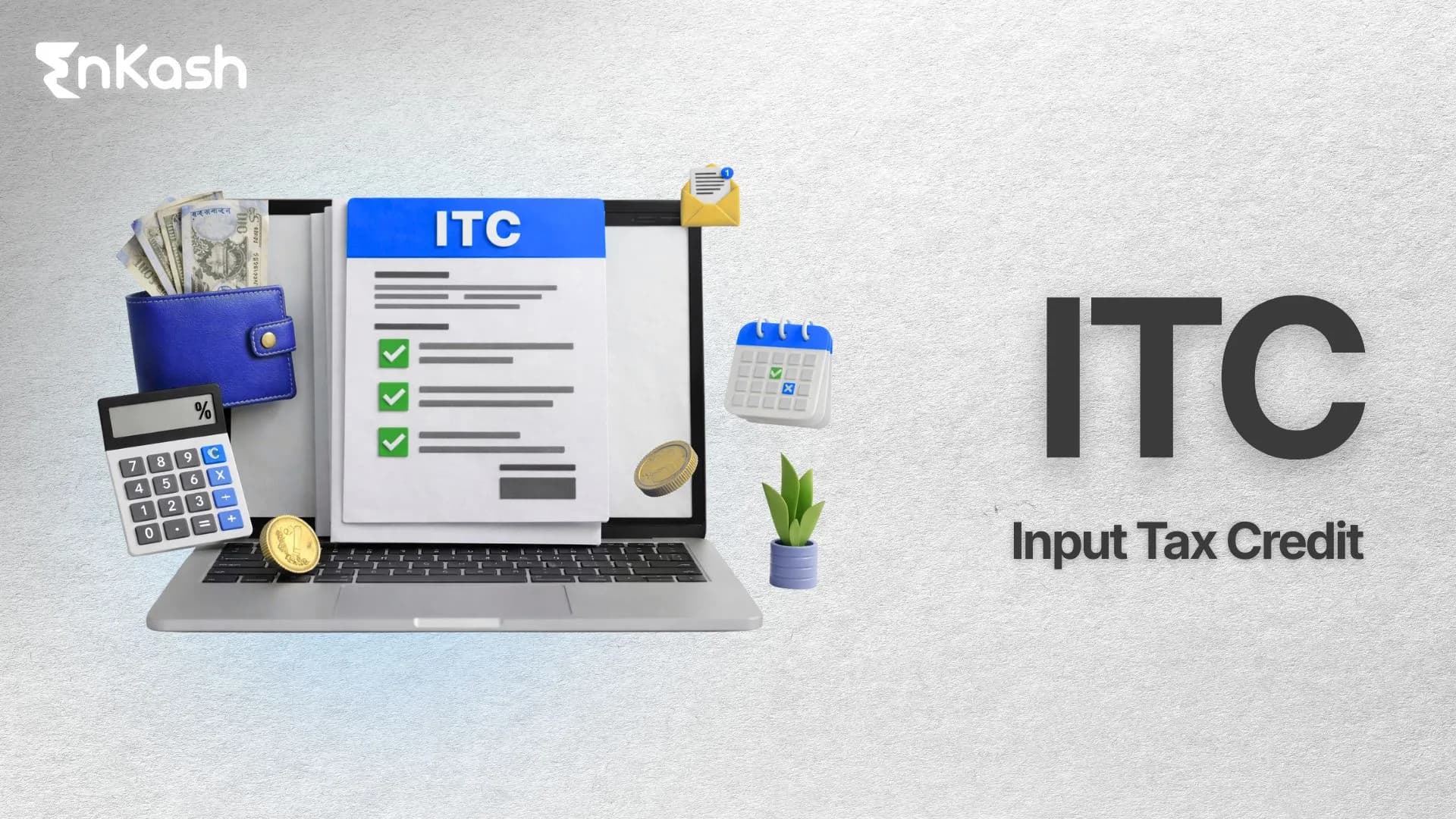
Under India’s GST system, Input Tax Credit (ITC) is the mechanism that lets a GST-registered business reduce its GST payable by using the GST already paid on business purchases. When a business buys goods or services for taxable supplies, the GST charged on that purchase can be adjusted against the GST collected on sales. This keeps GST aligned to value addition, instead of charging tax again on the same component.
For businesses, ITC impacts working capital, pricing, and compliance discipline. When ITC is claimed correctly, the net GST payments are reduced, which supports cash planning. When ITC is claimed incorrectly, it can result in credit reversal, interest, or scrutiny through return matching and checks. That is why ITC needs process control, not last-minute adjustments.
ITC under GST is rule-based. Credit is allowed only when eligibility conditions are met, invoices are valid, supplies are linked to business use, and GST returns are filed correctly. Credit can also be restricted in specific cases under the GST rules. This blog explains what ITC means in GST, who can claim it, how it works in real transactions, and the key conditions that decide if credit can be taken and retained.
What is ITC?
Input Tax Credit in GST means the credit of GST paid on eligible business purchases that can be used to reduce output GST liability. If a registered business purchases goods or services for taxable outward supplies, the input tax charged by the supplier becomes eligible for set-off against the tax collected from customers.
GST applies at each stage of supply, but it aims to tax only the value added at that stage. ITC supports this structure by removing the earlier tax portion from the next tax calculation through the return system, which reduces the final GST Payment.
ITC is available within defined conditions. The purchase must be for business use, supported by a valid tax invoice, and properly reflected in GST returns. If these conditions are not met, the GST paid on purchases cannot be used for adjustment and becomes a direct cost to the business.
Why ITC Is a Core GST Mechanism?
Within the GST framework, ITC acts as the link between taxes paid on purchases and taxes collected on sales. This linkage prevents tax accumulation and keeps pricing aligned with actual value addition.
From a compliance angle, ITC also enforces reporting discipline. Credits claimed by one taxpayer must correspond with taxes reported by another. This matching requirement makes ITC claims traceable and central to GST enforcement.
Who Can Claim ITC?
Eligibility to claim ITC under GST is determined by the type of taxpayer, the nature of registration, and how the purchases are used. GST does not allow a blanket credit. Only those who fall within defined conditions can treat input tax as a credit instead of a cost.
GST-Registered Regular Taxpayers
Only a person registered under GST in the regular scheme can claim ITC. This includes businesses engaged in the supply of taxable goods or services that charge GST on their invoices and file periodic returns. Traders, manufacturers, and service providers registered as regular taxpayers form the core group eligible for input tax credit.
Business Use of Goods and Services
ITC is allowed only when goods or services are used for business purposes. If a purchase is made for personal consumption or non-business activities, the input tax paid on that transaction cannot be claimed. In cases where goods or services are used partly for business and partly for personal use, ITC is restricted proportionately to the business portion.
Taxable Supplies Requirement
To claim ITC, the taxpayer must be making taxable outward supplies. Businesses dealing exclusively in exempt goods or services are not eligible for credit because no output tax is payable. The GST system links ITC availability directly to the obligation to charge GST on sales.
Who Cannot Claim ITC?
Certain categories are specifically excluded from ITC claims. Taxpayers registered under the composition scheme cannot claim input tax credit since they pay GST at a concessional rate and do not collect tax from customers. Similarly, unregistered persons remain outside the ITC framework as they do not file GST returns or participate in tax set-off.
Link Between Registration and Credit
GST treats ITC as a benefit tied to compliance. Without proper registration, return filing, and taxable supplies, input tax credit does not arise. This structure ensures that ITC flows only through compliant and traceable transactions within the GST system.
Read More: Types of GST in India.
Understanding GST inputs is central to determining whether input tax credit can be claimed. GST law does not treat all purchases the same. Credits are allowed only when goods or services have a direct and identifiable connection with taxable business activities. This section explains how inputs are defined, classified, and evaluated for ITC purposes.
Under GST, inputs refer to goods used in the course or furtherance of business. This includes items that contribute directly to manufacturing, trading, or service delivery, as well as goods that support routine business operations. The focus is on functional use. If a good supports taxable output, it falls within the scope of GST inputs.
Examples include raw materials used in production, goods purchased for resale, consumables required for operations, and packaging materials. When GST is charged on these purchases by a registered supplier, the tax paid forms part of the input tax credit, subject to statutory conditions.
GST clearly separates inputs, input services, and capital goods. Inputs are movable goods used or consumed in business activities. Input services include non-tangible services such as rent, freight, professional services, software tools, and maintenance contracts used for business purposes.
Capital goods, such as machinery or heavy equipment, are excluded from the input category. They are governed by separate ITC provisions due to their long-term use and accounting treatment. Treating capital goods as regular inputs can lead to incorrect credit reporting.
Business Use as the Primary Eligibility Test
For ITC purposes, business use is the primary test. Goods or services used partly for business and partly for non-business purposes require proportionate credit reversal. If an input is used exclusively for personal consumption or exempt supplies, the associated credit is not available.
What Can Be Claimed as ITC?
Once GST inputs are correctly identified, the next step is understanding what types of tax payments are actually eligible to be claimed as input tax credit. GST allows credit only for specific categories of tax that are part of the formal GST chain and are linked to taxable business activity.
GST Paid on Goods Used for Business
GST charged on goods purchased for resale, manufacturing, or operational use can be claimed as a credit, provided the goods are used for taxable supplies. This includes raw materials, finished goods purchased for trading, and consumables that support business activity. The key requirement is that the tax must be charged on a valid GST invoice issued by a registered supplier.
GST paid on services used in the course of business is also eligible for credit. This covers expenses such as rent, freight, professional fees, advertising, software subscriptions, and maintenance services. Even though these are not physical goods, the GST paid on such services forms part of the eligible ITC pool when they support taxable operations.
GST Paid Under Reverse Charge Mechanism
In certain notified cases, GST is payable by the recipient instead of the supplier under the reverse charge mechanism. When a business pays GST under reverse charge and the related goods or services are used for business purposes, the tax paid becomes eligible for input tax credit, subject to return filing compliance.
Integrated GST on Imports
IGST paid on the import of goods is also eligible for credit. When goods are imported for business use, the IGST paid at customs can be claimed as ITC, provided the importer is GST registered and the goods are used for taxable supplies.
Conditions Linked to Claimable Tax
Only GST that is actually paid to the government and properly reported through returns can be claimed. Taxes charged incorrectly, paid outside GST, or linked to exempt supplies do not qualify. This ensures that input tax credit flows only through verified and compliant transactions within the GST system.
Certain GST payments made by a business are not eligible for input tax credit. GST law clearly separates eligible input tax credit from credits that are blocked or restricted. This distinction is critical because claiming ineligible credit can lead to reversals, interest, and penalties.
Input tax credit is eligible when goods or services are used for taxable business supplies, and all GST conditions are met. The purchase must be supported by a valid tax invoice, the supplier must be GST compliant, and the tax should be reflected in the return system. Credits are allowed on inputs, input services, and certain capital goods when they directly support taxable output.
Eligibility is also linked to usage. If goods or services are used entirely for business purposes, the full credit may be claimed. If they are used partly for business and partly for exempt or personal purposes, credit must be restricted proportionately. This ensures that input tax credit flows only where GST contributes to taxable value creation.
GST law blocks credit on specific categories, even if GST is paid. These include expenses that are personal in nature or not directly connected to taxable supplies. Common blocked credits include motor vehicles used for personal transport, employee-related benefits such as food or leisure facilities, and goods or services used exclusively for exempt supplies.
Credits are also restricted where statutory conditions are not met. If the supplier fails to file returns, if invoices are invalid, or if the time limit for claiming credit has expired, the input tax credit becomes ineligible, even though GST was paid at purchase.
Read more: What is GST Exemption? Complete List of Exempted Goods & Services Under GST
GST ITC Rules
The availability of Input Tax Credit under GST is governed by a defined set of statutory rules. These rules decide when ITC can be claimed, how long it remains available, and when it must be reversed. Understanding these rules is essential because ITC is allowed only within these boundaries, regardless of whether GST was paid on the purchase.
Core Conditions for Availing ITC
GST law allows ITC only when specific conditions are met. The taxpayer must be registered under GST, the purchase must be supported by a valid tax invoice, and the goods or services must be received. In addition, the supplier should have reported the transaction in their GST returns, and the tax charged must be paid to the government. If any of these conditions fail, the credit does not become valid.
Time Limit for Claiming ITC
ITC cannot be claimed indefinitely. GST prescribes a clear time window within which credit must be availed. If the credit is not claimed within the permitted period linked to the relevant financial year, it lapses. This makes periodic review and reconciliation critical for businesses.
Rules on Reversal of ITC
GST requires ITC to be reversed in certain situations. If goods or services are later used for exempt supplies, personal purposes, or if payment to the supplier is not made within the prescribed time, the credit must be reversed. In some cases, reversed credit can be reclaimed once conditions are corrected.
Compliance and Matching Discipline
ITC operates on a matching principle. Credits claimed by the buyer must align with details reported by the supplier. This rule strengthens reporting accuracy and ensures that ITC flows only through verified transactions.
Read more: Complete GSTIN Registration Guide: Get Your GST Number Today
Documents Required for Claiming ITC
Claiming Input Tax Credit under GST depends entirely on proper documentation. Even when a transaction is eligible, ITC cannot be availed unless it is supported by prescribed records that meet GST requirements.
- Tax invoice issued by a registered supplier
The invoice must include mandatory details such as supplier and recipient GSTINs, invoice number and date, taxable value, applicable GST rate, and tax amount. Any missing or incorrect detail can make the credit ineligible.
- Debit note issued by the supplier
A debit note can be used to claim ITC where additional tax is charged after the original invoice, subject to return reporting and time limits.
- Bill of entry for imported goods
For imports, the bill of entry acts as the primary document for claiming ITC on IGST paid at customs.
- Input Service Distributor (ISD) invoice
Businesses receiving common services through an ISD must rely on ISD invoices to claim distributed credit correctly.
- Proper recording in GST returns
All supporting documents must be accurately recorded and reflected in GST returns to keep ITC claims valid and traceable.
ITC for Capital Goods & More
Under GST, capital goods are treated differently from regular inputs because they are used over a longer period and form part of a business’s fixed assets. Capital goods include items such as machinery, equipment, tools, or installations used for taxable business activity.
Input tax credit on capital goods is allowed when these assets are used for making taxable supplies. The credit can be claimed in full in the year of purchase, provided the business is eligible and all GST conditions are met. Unlike the pre-GST system, GST does not require ITC on capital goods to be spread over multiple years.
However, usage plays a key role. If capital goods are used partly for taxable supplies and partly for exempt or non-business purposes, ITC must be claimed proportionately. If such assets are later sold or disposed of, GST rules may require partial reversal of credit based on prescribed calculations.
Special Cases of ITC
GST prescribes specific ITC treatment for transactions that fall outside the standard purchase–sale flow. These cases are governed by separate rules to ensure credit remains traceable and compliant.
- ITC under the reverse charge mechanism
When GST is payable by the recipient instead of the supplier, the tax paid directly to the government becomes eligible for ITC, provided the supply is used for taxable business activity and reported in returns.
- ITC on imports
IGST paid on imported goods can be claimed as ITC based on the bill of entry, subject to GST registration and business use of the imported goods.
- Input Service Distributor (ISD) credit
Businesses receiving common services across multiple GST registrations can claim ITC through ISD invoices, allowing proper distribution of credit.
- Non-standard supply arrangements
Certain notified transactions follow special ITC rules to ensure credit continuity without breaking the GST chain.
Conclusion
Input Tax Credit plays a central role in how GST works for businesses. It allows tax paid on purchases to be adjusted against tax on sales, keeping GST limited to value addition. When ITC is claimed correctly, it lowers tax cost and supports steady cash flow. When handled poorly, it creates compliance and audit issues. Businesses that treat ITC as a structured, rule-driven process, supported by proper records and regular checks, are better placed to manage GST efficiently and avoid unnecessary risks.
FAQs
1. How does mismatched invoice data affect credit availability?Invoice mismatch usually occurs when the buyer’s records do not align with the supplier’s return filings. In such cases, credit may not reflect in system-generated statements, limiting its availability for use. Businesses must reconcile purchase data with supplier filings and follow up for corrections to ensure the credit becomes usable.
2. What happens to credit if payment to the supplier is delayed?GST law links credit retention to payment timelines. If payment to the supplier is not made within the prescribed period, the claimed credit may need to be reversed. Once payment is completed, the reversed credit can generally be reclaimed, subject to return reporting and compliance conditions.
3. How is credit handled when goods are received in multiple lots?When goods covered by a single invoice are received in parts, credit becomes available only after the final lot is received. This rule ensures that credit is claimed only when the full supply has been completed and aligns physical receipt with tax adjustment.
4. How does credit work for goods lost, damaged, or destroyed?GST restricts credit on goods that are lost, stolen, destroyed, or written off. Since such goods do not contribute to taxable output, the related tax cannot be retained as credit. If already claimed, it may need to be reversed during return filing.
5. What is the impact of exempt supplies on credit calculation?When a business makes both taxable and exempt supplies, credit must be apportioned. Only the portion attributable to taxable supplies can be retained. The balance linked to exempt turnover must be reversed, ensuring credit supports only taxable value creation.
6. How does credit apply to advance payments under GST?Credit availability is tied to tax payment and receipt of goods or services. Even if GST is paid on advances, credit generally becomes available only after the supply is completed and reported correctly in returns, maintaining alignment between tax and actual supply.
7. How is credit treated during GST registration cancellation?Upon cancellation of registration, businesses may need to reverse credit for remaining stock and capital goods. This adjustment ensures that credit is not retained when taxable operations stop and prevents misuse after exiting the GST system.
8. What role does reconciliation play in protecting credit claims?Regular reconciliation helps identify missing invoices, supplier non-compliance, or reporting errors early. This reduces the risk of reversals, interest, or notices. Consistent reconciliation strengthens control over credits and improves overall GST accuracy.
9. How does credit impact pricing decisions for businesses?Credit directly influences cost structure. When credit flows smoothly, GST paid on inputs does not inflate costs, allowing competitive pricing. Breaks in credit flow increase effective costs, which may force businesses to adjust margins or prices.
10. Why do audits focus heavily on credit utilisation?Credit represents a direct reduction in tax payable, making it a high-risk area for revenue leakage. Audits examine eligibility, documentation, and usage patterns to confirm that credit claims follow GST rules and reflect genuine business transactions.