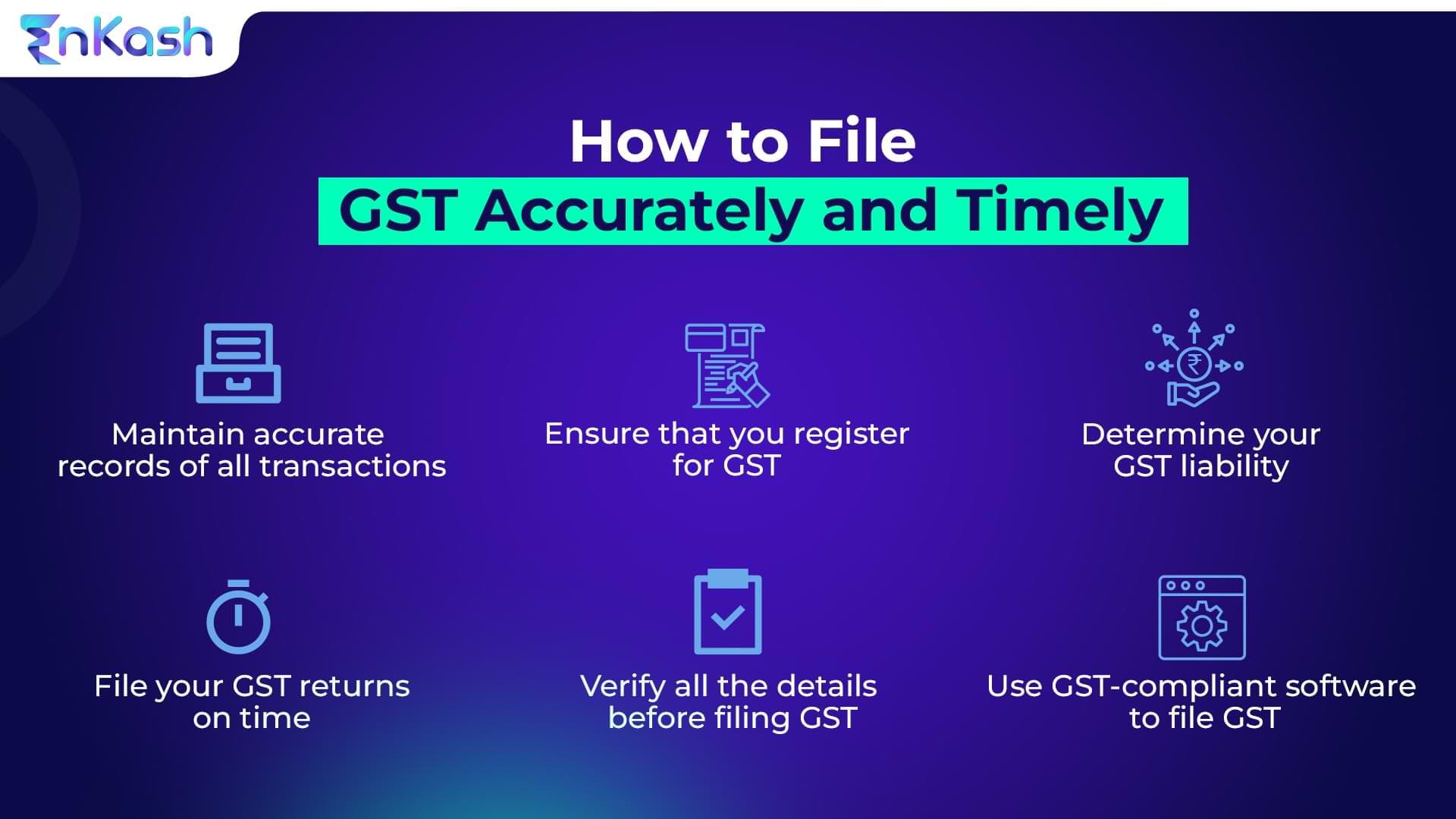
As businesses grow, managing GST payments often becomes more operationally demanding. What may begin as a routine monthly task can quickly involve multiple tax components, reconciliation checks, and strict timelines for payment of tax under GST.
Across many Indian businesses, GST payable is still calculated using spreadsheets and manual checks. This increases the risk of errors while adjusting input tax credit, applying the correct payment rules, or depositing tax under the right heads. Missed timelines or incorrect return payments can lead to interest, penalties, or delays in refunds.
With GST obligations spanning sales, services, and inter-state transactions, disciplined processes around tax calculation, deposits, and documentation become essential. Proper handling of GST payments helps businesses maintain compliance, protect cash flow, and avoid unnecessary exposure.
By the end of this blog, you will understand how GST payable is calculated, how GST payments are made, and how to manage deposits, refunds, and compliance timelines accurately.
What is GST Payable
GST payable represents the tax liability that remains after adjusting eligible input tax credit against the tax liability arising from outward supplies for a tax period. This liability arises during the tax period, is finalised at the time of return filing, and must be discharged within the prescribed due dates.
The payable amount is computed separately under CGST, SGST, IGST, and cess, based on the nature and place of supply. Utilisation across these tax heads is governed by GST payment rules and must follow the prescribed order and restrictions on cross-utilisation. Any shortfall, incorrect adjustment, or delayed discharge can result in interest or additional liability.
GST payable may also increase due to reverse charge transactions, interest on delayed payments, late fees, or other statutory dues identified during reconciliation. Since this amount directly determines the GST deposit and return payment, accuracy at this stage is critical for compliance, cash flow planning, and refund eligibility.
How to Calculate GST Payable
GST payable arises during the tax period and is finalised at the time of return filing after adjusting the eligible input tax credit against the tax liability arising from outward supplies. The calculation follows a defined GST payment formula and must be performed separately for each tax head.
GST payment formula:GST payable = Output tax liability − Eligible input tax credit
Note: Reverse charge tax, interest, late fees, and other statutory dues are added separately to arrive at the final GST payable.Output tax includes GST collected on taxable supplies during the tax period. Input tax credit can be adjusted only if it meets eligibility conditions and is reflected in the relevant returns. Credits must be utilised in the order prescribed under GST payment rules and cannot be applied interchangeably across tax heads unless permitted.
Additional liabilities such as reverse charge tax, interest on delayed payments, or other statutory dues are added to the final payable amount. Any excess eligible credit remaining after adjustment may be carried forward or claimed as a refund, subject to applicable conditions.
Accurate calculation of GST payable is critical, as errors directly affect GST deposits, return payments, and future refund claims.
Calculate GST Online FreeWhat Are Payments to Be Made Under GST
Payment of tax under GST involves discharging multiple components, depending on the nature of the transaction and the place of supply. Businesses are required to make GST payments under specific tax heads, and each must be deposited separately as per applicable rules.
The primary payments under GST include:
- CGST (Central GST): Applicable on intra-state supplies and payable to the Central Government.
- SGST (State GST): Levied on intra-state supplies and payable to the respective State Government.
- IGST (Integrated GST): Applicable on inter-state supplies and imports.
- GST Cess: Charged on notified goods such as luxury or sin items, where applicable.
In addition to tax liability, GST payments may also include interest, late fees, or other statutory dues arising from delayed return payment or short payment. These amounts are treated as separate liabilities and must be deposited accordingly.
Since GST deposits are made tax-head-wise, incorrect classification or adjustment can result in compliance issues, interest, or delays in return filing and refunds.
Importance of Timely GST Payment
Timely GST payments play a critical role in maintaining compliance and financial discipline for businesses. Once GST payable is determined, delays in deposit directly attract interest and late fees under GST payment rules, increasing the overall tax outflow.
Late payment of tax under GST can also affect return payment timelines, leading to mismatches between tax liability, deposits, and filed returns. These mismatches often trigger notices, reconciliation issues, or restrictions on claiming input tax credit in subsequent periods.
From a cash flow perspective, delayed GST deposits disrupt working capital planning, especially for businesses with high transaction volumes or tight liquidity cycles. Repeated delays may also impact refund eligibility and extend GST refund time limits due to compliance scrutiny.
Consistent and timely GST payments ensure that tax records remain aligned across returns, deposits, and payment receipts. This reduces audit risk, prevents unnecessary additional statutory liabilities such as interest and penalties, and supports smoother financial closures and predictable compliance outcomes..
Who Should Pay GST and When
GST payments must be made by any registered person who has a tax liability for a given period. This includes regular taxpayers, composition scheme taxpayers, entities liable under reverse charge, and those required to deduct or collect tax at source under GST provisions.
The timing of payment of tax under GST is linked to return filing deadlines. For most regular taxpayers, GST payable must be deposited on or before the due date of filing the monthly return. Composition taxpayers follow a quarterly payment cycle, while tax deducted or collected at source must be deposited within prescribed timelines after the end of the relevant month.
GST payment rules require that tax liability is discharged before a return is filed. Failure to deposit tax within the due date results in interest and may restrict return payment until the outstanding liability is cleared.
What is the Penalty for Non-Payment or Delayed Payment
Non-payment or delayed payment of tax under GST results in additional liabilities beyond the original GST payable. When GST payments are not deposited within the prescribed timelines, interest is automatically levied on the outstanding amount for the period of delay, at the rate prescribed under GST law.
Apart from interest, late fees may apply if the delay is linked to return payment timelines. These charges accumulate until the pending liability is cleared and the return is successfully filed. Repeated delays can also lead to notices, recovery proceedings, or restrictions on filing subsequent returns.
In certain cases, incorrect classification, short payment, or failure to discharge reverse charge liability may result in penalties in addition to interest. These amounts are treated as GST extras and must be paid separately during the GST deposit process.
Timely GST payments help businesses avoid unnecessary interest costs, penalties, and compliance disruptions that can impact cash flow and audit readiness.
GST Deposit Process
GST payments are deposited electronically through the GST portal as part of the return payment workflow. Once GST payable is finalised, businesses must generate a challan and make the GST deposit using the available payment modes.
The GST deposit process involves:
- Electing the relevant tax heads.
- Generating a challan.
- Completing the payment through net banking, NEFT, RTGS, or other permitted methods.
- After successful payment, a GST payment receipt is generated, serving as proof of tax deposit and enabling adjustment of the liability while filing returns.
It is important to ensure that the deposited amount is mapped correctly to the respective tax heads. Any mismatch between the GST deposit and the return payment can lead to reconciliation issues or delayed filings.
Maintaining accurate records of GST payments and payment receipts helps businesses track compliance status, respond to queries, and support refund claims within applicable timelines.
GST Refund Time Limit
Refunds under GST arise when excess tax is paid, input tax credit remains unutilised, or supplies qualify for zero-rated treatment. Once a valid refund application is filed, the GST refund time limit becomes a key compliance consideration for businesses.
As per Section 54 of the CGST Act, refunds are required to be processed within 60 days from the date of filing a complete and valid refund application. Delays beyond this period may result in interest payable by the tax authorities to the taxpayer, subject to applicable conditions.
Refund timelines can be impacted by mismatches in return payment, incomplete documentation, or discrepancies between GST deposits and filed returns. In such cases, additional clarifications or corrections may be required, extending the overall processing time.
Monitoring refund status and ensuring accurate GST payments, deposits, and payment receipts helps businesses avoid delays and manage cash flow more effectively.
GST Rebate vs GST Refund
While both involve returning funds to the taxpayer, GST rebate and GST refund apply in different situations and follow different rules
| Aspect | GST Rebate | GST Refund |
|---|
| Applicability | Primarily linked to the export of goods or services | Applicable in cases of excess GST payment or unutilised input tax credit |
| Nature | Refund of tax paid on outward supplies | Refund of excess tax or eligible credit |
| Trigger | Payment of tax followed by an eligible rebate claim | Excess GST deposit, inverted duty structure, or zero-rated supplies |
| Adjustment with Returns | Linked to return payment and export documentation | Linked to GST deposits and filed returns |
| Processing Basis | Subject to specific export-related conditions | Processed based on eligibility and supporting documents |
| Impact on Cash Flow | Improves liquidity after tax outflow | Returns excess funds locked in GST payments |
Read More: GST FAQs in India
Conclusion
Managing GST payments effectively is critical as businesses scale and transaction volumes increase. Accurate calculation of GST payable, timely deposits, and adherence to payment rules help organisations avoid penalties, reduce compliance friction, and maintain predictable cash flow.
When GST calculations, return payments, and payment records are handled manually, finance teams often face reconciliation delays and limited visibility into tax outflows. Structured payment workflows bring consistency to this process by improving accuracy, simplifying deposits, and keeping GST records aligned across returns and refunds.
EnKash supports this shift by centralising business payments, offering real-time visibility into outflows, and integrating smoothly with accounting systems.
Looking to streamline GST-related business payments? Explore how EnKash helps teams stay organised and compliant.
FAQs
What are GST payments?GST payments are the taxes paid by registered businesses under GST after calculating their net tax liability.
What does GST payable mean?GST payable is the final tax liability that remains after adjusting eligible input tax credit against the GST charged on outward supplies.
How to calculate GST payable?GST payable is calculated by subtracting eligible input tax credit from the output GST liability for the tax period, following the prescribed GST payment rules.
What is the GST payment formula?The GST payment formula is:
GST payable = Output tax liability − Eligible input tax credit
Note: Reverse charge tax, interest, late fees, and other statutory dues are added separately to arrive at the final GST payable.When should GST payments be made?GST payments must be made before filing the relevant GST return and within the due date prescribed for the applicable return period.
What happens if payment of tax under GST is delayed?Delayed GST payments attract interest and may also lead to late fees, penalties, and restrictions on filing returns or claiming refunds.
What is the GST deposit process?GST deposits are made online through the GST portal by generating a challan and completing payment under the applicable tax heads.
What is a GST payment receipt?A GST payment receipt is generated after a successful tax deposit and serves as proof of payment for return filing and reconciliation.
What is the GST refund time limit?GST refunds are generally required to be processed within the prescribed period from the date of filing a complete refund application.
What is the difference between GST rebate and GST refund?A GST rebate applies mainly to exports after tax payment, while a GST refund applies to excess tax paid or unutilised input tax credit.