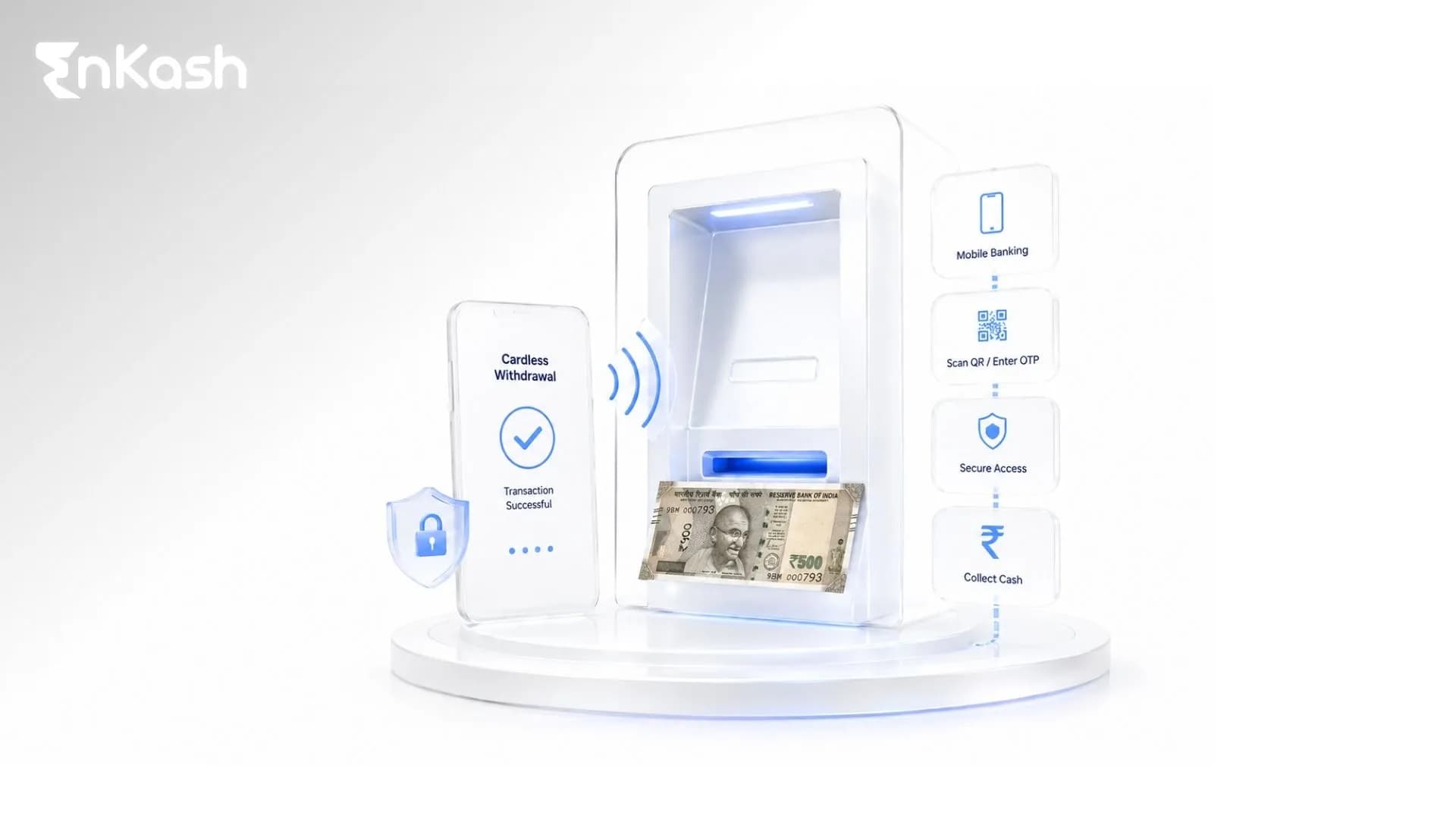
A debit card is no longer the only way to access cash at an ATM. A person may need money after leaving the card at home, after a misplaced card is blocked, or after choosing a safer method during travel. In those moments, the query “how to withdraw money from an ATM without a card” becomes a practical banking concern.
The cardless route works only when the ATM and the customer’s bank support the feature. Many banks now offer UPI-based cash withdrawals at enabled ATMs, where customers scan a QR code and approve the debit transaction in a UPI app. Some banks provide a separate mobile banking flow, where the customer creates a request in the bank app and completes the withdrawal at that bank’s ATM.
The process still depends on bank checks, account balance, transaction limits, phone access, and secure authentication. A user must confirm the amount, approve the request through the correct app, and keep the transaction alert until the cash is received. This blog explains cardless cash withdrawals, including practical steps, safety checks, limits, and bank-specific details for customers using Indian banking services.
What is Cardless Cash Withdrawal
Cardless cash refers to an ATM withdrawal made without inserting a debit card. The customer still uses a bank account, a registered mobile number, and secure approval before cash is released. The card is removed from the physical ATM interaction, but the transaction still passes through banking controls.
Indian customers mainly see two cardless models. The first is UPI-ATM, which is formally linked to Interoperable Cardless Cash Withdrawal. In this flow, the ATM generates a QR code-based withdrawal request for the amount selected by the customer. The customer scans the code through a UPI app, checks the displayed amount, and approves the debit with the UPI PIN. The cash is dispensed only after approval is received by the ATM network.
The second model is bank app-based withdrawal. A customer creates a cash request inside the bank’s mobile app and receives a reference number, code, or app-generated PIN. The withdrawal is then completed at that bank’s enabled ATM. SBI YONO Cash is a common example of this approach.
A cardless transaction in an ATM is separate from a store UPI payment because it ends with physical cash. It can help when the card is unavailable, but it should be used with the same care as any banking transaction. The customer should protect the phone, app login, UPI PIN, and confirmation messages.
How to Withdraw Cash from an ATM Without a Debit Card
Using UPI-ATM or ICCW at an Enabled ATM
A UPI-ATM withdrawal starts only when the machine offers a card-free cash option. The customer should check the screen for UPI cash withdrawal, ICCW, or a similar menu before entering any amount. A regular ATM without this option will still require a debit card.
Once the option appears, the customer enters the withdrawal amount on the ATM. The machine then creates a QR code linked to that specific request. The customer opens a UPI app linked to the bank account, scans the ATM screen's QR code, verifies the amount, and approves the debit using the UPI PIN.
The ATM releases cash once network approval is received. The UPI PIN must be entered in the mobile app, not on the ATM keypad. A safe explanation of how to withdraw money from an ATM without an ATM card starts with ATM availability, phone network, and active UPI access.
Using a Bank App-Based Cardless Withdrawal
Some banks provide a separate app-led withdrawal facility. In this method, the customer begins in the bank’s mobile app instead of the ATM menu. SBI YONO Cash is a familiar example. The customer creates a cash request in the app, chooses the amount, and receives the details required for ATM validation.
At the enabled ATM, the customer enters the reference information, confirms the amount, and completes the request with the app-linked PIN or code. The cash is released after the bank verifies the request. This route may work only through the bank’s own enabled ATM network, depending on the service design.
A customer learning how to take money from an ATM without a debit card should first identify the available route. UPI-ATM works through QR approval at participating machines. Bank app-based withdrawals depend on the bank’s mobile app and the supported ATM network.
Basic Checks Before You Leave the ATM
The customer should wait for the final ATM screen before leaving the machine. The screen status, cash received, and bank alert should match the requested amount. If the account shows a debit but the machine does not release cash, the customer should keep the alert, note the ATM location, and raise a complaint through the bank’s official channel.
The same withdrawal should not be repeated immediately when the first attempt remains unclear. A quick account check helps avoid duplicate debits, balance confusion, and delayed dispute filing.
How does UPI Work in Cardless Transactions on ATMs
ATM Creates the Cash Withdrawal Request
A UPI-led ATM withdrawal begins with a request created at the machine. The customer selects the cash withdrawal option and enters the amount. The ATM converts this input into a QR code linked to the machine session, the amount, and the approval request.
A cardless transaction in an ATM is structured differently from a regular merchant payment. A shop QR moves money from a customer to a merchant. A UPI-ATM QR code sends an approval request to the banking system and releases physical cash after validation. The QR code serves a short-lived transaction purpose, keeping the withdrawal linked to the live ATM session.
UPI App Handles Customer Approval
The UPI app becomes the approval point for the transaction. After scanning the ATM QR code, the customer sees the withdrawal request on their phone. The app displays the amount and the account selected for debit. The customer then authorizes the request through the UPI PIN.
This arrangement keeps the sensitive credentials within the mobile banking environment. The ATM does not need the debit card PIN for this flow. The phone, UPI app, and linked account work together to verify the customer’s authority before the request proceeds.
Bank and ATM Network Complete the Flow
After UPI approval, the issuing bank checks the request against account balance, transaction permissions, risk rules, and withdrawal limits. Once the bank validates the debit, the confirmation is sent to the ATM network. The machine releases cash only after this approval is received.
The settlement travels through existing ATM rails, such as the National Financial Switch or other ATM network arrangements. This design allows UPI approval to connect with a cash-dispensing machine without physical card use. It also keeps the transaction within the broader ATM operating framework.
Why Interoperability Is Useful
Interoperability allows customers of participating banks to use enabled ATMs outside their own bank’s network. The feature depends on both sides of the transaction. The customer’s bank must support the facility, and the ATM operator must activate the service on that machine.
A clear answer to how to withdraw money from an ATM using UPI begins with checking the machine's availability. The ATM must display a UPI cash withdrawal or ICCW option before the request can move ahead through the bank and network.
Security Features of Cardless Withdrawals
No Physical Card Exposure
Card-free ATM use reduces exposure to skimming, cloning, and card trapping. The customer does not insert a debit card into the machine, which removes a common fraud route linked with tampered ATM slots. This gives cardless cash withdrawal a practical security advantage in busy or unfamiliar ATM locations.
The risk still requires attention. Phone access, app login, screen privacy, and PIN safety remain critical. A careless approval can result in a loss even when no card is used.
QR-Based Transaction Approval
The ATM screen generates a QR code for the active withdrawal request. The customer should scan only the code displayed on the machine during that session. QR images received through messages, screenshots, calls, or social media should be avoided.
The amount shown inside the UPI app must be checked before approval. Any mismatch in amount, account, or screen details should lead to cancellation.
UPI PIN Inside the App
The UPI PIN is available only in the UPI app. No bank staff member, ATM guard, caller, or support agent needs it to complete a genuine withdrawal. This rule remains valid even when a complaint is filed about a failed transaction.
A secure cardless transaction in an ATM depends on customer control. The phone screen should be shielded, the app should be updated, and the PIN should never be shared under pressure.
Alerts and Failed Transaction Safeguard
SMS, email, and app alerts help confirm the transaction status. If the account is debited but no cash is dispensed, the customer should preserve the alert and file a complaint through the bank’s official channels.
The complaint should include the ATM location, date, amount, and transaction reference. Existing failed ATM transaction protection applies to this facility, providing customers with a formal recovery route when a technical failure results in a debit without cash release.
Benefits of Cardless Withdrawal
Useful When the Debit Card Is Not Available
Cardless cash gives customers a backup when the debit card is forgotten, misplaced, blocked, or left behind during travel. It can help during urgent errands, medical payments, family needs, or office-hour cash requirements.
This facility does not replace every debit card use. It works best as an alternate access route when cash is needed and the customer has a working phone, active banking access, and valid authentication.
Access Through UPI-Linked Bank Accounts
UPI-ATM allows customers to choose from eligible bank accounts linked to a supported UPI app. This can help when the required balance is available in a different linked account and the physical card is not available.
The customer should still check the selected account before approval. An incorrect account selection can disrupt planned payments, balance tracking, or scheduled commitments.
Less Dependence on Branch Visits
Cardless withdrawals can reduce reliance on branches for urgent, low-value cash needs. The customer does not have to visit a branch or wait for a replacement card when a supported ATM and active mobile authentication are available.
This is useful for customers who rely on digital banking but still need cash for daily expenses, local payments, or situations where digital acceptance is unavailable.
Indian Bank Cardless Withdrawal Search Intent
Customers seeking an Indian bank cardless withdrawal should verify the current availability via the Indian Bank’s app, website, branch, or ATM screen. Availability can depend on mobile banking access, ATM or BNA enablement, and active service menus.
A card-free attempt should be made only when the option appears on the machine or is clearly available through the bank’s official mobile channel. This avoids confusion at unsupported ATMs.
Cash Withdrawal Limit Using UPI on ATMs
UPI-ATM Per-Transaction Limit
The UPI-ATM cash limit is commonly set at ₹10,000 per transaction under ICCW guidance. A customer cannot use one QR-based ATM request for an unlimited withdrawal. The requested value must remain within the limit shown by the ATM and allowed by the bank.
A cardless cash withdrawal may also fall within the customer’s broader ATM or UPI usage rules. The approved amount can depend on issuer controls, account permissions, and risk checks.
Bank-Specific Daily Limits
Banks may apply daily value caps, transaction count restrictions, account-category rules, and customer-level security controls. HDFC Bank, for example, lists a daily ICCW cap of two transactions or ₹20,000 for its customers.
A person checking how to withdraw money from an ATM without a card should confirm limits before depending on a large cash requirement. The bank app, ATM notice, or fee schedule is the right place to verify the current amount.
ATM Charges and Free Transaction Count
UPI cash withdrawals at ATMs can fall under ATM customer charge rules. Some banks count these withdrawals within the monthly free ATM transaction allowance. Once the free count is exhausted, charges and taxes may apply according to the bank’s schedule.
HDFC Bank currently lists ₹23 plus applicable taxes after the monthly free limit is crossed. Customers using other banks should check the latest ATM charge schedule before making repeated withdrawals.
Final Thoughts
A card-free ATM withdrawal can help when a debit card is missing, blocked, or unavailable. The customer can use UPI-ATM at an enabled machine or a bank app-based request, where the bank provides that service.
Before starting a cardless cash withdrawal, the customer should confirm the ATM option and the requested amount. Approval must occur within the app, with the UPI PIN kept private. This careful flow explains how to withdraw money from an ATM without compromising account security.
FAQs
1. How to withdraw money from an ATM without a card?
To withdraw money without a card, use an enabled UPI-ATM. Select UPI cash withdrawal, enter the amount, scan the QR code with a UPI app, verify the amount, approve with UPI PIN, and collect cash after confirmation.
2. What is cardless cash withdrawal?
Cardless cash withdrawal means taking cash from an ATM without inserting a debit card. The customer uses UPI approval or a bank app-based request, depending on the ATM and bank facility available for the account.
3. Can I withdraw cash from any ATM without a debit card?
Cardless withdrawals are available at ATMs that support UPI-ATM, ICCW, QR Cash, or a bank-specific cardless option. A regular ATM without these menu options will require the normal debit card-based withdrawal flow.
4. What is the UPI-ATM cash withdrawal limit?
The UPI-ATM cash withdrawal limit is up to ₹10,000 per transaction. The final amount can also depend on the customer’s bank, daily UPI limit, account category, and issuer-level controls.
5. Is the UPI PIN required for cardless cash withdrawal?
A UPI PIN is required for cash withdrawals made through UPI-ATM. The PIN must be entered inside the UPI app after scanning the ATM QR code. The PIN should never be shared with any person.
6. Is cardless cash withdrawal safe?
Cardless withdrawals reduce the risk of card skimming and cloning because the debit card is not inserted into the machine. Safety still depends on scanning the ATM screen QR, checking the amount, protecting the phone, and keeping the UPI PIN private.
7. What should I do if money is debited but cash is not dispensed?
Keep the debit alert, note the ATM location, amount, date, and transaction reference, then raise a complaint with the bank. Failed ATM transactions must be reversed within T+5 calendar days under RBI’s framework.
8. What is the difference between UPI-ATM and YONO Cash?
UPI-ATM uses a QR code at an enabled ATM and approval through a UPI app. YONO Cash uses SBI’s app-generated request, reference number, and YONO Cash PIN for withdrawal through supported SBI ATM channels.
9. Can I use cardless cash withdrawal without the internet?
UPI-ATM generally needs mobile network access because the customer must scan the QR code and approve the request through a UPI app. Some bank app workflows may also require an internet connection when creating a withdrawal request.
10. Are charges applicable to cardless ATM withdrawal?
Charges depend on the customer’s bank, ATM usage count, and free transaction limits. Some banks may count UPI cash withdrawals under monthly ATM free limits, with charges after the free count is exhausted.