A hosted payment gateway enables a business to accept online payments without building its own payment page. Instead of collecting payment details directly, the customer is taken to a secure payment page managed by the provider, completes the transaction, and returns to the business site.
This model works well in India, where customers use a mix of payment methods such as UPI, cards, and net banking. A business needs a checkout that supports all of these without becoming complex to build or manage. A hosted model solves that by shifting the payment step to a ready system while keeping the merchant in control of the order and customer journey before payment. Payment gateways in India operate under the framework defined by the Reserve Bank of India, particularly under the Payment Aggregator guidelines.
In the next sections, the blog explains how a hosted payment gateway works, why businesses use it, where it helps, where it falls short, and how to approach implementation.
What is a Hosted Payment Gateway
A hosted payment gateway is a payment setup where the payment page is controlled by the payment provider rather than the merchant. The merchant’s website creates the order and sends the payment details to the customer, who enters the payment information on the provider’s page.
This structure places it within the broader types of payment gateway, where the main difference lies in who controls the payment page. Hosted models move the payment interface to the provider, while non-hosted models keep it closer to the merchant’s own system.
A simple hosted payment gateway example would be a user clicking “Pay Now” on an online store, landing on a secure payment page, choosing UPI or card, completing authentication, and then returning to the store with the payment result.
The value of this model lies in its clarity. The merchant focuses on the product and order flow, while the provider handles the payment layer.
Hosted payment gateways operate within India’s regulated digital payments ecosystem. Payment providers function under guidelines issued by the Reserve Bank of India, particularly the Payment Aggregator (PA) framework. These systems are also expected to comply with PCI-DSS standards for secure card data handling. As a result, hosted gateways are designed to reduce merchant exposure to sensitive data while maintaining transaction security and compliance.
How Does a Hosted Payment Gateway Work
Payment Starts on the Merchant Website
The flow begins on the merchant’s website or app when the customer selects a product or service and proceeds to checkout. Once the payment button is clicked, the merchant system creates the transaction request. This usually includes the order amount, order reference, customer details, and return or callback information. At this point, the business is not collecting the actual payment credentials. It is only preparing the payment session and passing the required transaction data forward so the payment step can begin properly.
Customer Moves to the Hosted Payment Page
After the transaction request is created, the customer is redirected to a secure payment page managed by the payment provider. This page is built to handle online payments and is separate from the merchant’s own checkout interface. It is designed to present payment choices in a structured way and support the next stage of the transaction. Since the page is already managed by the provider, the merchant does not need to build this payment layer from scratch.
Customer Selects and Enters Payment Details
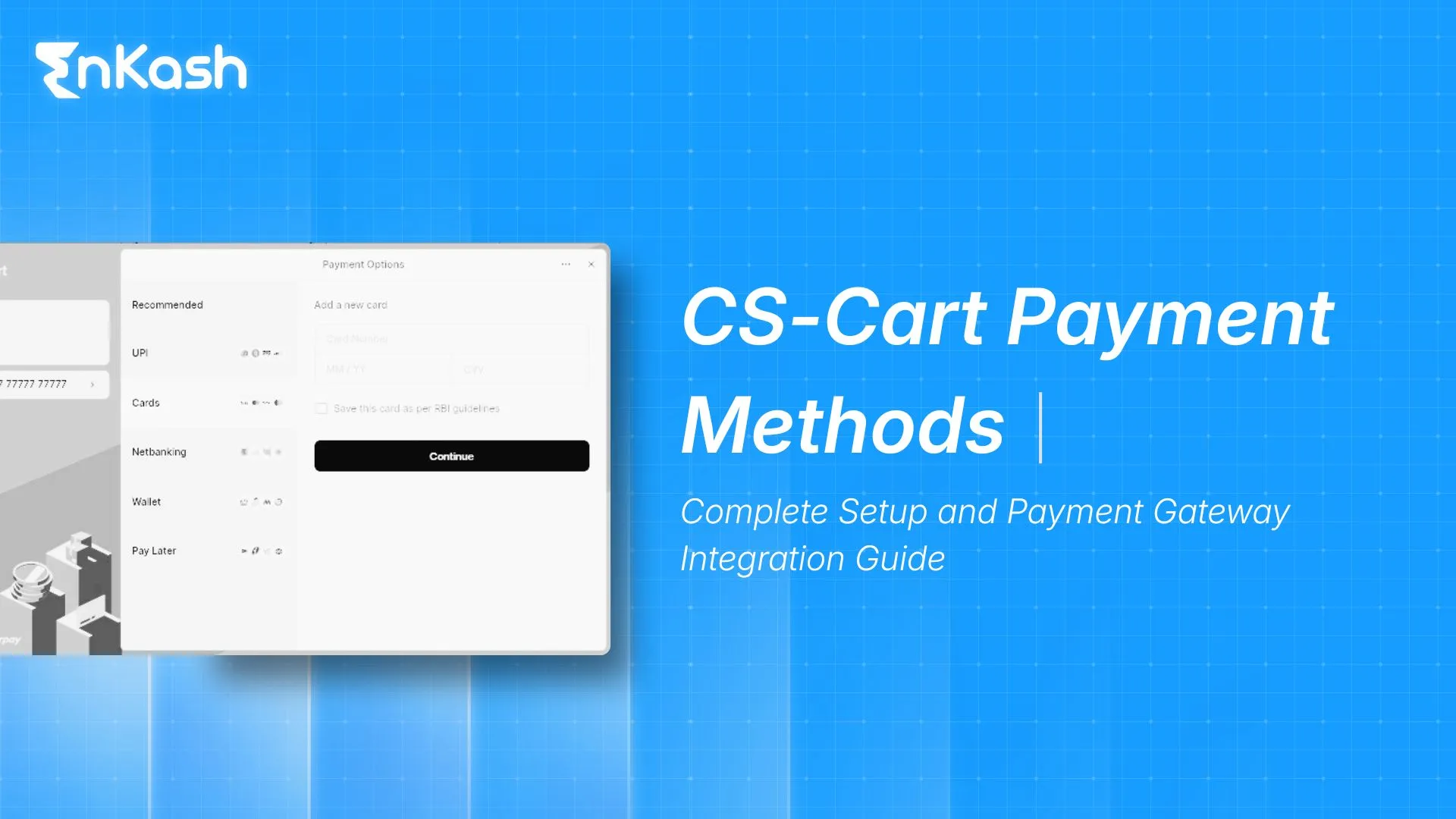
On the hosted payment page, the customer chooses the preferred payment method. In India, this can include UPI, debit cards, credit cards, and net banking. The customer then enters the required details for the selected method. These details are entered directly on the provider-managed page rather than on the merchant’s own system. This is a key feature of the hosted model because the payment entry step occurs outside the merchant’s checkout environment.
Authentication Completes the Transaction
Once the payment details are entered, the customer completes the required authentication step. This may involve OTP-based Additional Factor Authentication (AFA), as mandated by RBI for card transactions in India. This stage is important because it confirms that the payment request is genuine and authorized before the transaction is finalized. The provider handles this part of the payment journey through the relevant banking or payment network path.
Result is Sent Back to the Merchant
After the transaction is completed, the customer is sent back to the merchant website with the payment result. The merchant system then checks the final transaction status through callbacks, webhooks, or another verification method before treating the order as successful.
Why Hosted Payment Gateways Reduce Compliance Burden
In a hosted model, payment data is captured and processed on provider-controlled infrastructure. This reduces the merchant’s direct responsibility for handling card details and lowers the operational burden associated with payment security, audit requirements, and compliance management.
Advantages of Hosted Payment Gateway
Faster to Launch
A hosted payment gateway helps businesses start accepting online payments without spending weeks or months building a separate payment page. The merchant still needs to set up the order flow, connect the checkout button, and verify payment status after the transaction, but the payment screen itself is already managed by the provider. This cuts down development effort and makes the launch process more practical for businesses that want to start collecting payments quickly. For startups, service-led businesses, and growing online sellers, this speed can be a major advantage because payments stop being a large product build and become a simpler integration task.
Lower Direct Payment-Data Handling
This is a major reason many businesses prefer a hosted model. In this setup, the customer enters card or payment details on the provider’s secure page rather than on the merchant’s own checkout form. That reduces the merchant’s direct involvement in handling sensitive payment information, as payment data is captured on a PCI-DSS-compliant infrastructure managed by the provider inside its own system. In practical terms, this can make security management easier, reduce internal payment page maintenance, and lower the operational burden associated with payment data exposure. The business still needs proper integration and transaction verification, but it does not have to own the most sensitive part of the payment-entry experience.
Supports Indian Payment Behavior
A hosted payment page is useful in India because payment behavior is not limited to a single method. Some customers prefer UPI because it is quick and familiar. Others use debit or credit cards, and some still choose net banking depending on the amount, bank, or purchase type. A hosted setup makes it easier to bring these options together on a single payment screen without forcing the merchant to build separate flows for each. That gives the customer more freedom to pay in the way that feels most convenient and helps the business serve a wider range of payment preferences without adding unnecessary checkout complexity.
Works Well for Lean Teams
Many businesses do not have large product or engineering teams dedicated to payments. A hosted model works well in such cases because it eliminates the need to design, secure, and maintain a full payment interface within the merchant’s system. The internal team can focus on products, sales, service, support, and reconciliation while the provider manages the payment page itself. This is where web hosting with a payment gateway becomes easier to manage in practice. The business still needs a functioning website or app, but it does not need to build the most sensitive payment-entry layer from scratch. That makes hosted checkout a strong fit for lean teams looking for a practical, manageable payment setup.
Disadvantages of Hosted Payment Gateway
Limited Design Control
The clearest drawback is reduced control over the payment page. A hosted model may allow basic branding, such as adding a logo or adjusting a few visual elements, but the deeper structure, layout, and behavior of the page remain under the provider’s control. This can be limiting for businesses that want a tightly branded or highly customized checkout experience.
Redirect Can Interrupt Flow
Hosted checkout usually moves the customer away from the merchant website for the payment step. That handoff is normal, but it can create a small break in continuity. Some users may pause when they see a different page during payment, and that hesitation can affect completion.
Not Ideal for Complex Checkout Logic
A hosted model works best for straightforward payment journeys. Businesses that want advanced checkout experiments, highly personalized flows, or deeper control over payment behavior may find it restrictive. In those cases, a more merchant-controlled model may be a better fit.
Read more: Payment Gateway Fees in India: What to Expect in 2026
How to Integrate Hosted Payment Gateway
Choose a Provider Based on Business Needs
The first step is selecting a provider that supports the required payment methods, settlement needs, and integration options. Businesses should also check whether the provider supports multiple integration paths.
A practical example is EnKash, which supports API-based website integrations, SDK-based mobile integrations, and plug-ins for platforms such as WooCommerce and Shopify. This flexibility allows businesses to start with a hosted setup and evolve their payment integration as they scale.
Complete Onboarding and Verification
Before a business can start accepting live payments, it must complete the provider’s onboarding process. This usually includes KYC documents, bank account details, business registration information, and website or app details. This step is important because payment providers need to verify the merchant before enabling transactions in a regulated environment.
Create the Payment Request
Once the account is approved, the merchant system must create the payment request. This request usually includes the order amount, order ID, customer details, and return information. It serves as the link between the merchant website and the hosted payment page where the customer completes the transaction.
After the payment flow is connected, the business can configure basic checkout settings. These may include the business name, logo, available payment methods, and a few visual elements. This aligns the payment page with the brand while keeping the checkout familiar and easy to use.
Set Verification and Callbacks
A payment should never be considered successful based solely on what appears on the screen. The merchant system must confirm the final payment status through callbacks, webhooks, or other verification tools. This step helps prevent false confirmations and ensures only valid transactions are marked as paid.
Test Before Launch
Before going live, the business should thoroughly test the payment journey. This includes successful payments, failed transactions, cancellations, timeout cases, and return-flow behavior. Testing helps catch technical issues early and reduces the chance of customer-facing payment problems after launch.
After launch, the work does not stop. Businesses should keep tracking payment success rates, failed transactions, and customer feedback to maintain a stable checkout experience.
How Hosted Payment Gateway Improves Customer Experience
Simplifies the Payment Step
A hosted payment gateway makes the payment process easier to follow by presenting it on a page designed specifically for transactions. Customers do not have to deal with a cluttered or poorly arranged checkout screen. The payment journey is usually clearer because the page is designed around the single task of completing payment, which helps users move forward with less uncertainty.
Provides Familiar Payment Choices
Customers are more comfortable when they can see common payment methods in one place. A hosted payment page can display options such as UPI, cards, and net banking together, which makes selection easier. This helps users choose the payment method they already know and trust instead of spending extra time searching through a confusing checkout flow.
Supports Mobile-First Users
A large share of digital payments in India takes place on mobile devices. Hosted payment pages are generally designed to work across different screen sizes, making the experience smoother for users paying on their phones. This is important because a payment flow that does not work well on mobile can quickly lead to user drop-off.
Reduces Friction During Checkout
A structured payment page helps users complete transactions with fewer interruptions. When the flow is clean, the steps are easy to understand, and the payment methods are clearly displayed, the customer is less likely to abandon the purchase. This can improve payment completion by making the final checkout stage simpler.
How to Choose the Right Hosted Payment Gateway
Check Payment Method Coverage
Start by seeing whether the gateway supports the payment methods your customers already use. For Indian businesses, that usually means UPI, debit cards, credit cards, net banking, and wallets, where supported. A gateway that supports the right mix helps reduce payment drop-off and makes checkout more practical for a wider customer base.
Review Integration Flexibility
A business should also check how easily the gateway fits into its website or app. Some providers offer simple hosted checkout, while others also support plug-ins, mobile SDKs, or API extensions. This matters because a business may want a quick launch now, but more flexibility later as payment needs grow.
Evaluate Compliance and Security Readiness
The right gateway should make secure payment collection easier, not harder. Hosted models generally reduce the merchant’s direct exposure to card-data handling, but businesses still need to review onboarding requirements, checkout security, and data-handling obligations before going live.
Compare Reporting and Operational Support
A good choice should support day-to-day payment management after launch. Businesses should consider refund handling, settlement visibility, reconciliation tools, and issue-resolution support. A gateway may work at checkout, but it must also be manageable for finance and operations teams after payments start coming in.
Difference Between Hosted and Non-Hosted Payment Gateway
| Basis | Hosted Payment Gateway | Non-Hosted Payment Gateway |
|---|
| Payment page | Managed by provider | Controlled by merchant |
| Customer flow | Redirect-based | Stays within merchant system |
| Design control | Limited | High |
| Setup effort | Faster | More complex |
| Payment-data handling | On provider side | More merchant involvement |
| Compliance burden | Lower for merchant | Higher responsibility |
| Technical effort | Lower | Higher |
| Flexibility | Limited | Greater |
| Speed to market | Faster | Slower |
| Maintenance | Lower | Higher |
| Best fit | Startups, SMEs | Large, custom-focused businesses |
This comparison clearly answers how hosted payment gateway is different from self-hosted. Hosted models prioritize ease and speed, while self-hosted models prioritize control and flexibility.
Read More: Common Mistakes to Avoid While Integrating Payment Gateways
Who Should Choose a Hosted Payment Gateway
Startups Launching Online Payments
Startups beginning online payment collection usually need a setup that is practical, quick to implement, and easier to manage. A hosted payment gateway fits well with this stage because it reduces the work required to build a separate payment interface and helps the business begin accepting digital payments sooner.
Small and Medium Businesses
Small and medium businesses can benefit from hosted checkout because it allows them to accept multiple payment methods without taking on the effort of creating and maintaining a full payment system. This makes the model useful for businesses seeking a reliable payment flow with lower technical requirements.
Teams Prioritizing Speed and Simplicity
Some businesses care most about launching quickly and keeping payment operations easier to maintain. For these teams, hosted checkout is a practical choice because the payment page is already managed by the provider, reducing implementation effort and ongoing maintenance.
Businesses Exploring Gateway Options
Companies comparing different payment gateway models often begin with hosted checkout because it offers a simpler starting point. It allows them to start with a lower-complexity setup before deciding whether a more customized payment model is needed later.
Conclusion
A hosted payment gateway provides a simple way for businesses to accept online payments without building a full payment interface. It shifts the payment step to a provider-managed page, allowing faster setup, easier management, and support for common payment methods used in India. The trade-off is reduced control over the payment page and a redirect-based experience. For startups, SMEs, and businesses focused on speed and ease, this model offers a practical starting point. For businesses that also need broader payment collection capabilities, such as payment pages, links, and UPI-based flows, EnKash becomes relevant because it combines these tools within a single ecosystem, making it easier to manage different payment use cases without adding complexity.
FAQs
1. What is a hosted payment gateway?A hosted payment gateway sends the customer to a secure payment page managed by the provider. The customer completes the payment there, and the result is then returned to the merchant website for order confirmation.
2. How does a hosted payment gateway work in India?In India, the customer starts payment on the merchant site, moves to a hosted page, selects UPI, card, or net banking, completes authentication, and returns after the payment status is processed and confirmed.
3. Is a hosted payment gateway secure?A hosted payment gateway can be secure because the payment page is managed by the provider, which reduces direct handling of sensitive payment data on the merchant side during the transaction process.
4. What payment methods are supported in hosted gateways?Most hosted gateways in India support UPI, debit cards, credit cards, net banking, and wallets. The exact mix depends on the provider, merchant category, and the payment methods enabled during onboarding.
5. What is the difference between hosted and self-hosted gateways?Hosted gateways use a provider-managed payment page, which makes setup easier. Self-hosted gateways keep the payment interface closer to the merchant system, giving more control but adding more technical and compliance responsibility.
6. Can a business use hosted payments without a website?Yes, a business can use hosted payments without a full website by using payment pages, payment links, or payment buttons. These options allow online collection without building a complete checkout system.
7. What should be tested before going live?Before going live, businesses should test successful payments, failed transactions, cancellations, timeout cases, return flows, and payment verification. This helps confirm that the checkout journey and order confirmation process work correctly.
8. Who should use a hosted payment gateway?Startups, SMEs, service businesses, and merchants that want fast setup, low technical effort, and support for multiple payment methods usually benefit most from a hosted payment gateway model.
9. Does a hosted payment gateway improve conversions?A hosted payment gateway can improve conversions when the payment page is clear, mobile-friendly, and easy to complete. Better payment-method visibility and lower friction can help more customers finish the transaction.
10. What is the easiest way to start accepting payments?The easiest way to start accepting payments is usually through hosted payment pages, payment links, or simple checkout integrations. These options require less development work and help businesses begin collecting payments quickly.