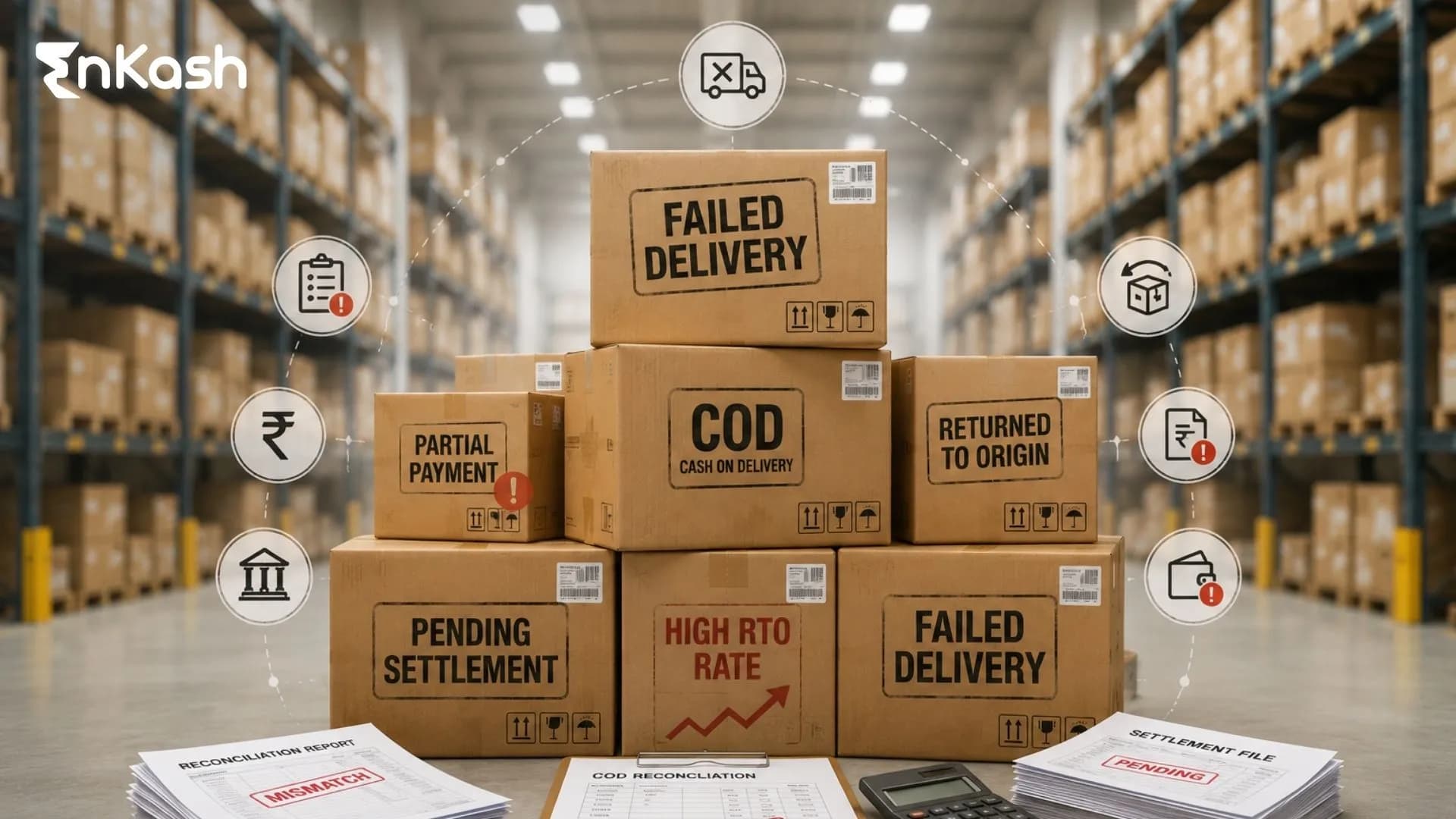
Cash on Delivery Still Has a Strong Hold on Indian E-commerce
India has become one of the most active digital payments markets in the world. UPI processed over 24,000 crore transactions in FY 2025-26, with transaction value crossing ₹300 lakh crore, according to reported NPCI data. The Government of India has also stated, citing IMF data, that UPI accounts for nearly 49% of global real-time payment transactions..
Yet, COD continues to influence how Indians shop online. A recent Economic Times report states that nearly half of India’s online orders are still fulfilled through cash on delivery. The reason is not lack of digital payment access. It is trust. Many shoppers still prefer to pay after seeing the product, especially when buying from new brands, smaller sellers, or product categories where return concerns are high.
India’s e-retail GMV reached $65 to $66 billion in 2025, with 290 to 300 million online shoppers, according to Bain and Flipkart’s 2026 report. As order volumes grow, COD creates more delivery attempts, RTO cases, courier settlements, deduction lines, and bank entries for finance teams to track.
For merchants, COD helps conversion. For finance teams, it creates a longer money trail.
The order is placed online, but the payment often moves through the courier-led collection and settlement cycle instead of the checkout payment flow. The courier collects payment, updates delivery status, deducts charges, adjusts RTO cases, and settles the amount later. The bank credit may come as one bulk entry, while finance teams still need to map it back to individual orders.
At lower order volumes, this process can be handled with spreadsheets and manual checks. At scale, it creates cash flow gaps, open receivables, deduction disputes, and slower month-end closing.
The real question for CFOs and finance teams is simple: if the order was delivered and the customer paid, why is the payment collection still pending, short-settled, or unmatched?
What is COD Reconciliation?
COD reconciliation is the process of matching cash collected at the time of delivery with the amount finally settled to the business.
For finance teams, a COD order does not close when the courier marks it delivered. They still need to check whether the right amount was collected, whether it was included in the courier settlement, whether deductions were valid, and whether the final bank credit was mapped to the correct order.
A bank credit only confirms that money reached the account. It does not explain which orders were included, which orders are pending, or why the settled amount is lower than the original COD value.
COD reconciliation gives finance teams order-level clarity across delivery, cash collection, courier settlement, deductions, bank credit, and accounting closure.
Why COD Reconciliation Breaks At Scale
1. Bulk courier settlements hide order-level gaps
Courier partners often settle COD collections in batches.
A merchant may receive one bank credit of ₹20 lakh. That credit may include hundreds or thousands of COD orders, after shipping charges, COD handling fees, RTO costs, weight discrepancy charges, penalties, and previous-cycle adjustments.
The bank statement shows money received. The finance team still needs to know which orders were included.
If the team only matches the total bank credit, unresolved order-level gaps can remain hidden. Some orders may be short-settled. Some may be missing from the settlement. Some deductions may need validation. Some RTO adjustments may have been applied against the wrong cycle.
For COD-heavy merchants, bank-level matching is too shallow. Order-level reconciliation is required.
Why bulk settlement matching is not enough
Suppose a merchant receives a ₹20 lakh COD settlement from a courier partner. The bank statement confirms the credit, but the settlement file shows that the original COD value was ₹22.4 lakh.
The difference includes shipping charges, COD handling fees, RTO charges, reverse logistics costs, weight discrepancy charges, and previous-cycle adjustments. On paper, the settlement may look complete. But order-level matching may show that some delivered orders were not settled, some orders were short-settled, and a few RTO charges were applied incorrectly.
This is where COD reconciliation becomes critical. Finance teams need to match the bank credit with order IDs, AWB numbers, delivery status, deduction type, and courier settlement lines. Without this, a single bulk credit can hide pending receivables, incorrect deductions, and margin leakage.
2. Delivery status and settlement status do not move together
A delivered order does not always mean settled cash. Delivery status may update first. Courier settlement may happen later. The bank credit may arrive after that. The accounting entry may close only after finance maps the settlement to the order. Each status has a different owner.
The e-commerce platform records the order. The courier system records delivery. The courier finance team prepares settlement. The bank statement records credit. The merchant finance team closes the receivable.
When these systems do not sync properly, finance teams spend time checking whether an order is actually settled or only marked delivered. This becomes harder when multiple courier partners are involved. Each partner may follow a different settlement cycle, file format, deduction logic, and dispute process.
3. RTO changes the expected cash position
Return to Origin, or RTO, creates one of the biggest COD reconciliation gaps.
Industry estimates often place Indian e-commerce RTO rates around 20% to 25%, with higher rates in certain categories, geographies, and pin code clusters. COD orders generally see higher RTO rates than prepaid orders
For finance teams, an RTO does not only mean a failed delivery. It changes the expected cash amount. The business may need to reverse the receivable, book forward shipping cost, book reverse shipping cost, check courier deductions, update inventory status, and validate whether the RTO charge was applied correctly. If RTO updates are delayed, finance may continue showing a COD receivable that will never be collected. If RTO deductions are not checked order-wise, logistics costs can quietly reduce margins.
COD-heavy growth makes this sharper because the customer has not paid upfront. A failed delivery can turn into revenue reversal, logistics cost, and blocked inventory at the same time.
For example, suppose a merchant ships a COD order worth ₹2,499. The order is marked out for delivery, but the customer refuses it. The courier later marks it as RTO. From a finance view, this does not mean only one lost sale. The expected COD receivable of ₹2,499 has to be reversed. The business may still have to absorb forward shipping, reverse logistics, packaging cost, and any COD handling charge applied by the courier.
If the RTO update reaches the finance team late, the order may continue to appear as a pending receivable. If the courier applies the RTO charge in a later settlement cycle, the deduction may look unrelated unless the team tracks the order ID and AWB number. This is how one failed COD delivery can affect revenue, logistics cost, inventory, and settlement accuracy at the same time.
4. Deductions reduce settlement value
COD settlements rarely match gross order value. Courier partners may deduct shipping charges, COD handling fees, RTO charges, reverse logistics costs, weight discrepancy charges, penalties, fuel surcharges, and previous-cycle adjustments.
A merchant may expect ₹50 lakh in COD collections and receive ₹46.8 lakh after deductions. The ₹3.2 lakh difference may be valid, partially valid, or incorrect.
Finance cannot confirm this from the bank statement alone. The team needs deduction-level mapping. Each deduction should connect to a shipment, order, RTO case, charge type, or agreed commercial term.
Without this, margin leakage becomes difficult to catch. A few incorrect deductions may look small in one settlement cycle. Across thousands of orders, they can become material.
5. Manual spreadsheets fail when exceptions increase
Most COD reconciliation workflows begin with spreadsheets. Spreadsheets work when order volume is low and exceptions are few. They become risky when finance teams need to compare order exports, courier files, settlement reports, RTO updates, and bank credits every day.
A business may have delivered orders without settlement, bank credits without order mapping, RTO orders with unclear deductions, settlement files without bank references, and courier charges that need dispute follow-up.
Manual reconciliation depends on clean files, correct formulas, consistent naming, and careful copy-paste work. One broken lookup or missing row can leave several orders unresolved.
At scale, finance teams should not have to search for every mismatch manually. They need exception-based tracking that tells them what needs action.
COD Reconciliation Gap Analysis
| Reconciliation gap | What finance sees | Likely cause | Business cost |
|---|
| Delivered but unsettled | Order marked delivered, no matching settlement | Courier settlement delay | Open receivable |
| Bank credited but unmatched | Lump-sum credit received | Bulk settlement without order mapping | Manual reconciliation effort |
| Short settlement | Expected amount is higher than received | Deductions, RTO, penalties | Margin leakage |
| RTO mismatch | Order returned, charges unclear | Delayed or incorrect courier update | Wrong revenue or expense booking |
| Aging COD receivable | Amount remains pending beyond expected cycle | Weak exception tracking | Poor cash planning |
What Broken COD Reconciliation Does to a Business
Broken COD reconciliation affects cash flow, margins, and finance closing.
Working capital and receivables become harder to track
COD creates a delay between sale and cash receipt. If settlements are not tracked regularly, finance teams cannot confidently estimate available cash.
A delivered COD order creates an expected receivable until the money is settled and matched. When bulk credits are not mapped order-wise, receivables can remain open even after partial cash has arrived. This can affect vendor payments, inventory planning, ad spends, and courier negotiations.
Margins become unclear
RTO charges, reverse shipping, COD handling fees, courier deductions, and weight discrepancy charges reduce the actual margin per order. If these costs are not mapped correctly, category-level profitability may look better than it is. This can lead to wrong decisions on pricing, marketing, shipping policy, courier mix, and COD availability. Without courier-wise reconciliation, businesses also lose visibility into which partner causes frequent delays, short settlements, high RTO, or recurring deductions.
Month-end closing slows down
Open receivables, unmatched bank credits, unverified deductions, and RTO disputes create closing pressure. Finance teams spend time cleaning data instead of reviewing performance. For founders and CFOs, this delays cash reporting, cash planning, and business decisions.
What a Scalable COD Reconciliation Process Needs
COD reconciliation improves when merchants track the full order-to-cash path at transaction level.
Finance teams need a clear connection between the order ID, AWB number, courier partner, delivery status, COD amount, settlement amount, deduction type, bank reference, and ledger status. Without this connection, teams continue to depend on manual matching and follow-ups.
Exception tracking should also happen regularly, not only during month-end closing. Delivered but unsettled orders, short-settled orders, bank credits without settlement mapping, settlement files without bank credit, and RTO deductions need early visibility.
RTO should be treated as a finance metric, not only a logistics metric. It affects revenue, logistics cost, inventory, cash flow, and margin. Finance teams should know the order value, shipping cost, reverse logistics cost, deduction applied, and inventory status for major RTO buckets.
Merchants should also reduce avoidable COD dependency wherever digital payment intent is strong. COD will remain important in India, but not every customer needs to remain on COD. Repeat customers, high-ticket orders, urban buyers, and high-risk pin codes can be nudged toward prepaid payments through better checkout experience, preferred payment modes, and clearer refund communication.
Customers are already comfortable with digital payments in many daily use cases. UPI’s scale proves that digital payment adoption is strong across India, even though COD remains important for online shopping trust. For e-commerce merchants, the challenge is to convert that comfort into checkout completion.
How EnKash Helps Merchants Build Stronger Payment Control
COD reconciliation becomes difficult when payment, order, delivery, RTO, settlement, and accounting data are reviewed in isolation. A stronger payment setup can reduce this pressure by improving the prepaid side of collections and giving finance teams cleaner transaction records to work with.
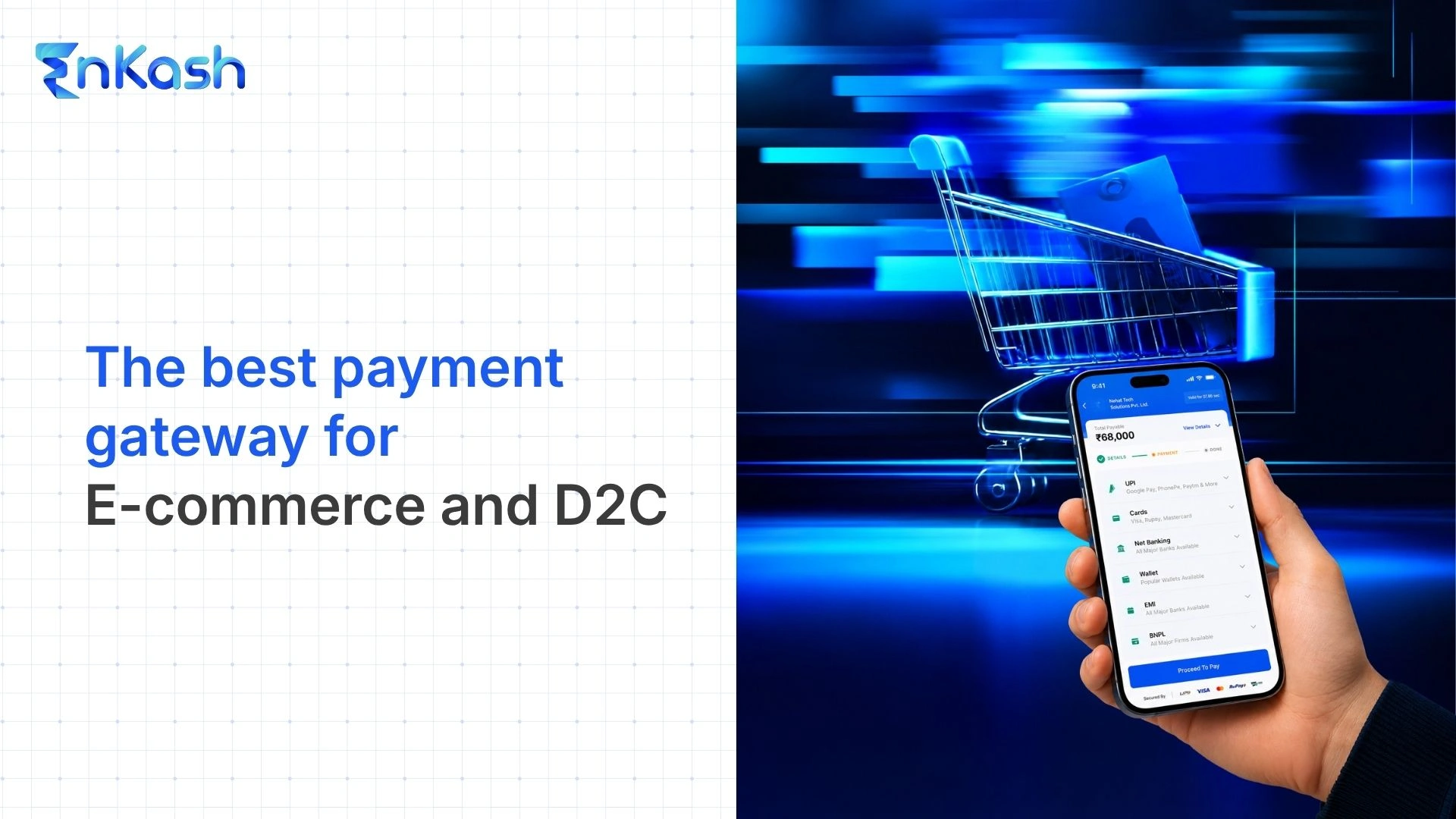
EnKash Payment Gateway can be integrated with e-commerce websites, mobile apps, and commerce platforms through APIs, SDKs, and plugins. For merchants using platforms such as Shopify, WooCommerce, Magento, PrestaShop, WHMCS, CS-Cart, or custom-built stacks, this helps connect digital payment collection more closely with the existing checkout and order flow.
This is important for COD-heavy businesses because each successful prepaid order reduces the number of orders that enter the courier-led cash collection cycle. When customers can pay through UPI, cards, net banking, wallets, BNPL, EMI, Autopay, or QR code, merchants have more room to move eligible orders away from COD. For COD-heavy merchants, the practical approach is not to remove COD overnight. It is to control COD better, where it remains necessary, and reduce avoidable COD dependency where digital payment intent is already strong.
For finance teams, prepaid payments create a cleaner trail. The payment status, transaction reference, refund status, and settlement details are available digitally. These records can then be compared with OMS data, order status, and internal finance records to identify paid, failed, refunded, settled, or pending transactions more clearly.
COD orders will still need courier, RTO, and logistics tracking. But when the prepaid share improves, finance teams have fewer cash-led orders to chase manually. They can also use payment and order data together to identify where COD risk is higher, such as high-value orders, repeat RTO patterns, specific pin codes, or customer segments that can be nudged toward prepaid checkout.
EnKash payment gateway supports this shift by helping merchants offer more payment choices, improve digital collection visibility, and access cleaner settlement data for online transactions. For CFOs and finance teams, this means better control over prepaid collections and lower pressure on manual COD reconciliation over time.
Conclusion
COD continues because it solves a real customer trust problem in Indian e-commerce. But for merchants, COD creates a finance control problem when order volumes grow. The money trail passes through delivery status, cash collection, courier settlement, deductions, bank credit, and accounting closure. Any mismatch in this chain can delay cash visibility and reporting. The businesses that scale better will track COD at order level, monitor exceptions daily, validate deductions, measure RTO as a finance metric, and reduce avoidable COD dependency through better prepaid payment flows. COD can support sales. Controlled payment workflows protect cash, margins, and finance reporting.
Frequently Asked Questions (FAQs)
Why does COD reconciliation break at scale?
COD reconciliation breaks at scale because finance teams have to match order IDs, delivery status, courier settlements, deductions, RTO cases, bank credits, and accounting entries across multiple systems and courier partners.
What is the biggest issue in COD reconciliation?
The biggest issue is that courier settlements often come as bulk bank credits, while finance teams need order-level clarity to identify settled, unsettled, short-settled, returned, or disputed orders.
How does RTO affect COD reconciliation?
RTO affects COD reconciliation because it changes the expected cash position. A returned order may require reversal of receivables, forward and reverse shipping cost booking, inventory updates, and deduction validation.
How can merchants improve COD reconciliation?
Merchants can improve COD reconciliation by tracking order ID, AWB number, courier partner, COD amount, delivery status, settlement amount, deductions, bank reference, and ledger status at the transaction level.