For an NBFC, receiving a loan repayment is only the first step. The payment must also be identified, matched to the correct loan, and accurately reflected in its records. The collection system must identify the loan, update the repayment records, and provide finance teams with a clear view of received funds.
Recurring EMI collections introduce additional requirements: mandate registration, debit instructions, failure handling, and changes when a loan is restructured or closed. A payment gateway should fit these workflows without creating more manual work for collection and technology teams.
This guide compares six payment providers on recurring mandates, repayment identification, LMS integration, reconciliation, lending-specific fund flows, and collection costs across UPI AutoPay, eNACH, mandate management, borrower-level payment identification, LMS integration, reconciliation and repayment fund flows.
This comparison is based on publicly available information from the providers’ product pages, pricing pages and developer documentation. Feature availability, pricing, bank coverage and mandate configurations may vary by NBFC requirements, integration type, provider approval and commercial agreement.
How we selected the providers: We shortlisted payment providers with publicly documented capabilities relevant to NBFC collections, including recurring mandates, repayment identification, collection APIs or reconciliation services. The comparison reflects published product information rather than independent transaction-performance testing. Inclusion does not establish regulatory suitability for every lending model, and providers are listed without a verified performance ranking.
Best Payment Gateways for NBFCs: Quick Comparison
| Provider | Relevant capabilities across its product suite | Consider when you need | Critical Checks before Onboarding |
|---|
| EnKash | UPI AutoPay, eNACH, virtual UPI IDs, bank-transfer identification, payment APIs, webhooks and settlement reporting | Recurring collections and payer-level reconciliation alongside broader business payment tools | Direct repayment fund flow, supported loan-level identification, UPI AutoPay/eNACH configurations and required integrations |
| Cashfree Payments | UPI AutoPay, eNACH, TPV, borrower verification and dedicated digital-lending solutions | Recurring repayments, payer validation and lending-specific payment infrastructure | NBFC account structure, TPV coverage, co-lending eligibility and separately priced services |
| Razorpay | UPI AutoPay, lending mandate configurations, TPV and Smart Collect customer identifiers | API-based collections and identification of UPI and bank-transfer repayments | Smart Collect receiving-account structure, eligible lending mandates and interoperability coverage |
| PayU | UPI AutoPay, eNACH, TPV, payment links, WhatsApp collections and QR payments | Automated EMIs combined with assisted repayment collection | Mandate coverage, dynamic VPA mapping, assisted-collection controls and loan-specific settlement arrangements |
| BillDesk | UPI AutoPay, eNACH, recurring-payment integrations, routing and checkout retry options | Enterprise payment acceptance and recurring-payment infrastructure | Lending-specific mandate availability, reporting format, debit cut-offs and distinction between checkout and recurring retries |
| Easebuzz | UPI AutoPay, eNACH, virtual accounts and receivables tools | Recurring collections combined with payment matching and receivables management | |
Why NBFCs Need More Than Standard Payment Acceptance
Unlike a typical e-commerce transaction, a loan repayment may need to be matched to a borrower, a specific loan, an instalment, and several outstanding dues. An NBFC must connect a repayment with a borrower, loan, instalment, and outstanding balance.
That distinction becomes important when a borrower has multiple loans, makes a part-payment, or pays manually while a scheduled debit is still pending.
An NBFC collection setup should support:
- Register and track recurring repayment mandates.
- Identify payments at borrower and loan level.
- Handle failed, pending, and reversed transactions.
- Reconcile collection records with bank credits.
- Update the LMS through APIs and webhooks.
- Offer alternate repayment channels when required.
- Maintain records of mandate changes and collection attempts.
The selected payment and collection services provide transaction initiation, identification, and status information. The NBFC remains responsible for applying repayments accurately in its loan and accounting systems. Allocation of money to principal, interest, and other dues should follow the NBFC’s configured lending and accounting rules.
Best Payment Gateways for NBFCs in India
1. EnKash
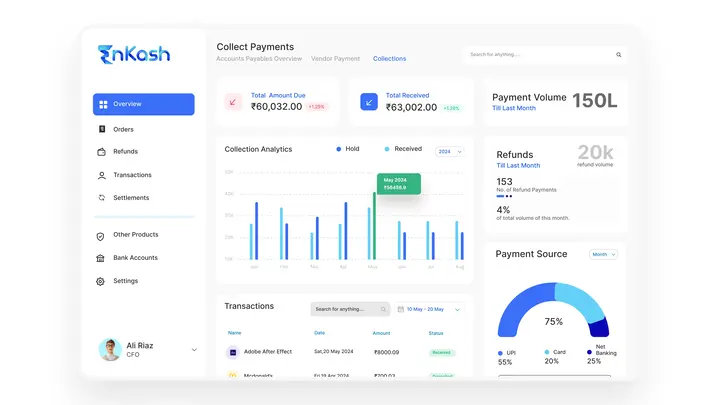
EnKash offers UPI AutoPay, eNACH and payment-identification capabilities through its payment and collection products.
Key capabilities
EnKash’s UPI AutoPay APIs cover mandate creation, updates, revocation, pre-debit notifications, and debit callbacks. Its eNACH solution provides another route for recurring collections.
EnKash Auto Collect supports customer identifiers and virtual payment addresses for matching incoming UPI and bank-transfer collections. NBFCs should confirm that the proposed receiving account and settlement arrangement meet the requirements applicable to their lending model. Payment APIs, transaction references and reporting data can help integrate collection records with the NBFC's systems. Loan-level allocation and updates to principal, interest, and other dues must be handled through the NBFC's configured LMS and accounting rules..
Advantages
- Recurring collection options through UPI AutoPay and eNACH.
- Customer identifiers for matching incoming payments.
- APIs and callbacks for connected payment workflows.
- Access to connected business payment and reconciliation capabilities, subject to the chosen integration.
Best suited for: NBFCs evaluating recurring collections and payer-level reconciliation within a broader business payments platform.
Integrate Payment Gateway
2. Cashfree
Cashfree offers dedicated digital-lending solutions covering repayments, verification and lending payment workflows.
Key capabilities
Its NBFC payment solutions include UPI AutoPay, eNACH, TPV and borrower-verification services. Cashfree also offers lender-account and escrow-related solutions for specified lending and co-lending arrangements. NBFCs must validate the legal account structure and permitted fund flow before implementation.
Advantages
- Dedicated product positioning for NBFCs and digital lenders.
- Multiple recurring repayment methods.
- Verification services alongside payment collection.
- Account and integration options for eligible lending and co-lending arrangements
What to confirm before onboarding: Bank coverage for the intended TPV flow, the account structure, applicable lending arrangements and which verification or collection services need separate integration and pricing.
Best suited for: NBFCs prioritising recurring repayments, payer validation and dedicated digital-lending infrastructure.
3. Razorpay
Razorpay combines recurring-payment capabilities with customer-specific collection identifiers through Smart Collect.
Key capabilities
Smart Collect supports identification and reconciliation of bank transfers, while Smart Collect 2.0 extends the approach to virtual UPI IDs. Razorpay also documents UPI AutoPay and lending-specific mandate configurations.
Razorpay documents a phased UPI AutoPay interoperability framework that can support migration and portability for eligible mandates. Existing mandates are not automatically transferable in every case; participating banks, UPI apps, mandate types and rollout eligibility must be checked..
Advantages
- APIs for integrating collection workflows.
- Customer identifiers across bank-transfer and UPI collections.
- Documented recurring-payment and lending mandate options.
- Published guidance on eligible mandate interoperability.
What to confirm before onboarding: The required recurring-payment product, TPV availability, borrower-to-loan mapping and migration eligibility for existing mandates. Validate the fund flow of the specific collection product being proposed.
Best suited for: NBFCs seeking API-based collections with customer-specific UPI and bank-transfer reconciliation.
4. PayU
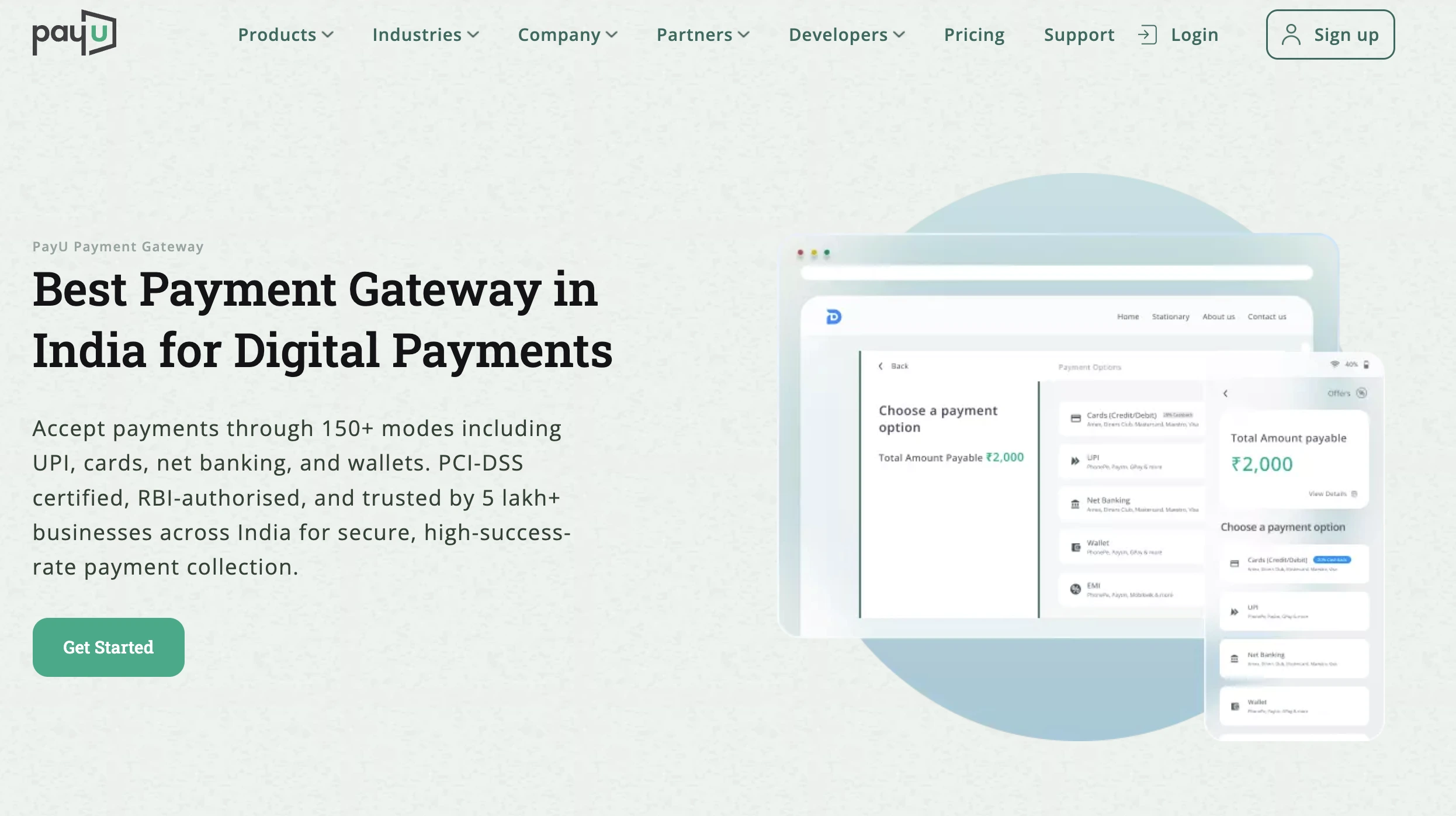
PayU offers NBFC-focused payment tools for both scheduled repayments and assisted collections.
Key capabilities
Its NBFC solutions include UPI AutoPay, eNACH, TPV and bank-account verification. Collection teams can also use payment links shared through SMS, email or WhatsApp, alongside static and dynamic QR payments.
PayU also documents dynamic virtual payment addresses (VPAs) that help NBFCs identify incoming repayments and match them to loan records.
Advantages
- Recurring mandates and assisted collection channels.
- Bank-account verification and TPV capabilities.
- Payment links and QR options for repayments outside scheduled debits.
- Customer-specific identification options for UPI collections.
What to confirm before onboarding: Bank and mandate coverage, channel activation requirements, loan-reference handling and how manual payments are coordinated with scheduled debits.
Best suited for: NBFCs combining automated EMI collections with follow-up payment requests through links, WhatsApp and QR.
5. BillDesk
BillDesk offers payment acceptance and recurring-payment infrastructure for businesses requiring enterprise integrations.
Key capabilities
Its recurring-payment solutions cover UPI, NACH and cards. Neo integration documentation describes mandate registration and recurring-payment journeys, including UPI and eNACH.
BillDesk separately offers checkout routing and retry features. Their applicability to one-time payment attempts must be distinguished from recurring mandate-debit retry rules and capabilities.. Checkout retry options should be evaluated separately from the rules and capabilities for retrying a recurring EMI debit.
Advantages
- Enterprise payment and recurring-payment integrations.
- UPI AutoPay and eNACH options.
- Documented mandate setup journeys.
- Routing and retry capabilities for supported payment flows.
What to confirm before onboarding: Lending-specific mandate support, borrower identification, debit submission cut-offs, reporting formats and the scope of each retry feature.
Best suited for: NBFCs evaluating enterprise acceptance and recurring-payment infrastructure with defined integration and reporting requirements.
6. Easebuzz
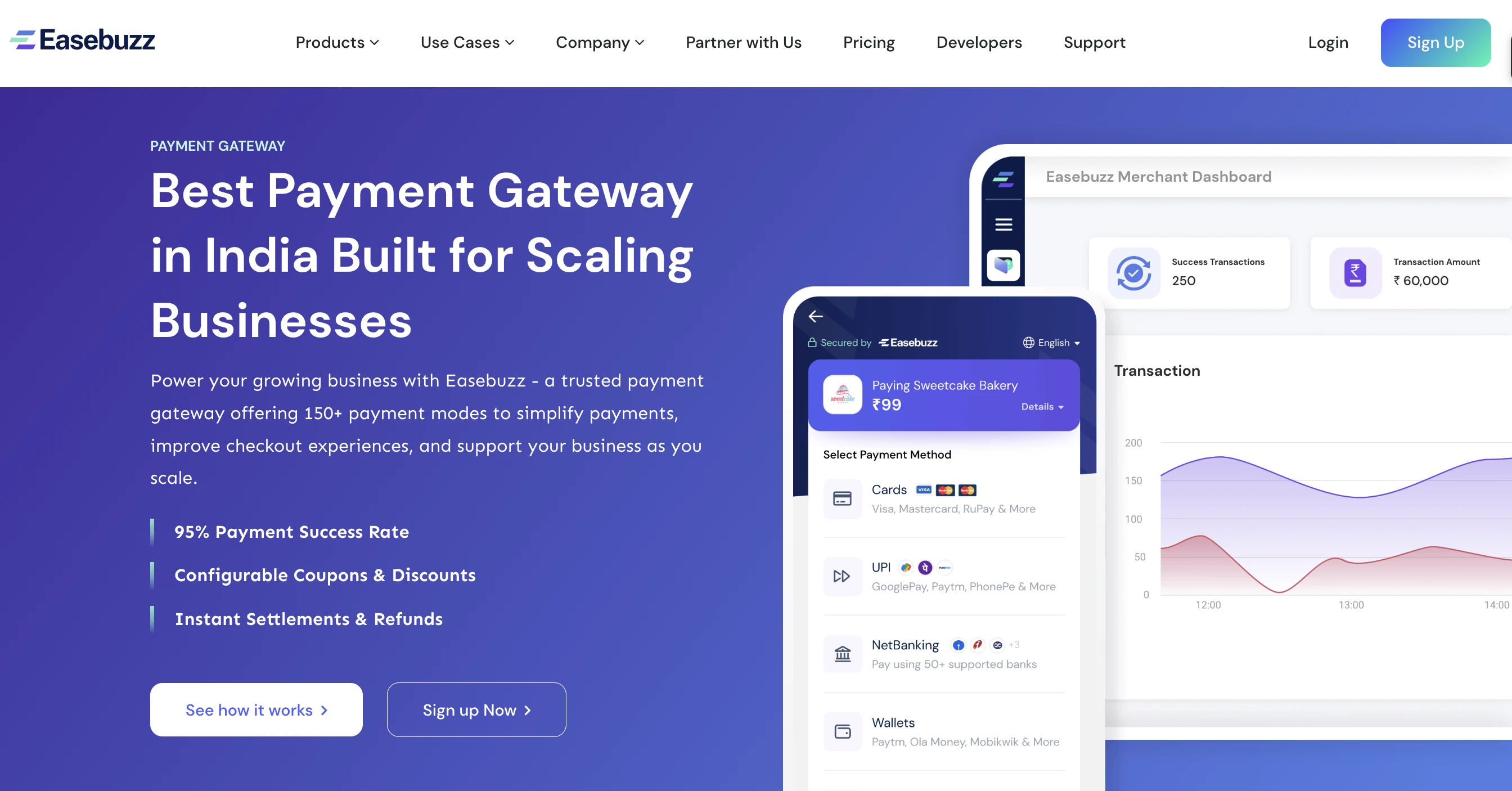
Easebuzz offers recurring-payment, virtual-account and receivables products across its platform.
Key capabilities
InstaCollect provides virtual accounts with UPI IDs and QR codes for incoming payment identification. Easebuzz’s recurring and receivables offerings include eNACH and UPI AutoPay, with Teller describing payment collection and receivables workflows.
Advantages
- Virtual-account-based payment identification.
- Recurring collection options.
- Receivables tools alongside payment acceptance.
- Products that can support payment matching and follow-up workflows.
What to confirm before onboarding: Which products suit loan repayments, whether multiple integrations are required, how payments map to loan accounts and what lending-specific fund flow is available.
Best suited for: NBFCs evaluating recurring collections and virtual accounts alongside receivables automation.
What Should an NBFC Check Before Choosing a Payment Gateway?
Regulatory Role and Repayment Fund Flow
For digital lending, an NBFC should verify the provider's regulatory role, the bank account receiving repayments and whether the arrangement complies with RBI's restrictions on third-party handling and control of loan funds
The RBI’s NBFC–Credit Facilities Directions, 2025, updated as of July 15, 2026, for digital loans, require repayments to flow directly into the NBFC's bank account, without routing through a third-party pass-through or pool account. The directions provide specified exceptions, including certain cash recoveries and regulated co-lending arrangements, which must be assessed separately. They also restrict third-party control over borrower–NBFC fund flows.
Ask the provider to document the receiving account, fund movement, control over funds, and treatment of exceptions. Check its regulatory role and applicable authorisation separately.
For co-lending, verify the applicable RBI co-lending framework, ownership and operation of the relevant accounts, and the permitted movement of funds between lenders. A generic marketplace split-settlement product should not be assumed to satisfy these requirements.. A general marketplace split-settlement feature does not by itself establish suitability for co-lending repayments.
UPI AutoPay, eNACH and Mandate Management
Evaluate both rails against the actual borrower portfolio. Check supported banks, UPI apps, repayment values, frequencies and authentication journeys.
Also confirm pre-debit notifications, submission cut-offs, failure statuses, retry rules and the process for updating instructions after restructuring or loan closure. Mandate registration and subsequent debit execution are separate events, so measure each independently.
RBI Requirements for Recurring Repayment Mandates
NBFCs evaluating UPI AutoPay should consider the RBI's Digital Payments – E-mandate Framework, 2026, alongside the applicable NPCI operating rules and lending-specific configurations.
For recurring transactions covered by the RBI framework:
- Mandate registration requires additional factor authentication (AFA).
- Issuers must provide pre-transaction notifications at least 24 hours before debit, subject to specified exceptions.
- Recurring transactions up to ₹15,000 may be authorised without AFA for each subsequent debit. Higher transactions ordinarily require AFA, except for specified categories with different thresholds.
- Mandate validity, modification and withdrawal requirements must be addressed under the applicable framework.
- Customers must receive the prescribed post-transaction information.
These requirements should not be confused with the separate operating rules applicable to NACH and eNACH mandates.
For loan collections, NBFCs should also confirm the supported lending mandate category, permitted debit frequency, mandate amount, borrower authentication and applicable cancellation procedures with the payment provider.
Borrower Identification and LMS Integration
. If one customer has two active loans, the integration must identify which loan a payment should reduce.
Check support for loan references, mandate identifiers, transaction references and status APIs. The LMS should handle duplicate or delayed webhooks without posting the repayment twice.
Review webhook authentication, access controls, audit logs and the payment data shared with each system. Confirm whether a pre-built LMS connector exists or whether a custom integration is required.
Reconciliation and Support
Ask for sample reports covering successful, pending, failed and reversed payments, bank credits, fees, and adjustments. Finance should be able to match the loan reference, payment transaction, bank credit and final LMS posting.
Support terms should specify incident severity, response times, escalation contacts and coverage during collection peaks. Test the escalation process during the pilot.
What Does an NBFC Payment Collection Setup Cost?
Compare quotations using the same monthly collection volumes, repayment values and expected failure rates.
| Cost component | What to clarify |
|---|
| Mandate registration | Charges for successful registrations, failed attempts and changes |
| Recurring debits | Charges for successful, failed and retried debits on each rail |
| One-time collections | Pricing for UPI, bank transfers, payment links and QR collections |
| Additional services | Separate charges for TPV, verification, virtual identifiers and reporting |
| Implementation | Setup, LMS integration, migration and testing costs |
| Support and commitments | Dedicated support, minimum billing and volume commitments |
| Taxes and adjustments | Applicable taxes and contractual charges for reversals or other exceptions |
Calculate total collection cost per successfully collected repayment over the same reporting period. Include implementation and operational effort in the wider assessment, rather than selecting a provider on headline transaction pricing alone.
What Should an NBFC Test Before Going Live?
Before onboarding, test successful repayments alongside mandate failures, unknown payment statuses, duplicate events and settlement mismatches
| Test scenario | What to verify |
|---|
| Mandate registration fails | The failure is recorded and an alternate registration journey is available |
| Debit remains pending | Final status is checked before another collection attempt |
| Borrower pays manually before a scheduled debit | Controls prevent an avoidable duplicate repayment |
| A webhook arrives twice or late | The LMS records the correct final state without duplicate posting |
| Borrower has multiple loans | The repayment maps to the intended loan |
| Borrower makes a part-payment | Outstanding dues and future collection instructions remain consistent |
| Loan is prepaid or closed | Future debits are stopped or updated appropriately |
| Payment records differ from bank credits | Finance can identify and resolve the exception |
| A collection incident occurs | Support follows the agreed escalation process |
Track mandate registration completion, first-attempt debit success, recovery after retries, unmatched payments and time taken to update the LMS. Compare providers using the same borrower mix and calculation methods.
Which Payment Gateway Should an NBFC Choose?
The right payment provider depends on the NBFC's repayment model, borrower base, collection volumes and integration requirements.
An NBFC primarily collecting scheduled EMIs should prioritise mandate registration, bank coverage, debit success, retry handling and reconciliation.
Lenders accepting frequent manual repayments may need payment links, customer-specific UPI IDs or virtual-account identification alongside recurring collection capabilities.
For complex lending or co-lending arrangements, the provider's regulatory role, receiving-account structure and permitted fund flow should be evaluated before comparing convenience features.
EnKash, Cashfree Payments, Razorpay, PayU, BillDesk and Easebuzz offer different combinations of these capabilities. NBFCs should shortlist providers whose supported products match their requirements and validate them through a pilot before committing to a long-term arrangement.
Frequently Asked Questions
Which Payment Gateway Is Best for NBFCs in India?
EnKash, Cashfree Payments, Razorpay, PayU, BillDesk and Easebuzz offer relevant capabilities. Choose based on repayment methods, fund flow, loan-level reconciliation, LMS integration, costs and performance in your pilot.
Can NBFCs Collect EMIs Through UPI AutoPay?
Yes. Providers offer UPI AutoPay for recurring repayments, including lending use cases. Confirm the applicable mandate configuration, supported banks and apps, debit requirements and repayment limits before implementation.
Is UPI AutoPay Better Than eNACH for EMI Collection?
Neither is universally better. Compare registration completion, bank coverage, supported repayment values, debit success and total costs for your borrower base. Using both can provide more collection options.
What Is TPV in Loan Repayment?
Third-Party Validation (TPV) checks whether the bank account used in a supported payment or mandate flow matches the account registered or authorised for that customer. Its purpose and application vary by product and regulated use case. TPV is different from simply checking whether a bank account exists or is active. Confirm what is validated, when the check occurs and how mismatches are handled. TPV is distinct from a separate bank-account verification service.
What Happens When an EMI AutoPay Debit Fails?
Check the final status and available failure reason before taking action. An eligible debit may be retried under the applicable rules, or the borrower may receive an alternate payment option. Coordinate manual payments and retries to prevent duplicate collection.
Can Borrowers Repay Through Payment Links or QR Codes?
Yes, where the provider supports the intended lending flow. Attach the correct loan reference and ensure that payment confirmation updates the LMS and outstanding dues.
Can a Borrower Cancel a Loan AutoPay Mandate?
Mandate cancellation depends on the payment rail, mandate category, and applicable rules.
RBI's 2026 e-mandate framework provides modification and withdrawal requirements for covered mandates. However, certain loan-repayment UPI mandates may operate under lending-specific NPCI configurations that restrict pause or revocation through the UPI app.
NBFCs should confirm the applicable mandate rules, borrower-facing cancellation process and lender obligations with their payment provider.
Cancelling a payment mandate does not cancel the underlying loan or remove the borrower's repayment obligation. When a loan is prepaid, closed, or restructured, the NBFC should ensure that scheduled debit instructions are appropriately updated or stopped.
Can an NBFC Migrate Existing Mandates to Another Provider?
Migration depends on the rail, mandate type, bank, UPI app, and provider capabilities. Ask both providers to confirm eligibility, continuity of debit instructions, and whether borrowers need to register new mandates.
Does a Payment Gateway Automatically Update the LMS?
Only when the required integration is implemented. APIs and webhooks must map payment and mandate events to the correct loan records, with controls for delayed events, duplicates and reversals.
Can an NBFC Use Multiple Payment Providers?
Yes, but separate providers require consistent loan references, reconciliation and collection controls. Adding a provider does not automatically make existing mandates transferable or prevent duplicate debit attempts.
Product information reviewed on October 22, 2026. Features, lending eligibility, banking coverage, mandate configurations and commercial terms vary by provider and implementation.