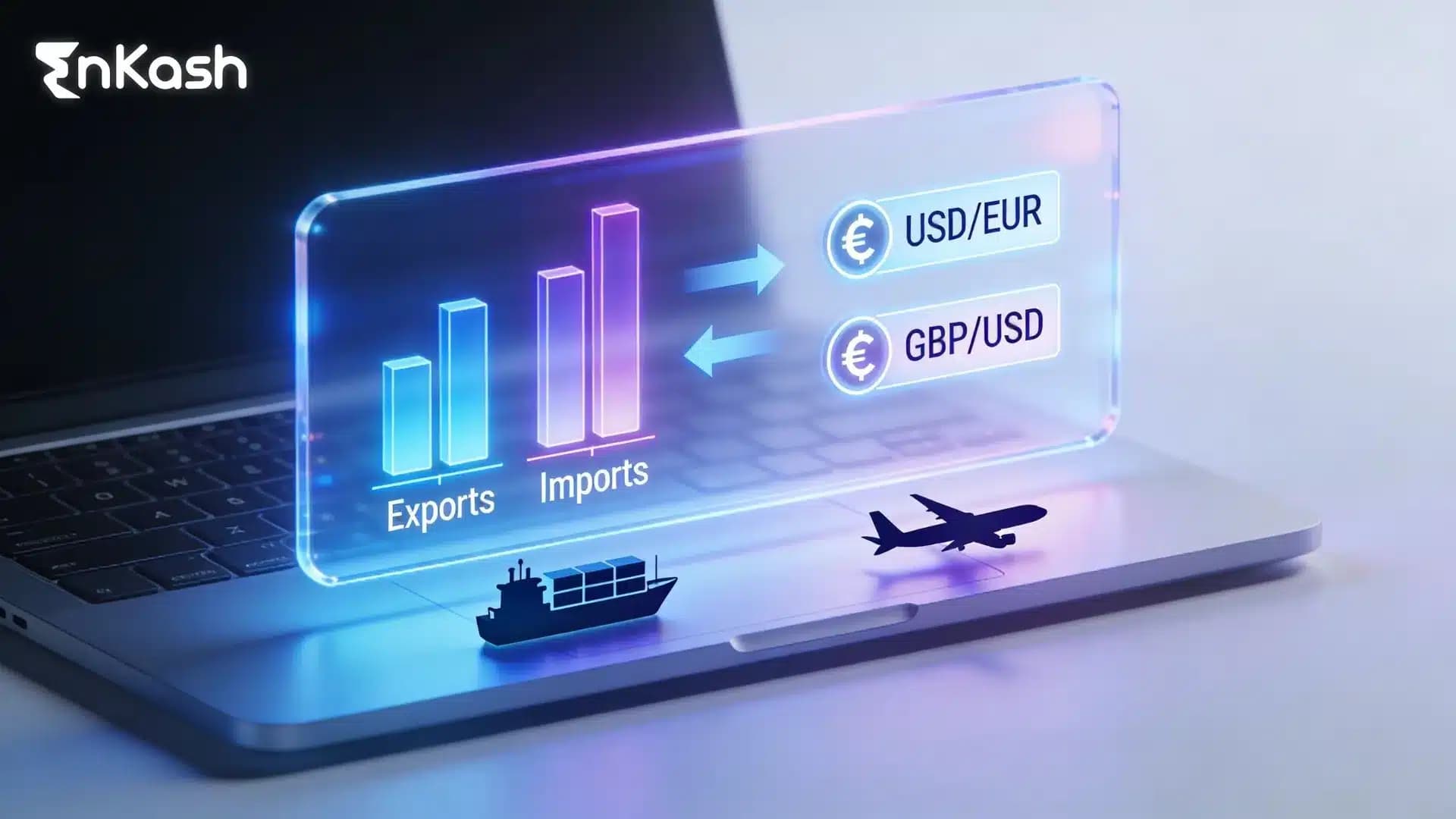
India’s connection to the global economy shapes everything from currency movements to the flow of capital. Goods, services, and investments move in different directions each day, and these movements influence economic stability in ways that are not always visible on the surface. Analysts, policymakers, and businesses use their understanding of the balance of payments to evaluate how external flows impact financial stability.
A clear reading of these numbers helps the central bank manage liquidity and guide markets with accurate signals. Shifts in exports, remittances, and foreign investment often appear in BOP data before they affect the broader economy. This allows decision-makers to anticipate pressure on the currency or to prepare for periods when financing conditions may tighten. The balance of payments of India provides this visibility and supports more informed planning across trade, monetary policy, and external sector management.
For anyone trying to understand how money enters and moves out of the country, knowing the components of the balance of payments becomes essential. It offers a structured view of the current account, the capital account, and the financial flows that influence India’s external position. Once this structure is clear, the rest of the topic becomes much easier to follow.
What is Balance of Payments (BOP)
When readers search for what a balance of payment is in economics, they usually want a definition that is both accurate and grounded in real financial reporting practices. The balance of payments is a formal accounting statement that records all economic transactions between a country and the rest of the world within a specific period. Central banks and global institutions follow established standards to ensure this record reflects the true position of an economy in global markets.
In India’s case, the data is compiled using the IMF’s accepted methodology, which gives analysts, regulators, and businesses a consistent view of how external flows behave. Understanding what balance of payments is helps explain how trade, income, investments, and transfers shape the external sector. It also helps identify when conditions may strengthen or weaken, which is crucial for policy responses and strategic decision-making.
The structure of BOP is divided into clear segments that show different types of activity. The current account measures trade and income flows. The financial account tracks investments, borrowings, and other cross-border financial movements, while the capital account records capital transfers and transactions involving non-produced non-financial assets. Each of these segments serves a specific purpose and together provides a full picture of a country’s engagement with the global economy. For readers exploring the components of balance of payments, this structure becomes the foundation for understanding how external balances influence currency stability, liquidity, and overall financial health.
Balance of Payments Example Explained with an Indian Scenario
Many readers understand the definition but still search for a clear balance of payments example that shows how the concept works in day-to-day economic activity. A practical illustration makes the idea easier to follow, especially for those trying to connect theory with financial behaviour in India.
Consider a situation where a technology firm in Bengaluru provides software services to a global client. The payment received for this work enters the country as a service export and is recorded as an inflow in the current account. At the same time, India imports crude oil to meet energy needs. This purchase results in an outflow because money leaves the country to pay overseas suppliers. These two movements reflect how the current account captures both earnings and obligations.
Now add another layer. A multinational company decides to set up a manufacturing facility in India and brings capital into the country for this investment. This inflow appears in the financial account as a foreign direct investment. Remittances from overseas workers also add to the current account as income transfers. When all these movements come together, they form a full picture of how the balance of payments of India is shaped over a given period.
This simple scenario shows how different transactions align with the components of the balance of payments without requiring complex terminology. Each entry has a defined place in the framework, and together they help measure the country’s economic linkages with the rest of the world. For policymakers and businesses, this clarity is essential when assessing external stability or preparing for shifts in trade, capital flows, or global demand.
Components of the Balance of Payments
The components of the balance of payments are organised to separate different types of external activity in a transparent and consistent way. India follows internationally recognised reporting practices, which strengthen the accuracy of its external sector data. Each account serves a defined purpose, and understanding these roles provides a clearer interpretation of the overall balance.
Current account
The current account records the trade of goods and services, along with income earned from abroad and transfer receipts such as worker remittances. It shows how the country performs in areas linked to exports, imports, overseas income, and outflows related to foreign obligations. This account is closely watched because it reflects frequent, real-time activity that influences currency movements and market expectations.
Capital account
The capital account covers specific capital transfers and transactions involving non-produced and non-financial assets. These include items such as the transfer of ownership of fixed assets or the acquisition of intangible assets. Although smaller in volume compared to the financial account, it remains an essential category for maintaining the structure and completeness of the balance of payments of India.
Financial account
The financial account records cross-border investments, loans, deposits, and other financial flows. This includes foreign direct investment, portfolio flows from global markets, external commercial borrowings, and deposits placed by non-resident individuals. Movements in this account show how global investors view the domestic economy and how external financing conditions shift over time. It also influences the country’s foreign exchange reserves, which remain a key stability indicator.
How the balance of payments is balanced
Understanding the core accounting identity
The balance of payments follows an accounting structure where every inflow has a corresponding outflow recorded in another part of the statement. This accounting structure ensures that the statement balances once all transactions are recorded. Even when a deficit appears in one account, the statement balances through adjustments in the financial account, changes in reserve assets, and statistical discrepancies recorded under errors and omissions.
Role of official reserves in maintaining balance
When the current account or financial account shows a gap, the central bank may use foreign exchange reserves to absorb the pressure. These movements appear under reserve assets within the financial account and are tracked closely by analysts who study the components of the balance of payments to understand how markets are adjusting. Reserve activity also provides an early signal of how external conditions are influencing currency stability.
How adjustments reflect the final external position
At the close of each reporting cycle, the entire statement is reconciled. Timing differences or reporting variations are recorded under errors and omissions to keep the final numbers consistent with the underlying framework of the balance of payments of India. This approach strengthens transparency and ensures stakeholders can rely on the data when evaluating external risks or interpreting policy responses.
What creates surpluses and deficits in the balance of payments
How positive external flows lead to a surplus
A surplus appears when the country earns more from the world than it spends. Strong export performance, steady service receipts, and robust remittances push inflows higher. These periods usually improve liquidity conditions and support currency stability, which strengthens confidence in the balance of payments of India.
Why certain conditions result in a deficit
A deficit reflects the opposite situation, where payments to the rest of the world exceed earnings. India often faces pressure when global energy prices rise or when demand for its services slows. Shifts in foreign investment can also widen the gap. Reviewing the components of the balance of payments helps identify which segment is driving the imbalance.
What these shifts reveal about external stability
Surpluses and deficits carry different implications for financial planning and policy decisions. A surplus can ease external risks, while a sustained deficit may require careful currency and liquidity management. Analysts rely on the current account balance of payments to understand how these patterns evolve and what they signal about the economy’s resilience.
Why the balance of payments is important for India’s economy and policy
Monetary and external sector guidance
The balance of payments provides a structured view of external pressures and supports the central bank in maintaining financial stability. When inflows weaken or outflows rise, this data helps determine how reserves should be used and whether liquidity conditions need adjustment. These insights are critical for interpreting shifts in the balance of payments of India during periods of global volatility.
Evaluation of trade competitiveness
Movements in goods, services, and income flows reveal how India is positioned in global trade. Patterns in exports and imports indicate whether sectors are gaining strength or losing momentum. The components of balance of payment help isolate which activities are driving performance and which require policy support.
Directions for investment and borrowing strategy
Data from the financial account reflects how global investors view India. Foreign direct investment, portfolio flows, and external borrowings all influence how businesses plan their funding needs. Strong inflows reduce borrowing risks, while weaker inflows may signal tightening global conditions.
Foundation for fiscal and trade planning
Governments rely on BOP data to adjust duties, refine incentives, and evaluate trade agreements. The behaviour of imports, services earnings, and remittances shapes broader strategies linked to manufacturing, energy, and export development.
Identification of structural strengths and weaknesses
The current account balance of payments highlights resilience in areas such as services and remittances while pointing to vulnerabilities linked to commodity imports or global demand cycles. These indicators help guide long-term reforms and capacity building.
Influence on market behaviour and business decisions
Financial markets track BOP movements because they offer early signals on currency pressures, capital availability, and risk appetite. Businesses use these insights to plan pricing, hedging, investment timelines, and foreign market exposure.
Balance of Payments in India: Structure, Trends, and Current Account Position
Structure of India’s external accounts
India reports its external sector data using internationally recognised standards that separate trade flows, income movements, and cross-border investments into defined accounts. This structure supports transparent reporting and helps institutions interpret how the economy interacts with global markets. The layout also makes it easier for analysts to identify changes within the balance of payments of India over each reporting cycle.
Recent movements in goods, services, and capital flows
India’s external performance often shows contrasting trends across its major accounts. Merchandise trade typically records a deficit because the country imports large volumes of crude oil and industrial inputs. Services, particularly technology and business process exports, usually generate strong inflows that support the broader position. Investment flows vary with global liquidity and risk appetite. These elements, viewed together, help explain shifts in the components of balance of payments from one quarter to the next.
Reading India’s current account position
The current account balance of payments reflects the combined outcome of goods trade, services earnings, income flows, and transfers. India’s current account tends to move into deficit when energy prices rise or when export demand softens. Periods of stability emerge when service exports strengthen or remittances grow. These patterns serve as important indicators for policymakers who monitor external sustainability, currency pressures, and the adequacy of foreign exchange reserves.
Difference Between Balance of Payments and Balance of Trade
Many readers confuse balance of payments with balance of trade, but the two concepts measure different aspects of a country’s external economic activity. While both relate to international transactions, their scope and purpose are not the same.
Balance of Trade (BOT)
The balance of trade measures the difference between a country’s exports and imports of goods during a specific period.
It focuses only on physical merchandise trade, such as:
- Machinery
- Electronics
- Crude oil
- Agricultural products
- Manufactured goods
If exports of goods exceed imports, the country records a trade surplus. If imports exceed exports, it records a trade deficit.
In India’s case, the balance of trade often shows a deficit because the country imports large volumes of crude oil, electronics, and industrial inputs.
Balance of Payments (BOP)
The balance of payments is a much broader financial statement. It records all economic transactions between a country and the rest of the world over a specific period.
The BOP includes three main accounts:- Current account
Records trade in goods and services, income flows, and remittances.
- Capital account
Records capital transfers and transactions involving non-produced non-financial assets.
- Financial account
Records foreign investments, portfolio flows, external borrowings, and reserve assets.
Because of this wider coverage, the balance of payments provides a complete picture of a country’s external financial position, not just trade performance.
Key Differences Between Balance of Payments and Balance of Trade
| Basis of Comparison | Balance of Trade (BOT) | Balance of Payments (BOP) |
|---|
| Scope | Measures only exports and imports of goods | Records all international economic transactions |
| Coverage | Merchandise trade only | Goods, services, income flows, transfers, investments |
| Components | Exports of goods and imports of goods | Current account, capital account, financial account |
| Purpose | Indicates trade performance | Shows overall external financial position |
| Relationship | Part of the current account | Includes balance of trade within the current account |
| Policy relevance | Helps evaluate trade competitiveness | Guides monetary policy, currency management, and external sector stability |
History of balance of payment: Global evolution and India’s key milestones
Early development of the BOP framework
The modern balance of payments framework emerged from the Bretton Woods system and the reporting standards established in the IMF Balance of Payments Manual. Countries needed a consistent method to record transactions with the rest of the world, which eventually shaped today’s structured layout. This history helps clarify why the components of the balance of payments follow a uniform pattern across economies.
Evolution of reporting standards and global integration
As financial markets became more connected, global institutions refined the rules governing how countries report external sector data. The adoption of updated methodologies strengthened transparency and improved comparability. These developments also influenced how nations interpret the balance of payments of India when assessing shifts in trade and capital flows.
India’s key milestones in external sector reporting
India’s approach to its external accounts has progressed alongside economic reforms. Liberalisation expanded the scale of trade and investment, making precise reporting essential for guiding policy. Over time, improvements in financial openness, services exports, and capital markets increased the relevance of the current account balance of payments, which now serves as a key indicator for external stability and long-term planning.
Closing thoughts
A deeper understanding of the balance of payment framework gives clarity on how a country navigates its financial relationship with the world. The BOP captures trade activity, service earnings, investment flows, and income movements in a structured format, giving a reliable view of external conditions.
Through this lens, the components of balance of payments create a clear map of how money enters and leaves the economy and how these flows influence currency levels and financial stability.
For India, this framework guides decisions that shape external resilience. Movements in the balance of payments of India help the central bank assess pressure on reserves, support currency management, and monitor the flow of funds across borders. Businesses and investors use the same signals to evaluate market conditions, funding costs, and global exposure.
The broader takeaway is that the balance of payments is not just a statistical record. It is a real-time indicator of how resilient the country is in a global environment that changes quickly. It connects domestic decisions to international outcomes and helps shape strategies for growth, stability, and long-term competitiveness. Understanding it equips readers, businesses, and policymakers with a clearer view of India’s position in the global financial system and the path ahead for sustainable external balance.
FAQs
1. How is BOP data compiled for a country?BOP data is compiled using internationally accepted reporting standards, with transactions recorded by banks, financial institutions, customs authorities, and major market participants. These records are then consolidated by the central bank into a structured statement. The process ensures that goods, services, income flows, and financial movements are captured accurately, allowing analysts to interpret the country’s external position with consistency and transparency.
2. What does BOP tell policymakers during global volatility?During periods of global volatility, BOP data highlights where pressures are building across trade, capital flows, or income transfers. Policymakers use these signals to evaluate currency risks, adjust liquidity conditions, or strengthen reserve buffers. It also helps anticipate potential funding gaps or periods of reduced external demand, enabling timely actions that support stability across the broader financial system.
3. How does BOP influence a country’s credit rating?Credit rating agencies examine BOP trends to understand how dependent a country is on foreign capital and whether it can consistently meet external obligations. Persistent deficits or volatile financial flows may signal a higher risk profile, while stable inflows and healthy reserves reflect stronger resilience. These assessments directly influence how global investors view the country’s financial reliability.
4. Why do financial markets react to BOP announcements?Financial markets track BOP announcements because they reveal early indicators of currency pressure, liquidity shifts, and changes in investor sentiment. A stronger external position can support equity and bond markets, while weaker readings may increase caution. Traders, institutions, and portfolio managers use this information to adjust hedging strategies, rebalance portfolios, and evaluate exposure to external shocks.
5. How does BOP help businesses plan their operations?Businesses use BOP insights to forecast currency movements, assess demand for exports, and understand financing conditions. A stable external environment may encourage expansion or investment in global markets, while signs of stress may lead companies to manage costs more tightly. BOP data supports decisions related to pricing, procurement, foreign market entry, and risk management.
6. What role do remittances play in shaping BOP outcomes?Remittances provide a steady and reliable inflow for many economies, helping offset trade deficits or weaker income flows. These transfers support household consumption and contribute to a healthier external account. A strong remittance base can ease pressure on reserves and reduce reliance on external borrowing, making it an important stabilizing factor in countries with large overseas workforces.
7. Why do countries monitor errors and omissions in BOP?Errors and omissions account for timing gaps, data mismatches, and unclassified movements that naturally occur when tracking millions of transactions. Monitoring this line helps assess the quality of reporting and ensures transparency. Large or unusual shifts may prompt deeper review of financial flows or trade data. It serves as a crucial checkpoint in maintaining the credibility of BOP statistics.
8. How do central banks use BOP to manage reserves?Central banks rely on BOP data to gauge how external flows are affecting reserve levels. When outflows exceed inflows, reserves may be used to settle obligations or stabilise the currency. During strong inflow periods, reserves can be rebuilt. This continuous assessment supports currency management strategies and helps maintain confidence in the country’s ability to meet its external commitments.
9. How is BOP useful for long-term economic planning?Long-term planning requires an understanding of recurring patterns in trade, investment, and income flows. BOP trends reveal structural strengths such as competitive service sectors or consistent investment, along with vulnerabilities like energy dependence. Governments use this information to shape reforms, strengthen productive capacities, and build frameworks that support sustainable external stability over multiple economic cycles.
10. How do global events influence BOP outcomes?Global events such as commodity price swings, geopolitical tensions, or financial market shifts can affect exports, imports, capital flows, and investor behaviour. These changes appear quickly in BOP data, offering insight into how external shocks are feeding into the domestic economy. Tracking these movements helps policymakers and businesses prepare for potential disruptions and adjust strategies accordingly.