Getting customers to an eCommerce store is becoming more expensive.
Contentsquare’s 2025 Digital Experience Benchmarks, based on 2024 data across 6,000 websites, found that the cost of an online visit increased by 9% year over year while conversion rates fell by 6.1%. Digital advertising spend increased by 13.2% over the same period.
For eCommerce brands, this makes one number increasingly important: Customer Acquisition Cost, or CAC.
If CAC keeps rising, spending more on ads may only make acquisition more expensive. Brands need to look at where the money is going, how well traffic converts, where shoppers drop off and which channels bring in new customers at a sustainable cost.
Reducing CAC is not only about finding cheaper advertising. The bigger opportunity is to reduce wasted acquisition spend, convert more of the traffic you already have, and build channels that can bring in new customers more efficiently.
Here are the 10 areas to focus on:
| Strategy | How It Can Reduce CAC |
|---|
| Break down CAC by channel and campaign | Identifies where acquisition costs are rising and where spend is working efficiently |
| Exclude existing customers from acquisition campaigns | Prevents prospecting budgets from being spent on people who have already purchased |
| Improve ad creative | Helps attract more qualified traffic and improves the efficiency of paid acquisition |
| Improve product-page and site conversion | Generates more new customers from the traffic you already paid to acquire |
| Reduce checkout and payment drop-offs | Converts more high-intent shoppers who have already reached the final stages of purchase |
| Recover high-intent abandoners | Brings back shoppers who viewed products, added to cart or left during checkout |
| Grow organic product discovery | Reduces dependence on paid traffic by attracting customers through search and shopping surfaces |
| Measure creators and affiliates by customer acquisition | Helps move budget toward partners that actually bring in new customers |
| Build a referral channel | Uses existing customers to acquire new customers at a potentially lower incremental cost |
| Look beyond ROAS when allocating budget | Helps identify which channels are creating incremental, profitable new customers rather than simply receiving attribution credit |
The most effective CAC strategy will vary by business. A brand with high traffic but weak conversion should focus first on product pages, checkout and payment performance. A brand with strong conversion but rising media costs may get more value from better targeting, creative, referrals or organic discovery.
What is Customer Acquisition Cost in eCommerce?
Customer Acquisition Cost is the average amount a business spends to acquire one new customer.
CAC = Total Acquisition Costs ÷ Number of New Customers Acquired
For example, if an eCommerce brand spends ₹8 lakh on acquisition and brings in 2,000 new customers:
CAC = ₹8,00,000 ÷ 2,000 = ₹400
The business is spending ₹400 to acquire each new customer.
For acquisition analysis, CAC should normally use the number of new customers acquired rather than total orders, because repeat purchases do not represent new-customer acquisition.
What Costs Should Be Included in eCommerce CAC?
Ad spend is only one part of CAC.
If creative production, agencies, creators, marketing tools or acquisition-focused team costs are required to bring in new customers, those costs should also be considered.
| Cost | Include in CAC? |
|---|
| Paid search and shopping ads | Yes |
| Paid social ads | Yes |
| Influencer and creator fees used for acquisition | Yes |
| Affiliate commissions for new customers | Yes |
| Acquisition-focused creative production | Yes |
| Agency and contractor fees | Yes |
| Relevant marketing software | Yes |
| Referral incentives for acquiring new customers | Yes |
| Acquisition-related internal team costs | Yes, when calculating fully loaded CAC |
| Cost of goods sold | No |
| General fulfilment costs | No |
| Retention campaigns for existing customers | No |
| General discounts available to everyone | Usually tracked separately |
First-order discounts and acquisition-specific incentives should be included when evaluating the true economics of acquiring a new customer, whether they are recorded directly in CAC or separately within contribution-margin analysis.
For businesses with a high number of COD cancellations or return-to-origin orders, it can also help to track:
Acquisition Cost per Successfully Delivered First Order
Acquisition Cost per Successfully Delivered First Order = Acquisition Spend ÷ New Customers Whose First Orders Were Successfully Delivered
This can be particularly useful for COD-heavy businesses where cancellations and return-to-origin orders make platform-reported purchase metrics look better than realised customer acquisition
CAC vs CPA: What Is the Difference?
CAC and CPA are often used interchangeably, but they measure different things.
CAC tells you how much it costs to acquire a new customer.
CPA tells you how much it costs to generate a particular action.
That action could be a purchase, lead, registration, app installation or another conversion.
For example, an advertising platform may show a ₹300 cost per purchase.
But once creator fees, agency costs, marketing software and creative production are added, the business may actually be spending ₹450 to acquire each new customer.
That ₹450 is closer to the real CAC.
1. Break Down Your CAC Instead of Looking at One Number
A blended CAC tells you the average acquisition cost across your business. It does not tell you where the money is working well and where it is getting expensive.
Consider this example:
| Channel | Spend | New Customers | CAC |
|---|
| Google Ads | ₹4,00,000 | 1,000 | ₹400 |
| Meta Ads | ₹5,00,000 | 800 | ₹625 |
| Affiliates | ₹1,00,000 | 250 | ₹400 |
Looking only at the overall CAC can hide the fact that Meta is currently costing much more per new customer.
Break CAC down by:
- Channel
- Campaign
- Product or category
- Geography
- Device
- Audience
Then look at those numbers alongside first-order value and contribution margin.
A channel with a ₹600 CAC may still be valuable if it consistently brings customers with stronger margins or repeat purchases. Another channel with a ₹350 CAC may look cheaper but attract customers who rarely return.
Track Marginal CAC as You Increase Spend
Your first ₹5 lakh of ad spend may perform very differently from the next ₹2 lakh.
Suppose ₹5 lakh brings in 1,000 new customers.
CAC = ₹500
You increase your spend to ₹7 lakh. Total new customers rise to 1,250.
For a simplified example, if the additional ₹2 lakh of spend is treated as responsible for the additional 250 customers:
Marginal CAC = ₹2,00,000 ÷ 250 = ₹800
The channel is still bringing in customers, but the additional customers are becoming much more expensive.
That is worth checking before putting more money into the same campaign.
2. Stop Paying to Acquire Existing Customers
A customer who has already bought from you should not keep getting counted as a new acquisition.
Yet this can happen when existing customers remain inside prospecting audiences.
Use first-party customer data to separate:
- Existing customers
- Previous high-value customers
- Visitors who have never purchased
- Cart abandoners
- New prospects
Existing customers can still receive loyalty offers, product recommendations and repeat-purchase campaigns.
This helps keep acquisition budgets focused on customers who have not purchased from you before.
Ad platforms also provide tools that can help advertisers prioritise new customers.
Nykaa, for example, used Google's New Customer Acquisition feature with Performance Max and reported 50% more acquisitions at its defined CPA targets.
Results will differ from one business to another, but the use case is relevant: if the campaign is meant to acquire new customers, its targeting and measurement should reflect that.
3. Fix Your Ad Creative Before Increasing the Budget
When CAC starts rising, adding more budget to the same campaign is not always the answer.
The creative may have stopped working.
People may have seen the same ad too many times. The opening may no longer grab attention. The ad may attract clicks without attracting buyers.
Test different creative approaches such as:
- Product demonstrations
- Customer reviews
- Creator videos
- Before-and-after use cases
- Product benefits
- Price-led creatives
- Comparison creatives
- Different opening hooks
- Static images
- Short-form videos
The format can matter too.
In a Meta analysis of 15 Reels-only split tests, campaigns using 9:16 video with audio and key creative elements inside the safe zone delivered a 34.5% lower cost per result than campaigns using still-image assets.
That does not mean every brand should replace images with Reels. Test different formats and compare how each one performs beyond clicks.
And do not judge an ad only by CTR.
An ad can generate plenty of cheap clicks and still bring very few customers.
Look further down the funnel at:
- Product-page conversion
- Add-to-cart rate
- Checkout rate
- First-time purchase rate
- New-customer CAC
The cheapest click is not always the cheapest customer.
4. Convert More of the Traffic You Already Have
You do not always need cheaper traffic to lower CAC.
Getting more customers from the traffic you already paid for can have the same effect.
Suppose you spend ₹5 lakh to bring 10,000 potential new customers to your website.
At a 1% conversion rate, you acquire 100 customers.
CAC = ₹5,000
If the same traffic converts at 2%, you acquire 200 customers.
CAC = ₹2,500
The traffic cost did not change. More visitors completed a purchase.
Look for problems across the buying experience:
- Slow mobile pages
- Weak product images
- Incomplete product descriptions
- Missing size or specification information
- Unclear pricing
- Hidden shipping charges
- Missing delivery dates
- Few or no reviews
- Unclear return policies
- Weak trust signals
- Difficult add-to-cart experience
- A mismatch between the ad and landing page
Contentsquare found that 40% of visits in its dataset showed some form of user frustration.
That is why acquisition teams should look beyond the amount spent on bringing a potential customer to the website.
You also need to know what happened once they arrived.
5. Reduce Checkout and Payment Drop-Offs
A customer can like the product, accept the price, and still leave during checkout.
Baymard Institute currently estimates the average documented online shopping cart abandonment rate at about 70%.
Some abandonment is unavoidable. People may be comparing products, checking prices or saving items for later.
Other problems can be fixed.
Review your checkout for:
- Too many checkout steps
- Forced account creation
- Long forms
- Unexpected shipping costs
- Unclear delivery information
- Poor mobile experience
- Distracting coupon fields
- Missing payment methods
- Authentication problems
- Payment failures
- No easy retry option
- Unclear order confirmation
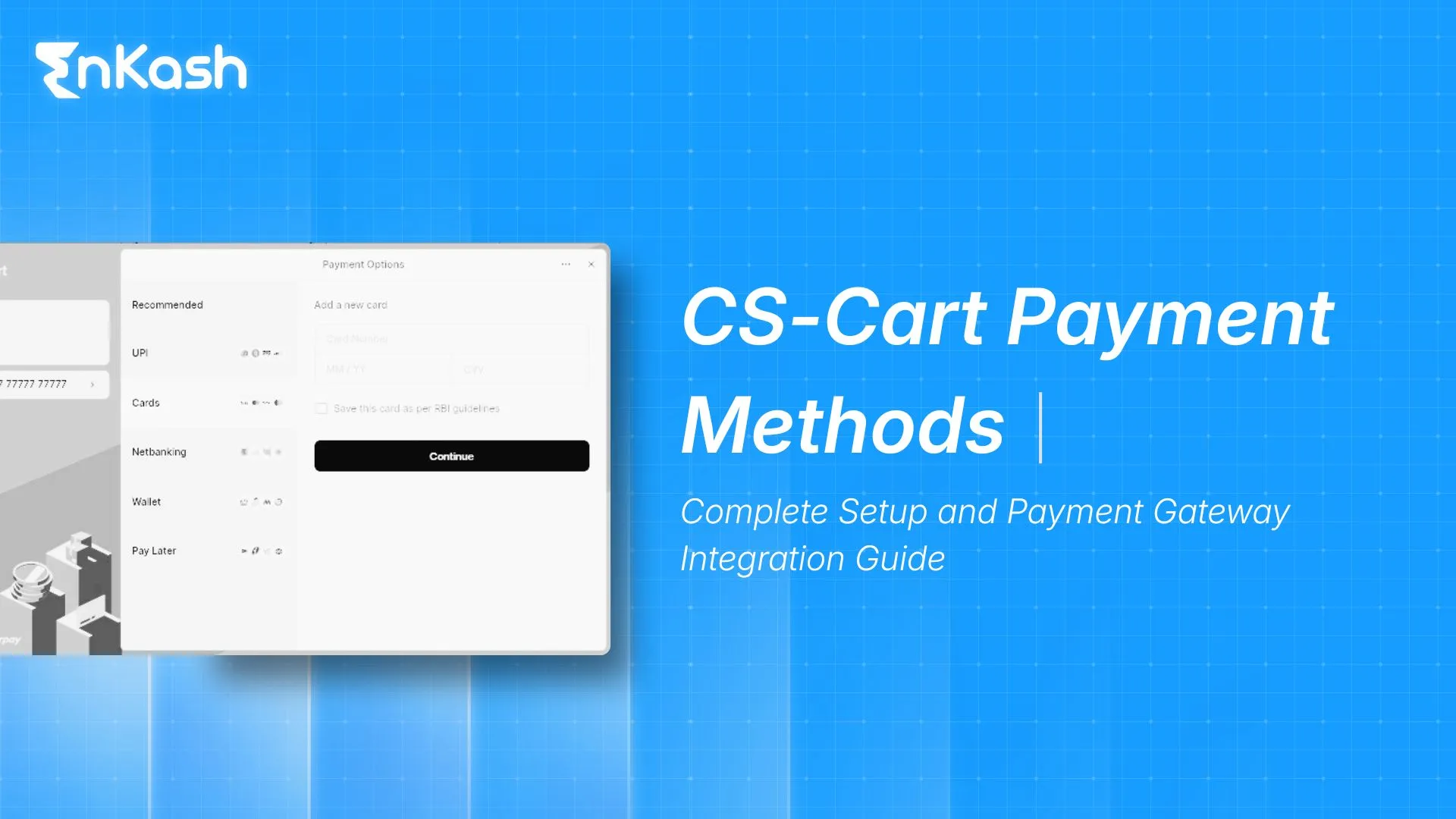
For Indian eCommerce brands, the payment experience is particularly important.
A customer may want to pay through UPI, credit card, debit card, net banking or another method. If the preferred option is unavailable or the payment repeatedly fails, the customer may leave even after reaching the final step.
By that point, you may already have spent money bringing the shopper there.
Better checkout and payment performance can help turn more of that paid traffic into actual customers.
6. Recover Shoppers Who Were Close to Buying
Not every visitor who leaves your website has the same intent.
Someone who viewed one page for five seconds is different from someone who added a product to the cart and reached the payment page.
Focus recovery efforts on people who showed stronger buying intent.
That may include customers who:
- Viewed the same product multiple times
- Added a product to cart
- Left during checkout
- Faced a failed payment
- Asked a product question
- Viewed an out-of-stock product
- Showed interest before a price drop
Email, WhatsApp and retargeting can help bring some of these customers back.
For Indian D2C brands, WhatsApp can also become a recovery and acquisition channel when messages are triggered by customer behaviour rather than sent as broad broadcasts
Automated flows such as cart reminders and other customer-triggered messages recorded an average click-through rate of 11.1%, compared with 2.6% for broadcast campaigns.
A customer who abandoned checkout should receive a different message from someone waiting for a product to come back in stock. The customer's behaviour should determine the message and timing.
7. Build Organic Product Discovery Beyond Blog SEO
Paid advertising usually requires more money when you want more traffic.
Organic acquisition works differently. Once strong organic pages and product feeds gain visibility, they can continue attracting shoppers without a direct media charge for each click, although creating and maintaining that visibility still carries a cost.
For an eCommerce store, organic search should go beyond publishing blogs.
Work on:
- Product-page SEO
- Category pages
- Buying guides
- Product comparisons
- Detailed product attributes
- Descriptive product titles
- Strong product images
- Customer reviews
- Accurate prices
- Stock availability
- Merchant Center feeds
- Structured product data
Eligible products submitted through Merchant Center may appear in free listings across Google Search, Shopping, Images, Lens, YouTube, Maps and Geminii.
Product discovery is also expanding into AI-powered search experiences.
In July 2026, Google announced AI Performance Insights for Merchant Center, designed to show merchants how their products perform across surfaces such as AI Mode, AI Overviews and the Gemini app as the feature rolls out.
Google and Ipsos also found that among surveyed Indian shoppers using AI Overviews and/or AI Mode for shopping, 84% said they made decisions faster and 87% said they made decisions more confidently.
Maintaining detailed and accurate product information can support eligibility and visibility across traditional search, shopping surfaces and newer AI-assisted discovery experiences.
8. Make Creator and Affiliate Marketing Easier to Measure
A creator may generate thousands of views and hundreds of comments.
That still does not tell you how many new customers the partnership created.
Instead of relying only on reach and engagement, connect creator campaigns to measurable actions where possible.
You can use:
- Affiliate links
- Creator-specific coupon codes
- Commission per sale
- Product seeding
- Creator storefronts
- Revenue-sharing models
- Partnership ads
Then calculate:
Creator CAC = Total Creator Acquisition Cost ÷ New Customers Acquired
Compare it with the CAC from Google, Meta, affiliates, referrals and other channels.
A creator with a smaller but highly relevant audience may acquire customers more efficiently than an account with millions of followers.
Creator-led commerce is also becoming a bigger part of eCommerce in India.
Google and Deloitte expect one in three retail purchases to be influenced by creators by 2030. Creator-owned microstores and shoppable videos are expected to contribute around 9% to 11% of Indian eCommerce GMV.
Creator campaigns should therefore be measured on customer acquisition, not reach and engagement alone.
9. Use Referrals to Acquire New Customers
Existing customers are not part of new-customer CAC.
But they can help you acquire new customers.
Suppose a business spends ₹10 lakh and acquires 2,000 customers.
CAC = ₹10,00,000 ÷ 2,000 = ₹500
Those customers then refer another 500 new customers.
The business spends ₹50,000 on successful referral rewards.
Total acquisition spend becomes ₹10.5 lakh.
Total new customers become 2,500.
Blended CAC = ₹10,50,000 ÷ 2,500 = ₹420
The additional customers were acquired at a lower cost, pulling down the blended CAC.
A referral program should:
- Give customers a clear reason to refer
- Reward successful referrals
- Make referral links easy to share
- Give the referred customer a reason to place the first order
- Track referred customers separately
- Measure the margin from referred customers
- Prevent referral abuse
Rewards also do not need to be cash.
Store credit, loyalty points, free products or category-specific rewards may work better for some brands.
10. Look Beyond ROAS When Allocating Your Budget
ROAS tells you how much attributed revenue you received for the money spent on advertising.
It does not always tell you whether the campaign actually created new demand.
Take branded search.
A customer may have discovered your brand through Instagram, YouTube, a creator, organic search, a marketplace or even an offline recommendation.
Later, they search for your brand on Google and purchase.
This is an attribution problem: the channel receiving conversion credit is not necessarily the channel that created the incremental demand
Heavy retargeting can create a similar problem.
A strong ROAS therefore does not automatically mean that a channel is the best place to spend your next rupee.
Look at:
- New-customer CAC
- Marginal CAC
- New-customer revenue
- Contribution margin
- Branded and non-branded search
- First-time and returning buyers
- Incremental conversions
- CAC payback period
Where possible, test what happens when spend changes across different audiences, regions, or periods.
Then ask:
If we spend the next ₹1 lakh here, how many additional profitable new customers does the evidence suggest we can acquire?
That tells you more than ROAS alone.
What Does Not Directly Reduce CAC?
Some metrics make customer acquisition more profitable without actually reducing CAC.
AOV is a common example.
Suppose a business spends ₹5 lakh and acquires 1,000 new customers.
CAC = ₹500
Now suppose its average order value increases from ₹1,000 to ₹1,500.
If the business still spends ₹5 lakh to acquire the same 1,000 customers, CAC remains ₹500.
The business now earns more from each order, which makes the ₹500 CAC easier to afford.
This simplified example assumes the referral rewards are paid only for successfully acquired new customers and that no other incremental referral-program costs apply.
| Action | Does It Directly Reduce CAC? | What It Mainly Improves |
|---|
| Higher new-customer conversion | Yes, if acquisition spend stays similar | More customers from existing traffic |
| Lower wasted ad spend | Yes | Acquisition efficiency |
| Lower-cost referrals | Yes | New customer acquisition |
| Organic acquisition | Can lower blended CAC | Dependence on paid traffic |
| Higher AOV | No | Revenue per order |
| Better retention | No, by itself | Customer lifetime value |
| Cross-selling | No | Revenue per customer |
| Better gross margin | No | Ability to afford CAC |
A higher LTV or AOV can make an expensive CAC acceptable. It does not automatically make the CAC lower.
How Do You Know If Your eCommerce CAC Is Too High?
There is no single CAC number that every eCommerce brand should target.
A skincare brand selling a ₹700 product cannot afford the same acquisition cost as an electronics retailer selling a ₹40,000 product.
A business with strong repeat purchases may also be able to spend more to acquire a customer than a business where customers usually buy once.
Instead of comparing your CAC with one industry number, look at it alongside a few other metrics.
Contribution Margin
How much money remains after variable costs such as product cost, shipping, payment processing and returns?
Customer Lifetime Value
How much revenue, gross profit or contribution does a customer generate over the expected relationship with the business, depending on the LTV definition used?
CAC Payback Period
How long does it take for the business to recover what it spent acquiring the customer?
Repeat Purchase Rate
How many customers come back and purchase again?
Marginal CAC
Does acquiring the next group of customers cost considerably more than the earlier group?
A rising CAC deserves attention when:
- Conversion rates are falling
- Margins are getting smaller
- New-customer growth is slowing
- Repeat purchases are weak
- CAC payback periods are getting longer
- More ad spend is bringing fewer additional customers
Instead of asking:
“Is our CAC higher than the industry average?”
Ask:
“Can the customers we acquire generate enough contribution to recover their acquisition cost within a period that works for our business?”
Conclusion
Reducing eCommerce CAC is not only about finding cheaper ads.
A business may be spending too much because it is targeting existing customers, running creatives that no longer work, losing visitors on product pages, losing shoppers during checkou or depending too heavily on paid traffic.
Start by calculating CAC correctly and breaking it down by channel.
Then look at where potential customers are dropping between the ad, product page, cart, checkout and payment.
You may find that the answer is not more traffic.
It could simply be getting more customers from the traffic and acquisition spend you already have.
Frequently Asked Questions
1. What is a good CAC for eCommerce?
There is no fixed CAC that is good for every eCommerce business. It depends on product price, contribution margin, repeat purchases, customer lifetime value and how quickly the business can recover the acquisition cost.
2. How can an eCommerce business reduce CAC?
An eCommerce business can reduce CAC by cutting wasted ad spend, improving conversion rates, fixing checkout problems, recovering high-intent shoppers, improving organic discovery and acquiring new customers through lower-cost channels such as referrals and affiliates.
3. Does SEO reduce customer acquisition cost?
SEO can lower blended CAC over time when organic search brings in new customers without requiring the business to pay for every visit. Product pages, category pages, buying guides, product feeds and structured product information can all support organic acquisition.
4. Does customer retention reduce CAC?
Retention does not reduce the amount already spent to acquire a customer. It can increase customer lifetime value and help recover CAC faster. Referrals from existing customers can reduce blended CAC when they bring in new customers at a lower cost.
5. What is the difference between CAC and CPA?
CAC measures the total cost of acquiring one new customer. CPA measures the cost of generating a specific action, such as a purchase, lead or registration. A platform's CPA can therefore be lower than the business's actual CAC.
6. What is marginal CAC?
Marginal CAC shows how much it costs to acquire additional customers as acquisition spending increases. It helps identify when putting more money into a channel is becoming increasingly expensive.
7. Can improving checkout reduce CAC?
Yes. If more first-time visitors complete a purchase while acquisition spend stays similar, the business acquires more customers from the same spend. This reduces CAC.
8. Should discounts be included in CAC?
General discounts offered to all customers are usually tracked separately. New-customer offers, referral rewards or other acquisition-specific incentives should be included when evaluating the true cost of that acquisition channel.