The Rise of Prepaid Cards in Indian Business
Business spending in India has changed a lot in recent years. Companies are moving away from loose cash handling and shifting towards prepaid options that offer better control. This change is not just about convenience. It’s about having a secure, flexible, and trackable way to manage everyday expenses.
In simple terms, a prepaid card is a payment tool that carries a set amount of money loaded in advance. It does not pull funds from a bank account during each transaction. Instead, the cardholder can spend only what has been preloaded. This helps companies avoid overspending and keeps every transaction within a limit that has been planned ahead.
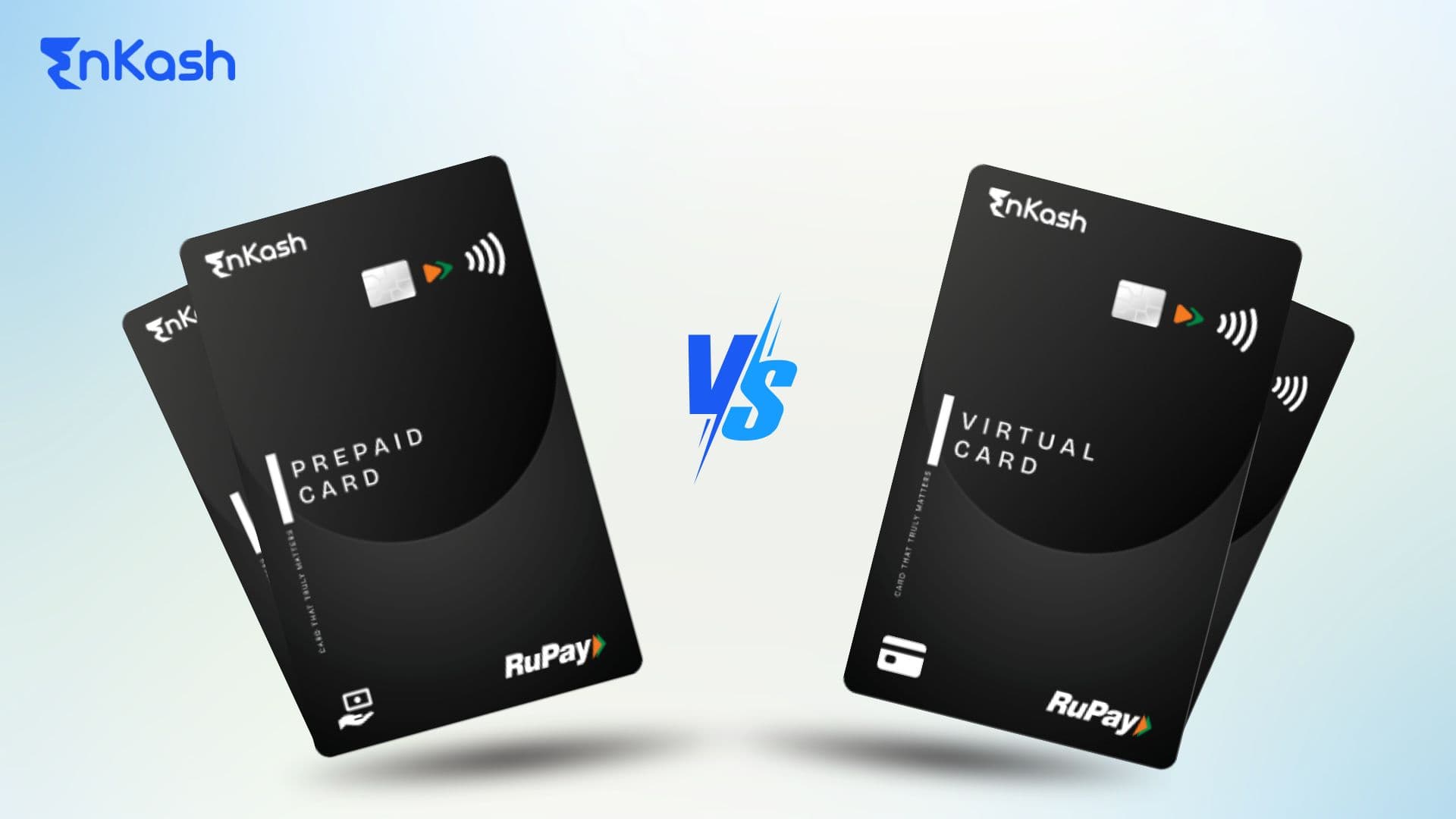
There are two main types of prepaid cards used by businesses in India today. Physical prepaid cards are plastic cards that can be swiped at stores or used at cash machines. Virtual prepaid cards exist entirely online and are used for digital payments.
Choosing between these two depends on how a business operates. A delivery company may need a card that its drivers can carry. A software firm may need digital-only tools for subscriptions. In this blog, we will break down the differences and help you decide which card suits your business better.
How Indian Businesses Use Prepaid Cards Today
Prepaid cards have become a smart choice for Indian businesses that want to manage spending better. From small startups to large companies, many firms are now using them to simplify daily payments and reduce the need for handling cash.
In most companies, expenses do not follow a single pattern. Some payments are made at local shops, while others are done online. Prepaid cards allow businesses to give teams a set budget without sharing access to the main account. For example, a manager can give a team member a card loaded with a fixed amount for travel or project-related spending. This makes the process cleaner and avoids confusion later.
The use of prepaid cards is growing across different sectors in India. Delivery firms, construction companies, service providers, and even educational groups use them. Some use physical prepaid cards for field staff who visit clients or vendors. Others prefer virtual prepaid cards for digital subscriptions, software tools, or running online ads.
There is also growing interest from finance teams who want to reduce delays and make expense tracking easier. These cards help them follow rules, keep spending in check, and save time during audits.
In India, the system around prepaid cards is also supported by clear guidelines. Providers issuing prepaid payment instruments (PPIs) must follow RBI guidelines under the Payment and Settlement Systems Act.. This ensures that each card is safe to use and meets the standards expected for business payments.
As more companies go digital, these tools are becoming essential. Prepaid cards are no longer just optional. For many, they have become a daily tool for smart and secure expense control.
Read more: How Does Expense Management Software Help Your Business?A physical prepaid card is a plastic card that holds a fixed amount of money added by the business. It works like a standard swipe card but does not connect to a bank account. This makes it a safe option for companies that want to control how their teams spend money outside the office.
These cards are often used for fieldwork, on-site duties, travel, and purchases made at stores. They are useful when digital tools are not practical or when teams need quick access to funds in hand.
Here is how physical prepaid cards work and what they offer:
Key Features- Printed plastic card with a magnetic strip or chip
- Works at stores, petrol stations, and cash machines
- Comes with a secure PIN for added safety
- Branded with the company name if required
Functions for Business Use- Helps staff pay for travel, meals, supplies, or project needs
- Allows fixed limits to prevent overspending
- Useful for team members who work outside office spaces
- Can be tracked, blocked, or reloaded by the business admin
Format and Setup- Cards are issued after completing standard verification
- Delivered to the office or directly to team members
- Can be reused or replaced as needed
- Reloaded from a central dashboard whenever funds are required
For Indian companies that manage teams in the field or locations with poor network access, these cards give control and flexibility. They bring order to spending, reduce paperwork, and help businesses manage costs without delay.
Virtual Prepaid Cards: Features, Benefits, and Workflow
A virtual prepaid card is a digital version of a payment card. It exists only online and is used for electronic transactions. There is no plastic. No delivery is required. The card details are shared by email or accessed through a secure business platform.
Indian companies are now using virtual cards for tasks that happen fully online. These may include paying for software tools, running advertising campaigns, or settling vendor invoices. The process is quick and leaves no room for confusion.
Here is a closer look at what these cards offer:
Key Features- Digital card number with an expiry date and a security code
- Issued instantly through a company dashboard
- Linked to a fixed balance that the business loads in advance
- Works on websites, mobile apps, and digital payment platforms
Benefits for Business Use- No waiting time or shipping delays
- Best suited for remote teams and online operations
- Easy to issue in bulk for different departments
- Can be blocked or paused in seconds if needed
Workflow and Usage- Cards are generated once the business account is verified
- Used by sharing card details with a trusted employee or vendor
- Valid for a set number of transactions or a specific period
- Can be assigned to a project, client, or campaign for better tracking
These cards help Indian businesses move faster. Every card can be tracked, limited, or withdrawn without paperwork. There is no risk of losing a card because nothing physical exists. For teams that work online or across cities, virtual prepaid cards offer a clean and efficient way to manage spending.
Cost Breakdown: Physical vs Virtual Prepaid Cards
Before choosing between physical prepaid cards and virtual prepaid cards, it helps to understand the cost differences. Each type has its own setup, handling, and usage-related charges. For Indian businesses that manage multiple teams and budgets, knowing these details can help prevent hidden expenses later.
The costs linked to these cards depend on the provider, the number of cards issued, and how frequently they are used. Below is a breakdown of where the money goes.
Physical Prepaid Card Costs
- A printing fee is charged for each new card
- Shipping costs apply during delivery to office or employee location
- If a card is lost or damaged, re-issuance adds to the total spend
- Reloading may carry a fixed or percentage-based fee
- Some providers charge monthly or yearly maintenance
Virtual Prepaid Card Costs
- No printing or delivery charges since the card is digital
- Instant issuance means no courier or handling delays
- Most platforms allow free creation of cards within limits
- Reloading is usually low-cost or free, depending on usage
- No replacement fee, since cards are cancelled and re-issued digitally
Additional Factors to Consider
- Bulk issuance of virtual cards is more cost-friendly than physical
- Admin effort is lower with virtual cards, as there is no paperwork
- Blocking a physical card takes longer than blocking a virtual one
- Tracking spend across hundreds of cards is easier on digital dashboards
Each business should weigh these points based on how many cards are needed, how they will be used, and how often they need to be recharged. Choosing the right card type based on cost can help manage company spending without cutting corners on control.
Read More: The Digital Journey of Cards from Plastic to PlatformsRisk and Security: Physical vs Virtual Cards
Security is a key concern for any business that issues payment cards. Whether the card is used by a delivery agent or a digital marketing team, the risk of misuse must be controlled. Both physical prepaid cards and virtual prepaid cards come with their own set of strengths and challenges when it comes to safety.
Understanding how each type manages risk can help business owners make smarter decisions.
Physical Prepaid Card Risks
- If a card is lost or stolen, it may be misused before the business can block it
- Some users may share their PIN with others, which increases the chance of fraud
- Delays in reporting loss can lead to untracked spending
- Cards can be physically damaged or worn out over time
Virtual Prepaid Card Risks
- If the card details are shared through insecure methods, they may be copied
- Phishing emails or unsafe websites can trick users into sharing card numbers
- A weak password for the platform can expose all virtual cards issued from it
- Linking a card to the wrong service or account may lead to data leaks
Built-in Safety Features to Control Risk
- Both card types allow spending limits to be set by the business
- Instant blocking is available in most platforms for both physical and virtual cards
- Some platforms let businesses lock cards to specific merchants or categories
- Notifications for every transaction help finance teams track issues early
Choosing between these two types is not just about how the card looks or feels. It is also about how quickly risks can be managed, and how clearly the spending trail can be followed. A good choice balances speed, control, and safety for everyone involved.
Physical Cards: When They Work Better for Indian Businesses
Some businesses in India depend on people working outside the office. These may include staff in transport, logistics, site operations, or door-to-door services. For such teams, physical prepaid cards are easier to use and manage. They are simple, reliable, and do not depend on mobile apps or digital wallets.
This section explains when physical cards are a better fit for business needs.
Situations Where Physical Cards Make Sense
- Teams that need to pay for fuel, parking, tolls, or daily allowances
- Employees who travel by road and may not have stable internet access
- Purchases made in shops that do not accept digital payments
- Staff who are not used to using mobile apps or digital platforms
Benefits That Support Offline Work
- The card is always with the user, ready to swipe or insert at a machine
- It works at any point of sale or cash machine that accepts card payments
- Businesses can add their brand to the card for a professional appearance
- Employees feel confident using a card they can hold and understand easily
Control Still Stays with the Business
- Each card has a limit that is decided by the finance team
- If the card is lost, it can be blocked before any major loss happens
- Spending reports show exactly when and where the card was used
- Replacement cards can be sent to field staff without any technical setup
For on-ground operations, physical prepaid cards offer a familiar and direct way to manage spending. They help businesses stay organised while giving staff a simple payment tool that works wherever they go.
Virtual Cards: When They’re the Smarter Option
Some business tasks happen fully online. In such cases, virtual prepaid cards can make things quicker and easier. These cards are created digitally and can be used right away. There is no need to wait for a physical card to arrive. The card number, expiry date, and code are shared instantly with the person who needs to use it.
Indian businesses working in digital spaces are finding strong value in these cards.
Ideal Use Cases for Virtual Cards
- Paying for software tools or online platforms
- Running digital ads across search or social channels
- Settling invoices for freelance or remote workers
- Assigning budget limits for departments or projects
Benefits That Support Digital Operations
- Cards can be created in a few clicks and shared immediately
- No shipping or printing delays, which saves time and effort
- Each card can be locked to one vendor, reducing the risk of misuse
- Cards can be instantaneously blocked, replaced, or deleted while maintaining compliance with governance protocols.
Best Fit for Certain Business Types
- Startups that work across cities or operate fully online
- Agencies that manage paid campaigns and use subscription tools
- Finance teams that prefer faster approvals and paperless workflows
- Companies looking to reduce plastic and move to digital systems
Virtual prepaid cards are useful when your business works across screens, apps, and cloud platforms. These cards support fast spending decisions without sacrificing control. Every payment can be tracked, and every card can be limited to a purpose. For modern teams, this makes virtual cards a practical and flexible choice.
Read more: What Are Digital Payment Solutions? Everything You Need to KnowHow to Decide: Business-Use Checklist for Choosing Right
Choosing between physical prepaid cards and virtual prepaid cards is not always easy. Each format has its place, but the best choice depends on how your business operates. Before you pick a card type, it helps to look closely at how your teams spend money and where those expenses take place.
Here is a simple checklist to guide your decision:1. Where does most of your spending happen?- If your team spends at shops, petrol pumps, or transport stops, physical cards work better.
- If payments go to online tools, ad platforms, or remote vendors, virtual cards are a smarter choice.
2. Does your team travel or work in the field?- If your staff moves from place to place or works on-site, a physical card they can carry makes sense.
- If your team works from laptops or handles projects digitally, virtual cards can be issued faster.
3. How quickly do you need cards to be active?- If you need instant access, virtual cards can be created and used in minutes.
- Physical cards need time for printing and delivery before use.
4. Are you managing many projects or departments?- Virtual cards can be created for each project or team with its own spending cap.
- Physical cards are harder to manage in large numbers unless there’s a fixed team structure.
Conclusion: Match the Card to the Context
Both physical prepaid cards and virtual prepaid cards can support business spending in a secure and structured way. The right choice depends on how your teams work, where expenses happen, and how quickly control is needed. Physical cards fit well in field-based setups. Virtual cards are ideal for fast, digital-first operations. Some businesses use both and benefit from the balance. What matters most is that each card serves a clear purpose. When tools match real needs, finance becomes easier, faster, and more reliable for everyone involved.
FAQs
1. Can prepaid cards be used internationally?Yes, both physical prepaid cards and virtual prepaid cards can be used for international transactions if the provider supports global usage. Always check currency conversion charges and limits before enabling cross-border spending.
2. Do prepaid cards help with GST tracking?Prepaid card records support expense matching, but GST credits depend on valid tax invoices, not just card usage data. Virtual cards used for digital tools or ads also help match vendor details for input credit claims.
3. Is it safe to link virtual prepaid cards with subscription services?Yes, virtual prepaid cards are safe for subscriptions. They allow you to set limits and expiry dates, which helps prevent unwanted renewals or hidden charges from unknown service providers.
4. Can virtual prepaid cards be used on Indian e-commerce platforms?Yes, most virtual prepaid cards work on major Indian e-commerce sites. They are accepted as long as the platform supports card payments with CVV and expiry date entry.
5. What happens when the balance on a prepaid card runs out?Once the funds on a prepaid card are used, transactions will be declined. You can reload the card manually or set auto-recharge rules through the provider’s dashboard if allowed.
6. Are prepaid cards useful for employee incentives?Yes, physical prepaid cards can be loaded with reward amounts and handed out as branded incentives. This avoids giving cash and adds a professional touch to employee recognition programs.
7. Can prepaid cards be linked to accounting software?Some virtual prepaid card providers allow direct integration with accounting tools. This helps auto-track spending, tag projects, and reduce manual data entry in finance reports.
8. Do prepaid cards require a credit check to issue?No, prepaid cards do not require a credit score. Since the money is loaded in advance, businesses can issue them to any team member without affecting their financial profile.
9. How many prepaid cards can a business issue?Most providers allow unlimited virtual prepaid cards and a fixed number of physical prepaid cards based on the plan. Businesses can issue cards to teams, departments, or individuals as required.
10. What happens to unused funds on a prepaid card?Unused money stays on the prepaid card until it is spent or withdrawn. Some providers may charge inactivity fees, so it’s better to monitor and use the balance regularly.