Online shopping has witnessed a remarkable growth over the years which means customers are choosing digital shopping over store visits. The rise in internet penetration, smartphone adoption and evolution of digital payments are the driving force behind this growth. According to Baymard Institute, India's e-commerce market is projected to reach nearly US$300 billion by 2030.
However, an increase in website traffic does not necessarily mean more sales. Stats from Baymard Institute says an average of 70.19% of shopping carts are abandoned before purchase which means 7 out of 10 online shoppers add products to their cart but never purchase them.
This means businesses are losing their revenue as shoppers are abandoning their carts. The reason behind cart abandonment could be due to preventable checkout issues like payment failures, lengthy checkout processes, unexpected costs or limited options to pay.
Let us explore the functioning of checkout pages, their impact on sales and how businesses can optimize their checkout page payment experience to turn visitors into customers.
What is a Checkout Page?
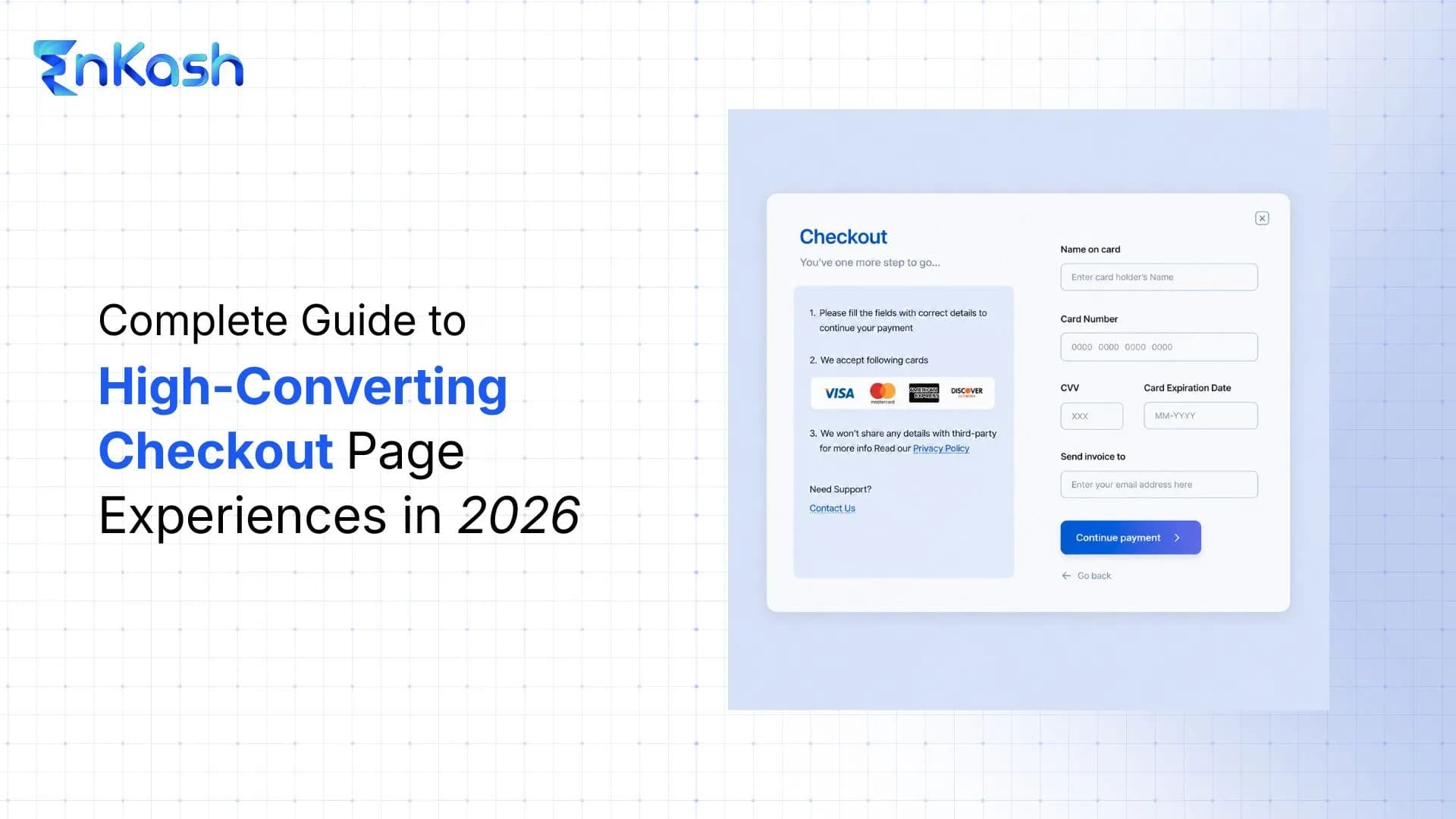
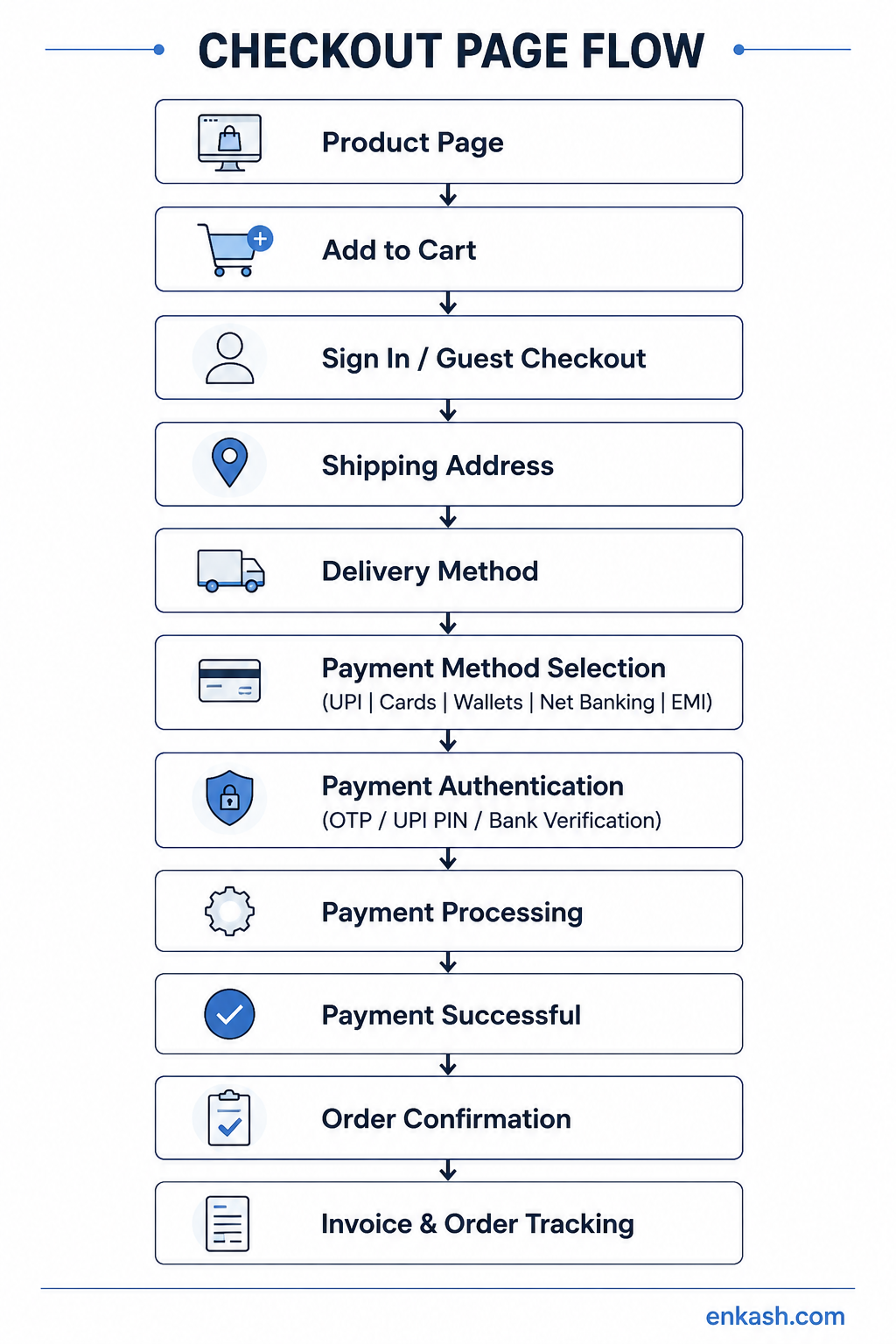
A checkout page is the final online screen where customers enter their shipping details, billing information, and payment method to complete a purchase.
A checkout page includes:
Shipping Details: Here customers enter their name, delivery address, and contact information for order delivery.
Billing Information: Customers add their billing details, which could be the same or different from their provided shipping address.
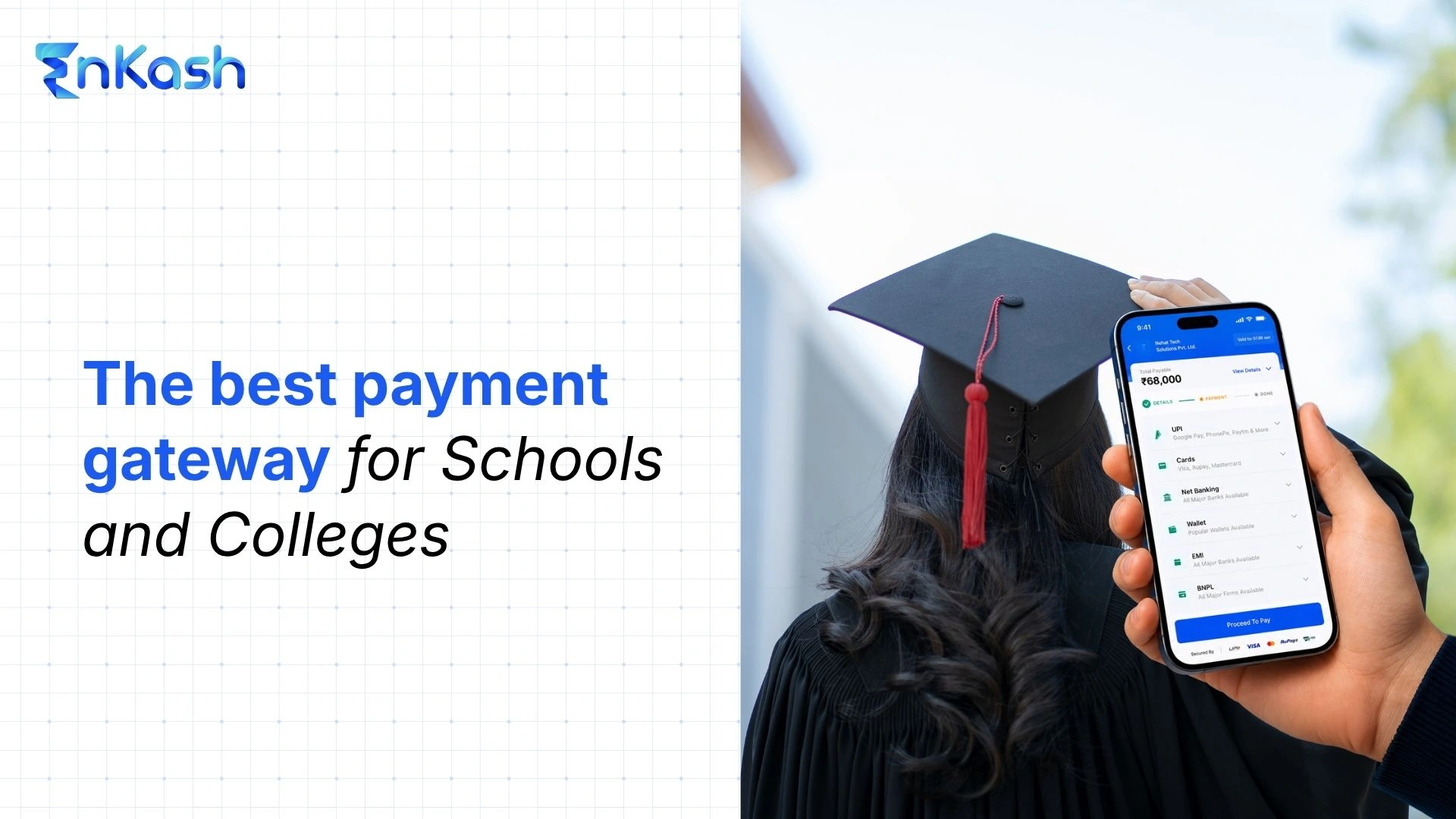
Payment Methods: Customers can choose their preferred payment option from multiple options available like UPI, credit or debit cards, net banking, wallets, EMI, or Buy Now Pay Later (BNPL).
Payment Processing: After the payment is made, the payment gateway processes the transaction by verifying the payment details, communicating with the customer's bank, and authorizing the payment.
Order Confirmation: The customer is redirected to an order confirmation page displaying details like order status, payment details, and confirmation message. The business receives the order and begins processing the order for fulfillment.
What is Checkout Conversion Rate?
Checkout conversion rate is a metric to measure the number of shoppers who complete the purchase after starting the checkout process. It is calculated using completed orders, measured against initiated checkouts..
Checkout Conversion Rate Formula = Complete Purchase ÷ Check Sessions x 100
Example:
100 people reached checkout, 65 completed payment
Checkout conversion rate = 65%
Why Checkout Conversion Rate Matters
If a customer has reached your website’s checkout page it means there is an intent to purchase the product. From this stage onwards, the real struggle begins when you want the customer to complete the purchase on the checkout page.
This is the moment when checkout conversion rate becomes an important metric for businesses. Even a small crack in your checkout experience can lead to customers leaving the purchase without checking out.
An ideal checkout page:
Reduces Cart Abandonment
A great checkout experience includes smooth movement through and through which means no unnecessary form filling, no unexpected costs and a few payment options. Customers will be able to make a purchase when their overall experience will be seamless.
Increases Revenue
Merchants have to spend a great deal on ads and marketing campaigns to acquire new customers. If only they improve their checkout experience, there are high chances that their sales will go up.
Enhances Customer Experience
Customers expect a checkout process that is fast and easy to go through. Features like autofill, multiple payment methods, guest checkout, and customer friendly design makes the purchase journey smooth and leaves customers satisfied.
Establishes Customer Trust
Customers share their personal and payment details on the checkout page. This means a secure checkout with a payment gateway that works on SSL encryption assures customers that their data is safe which makes them confident about their purchase.
Increases Customer Retention
A smooth checkout process increases the chances of customers returning to the website. A good experience always stays and that’s what makes them come back for a purchase again increasing customer loyalty and lifetime value.
Why Customers Abandon Checkout?
Reason | Impact |
Forced account creation | Adds friction |
Unnecessary long checkout forms | Time-consuming |
Hidden shipping charges | Loss of trust |
Limited payment methods | Customer leaves |
Slow loading pages | Frustration |
Payment failures | Purchase abandoned |
Poor mobile experience | Lower conversions |
Security concerns | Reduced trust |
What is a High-Converting Checkout Page?
A high-converting checkout page is designed to help customers complete their purchase with least effort. It removes unnecessary steps, offers trusted payment options, and creates a seamless payment experience that reduces abandonment and increases successful transactions.
Instead of making customers think, a high-converting checkout guides them effortlessly from cart to confirmation.
10 Elements of a High-Converting Checkout Page
1. No forced checkout
Customers lose interest when they have to add their details on every checkout page just to buy a simple product. This is a forced effort and not all customers are ready to take this pain.
Asking customers silly questions in the form should be the last thing to do on your business website. Only ask what is absolutely necessary.
3. Offers Multiple Payment Methods
Customers must have the flexibility to pay using their choice of payment method:
- UPI
- Debit/Credit Cards
- Net Banking
- Wallets
- EMI
- BNPL
- Payment Links
4. Has A User-Friendly Design
Ecommerce traffic depends on a user-friendly design and mobile devices work best for them. A single page checkout and multi page checkout can also make a huge difference in customer experience.
5. Maximum Loading Speed
Whenever a customer has to wait, the chances of cart abandonment increases. A slow checkout makes it difficult for the customer to stay back.
6. Displays Transparent Pricing
Every detail related to the product like tax, delivery amount, convenience fee and total amount must be visible to the customer.
7. Has Security Indicators
The website must have a secure and trusted payment gateway which is PCI-DSS compliant to ensure customer data is safe.
8. Includes Express Payments
A high converting checkout page must have features like one-click checkout, UPI payment and saved cards. This is the easiest trick to bring customers back.
9. Showcases Progress Indicator
The progression on the checkout page must be smooth and visible like from moving to cart to shipping to payment and purchase completion.
10. Shows Smart Error Messages
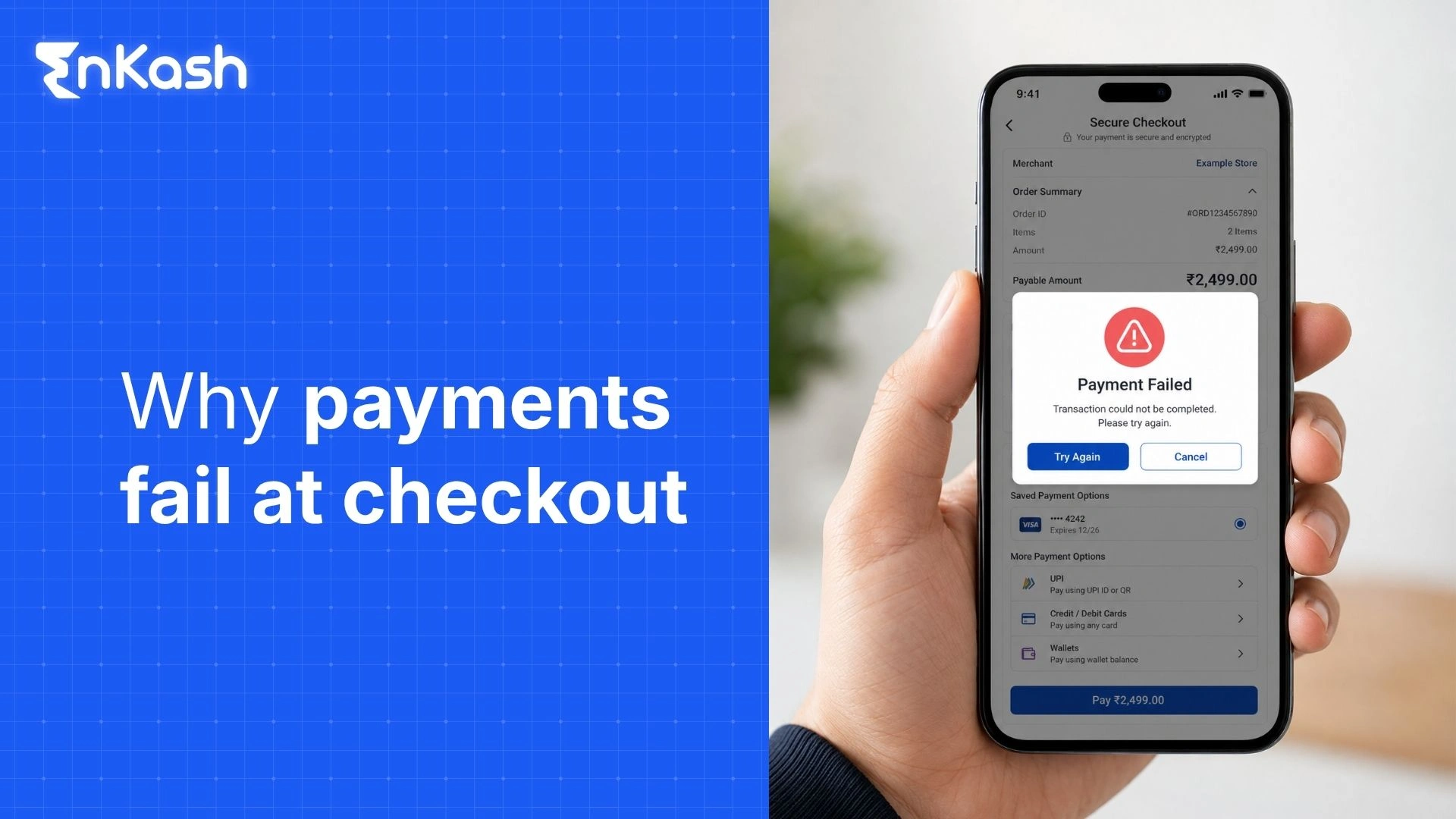
Tell your customers clearly why their transaction has failed or what error has occurred that led to payment failure. This helps them get clarity and they trust your platform more.
5 Ways to Optimize Checkout Page
Merchants must optimize their checkout page to reduce cart abandonment and increase their sales. These are the 5 ways which can help them for their checkout page:
Payment Methods Optimization
Ensure your checkout page has maximum payment methods including UPI, net banking, debit and credit cards, wallets, BNPL and express checkout.
Establish Trust With Security & Transparency
Display all security badges and certificates on your checkout page to give confidence to your customers that you are RBI compliant and sharing financial information with your website is safe.
Mobile Checkout Optimization
If you are a mobile first business, ensure your checkout is optimised for a mobile user with less fields to fill in the checkout page to a user friendly interface and a smart autofill option.
Advanced Checkout
Provide guest checkout to the user along with the real-time inventory and estimated delivery date to set the momentum right with the customers.
After Checkout Experience Optimization
Enable instant settlement for merchants to minimize cash flow friction and allow automated reconciliation along with smart retry logic to recover failed transactions.
How Checkout Affects Your Payment Gateway
Checkout experience starts before the customer reaches the payment gateway. If it’s slow, confusing or has an incorrect flow, customers may abandon the purchase. All this happens before the payment gateway processes the transaction.
However, if the checkout process is smooth but the payment page has failures, bad routing or limited payment options, the payment gateway takes the blame.
This means a checkout page and payment gateway cannot work in silos. They need to work together for business conversions.
How EnKash Payment Gateway Helps Improve Checkout Conversions
EnKash Payment Gateway is designed to eliminate friction points like payment failures, limited payment options and slow checkout. This enables businesses to increase their checkout conversions with a smooth payment experience.
100+ Payment Methods
EnKash supports over 100+ payment methods, including UPI, credit and debit cards, net banking, wallets, EMI, BNPL, payment links, and QR payments, ensuring customers can choose the payment method as per their convenience. The more payment choices a customer has, the chances of them abandoning the page goes down.
Improves Payment Success Rates
Checkout abandonment happens majorly because of payment failures. EnKash’s smart routing helps with payment success by redirecting transactions to reliable routes reducing payment failures.
Quick Checkout Experience
Payment must be completed within seconds. EnKash helps with fast transaction processing and smooth payment flow facilitating customer purchase.
Customizable Checkout Experience
A customizable checkout experience allows businesses to align the payment experience with their brand while keeping the payment journey same and conversion-based.
Industry Compliant Security
EnKash is certified with PCI DSS level 1 compliance when it comes to security standards. The data is end-to-end encrypted with 256-bit SSL encryption and sensitive data is replaced with secure tokens.
Quick and Easy Integration
EnKash payment gateway provides easy integration via APIs, SDKs, and ecommerce plugins. Merchants can go live with their products without tiring implementation cycles.
Payment Insights
EnKash payment gateway has a centralized dashboard where businesses can check payment insights and transaction analytics allowing them to check performance, look for drop-off points, and optimize their checkout for best experience.
Conclusion
A customer's journey is complete when the payment is successful. That's why the checkout page is one of the most important touchpoints in the purchase experience.A high-converting checkout page eliminates unnecessary friction, has multiple payment options, is data secure, and facilitates customers to complete their purchase. A successful checkout page is about delivering a seamless customer experience.
FAQs
1. What is a good checkout conversion rate?
The conversion rates differ based on the industry, however, according to Mid app checkout, 35% checkout conversion rate is considered good.
2. How is cart abandonment different from checkout abandonment?
Cart abandonment happens when customers add products to their shopping cart but do not complete their purchase.
Checkout abandonment happens when customers start the checkout process but leaves it midway before completing the payment.
3. Why do customers abandon the checkout page?
Customers abandon the checkout page because of these reasons:
- Hidden shipping or additional charges
- Forced account creation
- Long checkout forms
- Limited payment options
- Payment failures
- Slow-loading pages
- Payment security concerns
4. How can businesses improve checkout conversion rates?
Businesses can improve their checkout conversions by:
- Asking only for necessary data
- Providing multiple payment methods
- Optimizing their checkout for mobile
- Providing transparent pricing
- Using a secure and reliable payment gateway
- Improving their website page loading speed
5. How is payment gateway related to checkout conversions?
A payment gateway is directly related to payment experience. With a high payment success rate, multiple payment options availability, faster transaction processing, and secure payment infrastructure, customers are more likely to complete their purchases. All these are a part of a good payment gateway.
6. Which payment methods should a checkout support?
A checkout must support popular payment methods like:
- UPI
- Credit and Debit Cards
- Net Banking
- Digital Wallets
- EMI
- Buy Now, Pay Later
- QR Based Payments
7. How EnKash Payment Gateway helps improve checkout conversions?
EnKash Payment Gateway offers 100+ payment methods, smart payment routing, high payment success rates, customizable checkout options, fast integrations, enterprise-grade security, and real-time payment analytics. Together, these features help reduce payment failures, improve customer trust, and increase successful transactions.