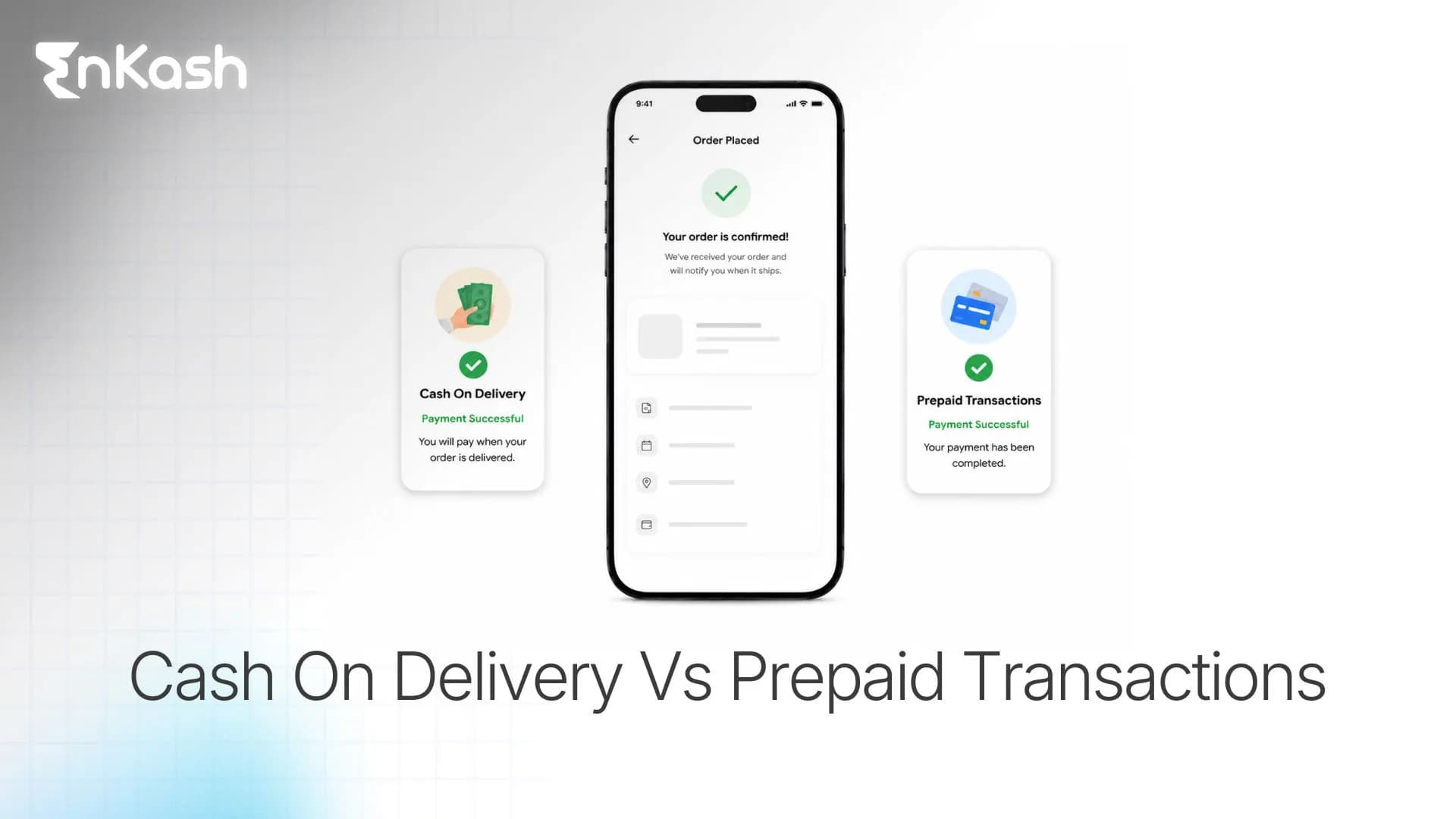
Digital payments have shifted the way ecommerce collects payments. However, Cash on Delivery (COD) still remains relevant for a large segment of buyers especially first-time buyers and Tier 2 and Tier 3 customers.
Payment methods like UPI, net banking, wallet, EMI directly influences business metrics like conversion rates, Return-to-Origin (RTO), working capital and profitability. COD encourages first time customers to make a purchase, prepaid instruments enable merchants to reduce their logistic costs and improve their cash flow.
We have compared Cash on Delivery and Prepaid Payment methods in this blog for merchants to know which payment method will be beneficial to them according to their business goals.
What is Cash on Delivery (COD)?
Cash on Delivery or COD is one of the payment methods a merchant uses to collect money from its customers. The product is handed over to the customer and then cash is paid on the spot to the delivery partner and that’s when the purchase is complete.
COD gives a sense of security and transparency to the customer as they get the product right in front of them and then pay for it like they would have done in an offline setup. In this case, they use a website to place an order, get it delivered at their doorstep and then pay for it.
How does COD Works
Customers visit the website and scroll through the products.
Find their suitable product and place an order while selecting COD as their mode of payment.
The merchant confirms the order and ships it with the help of their delivery partner.
Delivery partner reaches at the customer’s provided address and hands over the product.
The customer receives the product and pays cash or makes a digital transfer to the partner.
The collected amount is settled with the merchant.
Why Customers Choose COD?
First-time online shoppers are often hesitant to pay before receiving their order. For them, Cash on Delivery (COD) offers a sense of security and builds confidence for an unfamiliar brand. Once that trust is established through a positive shopping experience, many customers naturally transition to prepaid payment methods for the convenience and speed they offer.
Trust Issues: While purchasing from a new brand, customers often choose COD as their payment mode.This saves them from any kind of fraud or non-shipment of product.
Product Inspection: Customers can physically inspect their product before paying for it if they choose COD to make payment. This means they can choose not to pay for the product if not satisfied with it or it comes in an unacceptable condition.
No Access to Online Payment: Customers who are not tech savvy and more convenient dealing in cash choose Cash on Delivery as they believe online payment is not their way to make a purchase.
Online Fraud Risk: Cash on Delivery saves customers from the perceived notion of online fraud risk. Customers fear their payment details will be compromised if they use it on ecommerce websites to purchase products.
What are Prepaid Transactions?
Prepaid transactions mean when customers make an upfront payment for an online purchase using one of the prepaid payment methods.
Only after the payment is successful, the merchant fulfills the order. Modern payment gateways offer multiple payment methods making checkout fast and convenient.
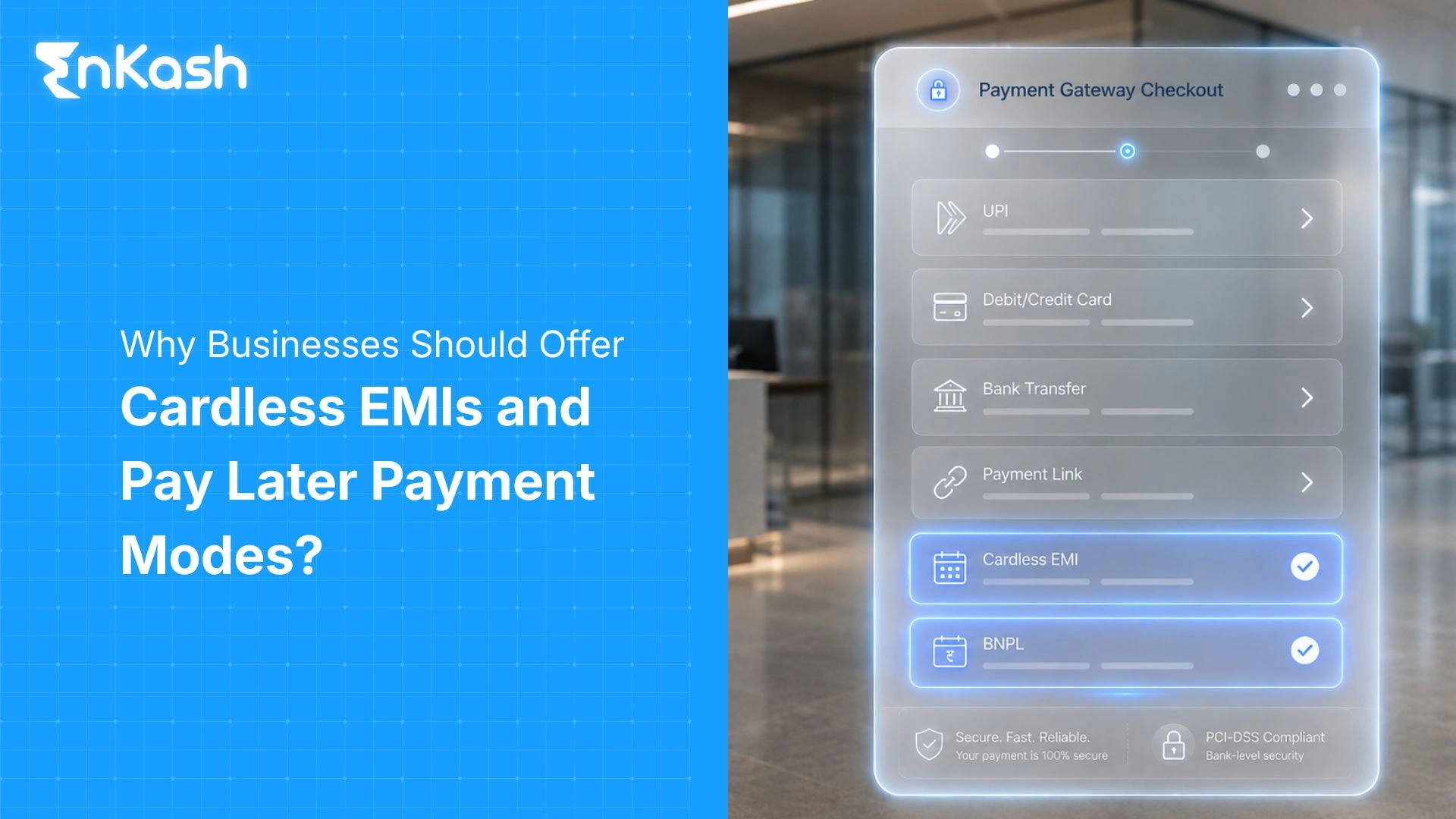
Modern payment gateways offer multiple prepaid payment options, making checkout fast and convenient.
Common Prepaid Payment Methods
UPI
Credit Cards
Debit Cards
Net Banking
Digital Wallets
Buy Now Pay Later (BNPL)
EMI Payments
Cash on Delivery vs Prepaid Transactions: A Quick Comparison
Basis | Cash on Delivery | Prepaid |
When to pay | At the time of delivery | Before order confirmation |
Order confirmation | Slower | Instant |
Cash flow | Delayed | Immediate |
Return rate | Higher | Lower |
RTO risk | High | Low |
Operational cost | Higher | Lower |
Customer Trust | Good for first-time buyers | Better for repeat customers |
Fraud risk | Fake orders | Payment fraud (manageable) |
Checkout experience | Simple | Faster with saved payments |
Profitability | Lower | Higher |
Benefits of Cash on Delivery
Cash on Delivery (COD) is an ideal payment option for shoppers who prefer to pay only after their order has been delivered.
Helps Build Customer Trust
COD helps merchants establish their brand’s trust among their customers. They can give them the benefit of doubt when they start purchasing their products.
Expands Reach
COD allows merchants to expand their reach to customers who prefer to pay via cash and not restrict themselves to only those customers who use digital payments.
Higher Conversions
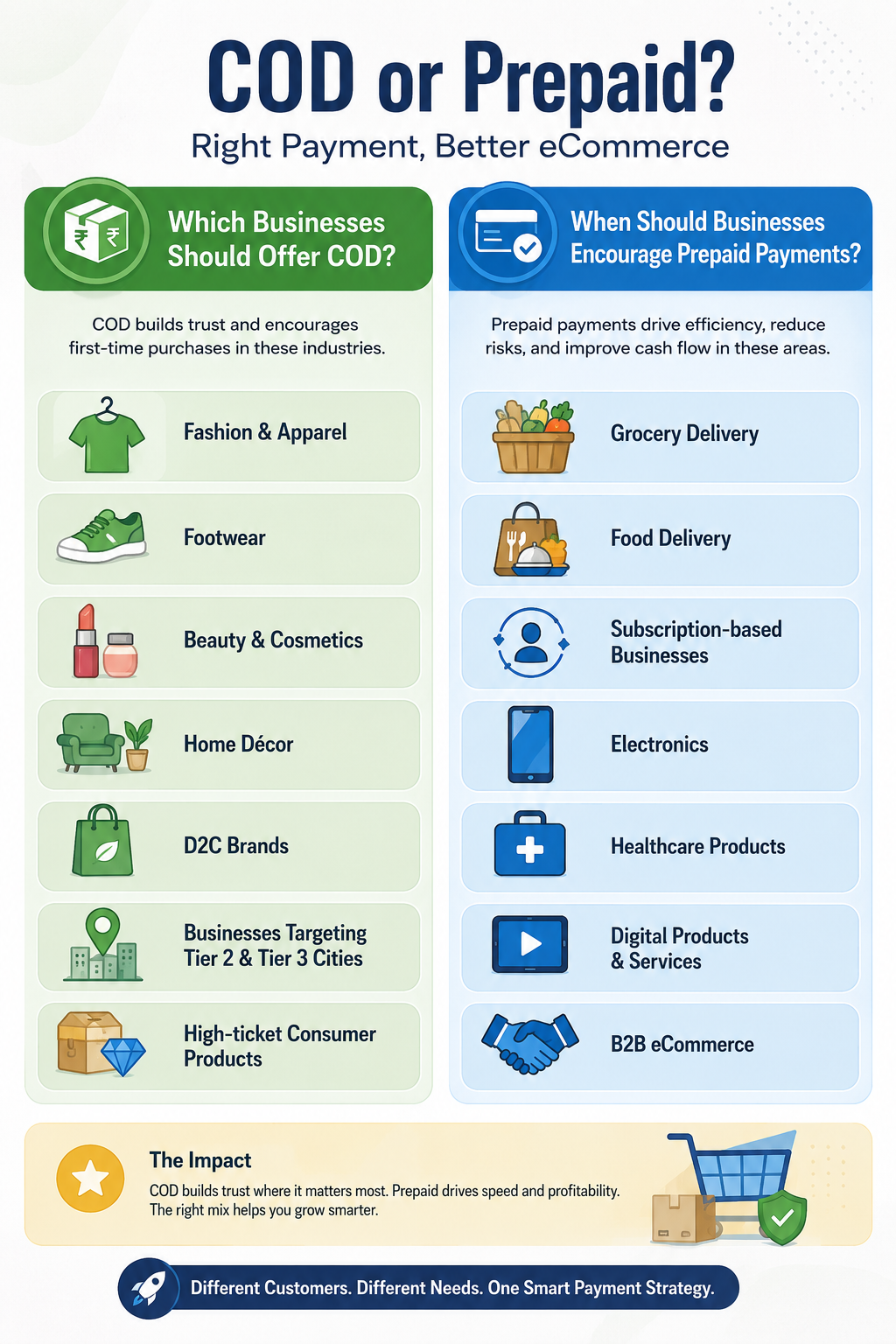
When COD is available, industries like cosmetics, fashion and footwear witness better conversions as customers prefer to see the product and then pay for it in cash.
High-End Purchases
Customers buying high-end products may feel more comfortable when choosing cash on delivery for their purchase.
Limitations of Cash on Delivery
Cash on Delivery increases logistics costs for eCommerce businesses while slowing down cash flow, putting additional pressure on working capital.
Return-to-Origin (RTO) Costs
The rate of order refusals and failed deliveries is maximum in COD. Every product return increases logistics and warehousing costs.
Order Seriousness
Merchants often get fake and non-serious orders when payments are supposed to happen post product delivery. This increases the operational costs for customers.
Cash Flow Delay
Customers pay cash only after they have received the product as expected. This affects working capital and cash flow for merchants.
Rise in Operational Expenses
COD has an additional cost that merchants have to pay like cash handling, courier charges, reverse logistics and payment reconciliation.
Benefits of Prepaid Transactions
Prepaid transactions are quick, safe and convenient, enabling businesses to receive payments instantly while offering customers a seamless checkout experience.
Order Processing
Merchants can process and dispatch orders faster with instant payment confirmation which is often due to prepaid transactions.
Better Cash Flow
Prepaid transactions enable merchants to receive funds upfront which helps them improve their liquidity and update their inventory.
Less Return Chances
Customers who pay in advance are less likely to return their products which is not the case in cash on delivery orders.
Improved Customer Experience
Modern payment gateways reduce friction with one-click checkout, saved payment methods, UPI Intent, QR payments and instant payment confirmations.
Less Operational Costs
Merchants can bring down their logistics expenses with prepaid transactions as there is no cash handling and reconciliation is also easy.
Faster Refunds
Merchants can process refunds quickly and directly to the customer’s original payment method when the product has been paid for digitally.
Limitations of Prepaid Payments
Prepaid payments rely on digital payment infrastructure. When technical issues or payment failures occur, businesses risk losing revenue and potential customers.
Payment Failures
A failed payment can lead to cart abandonment instantly and a sale could be lost.
Trust Issues
Customers may hesitate to pay before getting their order which never allows them to trust the brand.
Payment Gateway Downtime
The prepaid payment experience depends on the payment gateway’s technical infrastructure. If it breaks down at any point and time, customer experience can go for a toss.
Refund Expectations
Delay in refunds can reduce customer satisfaction and discourage them from a repeat purchase.
COD vs Prepaid: Impact on Business Metrics
Metric | COD | Prepaid |
Conversion Rate | High for new customers | High for returning customers |
RTO Rate | High | Low |
Working Capital | Slower | Faster |
Operational Costs | Higher | Lower |
Customer Lifetime Value | Moderate | Higher |
Profit Margins | Lower | Higher |
Order Processing | Slower | Faster |
Strategies to Reduce COD Dependency
Merchants can optimize their payment strategies to make their customers choose prepaid payments over COD.
Exclusive Prepaid Discounts
Offer small discounts or cashback offers for prepaid orders to motivate customers to pay online.
Promise Faster Delivery
Prioritize prepaid orders by offering quicker dispatch and delivery timelines.
Multiple Payment Options
Provide customers with multiple payment options like UPI, cards, wallets, BNPL, net banking, and EMI for customers to pay using their preferred method.
Improve Payment Success Rates
Optimize checkout with intelligent payment routing, retry mechanisms, and reliable payment infrastructure to minimize payment failures.
Simplify Checkout
The number of checkout steps must be reduced to avoid friction and features like saved cards and one-click checkout must be there to improve conversion rates.
Customer Trust
Showcase customer reviews, mention transparent return policies and easy refund processes to reassure customers. This will help gain customer’s trust.
How a Modern Payment Gateway Helps Increase Prepaid Transactions
A reliable payment gateway can enhance overall checkout experience and reduce payment friction.
Key capabilities of a payment gateway include:
100+ payment methods including UPI, cards, net banking, wallets, EMI, and BNPL
Intelligent routing to improve transaction success rates
One-click checkout for faster repeat purchases
QR-based payments
Real-time payment analytics
PCI DSS compliant and fraud detection
By reducing payment failures and simplifying the payment journey, modern payment gateways help businesses increase prepaid adoption, improve conversion rates, and maximize revenue.
Conclusion
COD and prepaid transactions both have different purposes to serve in the ecommerce ecosystem. COD helps build trust for first time customers, but it also brings higher operational costs, delays cash flow and increases RTO risks. Prepaid transactions offer faster payments, lower RTO risk and helps maintain cash flow.
It is vital for ecommerce businesses to follow the right strategy for payment mode based on their customer base, product category and business goals.
FAQs
Is Cash on Delivery still popular in India?
Yes, COD still remains a widely popular payment method especially among first-time customers.
Why do prepaid orders have lower RTO?
Customers pay upfront for prepaid orders and are less likely to return their orders.
Should every eCommerce business offer COD?
Not necessarily. The decision depends on factors such as the target audience, product category, average order value, and profitability. Many businesses use a hybrid approach by offering both COD and prepaid options.
How can businesses encourage prepaid payments?
Merchants can offer discounts, faster delivery, multiple payment options and a smooth checkout experience to encourage prepaid payments.
Does prepaid improve profitability?
Yes. Prepaid transactions reduce logistics costs, lower RTO rates, improve cash flow, and simplify operations, all of which contribute to higher profitability.
Which payment method is most preferred for prepaid transactions?
UPI has become one of the most preferred payment methods over the years due to its convenience, speed and acceptability.