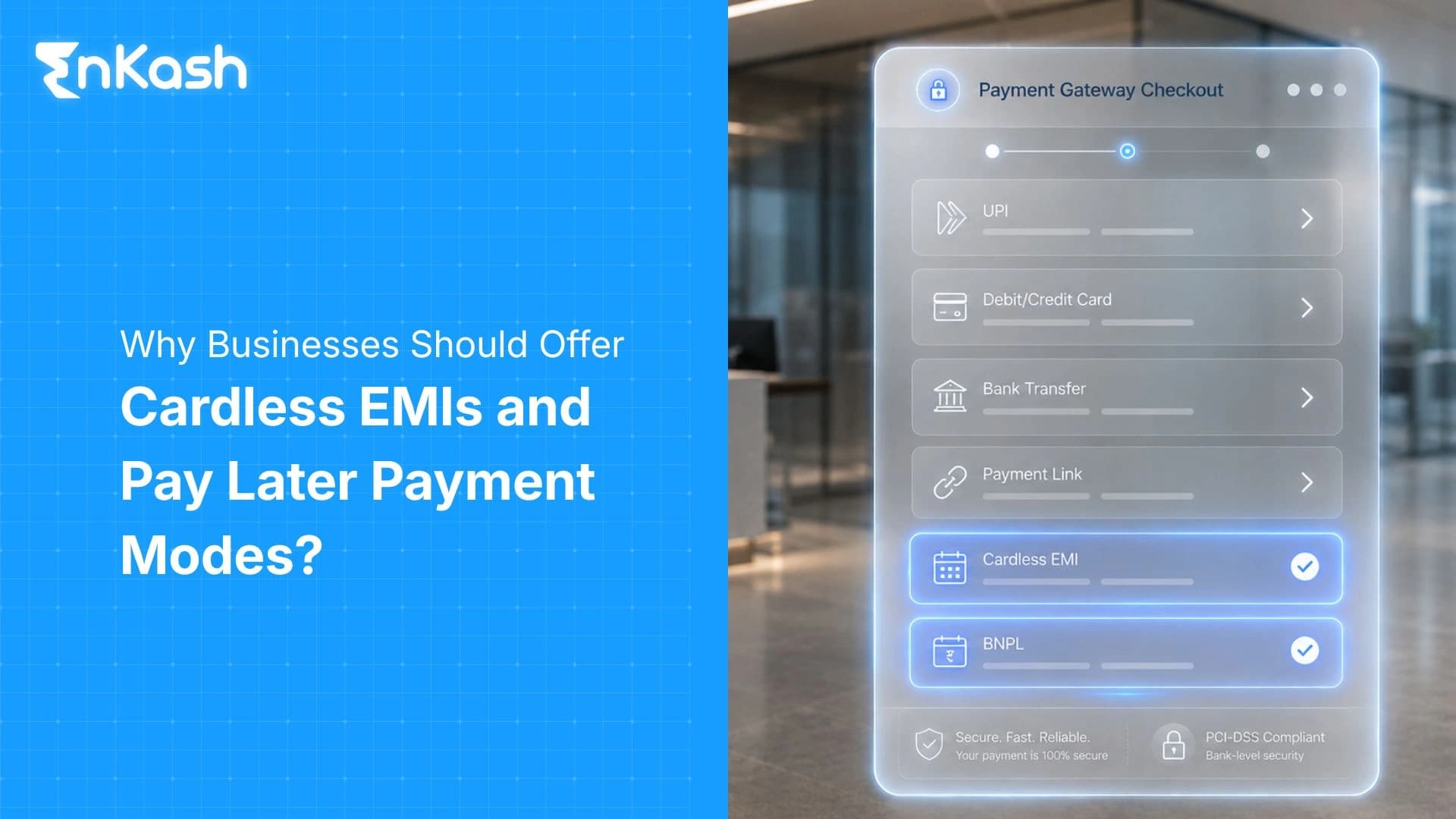
A large purchase does not always fit comfortably into a single payment. Cardless EMI and Pay Later give eligible buyers another route, allowing them to spread the cost of a medical bill, laptop, appliance, course, or holiday without relying on a credit card.
The lender checks eligibility, approves the credit, and pays the merchant once the transaction is accepted. The customer then repays the amount over the agreed period, together with any interest, processing fee, or late charge disclosed before confirmation.
The sections ahead explain how both options work, where they can support sales, and which disclosures, operating checks, repayment risks, and customer safeguards businesses need to review before adding them at checkout.
What Are Cardless EMI and Pay Later Payment Modes
At checkout, Cardless EMI and Pay Later can look similar, but the credit behind them works differently. A cardless EMI payment option lets an eligible customer split a purchase into fixed installments without using a credit card, once a bank or non-banking financial company approves the facility.
Buy Now Pay Later, or BNPL, usually offers a short payment window or a limited installment plan, while Card EMI draws on the customer’s existing credit-card limit. Approval criteria, tenure, interest, fees, and late-payment terms therefore depend on the lender and product.
How These Payment Modes Work
The customer sees a quick payment choice, but the transaction enters a lending process that continues from checkout until the final installment or refund is settled.
When the buyer selects Cardless EMI or Pay Later, the merchant sends the financing request to the lender or payment partner connected with that option.
The request is matched with the customer information needed to verify identity and process the application.
An existing credit limit may be checked immediately, while a new applicant may need a fresh eligibility review before receiving an offer.
The offer should state the financed amount, tenure, installment value, annual percentage rate, fees, taxes, and total repayment, so the buyer can see the actual cost before agreeing.
Acceptance also records consent to the credit terms, permitted use of personal data, repayment method, and consequences of delayed or missed installments.
The order moves forward only after the lender approves the facility and the customer completes the required authentication.
The merchant is paid under its settlement arrangement with the lender or provider, which may follow a different timeline from the customer’s repayments.
Responsibility then passes to the customer, who pays the lender according to the dates and amounts stated in the approved schedule.
When a purchase is canceled or returned, the loan does not change immediately because the lender must first receive and process the merchant’s refund before adjusting the balance.
Installment Credit Compared: Cardless EMI, BNPL, and Card EMI
All three methods delay payment, but they use different credit sources and rules. The table shows the practical difference.
Area | Cardless EMI | Buy Now Pay Later | Credit-card EMI |
|---|
Credit source | Bank or non-banking lender | Approved credit provider | Credit-card issuer |
Credit card needed | No | Usually no | Yes |
Approval | Limit check or fresh assessment | Limit check or quick assessment | Available card limit |
Repayment | Fixed monthly installments | Deferred payment or short installment plan | Card-bill installments |
Common use | Medium-value or high-value purchases | Shorter-term purchases | Purchases allowed by the issuer |
Cost | Interest, fees, merchant support, or a mix | Interest, fees, merchant support, or a mix | Interest and fees, sometimes offset by a discount |
Main limit | Approval and category restrictions | Short tenure and credit limits | Eligible card and sufficient limit |
Why Businesses Offer installment and Pay Later Options
The value of Buy Now Pay Later for businesses becomes clearer when financing solves a genuine affordability problem rather than adding another checkout feature.
Wider Access Beyond Credit-Card Holders
Card EMI depends on an eligible card and enough available limit. EMI without credit card gives approved customers another way to complete the purchase, although eligibility still rests with the lender. Businesses should compare uptake across channels, customer groups, and order values before judging its reach.
Better Affordability for Higher-Ticket Purchases
Some buyers can manage the cost across several months even when one large payment is difficult. installments can make the purchase workable without lowering the listed price. This approach may suit electronics, education, healthcare, travel, furniture, and home services, while smaller orders may not warrant the added process.
Lower Checkout Abandonment in Eligible Segments
A customer may leave when the full amount is beyond the available budget. Credit can keep the purchase open, but its presence alone will not improve checkout conversion. The monthly installment and total cost should be visible, and declined applicants should be able to choose another payment method without starting again.
Support for Planned and Time-Sensitive Purchases
Some expenses cannot always wait. A course may be starting, treatment may already be scheduled, or travel prices may rise. Flexible payment methods can help buyers act sooner, provided full payment and financed payment remain equally clear.
Merchant Cash-Flow Predictability
The lender may pay the merchant while collecting installments from the customer later. Settlement can still be affected by fees, reserves, refunds, or failed orders, so reports must reconcile every order, deduction, and adjustment.
Commercial and Operational Risks for Merchants
Bringing credit into checkout can improve access, but it also creates a second operating layer. That layer needs proper scrutiny before launch.
Margins can narrow quickly once lender fees, interest support, integration work, and promotional costs are included.
A visible finance option may do more harm than good when most applicants are declined.
A quick checkout can turn into a longer application, with more opportunities for customers to abandon it.
Some purchases may never qualify because of category, location, value, or provider restrictions.
Back-office teams must now untangle settlements, reserves, fees, refunds, and unusual cases.
Customers may continue paying installments until the lender updates the account.
Support ownership can become blurred. The retailer understands the order, while the lender controls the credit decision.
Identity fraud, dishonest returns, and repeated offer use may increase without stronger controls.
Poorly explained terms can make the merchant look responsible for the lender’s charges.
A policy update or technical failure at the provider can take the option offline immediately.
Which Businesses Should Consider These Options?
The decision should begin with the customer’s payment problem. The table shows where the option may fit.
Business characteristic | Why the option may help | What to verify first |
|---|
High average order value | Installments reduce immediate payment pressure | Approval, tenure, cost, and refunds |
Planned or essential purchase | Customers may need the purchase before full savings are available | Suitability, disclosure, and support |
Seasonal demand | Financing may help within a short buying window | Offer dates and settlement timing |
Education, healthcare, travel, or home services | Larger expenses may suit structured repayment | Category rules and cancellation terms |
Online and physical sales | One option may support several channels | Integration, reporting, and coverage |
Very low-ticket purchases | Credit may create more effort than value | Checkout delay, complaints, and margin |
Conclusion
Cardless EMI and Pay Later can make a purchase easier for buyers who cannot pay the full amount at once or do not use a credit card.
These options work well only when the customer can understand the cost, approval terms, repayment dates, and refund process before agreeing. For the business, the provider fees, support work, and settlement records must also remain manageable. Credit should make payment easier, not turn a simple purchase into a confusing borrowing experience.
FAQs
Does the merchant bear the customer’s default risk in this transaction?
The lender generally absorbs the loss when a customer stops paying. The merchant may still face costs linked to fraud, refunds, chargebacks, reserves, indemnities, or a loss-sharing clause in the contract, so every responsibility should be agreed before the service goes live.
Can this EMI option be offered at a physical store as well as online?
Physical stores can offer this option when the lender supports a point-of-sale terminal, payment link, QR code, or assisted digital process. Before confirming the purchase, the customer should see the lender’s name, repayment schedule, charges, consent steps, and refund process.
Are all customers eligible for Pay Later at checkout?
Approval always rests with the lender. Its review may cover the customer’s age, identity, income, existing debt, repayment history, credit records, purchase value, and internal lending rules. Even a pre-approved customer may receive a lower limit for a particular order.
Can Cardless EMI or Pay Later affect a customer’s credit score?
Cardless EMI or Pay Later can follow a customer beyond checkout when the lender reports it as credit. On-time installments build a clean repayment record. Falling behind may lower the credit score, influencing future borrowing decisions and terms.
Can the lender increase a Pay Later limit automatically?
A lender cannot raise a digital credit limit automatically. RBI requires the borrower’s clear consent for every increase, which prevents a higher limit from being added silently. Customers should review any revised amount, repayment capacity, and related terms before agreeing.
Where can a customer complain about a digital credit problem?
The borrower should first complain to the lender through the grievance contact shown in the Key Facts Statement. When no satisfactory reply arrives within thirty days, a complaint may be filed through RBI’s Complaint Management System without paying a fee.
What should a customer do when the credit report shows incorrect details?
Borrowers should review the credit report and raise a dispute with the credit information company or lender when an account, balance, or payment status appears wrong. Supporting statements and closure records can help the institution investigate and correct the entry.