Key Takeaways
- Corporate Diwali gifting in 2026 is increasingly emphasising recipient relevance, with more attention to personalisation, choice and everyday usefulness.
- Physical gifts remain relevant, while digital rewards, experiences, wellness options and employee-choice models are expanding the range of festive gifting formats.
- Sustainability is shaping what companies buy and how those gifts are packed for distribution.
- Indian craft, festive food, and traditional gift categories are being refreshed through better ingredients, stronger workmanship, and contemporary design.
- Large gifting programmes are becoming more structured, with clearer per-recipient budgets, earlier approvals, wider delivery planning and more post-gifting tracking.
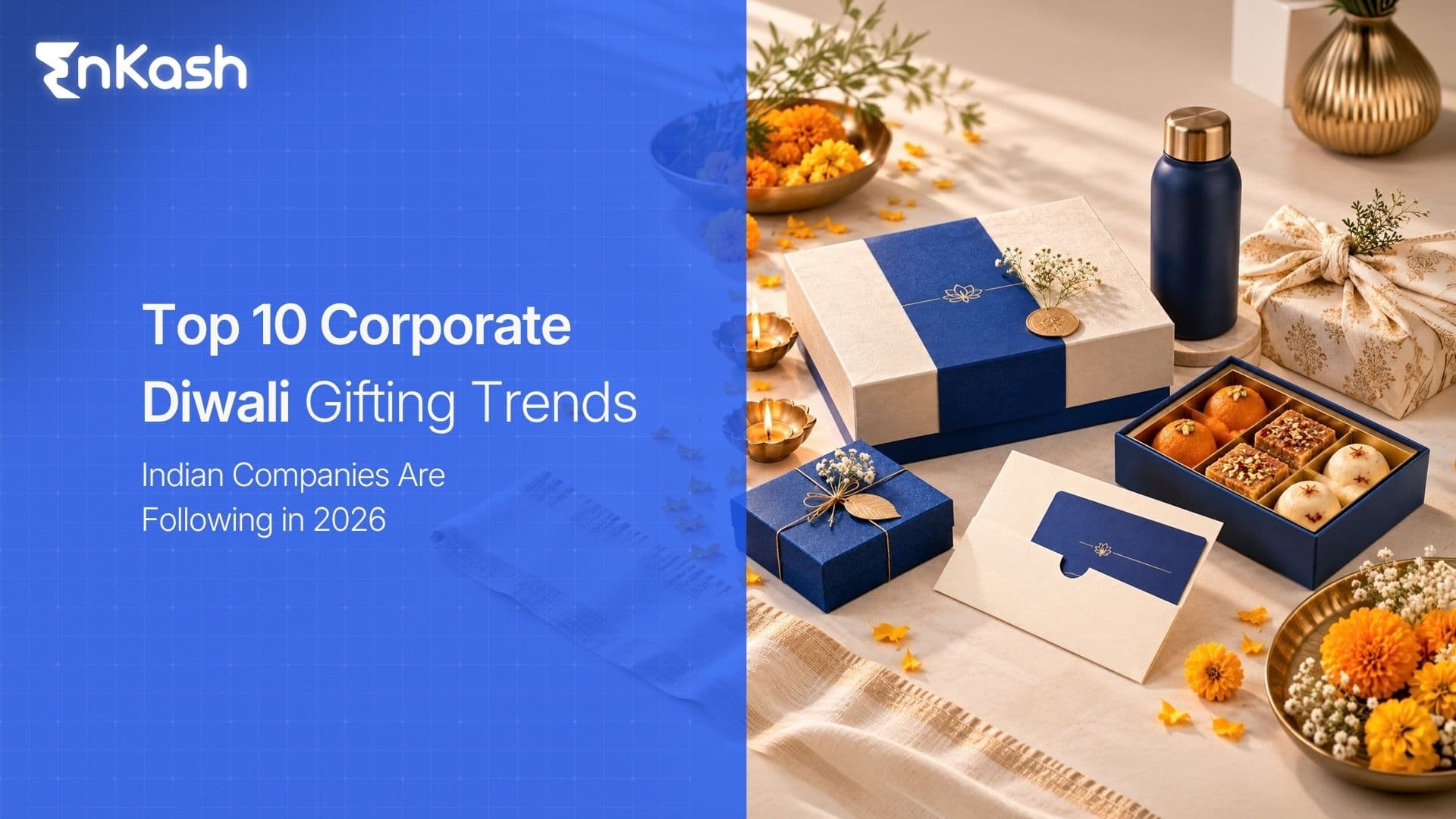
Corporate Diwali gifting in India is moving beyond the routine hamper as companies experiment with digital rewards, useful products, wellness, experiences and premium Indian craft. Sweets and festive boxes remain familiar, though they now share space with digital rewards, useful products, wellness-led gifts, experiences, and premium Indian craft. The change is visible in the way gifts are chosen as well. Companies are paying closer attention to what employees may actually use, how much choice they should have, and how the final gift feels when it reaches them. Together, these shifts are changing how companies decide what to gift, how to distribute it and how much choice to give employees.
Top 10 Corporate Diwali Gifting Trends in India for 2026
Ten separate changes are shaping how Indian companies plan festive rewards in 2026. Each one changes a different part of the gifting experience, from who controls the final choice to how the gift is presented and where Diwali appears within employee recognition. Together, these corporate gifting trends in India show several different directions instead of one common gifting model.
Here are the top 10 corporate Diwali gifting trends in India for 2026:
A single hamper can be difficult to get right across a workforce that spans different age groups, lifestyles, cities, and personal preferences. Choice-led programs answer that problem by letting employees select from an approved catalogue or a defined group of options.
The key difference is who makes the final selection. The company sets the budget and available range, while the employee decides which approved reward has personal value. The final selection may be physical or digital. For HR teams, that flexibility can reduce the chance of sending a well-meant reward that has little relevance to the person receiving it.
Festive distribution becomes harder when employees are spread across metros, smaller cities, field locations, and home offices. Digital delivery removes the need to pack and ship a physical gift to each recipient..
Electronic gift cards, digital vouchers, and reward credits can reach recipients without a physical shipment. Remote, hybrid, field-based, and multi-location teams give digital gifting trends in India a clear use case. The value here comes from delivery speed and geographic reach. Employee control over the final reward remains a separate decision.
3. Personalization Is Getting Deeper
Personalisation can now go beyond printing a name on a box. Companies can tailor festive communication or gift treatment by factors such as language, region, tenure, milestone, or recipient group where that level of differentiation is useful.
A festive note may change by region. A long-serving employee may receive a different message from a recent joiner. Multilingual communication can make a national program feel closer to the recipient. The company is shaping the experience in advance here, which keeps personalization separate from an employee choosing the final gift.
4. Experiences Are Joining Physical Gifts
Corporate Diwali gifting is expanding beyond objects. Companies can now include experience-led rewards such as dining, travel, entertainment, learning or stay-related vouchers alongside physical festive gifts.
An experience can stand alone or be paired with a small physical item. The appeal is that the reward can be used toward an activity, service or experience rather than adding another physical product. Learning rewards add a different angle through an interest the employee can continue exploring later. Dining or travel rewards also move the moment of use beyond Diwali week.
5. Wellness Has Become Its Own Category
Wellness is no longer hidden inside a generic hamper. Self-care products, fitness-oriented gifts, healthier food and beverage selections, memberships, and wellness subscriptions are being treated as a separate gifting category.
For large workforces, broad wellbeing options are usually safer than highly specific products. Personal health needs and preferences vary, so a neutral wellbeing theme is easier to scale than highly specific products. The defining idea here is the wellbeing focus, separate from leisure experiences or general lifestyle merchandise.
6. Sustainability Is Influencing More Gifting Decisions
The environmental side of gifting now reaches the product, the packaging, and the life of the item after Diwali. Reusable products, recycled materials, recyclable packs, plantable stationery or packaging, and lower-waste formats are becoming part of corporate selection criteria.
Packaging carries real weight in this trend. A reusable product can lose environmental value when it arrives inside several layers of disposable material. Reusability, waste volume, material choice, and expected product life now have a clearer place in the buying discussion.
7. Everyday Utility Is Beating Novelty Merchandise
A festive product gains value when employees keep using it after the lights and decorations come down. This is moving practical tech accessories, travel products, work-use items, and durable home goods higher on corporate shortlists.
Useful gifts can stay visible long after Diwali because employees continue using them. A charger used every week or a travel item carried for months can remain connected with the original gesture long after Diwali. Within employee gifting trends in India, continued use is carrying greater weight than a novelty product with little purpose after the festival.
8. Indian Craft and Traditional Gifts Are Being Premiumized
Traditional Diwali categories are being upgraded through stronger craftsmanship, better ingredients, regional identity, and contemporary product design. Premium mithai, artisanal foods, brassware, regional crafts, and refined homeware are giving familiar festive ideas a newer form.
The cultural connection remains central. What changes is the product standard. Regional ingredients, artisan production, skilled workmanship, and contemporary design can refresh familiar Diwali categories without removing their Indian character.
9. Better Curation Is Replacing Overfilled Hampers
A large box can look impressive before it is opened and feel random once the contents are unpacked. Companies are responding with smaller, more coherent selections built around a clear theme or use.
Curation now reaches item count, visual hierarchy, thematic consistency, and the amount of company branding used across the gift. Subtle logos and cleaner composition can keep the hamper focused on the recipient. The trend is about how the complete gift is assembled and presented, not the environmental material choices behind the packaging.
10. Diwali Is Joining Year-Round Recognition
Festive gifting is moving closer to the wider employee-recognition calendar. Diwali can become one moment in a sequence that also includes milestones, achievements, anniversaries, joining moments, or other forms of appreciation.
The festival then carries a clearer role. A single hamper no longer needs to represent the complete recognition relationship between employee and employer. Diwali can reinforce an appreciation program that already exists across the year, giving the festive gesture context beyond one annual distribution exercise.
How Corporate Diwali Gifting Programs Are Changing Behind the Scenes
For large workforces, the gift itself is only one part of the programme. Once recipient counts rise, HR, procurement, finance, and administration may all enter the same cycle. Their work reaches sourcing, approvals, quality, eligibility, dispatch, budgets, and post-gifting review. The operational side of corporate Diwali gifting is becoming increasingly structured as programs grow across locations and employee groups.
Six changes are reshaping how those teams run the program:
- Earlier planning: Sourcing, samples, personalization, internal approvals, and dispatch planning are moving further ahead of Diwali. A longer runway gives teams room to correct quality or fulfilment problems before employee distribution begins.
- Centralized budget control: Per-recipient caps, eligibility rules, approval levels, and total festive spend are being handled through clearer internal controls. Finance gains visibility before the order is committed.
- Multi-address fulfilment control: Physical gifting programs need verified addresses, dispatch allocation, shipment tracking, failed-delivery handling, and replacement workflows when parcels are being sent directly to employees.
- Sample and quality approval: Large physical orders receive closer checks before mass production. Teams can review the actual product, packaging, branding, and final assembly before hundreds or thousands of units move into dispatch.
- Redemption and usage tracking: Digital programs create a different post-delivery view. Digital reward platforms can provide issuance, claim, or redemption data where those reporting capabilities are supported, giving the program an outcome beyond the original distribution count.
- Preference and feedback analysis: One festive cycle can generate useful information for the next. Category response, redemption patterns, regional differences, and employee feedback can guide future selection and budget allocation.
What the 2026 Corporate Diwali Gifting Trends Mean for Gifting Decisions
A trend is useful only if it helps solve a real gifting problem. A workforce with varied preferences may need a different approach from a company trying to improve the cultural character of a festive gift. The right direction depends on the specific problem the program needs to solve.
Matching that need with the relevant trend keeps the final decision grounded.
| Corporate Gifting Need | Trend Direction to Consider | Decision Focus |
|---|
| Workforce has widely different preferences | Choice-led gifting | Give recipients controlled flexibility |
| Employees work across many Indian cities | Digital-first gifting | Reduce dependence on physical distribution |
| Gift should feel individually considered | Personalization | Tailor language, region, tenure, or recipient-group treatment |
| Company wants a non-material reward | Experiences | Offer an activity, access, or benefit |
| Employee wellbeing is a stated priority | Wellness gifting | Choose broadly relevant wellbeing options without making assumptions about individual health needs. |
| Sustainability commitments affect procurement | Sustainable gifting | Review product and packaging impact |
| Company wants high post-Diwali usage | Utility-led gifting | Select durable everyday products |
| Cultural character is important | Premium Indian craft and traditional gifting | Refresh familiar festive categories |
| Existing hampers feel excessive or promotional | Curated gifting | Improve coherence and branding restraint |
| Diwali is part of a wider appreciation program | Recognition-led gifting | Connect the festival with year-round recognition |
Turning Gifting Trends Into a Scalable Rewards Programme
Choice-led and digital-first gifting become more useful when companies can manage budgets, distribution and employee rewards from one place. For large or distributed workforces, that can mean setting a defined value per employee, issuing rewards in bulk, offering access to digital gift cards or brand vouchers, and tracking reward distribution without relying on physical fulfilment for every recipient.
EnKash Rewards helps businesses manage employee rewards and distribute digital gift cards and brand vouchers across teams and locations. This can support Diwali programmes where employee choice, faster distribution and centralised reward management matter more than selecting one physical gift for the entire workforce.
The format should still follow the gifting objective. Physical gifts may work better when cultural presentation or a tangible festive gesture matters, while digital rewards can be more practical when recipient preferences, locations or delivery complexity vary widely.
Final Take
The right corporate gifting trend is the one that solves a real workforce or programme problem. A distributed team may benefit most from digital delivery, a diverse workforce from employee choice, and a company seeking stronger cultural relevance from premium Indian craft. Companies do not need to combine every trend into one Diwali programme. Start with the recipient need, then choose the format that addresses it clearly.
FAQs
What are the top corporate Diwali gifting trends in India for 2026?
The trends covered here are employee-choice gifting, digital rewards, deeper personalization, experiences, wellness, sustainability, everyday utility, premium Indian craft, curated hampers, and connecting Diwali gifting with year-round employee recognition.
What works well for a distributed workforce?
Digital gift cards, vouchers, and reward credits can reach employees across locations without requiring a separate physical shipment to every recipient. Companies should still consider employee preferences and the reward options available.
Are physical Diwali gifts still relevant for employees?
Yes. Physical gifts can work well when cultural presentation or a tangible festive gesture matters. Companies can also improve their relevance through useful products, thoughtful curation, premium Indian craft, and less wasteful packaging.
How can companies manage Diwali gifting at scale?
Start planning early, define per-recipient budgets and eligibility, complete approvals, and choose a distribution method suited to the workforce. For physical gifts, manage samples, addresses, dispatch, and delivery issues. For digital rewards, track issuance and redemption where the platform supports it.