Employee gifting often begins with a budget and a list of recipients. A company decides how much to spend per employee, shortlists a few options and chooses something that can work across the workforce. What often gets less attention is whether employees will actually value what they receive.
Consider two employees who receive gifts worth ₹2,000. One gets a premium hamper selected by the company, but several items inside do not match their preferences. The other receives a digital gift card and spends it on something they were already planning to buy.
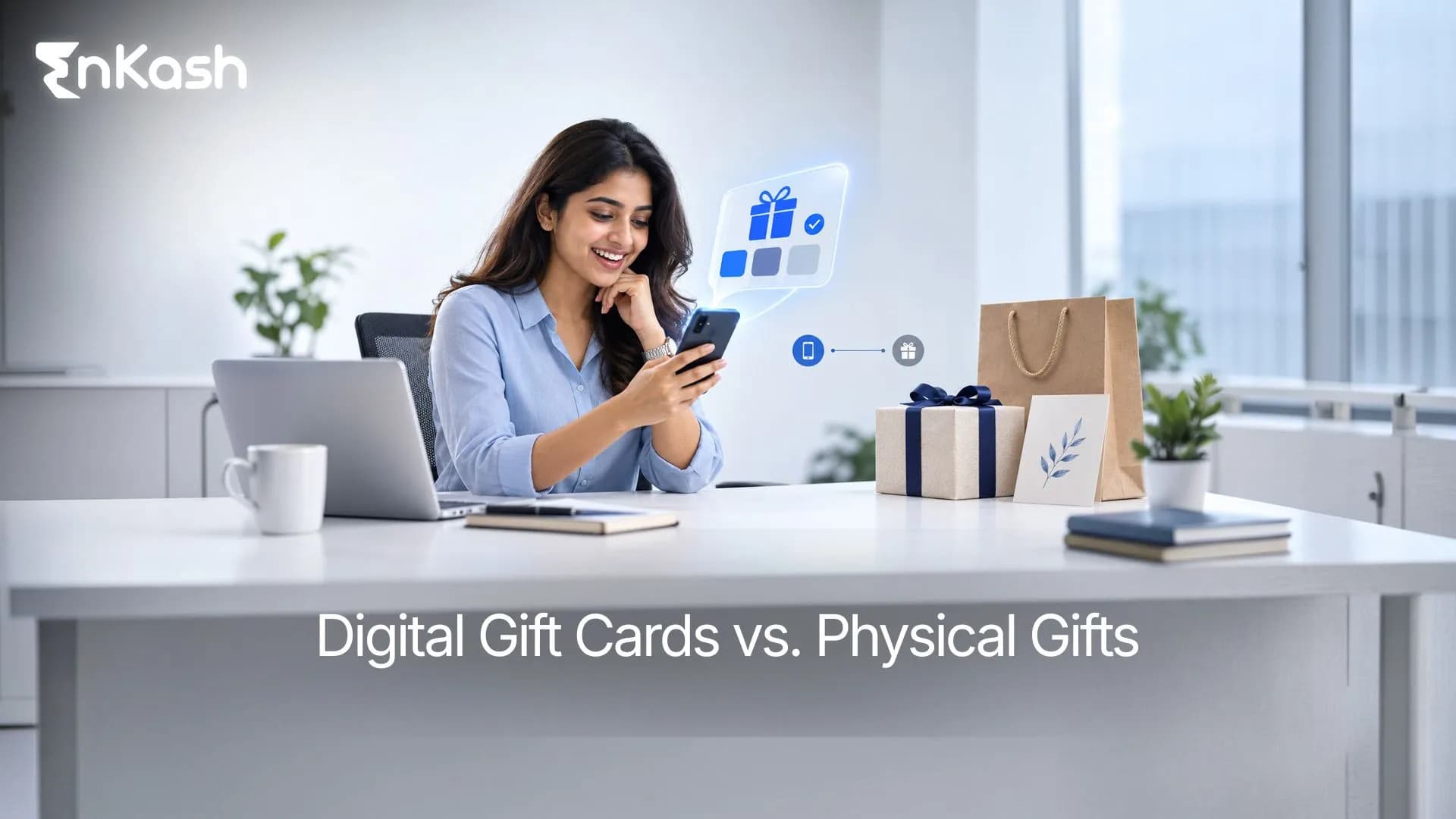
The company has spent the same amount in both cases, but the experience is different. That is why the digital gift cards vs. physical gifts comparison should go beyond delivery costs. The better option depends on what employees value and what the occasion calls for.
Recognition also plays a part. Gallup and Workhuman tracked nearly 3,500 employees between 2022 and 2024 and found that employees receiving high-quality recognition were 45% less likely to have changed organisations after two years. A gift is only one part of employee recognition, so the research should not be read as evidence that one gifting format improves retention. It does, however, reinforce the importance of making recognition meaningful to the recipient.
Digital Gift Cards vs. Physical Gifts: A Quick Comparison
| Factor | Digital Gift Cards | Physical Gifts |
|---|
| Employee choice | High when multiple brands or categories are available | Employer selects the item |
| Delivery | Can be issued instantly | Requires procurement and distribution |
| Personal touch | Depends on the reward and message | Strong when thoughtfully selected |
| Distributed workforce | Easy to issue across locations | Requires addresses and delivery coordination |
| Large employee base | Easier to distribute at scale | Operational effort increases with recipient count |
| Tracking | Issuance and redemption can be recorded | Purchase and delivery can be tracked, but post-delivery use is usually not visible |
| Preference mismatch | Lower when employees can choose | Higher when one item is selected for everyone |
| Best suited for | Regular rewards, incentives, festivals, large teams | Milestones, keepsakes and personal occasions |
Digital gift cards give employees more control over how they use their reward and are easier to distribute across teams and locations.
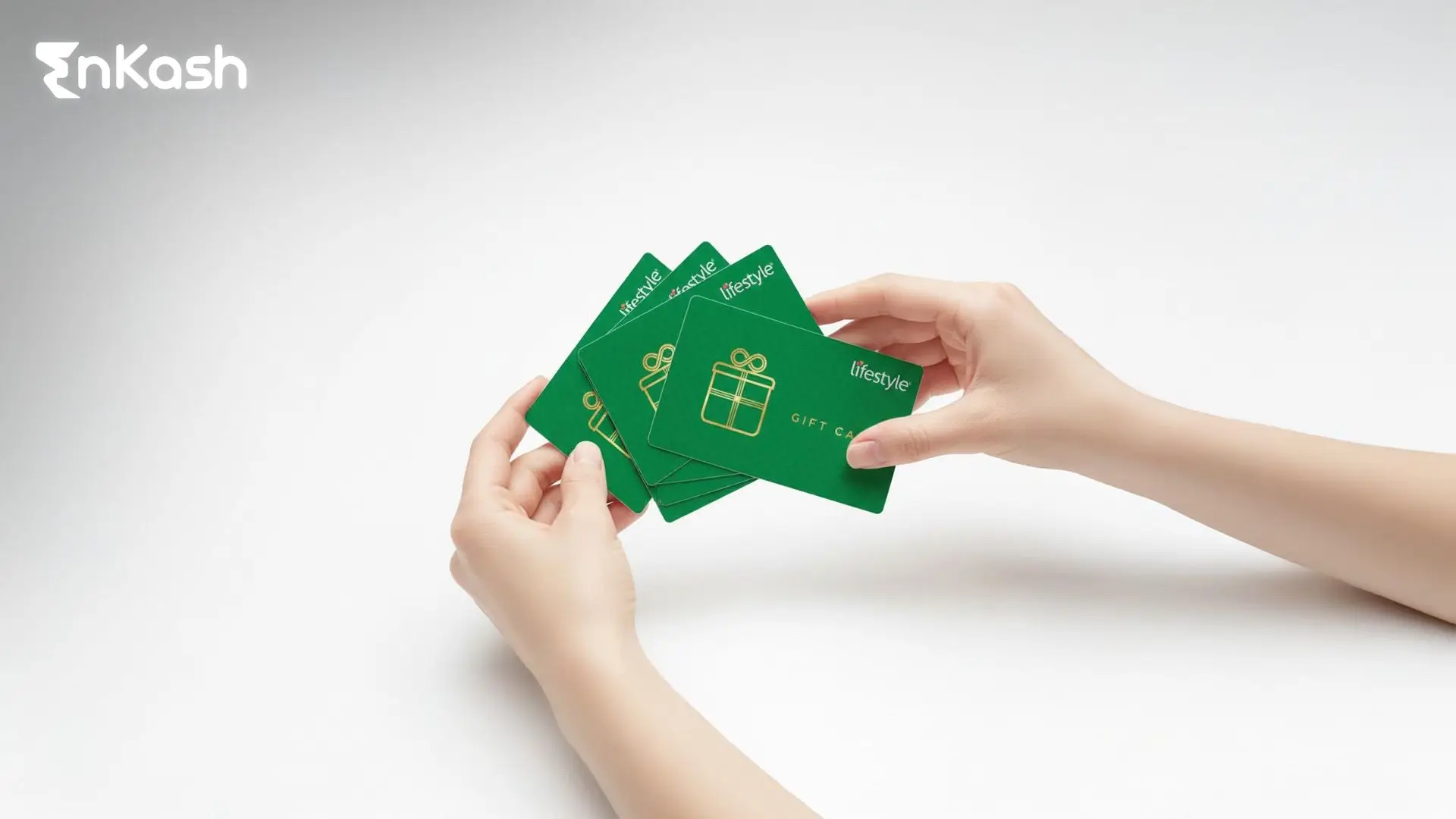
Physical gifts work well when the item itself has meaning, such as for a major work anniversary, retirement, or commemorative occasion.
What Makes an Employee Gift Feel Valuable?
The amount spent on a gift does not always determine how much an employee values it. A useful ₹2,000 reward can be more appreciated than a more expensive product that ends up unused.
Three factors matter especially when companies plan employee gifting: relevance, timing and personalisation.
Relevance Matters More than the Price Tag
A premium hamper can still contain things an employee does not use. Apparel brings questions of size and style, while a gadget can lose its appeal if the employee already owns something similar.
This becomes harder as the workforce grows. A manager choosing something for a small team they know well is very different from HR selecting one product for employees across several cities, age groups and functions.
When preferences are difficult to predict, giving employees more choice reduces the chance of getting the gift wrong. This is also relevant when companies build broader employee rewards and recognition programmes, where different employees can value different types of rewards.
Timing Matters for Recognition
If an employee exceeds a sales target this week, receiving the reward soon after keeps the recognition connected to the achievement.
That makes digital rewards useful for spot awards, referrals, performance incentives and contests, where waiting for procurement and delivery can create unnecessary delay.
Physical gifts work better for occasions known well in advance, such as Diwali, annual award events and major work anniversaries. In these cases, companies have the time to choose and present the gift properly.
Personalisation Goes Beyond Packaging
Putting an employee's name on a box is one form of personalisation, but the message behind the reward matters too.
A standard “Congratulations” says very little. A message explaining what the employee did well gives context to the reward and makes the recognition more meaningful.
This is especially important with digital gifting. Faster distribution should not make the experience feel automated or impersonal.
How Much Choice Does a Digital Gift Card Offer?
Digital gifting does not always mean employees have complete freedom over how to use the reward.
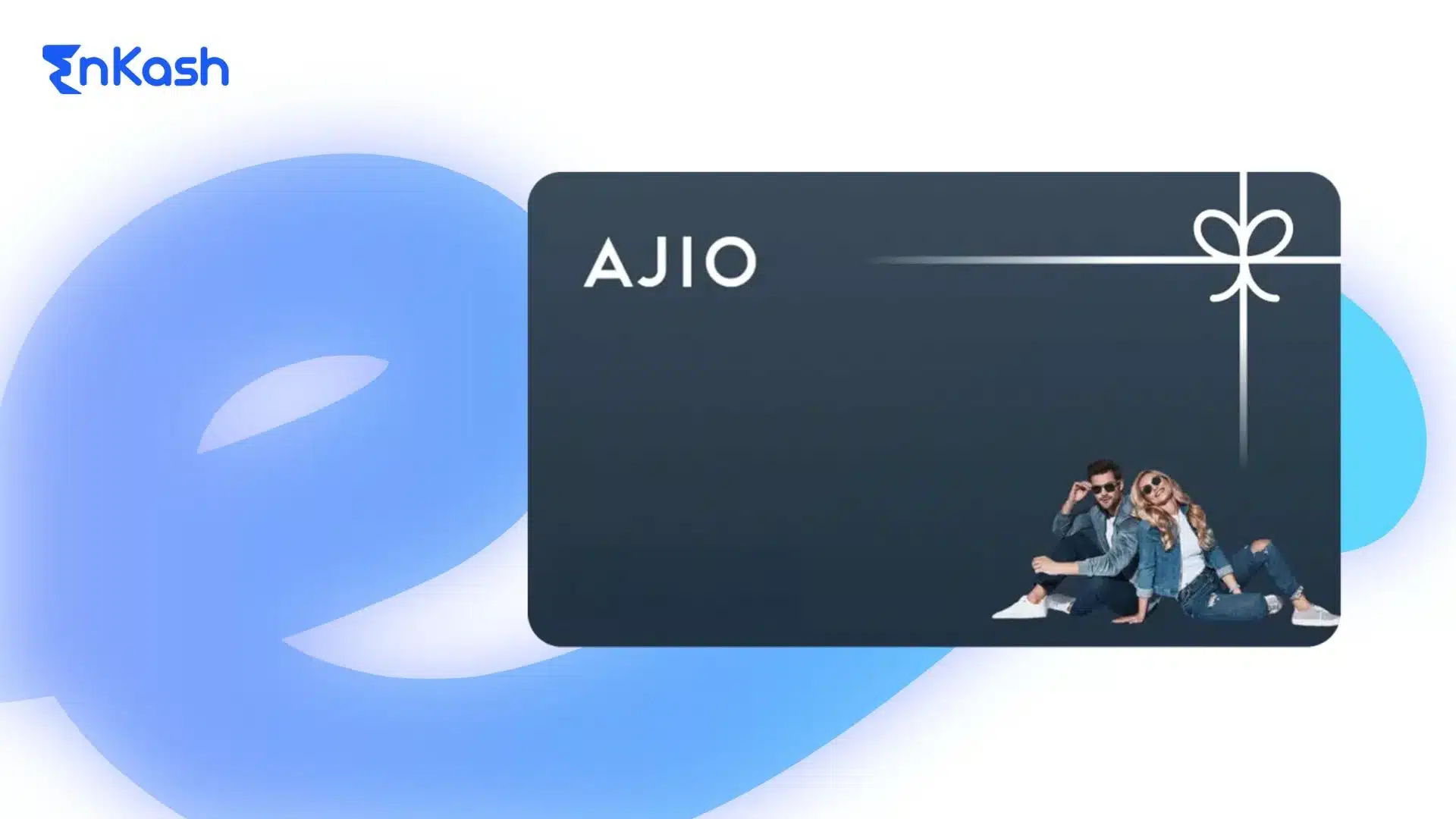
For example, if every employee receives a ₹2,000 voucher for the same fashion retailer, distribution is digital, but the company has still decided where employees have to spend it.
The type of digital gift card therefore matters.
Single-brand gift cards
A single-brand voucher works when the brand has broad appeal or the company already knows that the recipient prefers it.
The limitation is that an employee who rarely shops with that brand has fewer useful ways to use the reward.
Multi-brand rewards
Multi-brand rewards give employees more room to choose across different categories.
One employee can pick dining, another fashion and someone else travel or entertainment. This allows companies to maintain one reward programme while giving employees different ways to use it.
Prepaid gifting options
Prepaid gift instruments can offer wider acceptance than a retailer-specific voucher, depending on the programme and where the instrument is accepted.
Companies should therefore check the actual employee experience before choosing a digital gifting programme. Look at where the reward can be used, how easy redemption is, how expiry is communicated and what support is available if something goes wrong.
Sending the reward is only the first step. Employees should also be able to use it easily.
Tax and Regulatory Considerations for Employee Gifts in India
Indian employers also need to consider the tax treatment of employee gifts and the rules that apply to certain prepaid instruments.
Under the notified Income-tax Rules, 2026, the value of a gift, voucher or token received by an employee or a member of the employee's household from the employer is treated as nil when the aggregate value is below ₹15,000 during the tax year. The new rules took effect from April 1, 2026 and replaced the earlier ₹5,000 threshold.
Separate requirements apply to Gift PPIs regulated by the Reserve Bank of India. Under RBI rules, a Gift PPI:
- cannot exceed ₹10,000 per instrument
- is non-reloadable
- does not permit cash withdrawal
- has restrictions on fund transfers.
The two limits serve different purposes. The ₹15,000 threshold relates to the tax valuation of employer-provided gifts, vouchers or tokens, while the ₹10,000 limit applies to the value of an individual Gift PPI.
HR and finance teams should consider both the reward value and the type of instrument being issued when planning an employee gifting programme.
Employee Gifting with EnKash
Imagine HR is planning a festive reward for 1,000 employees.
With physical gifts, that can mean finalising products, collecting addresses, coordinating deliveries and handling missed or damaged shipments. With EnKash, the employee list can be uploaded in bulk and rewards can be allocated from one place.
Employees are notified about the reward and redemption process through WhatsApp, SMS and email. From there, they can choose from 400+ brands across 20+ categories, instead of everyone receiving the same item.
That also works for smaller, everyday moments. If a manager wants to recognise someone for hitting a target or doing great work, an open voucher can be issued without setting up a separate gifting exercise.
For HR, the useful part comes after distribution too. Redemption and account activity can be viewed from a central dashboard, unused rewards can be tracked, and expiry alerts help reduce cases where employees forget to use what they received.
HRMS integration also helps when employee data changes frequently, especially in larger teams. It can reduce manual work involved in employee onboarding and reward allocation..
So the experience stays efficient on both sides. HR manages the programme from one place, while employees get more choice in how they use their reward.
Conclusion
For frequent rewards, large teams and employees with different preferences, digital gift cards offer a strong advantage. They are easier to distribute and give employees more control over how they use their reward.
Physical gifts still work well for milestones where the item itself has personal or commemorative value.
The better employee experience comes from choosing the format based on the occasion. For regular rewards and gifting at scale, digital gift cards offer more flexibility. For major milestones, a thoughtful physical gift or a combination of both can work better.
Frequently Asked Questions
Are digital gift cards better than physical gifts for employees?
Digital gift cards work well for regular rewards, large teams and situations where employees have different preferences. Physical gifts are better suited to personal milestones and occasions where the item itself carries meaning.
What is the main difference between digital gift cards and physical gifts?
Digital gift cards give employees a reward value they can redeem according to the programme's terms. Physical gifts are products selected by the employer and delivered directly to employees.
Are employee gift cards taxable in India?
Under the Income-tax Rules, 2026, employer-provided gifts, vouchers or tokens have a nil perquisite value when their aggregate value is below ₹15,000 during the tax year. The exact treatment depends on the value and structure of the benefit.
What can companies use digital gift cards for?
Companies use digital gift cards for performance rewards, spot recognition, sales incentives, employee referrals, festivals, contests, birthdays, work anniversaries and company-wide celebrations.
Are digital gift cards suitable for remote employees?
Yes. Digital gift cards can be distributed without collecting shipping addresses or depending on courier coverage, making them suitable for remote, field-based and distributed teams.
Can companies combine digital gift cards with physical gifts?
Yes. Companies can combine a physical gift with a digital reward for occasions such as festivals or major work anniversaries, where both a tangible gesture and employee choice add value.