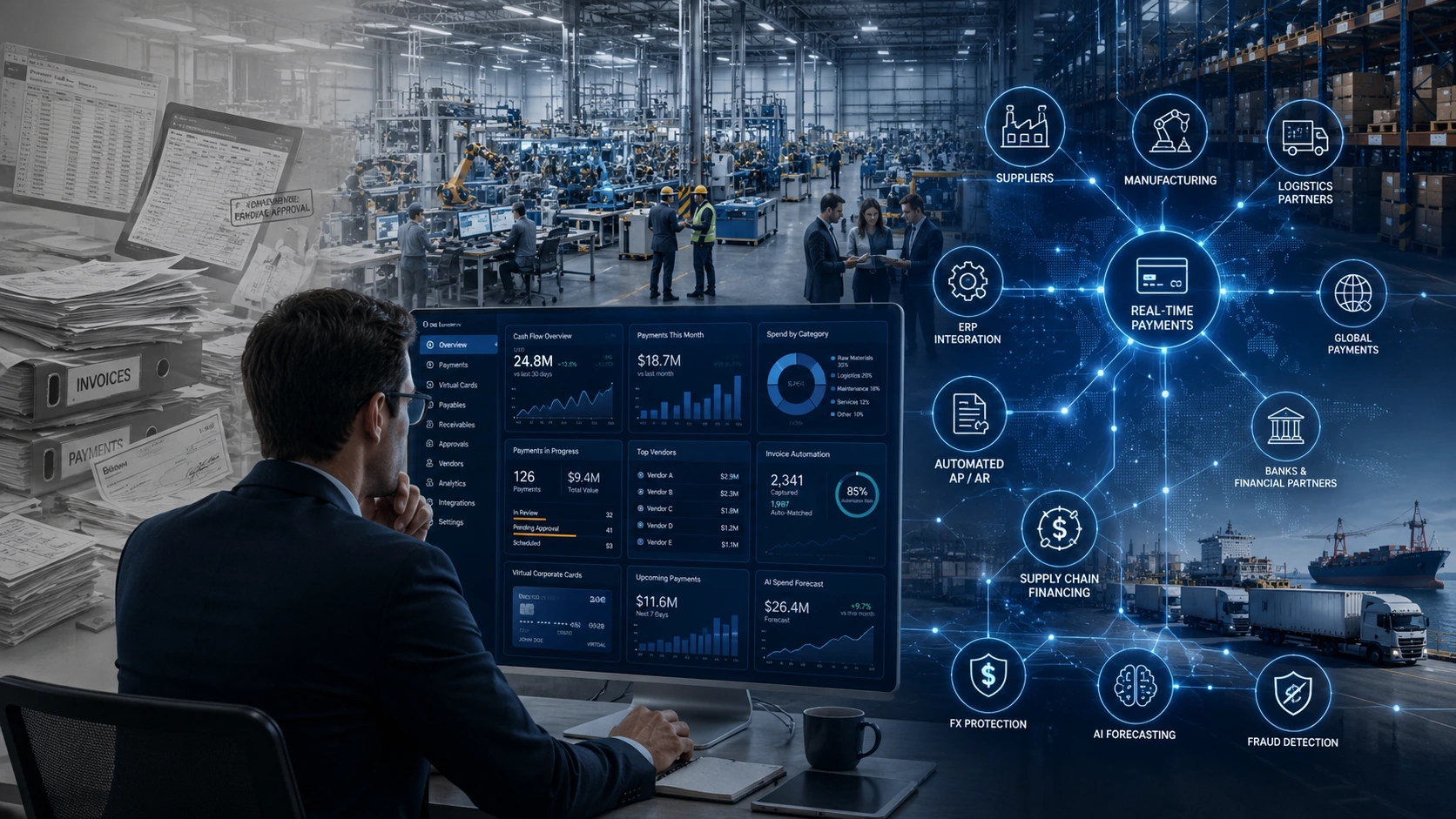
For decades, the industrial sector has relied heavily on legacy financial systems that were designed for a different era of commerce. Paper checks, manual invoicing, fragmented banking relationships, and cumbersome spreadsheet tracking have long been the standard for managing complex supply chains and large-scale procurement operations. However, the global business landscape is shifting rapidly. As operational agility, supply chain resilience, and real-time data visibility become critical to corporate survival, industrial leaders are turning to financial technology (fintech) to overhaul capital flows and meticulously optimize industrial business spending. By embracing these digital solutions, organizations are leaving behind outdated bottlenecks in favor of streamlined, scalable ecosystems.
Modern fintech solutions are no longer just restricted to consumer banking apps or retail point-of-sale systems. They have matured to address the highly specific, complex needs of enterprise-level operations, fundamentally reshaping B2B (business-to-business) payments. By offering unprecedented visibility and granular control over financial workflows, these platforms empower firms in manufacturing, logistics, and heavy industry to safeguard their margins in an increasingly competitive environment.
The High Cost of Legacy Financial Systems
The traditional B2B payment cycle is notoriously slow, opaque, and prone to human error. In manufacturing and heavy industry, the procurement of raw materials or heavy machinery is rarely a simple transaction. A single procurement order can trigger a complex cascade of invoices, multi-tiered management approvals, and manual reconciliations across different internal departments.
This friction inevitably leads to delayed payments, which in turn strains critical supplier relationships and traps essential working capital in transit. The administrative burden on finance teams is immense; accounts payable (AP) and accounts receivable (AR) professionals spend countless hours chasing down lost paperwork, verifying wire transfers, and manually inputting data into legacy ERP (Enterprise Resource Planning) systems. Fintech bridges this gap by introducing cloud-based payment gateways that digitize and automate the entire AP/AR lifecycle, drastically reducing processing times from weeks to mere hours.
Gaining Total Control Over Corporate Expenditures
Perhaps one of the most significant advantages that fintech brings to the industrial sector is the ability to exert granular, real-time control over corporate expenditures. Historically, tracking decentralized expenses across multiple remote job sites, various procurement channels, and regional offices required weeks of retroactive auditing. By the time a CFO recognized a budget overrun, the financial damage was already done.
Today's advanced spend management software integrates natively with a company’s central ERP, transforming how money is deployed. Key features driving this transformation include:
- Virtual Corporate Cards: Instead of handing out physical corporate cards with high limits, project managers can now be issued single-use or budget-capped virtual cards. These cards can be restricted to specific vendor categories, such as equipment rentals or raw material purchases, effectively eliminating rogue spending and fraud.
- Real-Time Analytics and Dashboards: Modern platforms categorize expenses instantly as transactions occur. This provides finance leaders with immediate visual insights into cash burn rates, allowing them to adjust budgets proactively rather than reactively.
- Automated Custom Approvals: Spending requests are intelligently routed through digital workflows based on the transaction size and department. This ensures strict compliance with internal corporate policies without stalling urgent operational needs on the factory floor.
Optimizing Supply Chain Liquidity and Vendor Relations
In the industrial supply chain, cash flow is the undisputed king. A persistent challenge in B2B commerce is the misalignment of payment terms. Large buyers often demand longer payment cycles (such as net-60, net-90, or even net-120 days) to preserve their own capital, while smaller suppliers need immediate cash to pay their workforce and purchase the raw materials required to fulfill the very same orders. This dynamic frequently creates dangerous liquidity gaps.
Fintech resolves this tension through innovative supply chain financing mechanisms. Solutions like dynamic discounting and digital reverse factoring allow suppliers to opt for early payments in exchange for a slight discount. This early payment is funded either directly by the buyer's excess treasury cash or facilitated by a third-party fintech lender. The result is a win-win scenario: buyers improve their profit margins or extend their Days Payable Outstanding (DPO), while suppliers gain vital access to immediate working capital. This ensures that the physical supply chain is never disrupted by a financial bottleneck.
Navigating Cross-Border Payments and FX Risks
Industrial companies rarely operate in a vacuum; their supply chains are inherently global. Traditional cross-border payments via the SWIFT network are notoriously slow, involve multiple intermediary banks, and are plagued by opaque fee structures and unpredictable foreign exchange (FX) rates.
Fintech disrupts this by providing multi-currency digital wallets and utilizing localized payment rails. Industrial firms can now hold balances in various currencies and execute cross-border vendor payments instantly, often bypassing intermediary banks entirely. By locking in competitive FX rates in real-time, these platforms shield companies from currency volatility, ensuring that international procurement costs remain predictable.
The Future: Real-Time Payments and AI Integration
The next massive frontier for industrial financial operations is the widespread adoption of real-time payment (RTP) networks combined with artificial intelligence. While consumer payments have settled instantly for years, the B2B sector has lagged. As governments and central banks roll out robust RTP infrastructures globally, industrial firms will soon be capable of settling multi-million dollar vendor payments in seconds, 24/7/365, permanently eliminating the traditional "check is in the mail" friction.
Furthermore, AI-driven spend management tools are transitioning from simply reporting historical data to proactively predicting future trends. Machine learning algorithms are now analyzing vast pools of purchasing data to forecast cash flow crunches months in advance. These systems can autonomously recommend the optimal time to pay specific vendors to maximize working capital and will automatically flag anomalous transactions that could indicate invoice fraud or duplicate billing.
By fully embracing these fintech innovations, industrial companies are executing a profound strategic shift. They are transforming their finance departments from purely administrative, back-office cost centers into dynamic, strategic drivers of growth, resilience, and operational efficiency.
Disclaimer: This article is a guest contribution. The opinions and views expressed are solely those of the author and do not necessarily reflect the views, policies, or position of EnKash