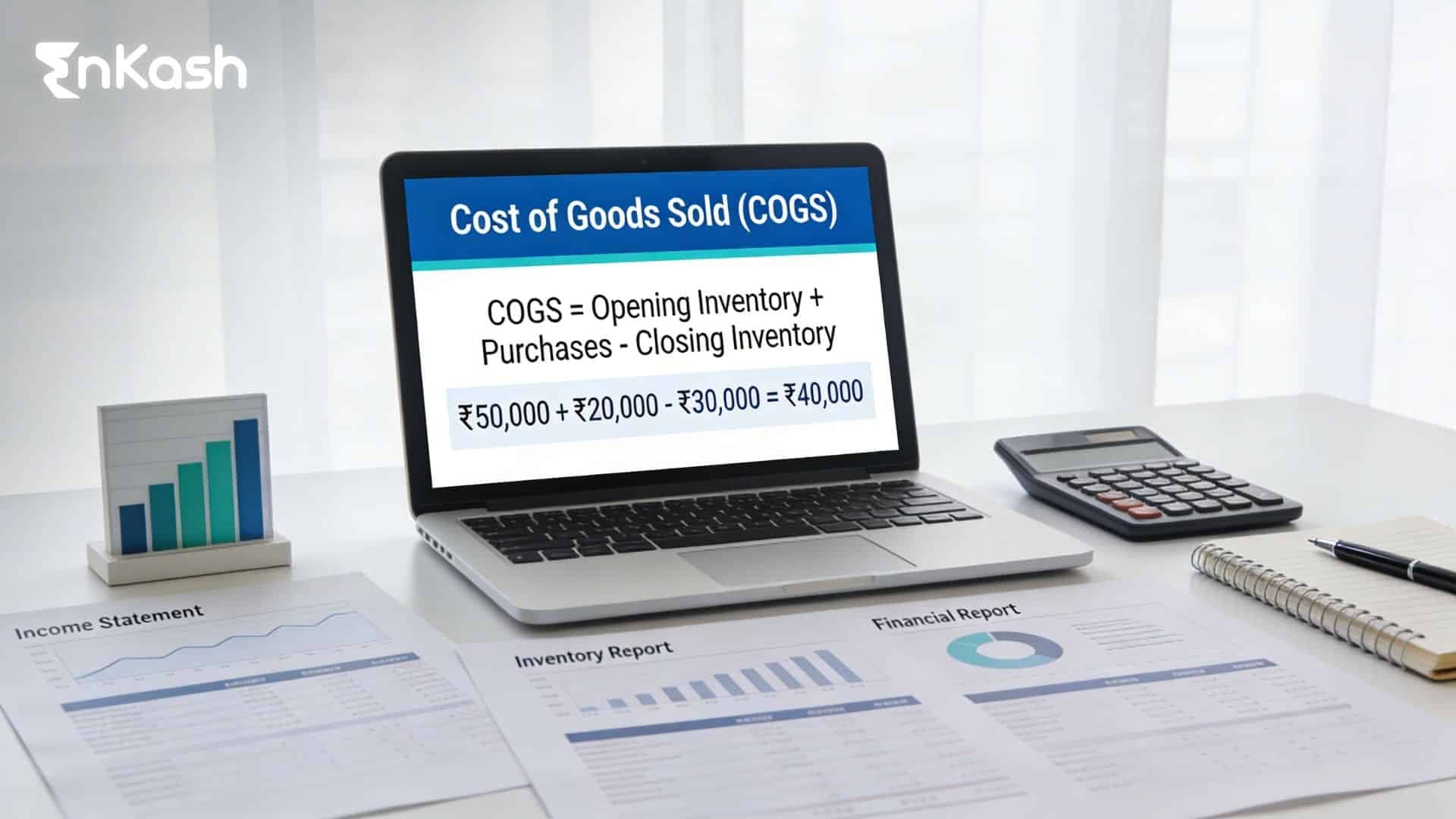
Every product-led business must understand what it truly spends to generate revenue. That is where the cost of goods sold becomes central to financial clarity. The COGS full form refers to the direct cost attached to goods that are actually sold during a reporting period. It does not represent everything a business buys. It represents the portion of inventory that has moved out and created income.
For Indian retailers, wholesalers, manufacturers, and digital-first brands, COGS directly influences gross profit, pricing strategy, and margin discipline. Even a small classification error can distort profitability and weaken financial reporting. Accurate tracking strengthens compliance, improves lender confidence, and supports better working capital management.
Structured financial review relies on proper cost allocation, and this guide clarifies how the cost of goods sold operates within that system. The analysis is based on established accounting methodology and reflects inventory reporting norms followed by Indian businesses.
What is COGS
Cost of Goods Sold represents the direct cost linked to products that have been sold within a specific financial period. When goods are purchased or manufactured, they are first recorded as inventory. Inventory is an asset. It becomes an expense only when those goods are sold. At that point, the cost moves from the balance sheet to the income statement. That transferred amount is COGS.
This distinction ensures financial accuracy. If a business purchases 1,000 units but sells only 700, the expense reflects the cost of 700 units. The remaining 300 units remain in inventory.
COGS and its Impact on Gross Profit Measurement
COGS sits directly below revenue in the profit and loss statement. Revenue minus COGS produces gross profit. Gross profit measures how efficiently a business converts product sales into earnings before administrative and operating expenses.
Financial institutions, investors, and auditors rely on this number to assess pricing discipline and cost control. If direct costs increase without a corresponding increase in selling price, margins narrow. If direct costs are effectively controlled, profitability improves.
Where COGS is Most Relevant
Cost of goods sold is most relevant to businesses that sell physical products. These include:
- Retailers
- Wholesalers
- Manufacturers
- E-commerce sellers
- Consumer goods companies
Service-only businesses may use different cost classifications. However, any business that buys, produces, and sells tangible goods must calculate COGS accurately to maintain financial clarity and reporting discipline.
Components of COGS
Cost of Purchase
The first component of the cost of goods sold begins with the cost of acquiring inventory. Accounting standards state that the cost of purchase includes the purchase price of goods or raw materials. It also includes import duties, non-recoverable taxes, and transport or handling charges that are necessary to bring the goods to their present location and condition.
Trade discounts, rebates, and purchase returns reduce the purchase cost. Only the net amount paid to make the inventory ready for sale is considered. Administrative expenses or marketing costs are not included because they do not relate directly to acquiring the goods.
Cost of Conversion
For manufacturing businesses, inventory is not only purchased but also produced. In such cases, conversion costs form part of the cost of goods sold. These include direct labour expenses paid to workers involved in production. They may also include production overheads that are directly attributable to manufacturing, such as factory utilities or machine-related costs.
These costs must be measurable and clearly linked to production output. General corporate overheads, head office expenses, or unrelated staff salaries remain outside this category.
Other Directly Attributable Costs
Accounting guidance allows inclusion of other costs if they are necessary to bring inventory to its saleable condition. For example, inspection costs or specific packaging required before sale may qualify. However, storage costs that are not required for production and selling expenses do not form part of inventory cost.
Opening and Closing Inventory Adjustment
COGS reflects the cost of goods actually sold during a period. Therefore, opening inventory is included in current-period costs because it represents goods available for sale. Closing inventory is deducted because the goods remain unsold and are still recorded as assets.
Inventory is generally measured at cost or net realisable value, whichever is lower. Accurate stock measurement is essential because any error directly affects reported margins and financial reliability.
Read more: What is Direct Expenses? Direct Expenses Examples, List Explained
The calculation of the cost of goods sold follows a disciplined accounting framework. The standard structure is:
COGS = Opening Inventory + Net Purchases + Direct Costs − Closing InventoryThis formula ensures that only the cost linked to goods actually sold during the reporting period is recognised as an expense. Any goods that remain unsold at the end of the period continue to be recorded as inventory on the balance sheet. This distinction protects reporting accuracy and prevents premature expense recognition.
Each element of the formula represents a defined cost category.
- Opening inventory reflects the value of stock available at the beginning of the financial year. It must match the prior period’s closing balance to maintain reporting consistency.
- Net purchases represent goods acquired during the period, adjusted for purchase returns, rebates, and trade discounts. Directly attributable procurement costs, such as freight inward, are included because they bring the inventory to its present condition.
- Direct costs apply primarily to manufacturing businesses. These include direct labour and production overheads that are clearly linked to output.
- Closing inventory removes the cost of unsold goods from the total available cost pool. Since these goods have not generated revenue, their cost cannot be recognised as an expense.
This structure aligns with recognised inventory accounting principles and ensures that financial statements present a fair view of gross profit.
How to Calculate Cost of Goods Sold Step by Step
Step 1: Confirm Opening InventoryBegin with the audited closing stock from the previous period. This ensures continuity and prevents distortion in current period reporting.
Step 2: Add Net PurchasesRecord total purchases made during the year. Deduct purchase returns and trade discounts. Include directly attributable procurement expenses where relevant.
Step 3: Add Direct Production CostsIf the business manufactures goods, include direct labour and allocable factory overheads tied specifically to production output.
Step 4: Determine Closing InventoryConduct a physical stock verification and value inventory using the selected accounting method. Inventory is generally measured at cost or net realisable value, whichever is lower.
Step 5: Apply the FormulaCombine these figures using the formula. The resulting amount represents the direct cost associated with goods sold during the reporting period.
What are the Different Accounting Methods of COGS
The calculation of Cost of Goods Sold depends on how inventory is valued before applying the formula. Accounting standards allow specific inventory valuation methods. The chosen method affects the timing of cost recognition and reported margins.
FIFO Method
FIFO stands for First In, First Out. Under this method, the earliest purchased goods are assumed to be sold first. Older inventory costs move into COGS before recent purchases.
In periods of rising prices, FIFO generally results in lower COGS and higher gross profit. This is because older inventory was acquired at a lower cost. FIFO is permitted under Indian and international inventory standards and is widely used in practice.
Weighted Average Cost Method
The weighted average method calculates an average cost per unit across the total available inventory. Instead of tracking batches separately, it distributes the total cost evenly across units.
This method smooths price fluctuations and is suitable where inventory items are interchangeable. It is also permitted under Indian accounting standards.
LIFO Method
LIFO stands for Last In, First Out. Under this approach, the most recently acquired inventory is assumed to be sold first. In periods of rising prices, LIFO results in higher COGS and lower reported profit.
However, LIFO is not permitted under Indian Accounting Standards and IFRS-based reporting frameworks. It is primarily recognised under US GAAP. For Indian businesses following Ind AS, FIFO and weighted average remain the acceptable methods.
Each method assigns different cost layers to sold goods. As a result, the reported COGS and gross profit can vary even when sales volume remains unchanged. The choice of method does not affect cash flow, but affects how cost is recognised over time.
What is the Difference Between COGS and Cost of Revenue
The terms cost of goods sold and cost of revenue are sometimes used interchangeably, but they are not the same. The difference lies in scope and business structure. Understanding this distinction improves margin analysis and prevents confusion in reporting.
Cost of Goods Sold: Product-Centric Cost
Cost of goods sold applies to businesses that deal in physical inventory. It captures the direct cost of goods that have been sold during the period. These costs typically relate to purchasing, manufacturing, or preparing goods for sale. Once inventory is sold, its cost shifts from the balance sheet to the income statement as COGS.
This structure is standard for retailers, manufacturers, wholesalers, and product-led e-commerce businesses. The focus remains strictly on inventory movement. Only costs directly tied to goods sold are included. Operating expenses, administrative salaries, and marketing costs remain separate.
Cost of Revenue: Broader Revenue-Linked Cost
Cost of revenue is a wider concept. It represents the direct costs incurred to generate revenue, whether the business sells goods, services, or both. In service-based models, there may be no inventory. Instead, direct service delivery expenses form the cost base. This can include technical staff costs, project execution costs, or infrastructure required to deliver services.
In hybrid businesses, the cost of revenue may combine product-related costs with service-related delivery costs. The definition expands beyond inventory alone.
The Reporting Impact of this Difference
The distinction affects how gross margin is interpreted. For product businesses, gross profit is calculated by deducting the cost of goods sold from revenue. For service businesses, the cost base may extend beyond inventory, which changes how margin performance is evaluated.
Clear classification supports comparability across industries. Investors and analysts need to understand whether the reported cost reflects inventory sold or a broader revenue generation structure. Accurate terminology improves transparency and strengthens financial reporting discipline.
Limitations of COGS
While Cost of Goods Sold is a critical metric for measuring product-level profitability, it does not provide a complete financial picture on its own. Its usefulness depends on accurate inputs and proper interpretation.
Dependence on Inventory Accuracy
COGS is directly linked to inventory measurement. If opening or closing stock figures are incorrect, the reported cost will also be inaccurate. Even small stock-count errors can distort gross profit. Overstated closing inventory reduces COGS and inflates margins. Understated inventory does the opposite. Reliable stock verification and consistent valuation methods are essential to maintain financial integrity.
Limited View of Overall Profitability
COGS reflects only the direct cost of goods sold. It does not account for operating expenses such as marketing, administrative salaries, rent, or finance costs. A business may report strong gross margins while still facing weak net profitability due to high operating expenses. For this reason, COGS should be analysed alongside operating profit and net profit figures.
Sensitivity to Cost Allocation
In manufacturing environments, allocation of production overheads influences COGS. If cost allocation is inconsistent or poorly structured, reported margins may fluctuate without real operational change. Proper cost controls and documented allocation policies reduce this risk.
Interpretation Requires Context
COGS must be evaluated in relation to revenue trends, pricing strategy, and inventory turnover. A rising COGS figure does not automatically indicate inefficiency. It may reflect higher sales volume or inflation in input costs. Without context, the number can be misleading.
Conclusion
A solid grasp of the cost of goods sold reinforces the accuracy of financial reporting. It determines how product costs move from inventory to expense and directly shapes gross profit. When inventory is classified correctly, procurement costs are recorded accurately, and valuation methods are applied consistently, margin analysis becomes reliable and defensible.
The cost of goods sold formula provides a structured way to measure the direct costs associated with goods sold over a period. It ensures that only revenue-generating inventory is recognised as an expense while unsold stock remains properly recorded as an asset. For analytical review, the cost of goods sold formula with sales and gross profit offers an additional lens to validate performance and identify cost pressure.
For inventory-led businesses, disciplined calculation is not optional. It influences pricing decisions, working capital control, and financial transparency. Strong cost tracking, accurate stock measurement, and consistent accounting treatment turn COGS from a routine calculation into a strategic tool for sustainable margin management and credible financial reporting.
FAQs
1. How does inventory turnover relate to cost tracking?Inventory turnover measures how quickly goods are sold and replaced during a period. A higher turnover generally indicates efficient stock management and faster cost recovery. When turnover slows, inventory remains on the balance sheet longer, delaying expense recognition. Analysing turnover alongside direct product cost helps businesses assess pricing efficiency, demand strength, and working capital performance more accurately.
2. Does inflation affect reported product cost?Rising input prices can increase the cost assigned to sold goods, depending on the valuation method used. In inflationary conditions, newer inventory purchases may carry higher prices, which can influence expense recognition timing. This affects gross margins and financial analysis. Businesses must monitor price trends and maintain consistent valuation policies to avoid distorted performance interpretation.
3. How do stock write-downs impact financial statements?When inventory cannot be sold at its original cost due to damage, obsolescence, or reduced market value, it may need to be written down. This reduces inventory value and increases expense in the reporting period. Such adjustments directly affect profit. Proper documentation and periodic review of stock conditions are necessary to maintain reporting integrity.
4. Why is physical stock verification important in cost calculation?Physical stock verification confirms the actual quantity of inventory available at period end. Without accurate stock counts, expense calculations may be overstated or understated. Discrepancies between book records and physical stock can distort profit margins. Regular verification strengthens internal control systems and supports reliable financial reporting.
5. How do purchase discounts affect reported cost?Trade discounts and rebates reduce the actual acquisition cost of inventory. If not properly adjusted, product cost may appear inflated. Only the net amount paid to acquire goods should be recorded in inventory valuation. Correct treatment ensures that margins reflect true procurement cost rather than gross invoice values.
6. Can abnormal losses be included in product cost?Abnormal losses, such as damage caused by accidents or extraordinary events, are typically excluded from inventory valuation. These costs are treated separately as period expenses. Including them in regular product cost can distort margin analysis and misrepresent operational efficiency. Proper classification maintains clarity in financial results.
7. How does cost allocation affect manufacturing margins?In production-based businesses, factory overhead must be allocated systematically to output. If allocation is inconsistent or inaccurate, reported expense levels may fluctuate even without an operational change. A structured and documented allocation method ensures stability in margin reporting and improves comparability across periods.
8. Why should businesses review cost trends regularly?Periodic review of cost patterns helps detect pricing pressure, supplier changes, and operational inefficiencies. Sudden increases in direct product cost without corresponding revenue growth can signal margin risk. Ongoing monitoring supports timely decision-making in procurement, pricing, and inventory planning.
9. How does seasonal demand affect expense recognition?Seasonal businesses may accumulate inventory ahead of peak sales periods. During the buildup phases, expense recognition remains low because goods remain unsold. When peak sales occur, expense increases sharply. Understanding this cycle helps interpret quarterly performance without misjudging profitability trends.
10. Why is consistency important in inventory valuation policies?Consistent application of inventory valuation methods ensures comparability across reporting periods. Changing methods without a valid reason can distort cost trends and confuse financial analysis. Stability in policy strengthens audit confidence and improves the credibility of reported margins.